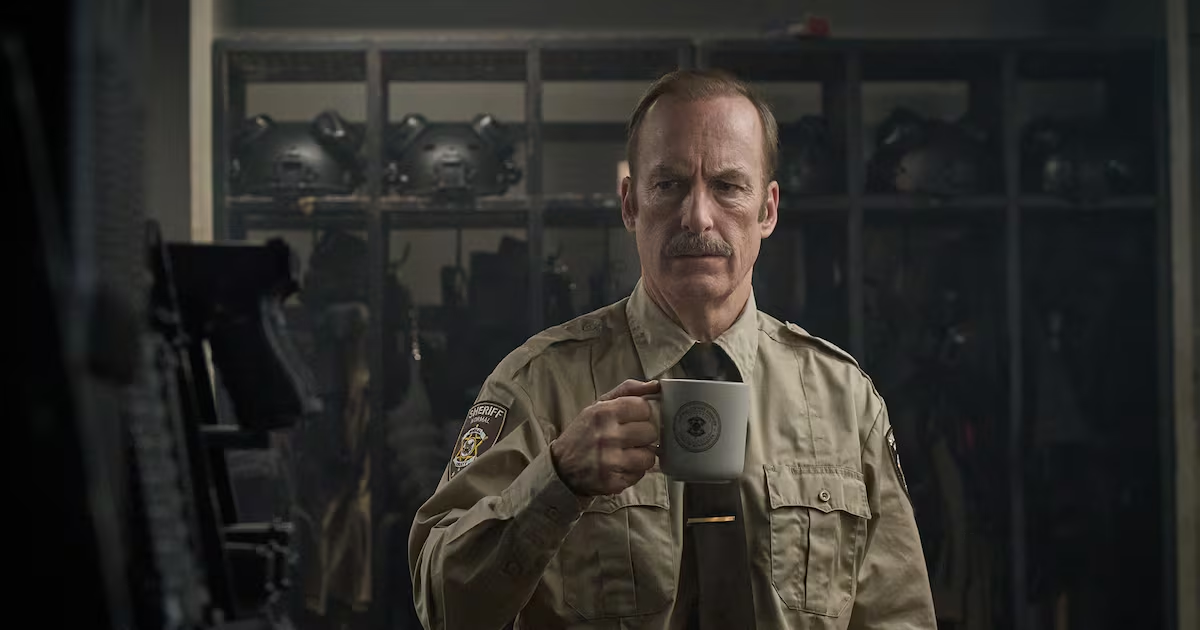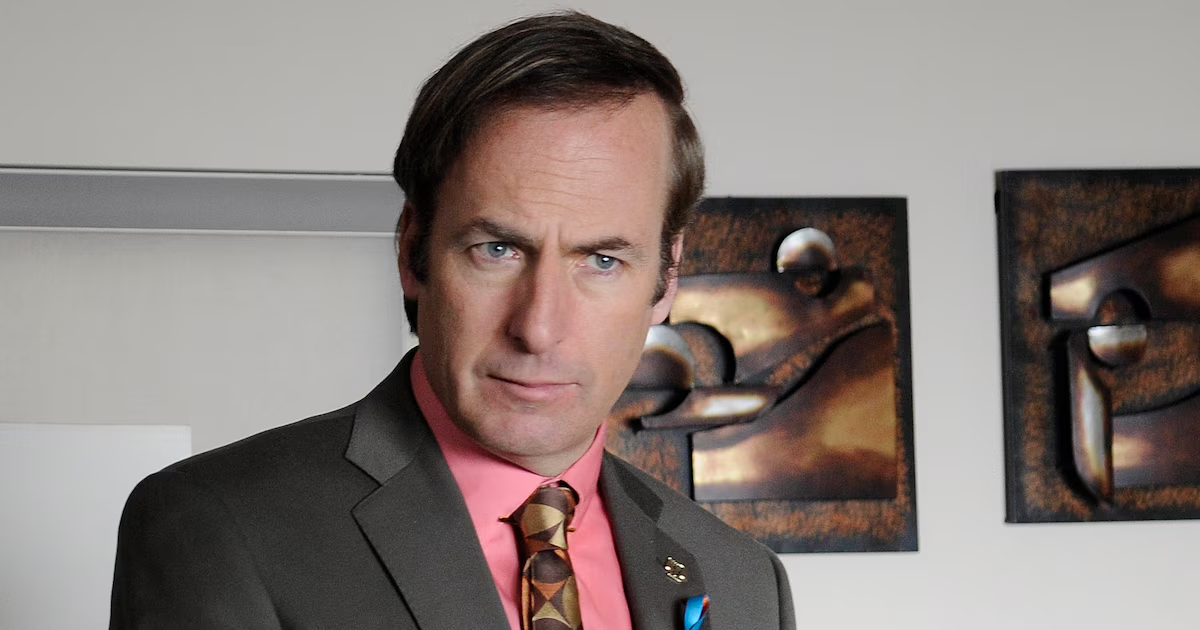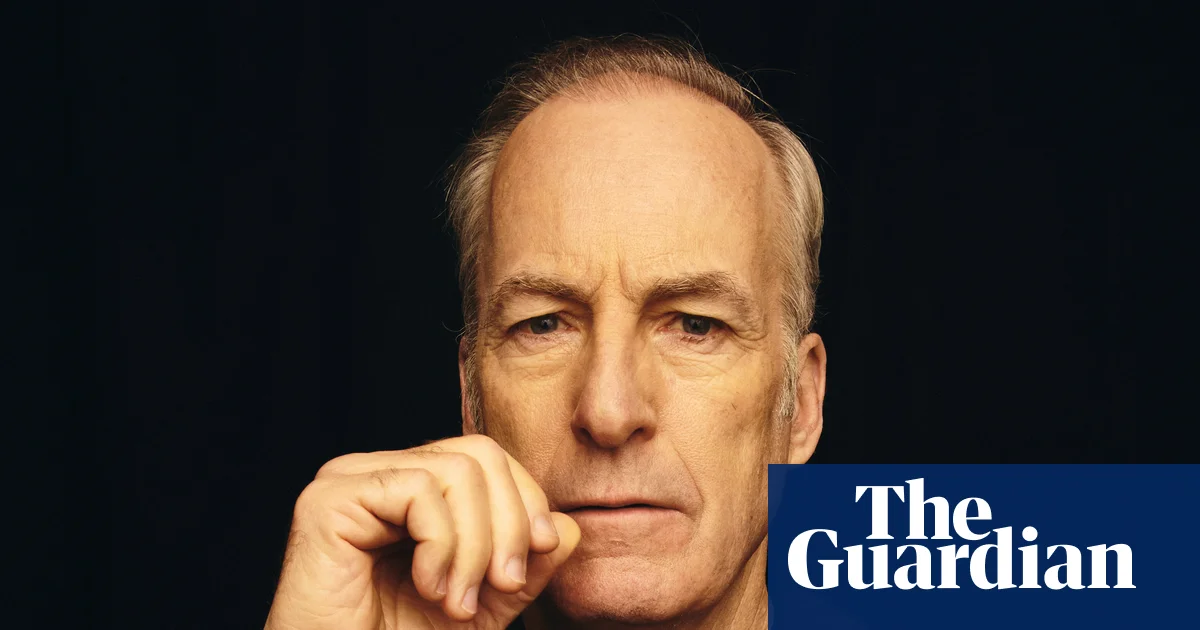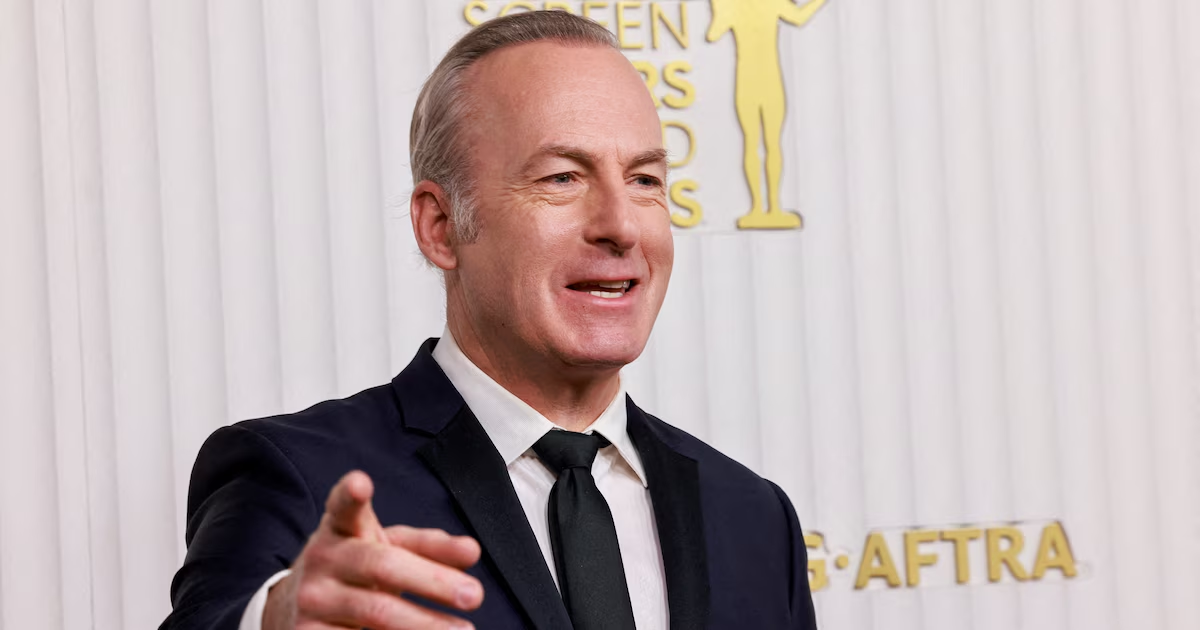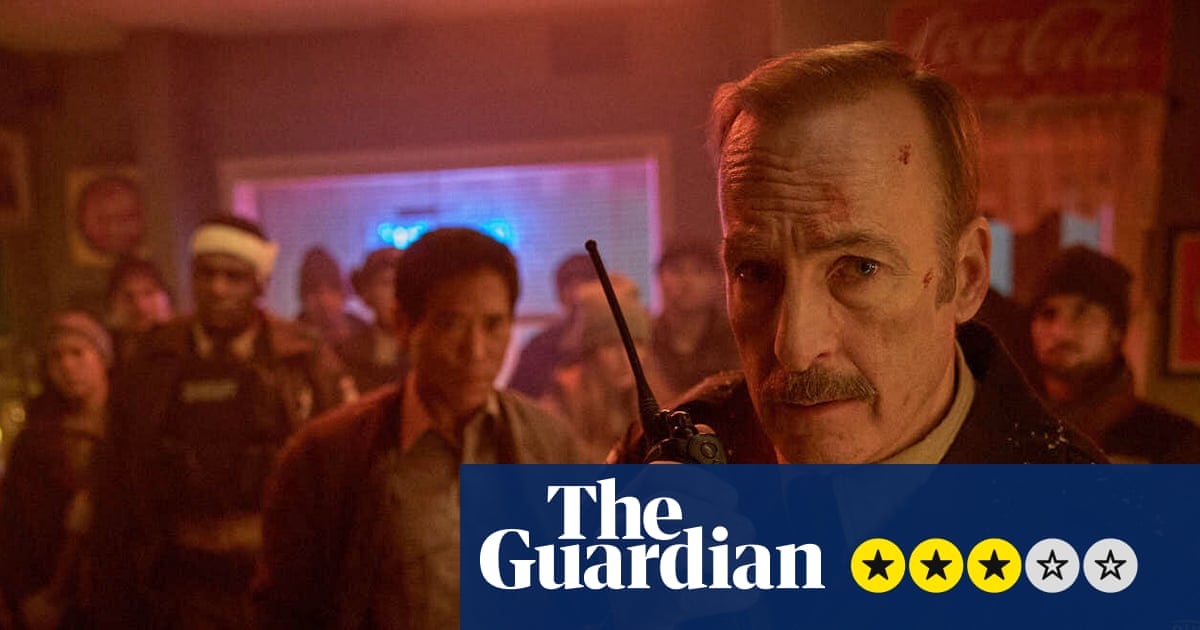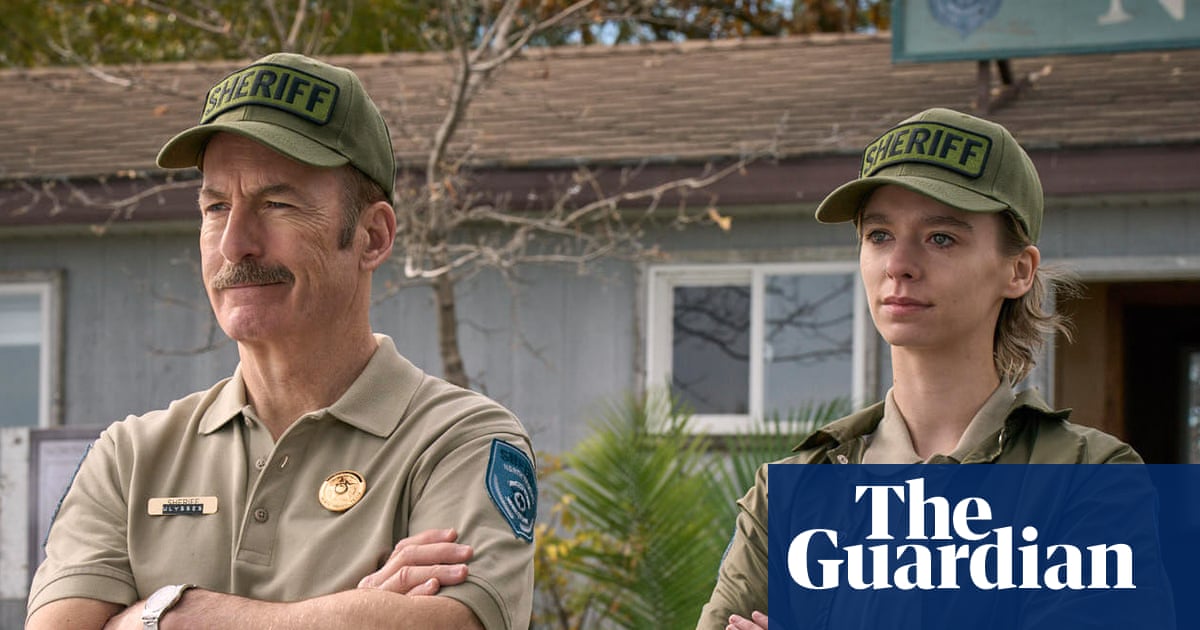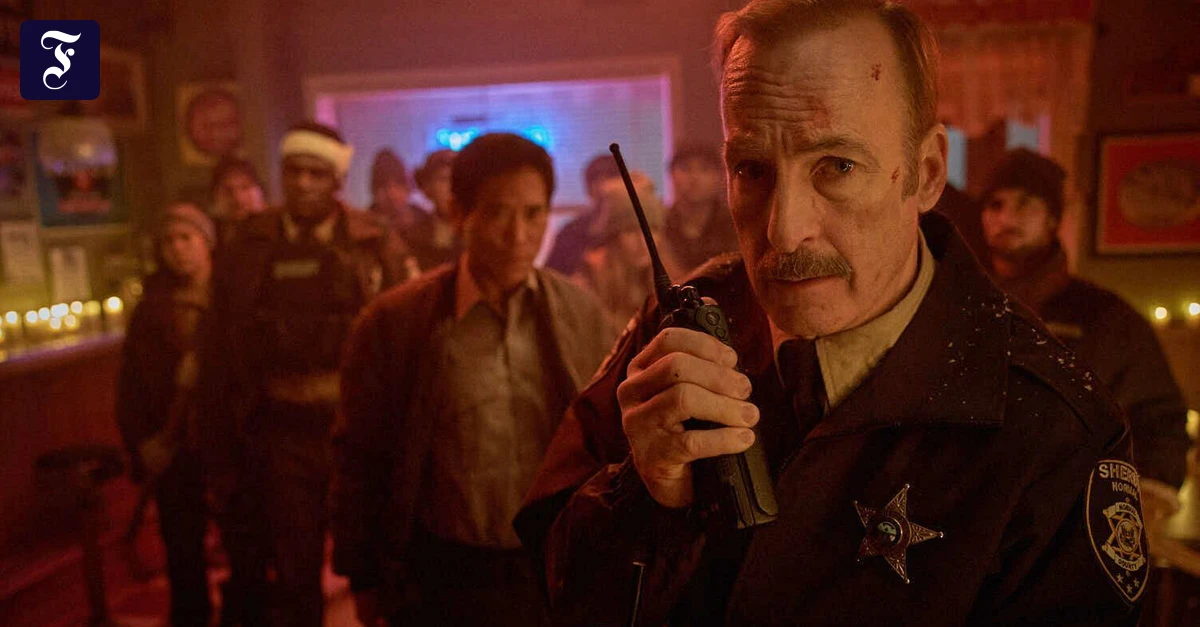
Bob Odenkirk, star of Better Call Saul and the outlandish action comedy Nobody, is gearing up for the ninth – possibly 10th – viewing of his new film. It’s brave territory for an actor who doesn’t like to see himself on screen.The feature is “just so much fun to watch with other people”, he tells me. “I’ve never made anything except Mr Show, a sketch comedy show that I did, that I personally was very happy to sit with an audience and watch. Everything else is more nerve-racking than it is fun. But this is just fun as hell.”Normal arrives in cinemas with a fine pedigree and the most hilariously violent scene ever set in a haberdashery. Based on a story co-written by Odenkirk, the film was directed by Ben Wheatley, the British innovator behind Kill List and A Field in England, and written by Derek Kolstad, the creator of John Wick. Odenkirk is comically unflappable as Ulysses Richardson, a weary interim sheriff who arrives in the tiny frozen town of Normal, Minnesota, hoping for six quiet weeks of paperwork and emotional recovery after a professional scandal and a broken marriage. Instead he discovers a townwide conspiracy involving the yakuza, corrupt locals led by Henry Winkler’s mayor, a heavily armed wool shop and enough illegal weaponry to facilitate a small revolution. What begins as a bungled bank robbery escalates into an hour-long bloodbath in which virtually every resident of Normal starts shooting at every other resident of Normal. Picture John Wick with more gunplay, more black humour and a higher body count.“It’s an independently financed film,” Odenkirk says. “And that’s how we were able to do that. I feel like we asked ourselves, ‘You know, should we go to a studio? There’s so much about it that a studio would like.’ “But a studio would have said, ‘Pick a lane.’ They would have said, ‘Guys, what are you? Are you a horror film? Are you a suspense film? Are you an action film? If you’re an action film, get the action going and keep it going. Get back to it.’ “This goes to broad comic violence, then it comes back down, then it goes back up. It’s wild.”Odenkirk is full of surprises. Most Hollywood actors guesting on genealogy shows feign amazement on discovering an ancestor who arrived on a coffin ship. Odenkirk, who has German and Irish Catholic heritage, basically won the PBS show Finding Your Roots by discovering that he’s an 11th cousin of the British monarch, King Charles.His career is similarly unpredictable. Having started as a comedy writer for Saturday Night Live, he has stealthily built an acting CV that features such variety as Wayne’s World II, Alexander Payne’s Nebraska and Greta Gerwig’s Little Women. He was in his 50s before Breaking Bad made him something of a household name.Breaking Bad: Bryan Cranston as Walter White and Bob Odenkirk as Saul Goodman. Photograph: Ursula Coyote/AMC “It’s better that way,” he says. “There’s a great book out right now by Lena Dunham called Famesick. She has a lot of issues that have nothing to do with her fame but with the degree of that fame. The way it hit her so strongly at such a young age. It was so difficult. It’s easier when you are older. You know what it is.”His journey to billboards and headlining roles has been very different. For years Odenkirk occupied one of the most noble jobs in show business: making other people look brilliant. At Saturday Night Live he wrote for the kind of performers – Chris Farley, Dana Carvey, Chris Rock – who could turn a good sketch into television history. At The Ben Stiller Show and The Larry Sanders Show he became part of a generation of comedy writers who quietly rewired American humour from the wings, sanding down punchlines until they sounded effortless. “I saw lots of very good friends become hugely famous: Janeane Garofalo, Ben Stiller,” he says. “I got to see it from up close, and I understood the way it was a thing that happens at you, not for you or with you. It just happens at you.”He remains circumspect about his current profile.Better Call Saul: Bob Odenkirk and Rhea Seehorn in season three. Photograph: Michele K Short/Netflix “I’m not famous,” he says. “Things I’ve worked on are famous. Breaking Bad is famous. Better Call Saul is famous. That’s not me. That’s a whole bunch of people. That’s a whole bunch of people’s work being appreciated. I’m in those projects, and I’m a focal point, but that’s not really me that’s being celebrated. And that’s kind of always true for everyone.”Odenkirk grew up in Naperville, near Chicago, the second of seven children in a loud, funny, volatile Catholic household where storytelling functioned as both entertainment and survival mechanism. His father, an alcoholic who left the family when Odenkirk was 12, remained a lasting source of anger and gravity in his work; his mother supplied warmth, devout faith and “a very good laugh”.As a teenager Odenkirk devoured Kerouac and dreamed of escaping suburbia for stranger, sharper worlds. By the time he arrived at Saturday Night Live, in the late 1980s, he had already developed the sensibility that would define his comedy: equal parts Midwestern eyerolling, intellectual silliness and suppressed Catholic guilt. “My dad was a difficult guy, but he was funny,” Odenkirk says. “He made wisecracks all the time. My mum was very funny. Then we also had seven kids in our family, so there was an audience, essentially, at dinner every night to tell stories to and do characters from your day. We had this built-in theatre to perform in called our kitchen.”He wishes Saturday Night Live had been that fun. By the time he crossed the continent to Los Angeles he found, bizarrely, that Hollywood offered a more civilised working environment.Normal: Bob Odenkirk and Jess McLeod. Photograph: Magnolia Pictures “It’s the way SNL is managed, which is to say it’s not managed,” he says. “It’s just, ‘Good luck. See you on Saturday. Hope there’s a show when we show up.’ It’s such an unbounded free-for-all. It makes it hard. “The longer you spend doing it, the less you freak out. ‘There’s a goddamn show on Saturday night. What are we doing? It’s Wednesday. We’ve got nothing.’ “I loved Hollywood. I worked on different TV shows. I drove home. I parked my car. I walked across a little lawn to a little house that I lived in.”[ Better Call Saul’s Bob Odenkirk: ‘I can go from zero to 80 on the rage scale’Opens in new window ]Jimmy McGill, the hustling small-time lawyer who gradually transforms into Saul Goodman across Breaking Bad and Better Call Saul, feels in many ways like the role Odenkirk had been unconsciously preparing for all along. Jimmy is funny, fast-talking and deeply performative, but beneath the seat-of-pants charisma lurks something darker: shame, self-deceit and a pathological need for acceptance.Goodman was originally written as a four-episode arc in the second season of Breaking Bad. Vince Gilligan, its showrunner, and Peter Gould, a key writer, were so impressed that they promoted the character and gave him a spin-off series.“Breaking Bad was a show that I was surprised they kept on the air,” Odenkirk says. “It wasn’t a success. The fame of that show grew exponentially. And then after three seasons we’re on Netflix, and people had binged all three of them. When that fourth season came on, it was a cultural phenomenon. And a joy to be a part of.”Better Call Saul was nominated for 53 Emmys and earned Odenkirk a star on the Hollywood Walk of Fame. But he was not unhappy to wave goodbye to his most successful role to date.“It wasn’t like I was running from him, but I got into this business, it’s pretty apparent from my resumé, to do different things next time,” he says. “So right now I’m working on a sitcom show that my son wrote. I’m working on a play with my friend David Cross. We’re working on a children’s book with my daughter. “I’m always wanting to do something that is fundamentally a fair number of degrees away from whatever I just did. I want that variety. It was hard to be in that guy for as long as we needed to.”Odenkirk was hospitalised in Albuquerque in 2021, after having a heart attack on the set of the sixth season of Better Call Saul. Crew members and medical staff performed CPR and used a defibrillator before he was taken to hospital.“I exercised a lot,” he says. “And the fact that I exercised as much as I did meant that the tributaries to my heart were a little bit enlarged. And that meant that the CPR fed my heart.“Talking about the heart attack, people say, ‘Well, have you talked about it enough?’ And I have. But if you want to hear anything of value to you in my story, it’s that: get to work. If you’re doing cardio, if you’re doing exercise, you’re strengthening everything around your heart, so that if you have an incident you’ll survive it better than you would otherwise.”[ Saul great, man: A potent finale brings the Breaking Bad universe to a closeOpens in new window ]Odenkirk’s late emergence as a movie action hero adds another plot twist to his career. In 2020 he began training with the martial artist and stuntman Daniel Bernhardt, another John Wick alumnus, to prepare for Nobody. For Normal, Odenkirk performed most of his own stunts.“If you told me I’d be doing this 10 years ago, I would have thought you are out of your freaking mind,” he says. “But then it occurred to me that an action character never quits. He’s got his heart, he’s chasing his goals, he’s trying to protect the things he loves, and he keeps getting knocked down, sometimes physically knocked down. “That’s an action character, even when he doesn’t fight. And I’m willing to learn to fight.”Normal is in cinemas now
Bob Odenkirk: ‘I saw lots of friends become hugely famous. It happens at you, not for you or with you’
The star of Normal was in his 50s when Breaking Bad made him a household name. ‘It’s better that way,’ he says
1,669 words~8 min read