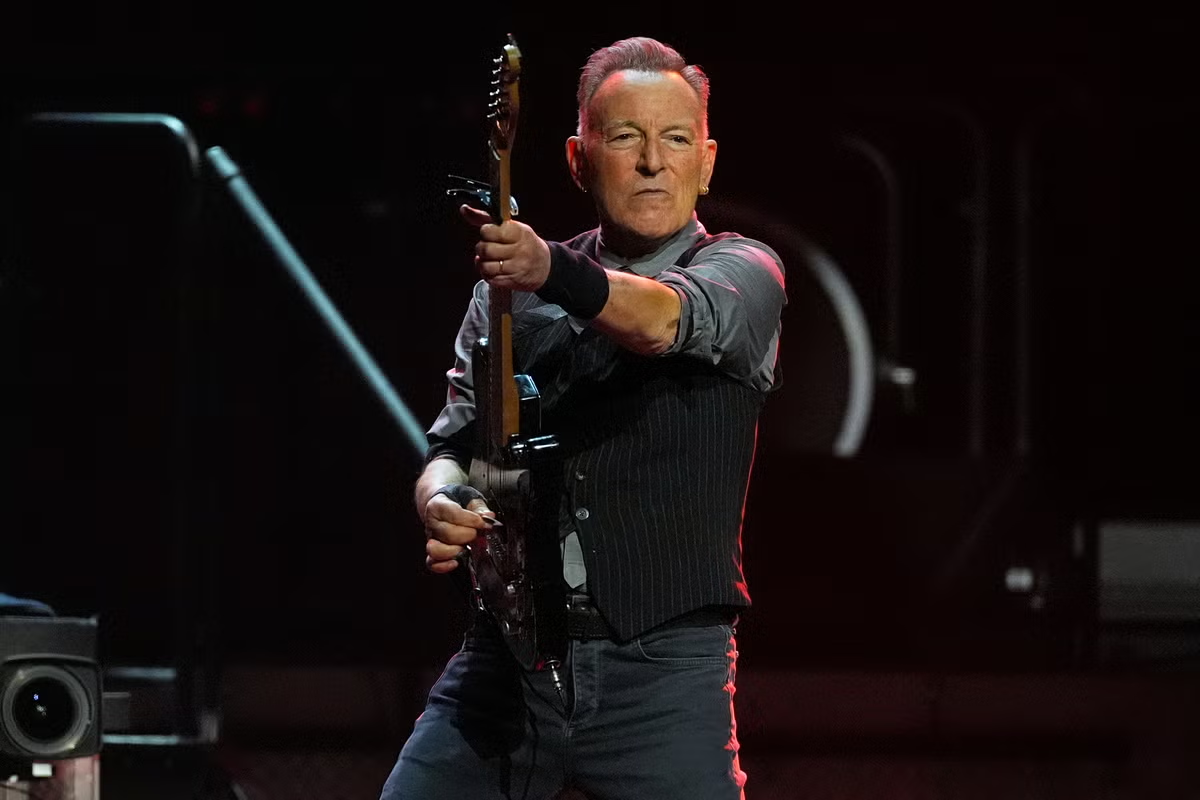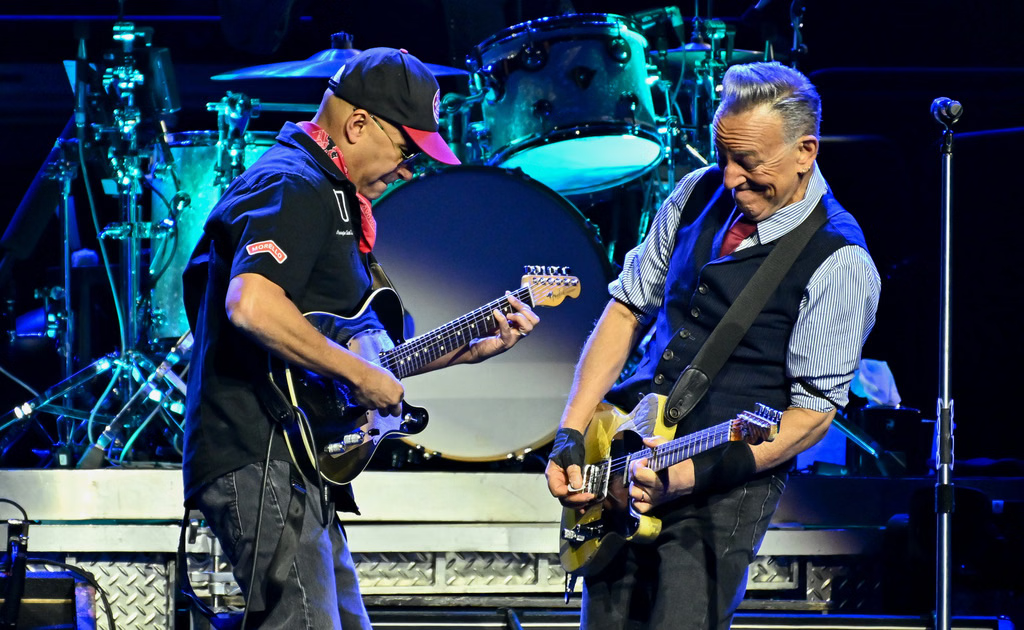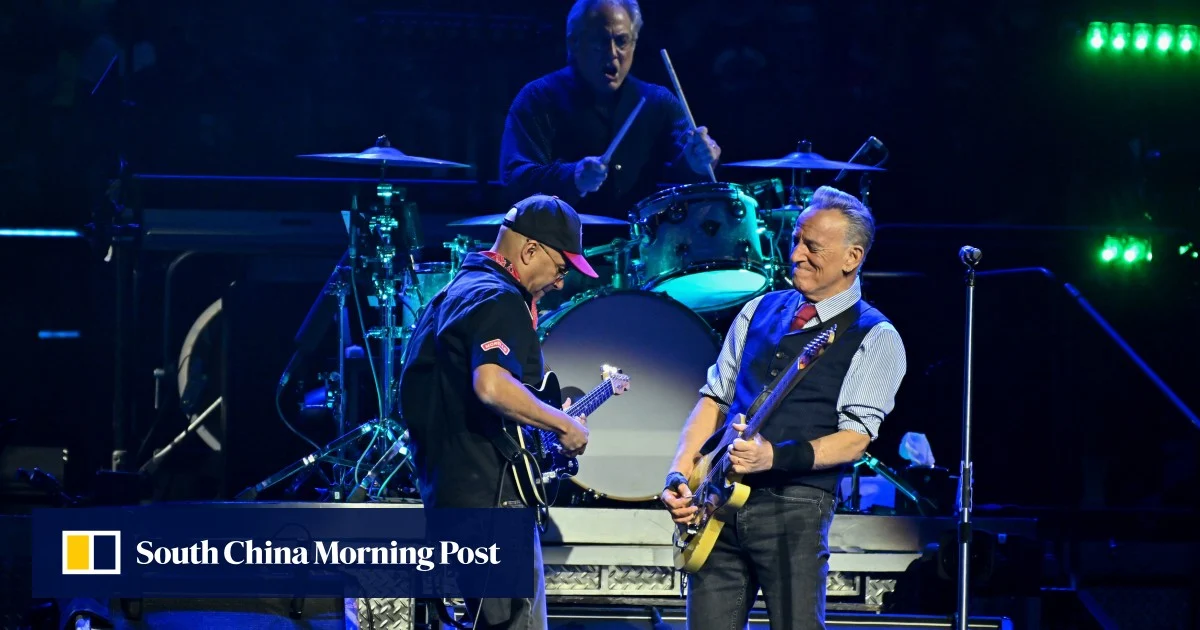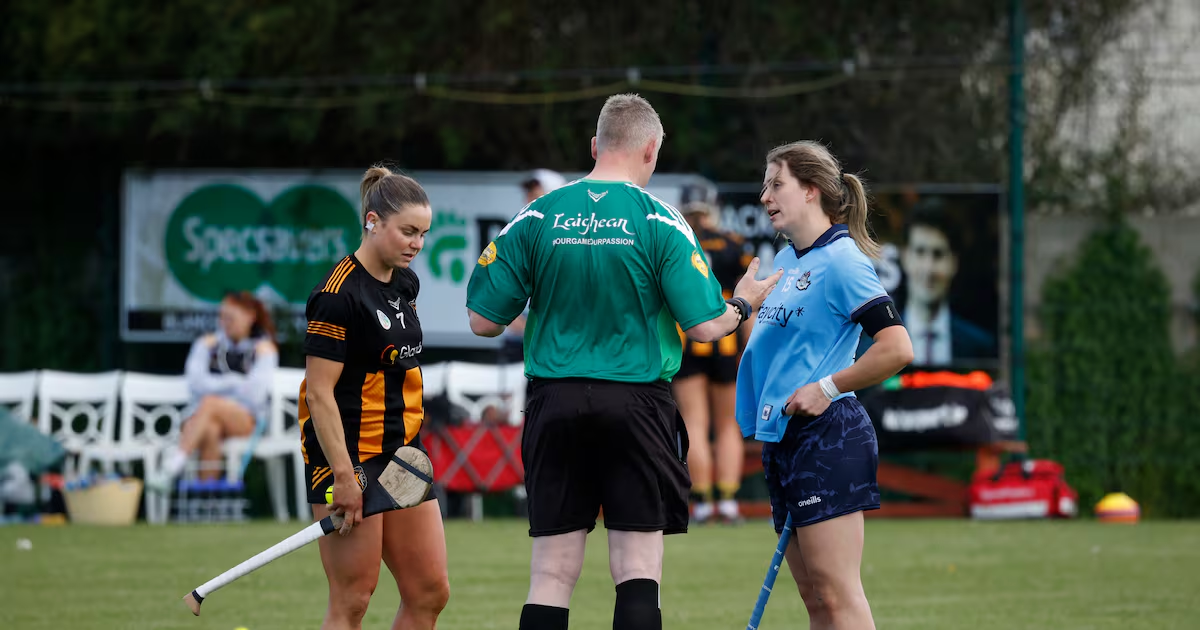
On his Land of Hope and Dreams Tour, Bruce Springsteen does a cover of Clampdown, The Clash’s anti-establishment song. Tom Morello, the American singer-songwriter and political activist, is a guest on the show and on that number, he performs a duet with Springsteen.“Let fury have the hour,” Morello shouts. “Anger can be power.”On the next line, Springsteen joins in.“Do you know that you can use it?”Donald Trump’s malevolent presidency has unleashed the protester in Springsteen and in the three-hour show, Joe Strummer’s lines are the heart of the message, nearly 50 years after they were first performed. All great lyrics travel through time and space.In our corner of the universe, it is a year since the skorts farrago. Have you thought about it since? Around this time 12 months ago, the Camogie Association convened a special congress to resolve an issue that, for years, had driven a wedge between the players and camogie’s establishment.The players demanded the simple right to choose what they wore on the pitch and after a fortnight or more of militancy, the establishment caved in. Only 2 per cent of delegates to special congress opposed the motion for change, even though more than 50 per cent of them had opposed it two years earlier. What changed their minds? A cold wind of bolshiness and public pressure.It was far more than a sports story, though. People who couldn’t care less about the game were inflamed by the notion of women being told what to wear. It was devoured by radio phone-in shows, took up residence on social media and crossed over into mainstream news. And because it had universal themes, it also had reach.Sara O’Sullivan, associate professor of sociology in UCD, included the story in a module she teaches on the sociology of gender. Most of the students in that class, she says, had no interest in sport but were fascinated by the layers of the story. In the assignment they were given, some of them related it to the dress codes they were forced to observe in school: “A different institutional setting,” says O’Sullivan, “but the same kind of policing.”The story travelled far from home, holding up a cracked mirror to us as it circled the globe. “In a country that prides itself on contemporary, progressive policies, the exhaustive debate over camogie apparel has needled some of Ireland’s most entrenched underbellies,” wrote Ali Watkins in The New York Times. “Camogie was one of the last major sports in the Western world to force its athletes to abide by a gendered dress code.”The Female Athlete Project, an Australian podcast hosted by Olympic gold medallist Chloe Dalton and with over 300,000 subscribers, covered the story extensively as it unfolded. The Financial Times in London had planned to run it as a midweek column but were so enamoured of the story that they held it for their weekend edition, where it would find a wider readership. Like many other observers, the reporter Jude Webber searched for context far beyond the four white lines of a camogie pitch.“Irish voters last year rejected a referendum to rephrase an article in the constitution declaring that a woman’s place is in the home,” wrote Webber, “raising the question of how deep progressive attitudes really run [in Ireland].Waterford's Keeley Corbett Barry and Caoimhe Stakelum of Tipperary during Saturday's Munster Senior Camogie Championship final at Semple Stadium, Tipperary. Photograph: Laszlo Geczo/Inpho “Ireland’s skort victory may inspire other athletes around the world battling uncomfortable or over-sexualised kits. But the fight is unlikely to have enhanced the ”positive awareness of Ireland overseas" – one of the cornerstones of a new national sports diplomacy strategy.”Once it was over, the players just wanted the story to go away. A year later, you wonder what difference it made outside of the outcome it delivered? The searing attention that camogie received for two or three weeks didn’t lead to any significant uptick in crowds for intercounty matches or attention in the media. Everything returned to the mean.Aisling Maher, the Dublin camogie player, was an eloquent and tireless advocate for the players during the skorts controversy and on other issues over the years. In her role as co-chair of the Gaelic Players Association (GPA), she reflected on it in the GPA’s annual report last week.“What began as a question of choice and comfort became a powerful expression of member voice,” she wrote. “Players articulated clearly what they needed and why it mattered. Their unity ensured the issue could not be overlooked.”For camogie players, the skorts affair wasn’t their first rodeo. Since the turn of the decade, it was the third time they felt forced into conflict with the game’s leadership. The first row was over the fixtures calendar, the second was over equality of funding with male players.That funding campaign led to sit-down protests before matches that escalated over a five-week period in the summer of 2023 until the Camogie Association, and the LGFA, agreed to a players’ charter for expenses and other supports. Ultimately, the success of that protest in 2023 probably emboldened the stance they took on skorts.The fighting, though, isn’t over. The week before last, two provincial camogie finals were moved to a Friday night, at short notice and without consultation with the players. Maher’s Dublin team were involved in the rescheduled Leinster final in Dr Cullen Park which, in her case, meant basing herself in a hotel room in Carlow to do her day’s work. In the men’s game, something like this would be inconceivable.Remember, too, the Munster camogie final was postponed at a day’s notice this time last year and was never rescheduled.The players’ charter that was agreed for the start of the 2024 season comes to an end this year. Negotiations on a new agreement have not commenced yet. As it stands, male players receive 70 cent a mile in travel expenses while female players receive half that amount. They both get a €20 weekly allowance for food and supplements, but the male players also get an annual Government grant of over €1,600.Government funding is the same for the male and female games, but in the case of camogie and ladies football, it is being used to pay expenses rather than being given as a grant to the players.Addressing that flagrant inequality is the next fight for female players. The skorts controversy clarified their power.Joe Strummer had it right.
Denis Walsh: Skorts controversy confirmed female players have power. Now to use it
Late fixture changes and absence of a grant only two examples of enduring inequalities
1,063 words~5 min read