
“The Door To Doom”On Saturday, Zero Hedge highlighted a note by Bank of America (BAC 0.00%↑) CIO Michael Hartnett (“‘Door To Doom Has Opened’ As Hartnett Spots ‘Obvious Echo’ To 1999 And 2009”). Hartnett’s argument, in short, is that the “door to doom” has opened because long-end Treasury yields have broken above key levels, inflation is still running hot, and stocks—especially tech and semiconductors—are behaving like late-stage bubble assets.Hartnett sees echoes of 1999 and 2009 in the way stocks and bond yields are rising together, but his “Door To Doom” phrasing is reminiscent of an ‘80s horror movie.Hartnett also points to semiconductor stocks trading far above their 200-day moving averages, market concentration, collapsing volatility, and political pressure from inflation as warning signs that the current boom loop may be close to exhaustion.Our view: the AI buildout may produce pullbacks and crowded trades, but the valuation picture, earnings base, and deflationary potential of the technology make this setup very different from 1999.The AI Boom Isn’t The Dot-Com BubbleThe comparison breaks down where it matters most: valuation, earnings, and the real-world consequences of the technology being built.Start With ValuationThe cleanest rebuttal to the “this is 1999” argument is Micron (MU 0.00%↑) .Micron is one of the key memory suppliers behind the AI buildout. High-bandwidth memory is essential for AI accelerators, and memory demand has tightened as AI infrastructure spending has grown.And yet Micron’s valuation looks nothing like dot-com-era Cisco Systems (CSCO 0.00%↑).Micron recently traded at a single-digit forward P/E, with some current estimates putting it around 7x–8x forward earnings.Now compare that with Cisco near the top of the dot-com bubble. In January 2000, Forbes noted that Wall Street expected Cisco to earn $0.99 per share for the fiscal year ending July 2000. At $108 per share, that put Cisco at about 109 times forward earnings.Cisco 2000 was a triple-digit forward-P/E stock priced as if the future had already arrived. Micron today is a key AI-infrastructure supplier trading at a fraction of that valuation.If you use the PEG ratio (Price/Earnings divided by Growth rate), famously popularized by Peter Lynch, Micron looks even cheaper. Lynch considered stocks with PEG ratios of 1 to be fairly valued.
Related reading
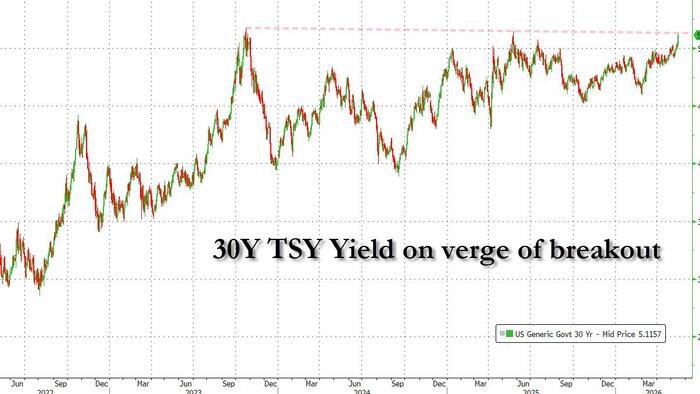
"Door To Doom Has Opened" As Hartnett Spots "Obvious Echo" To 1999 And 2009
"above 4% on CPI where risk assets get twitchy...past 100 years once CPI crosses 4% on average SPX -4% next 3 months, -7% next 6…

It may be time to worry like it’s 1999 | CNN Business
Eye-popping investments in tech infrastructure. Lofty predictions for workforce transformation. Heavy speculation in financial…

BofA's Hartnett Sounds Bubble Alarm: His Post-AI Playbook - State Street SPDR…
BofA's Michael Hartnett pushed his Bull & Bear gauge to a sell signal and laid out the post-bubble trade he says has worked since…
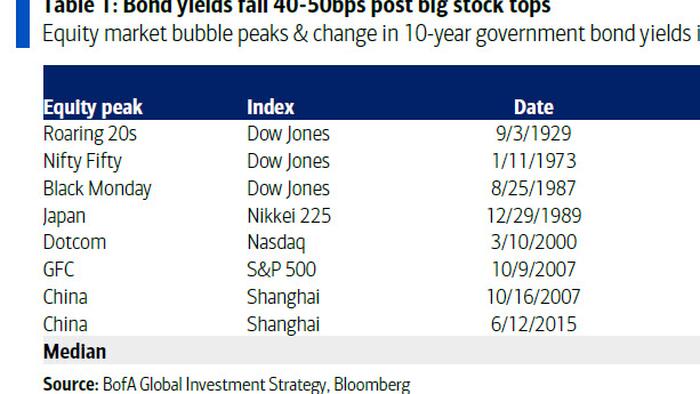
Hartnett: What To Trade When This Bubble Bursts
The post-bubble investor roadmap is long bonds (10-year yield down ~50bps in 6 months after market tops), and long defensives,…

The 'Ghosts of 2007' and the graybeard 'Nifty 50': BofA looks at the rare…
Conditions are like they were in 2007, or in the late 1990s, depending on how you look at the Fed raising rates during rising…

Bulls and bears both believe this could be 1999 all over again. Embrace it or…
We are not guaranteed a close rerun of the 1999-2000 extremes. Just because things got crazier then doesn't mean that's ahead of…