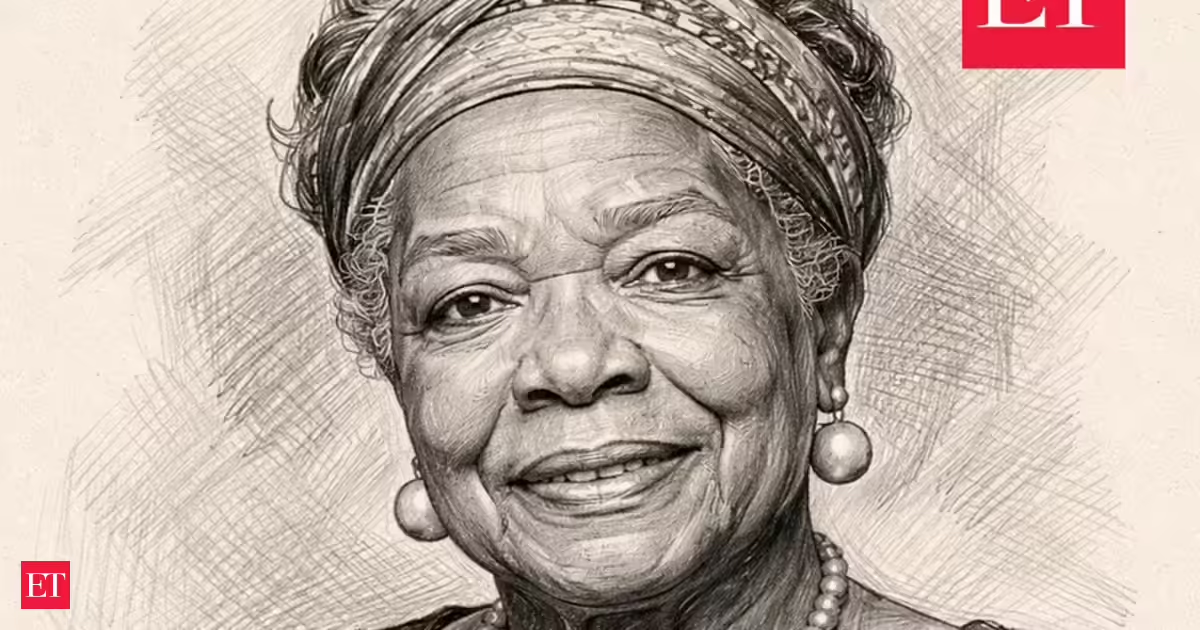
Quote of the day by Mae West highlights a famous statement by the American actor and writer Mae West. The quote says, “Love conquers all things except poverty and toothache.” The line connects love, relationships, marriage, wealth, peace and pain in one message. This explainer shares the meaning of the quote, the relevance in modern life, and the life journey of Mae West. It also explains how her career in theatre, film and writing shaped her views. The story provides details about her works, achievements, marriages and legacy. The aim is to help readers understand the deeper message behind the quote and why it still matters today.The quote says: “Love conquers all things except poverty and toothache.”The line connects emotion with reality. Love can support people during hard times. However, it cannot remove financial problems or physical pain. The quote mixes humour and life experience.Quote of the day by Mae West focuses on a message about love, wealth, relationships, marriage, peace and pain. The quote states that love can solve many problems but cannot remove poverty and toothache. This statement mixes humour with truth. It reminds people that emotions matter but real life problems also exist.You Might Also Like:Quote meaning and relevanceThe quote shows the limits of love. Love helps in relationships and marriage. It brings peace and emotional support. But money problems and health issues require practical solutions. The message is relevant today. Many people face financial pressure and health challenges. The quote reminds readers to balance emotions with real life responsibilities. Mae West early life and entry into performanceMae West was born Mary Jane West on August 17, 1893, in Brooklyn, New York, United States. She began performing with a Brooklyn stock company around 1901. By 1907, she joined the national vaudeville circuit with Frank Wallace.In 1911, she made her Broadway debut in the revue A la Broadway as a singer and acrobatic dancer. For about fifteen years, she moved between vaudeville, Broadway shows and nightclub acts. This long stage career helped her develop her style and voice.You Might Also Like:Mae West writing, controversy and rise to fameIn 1926, Mae West started writing, producing and starring in her own plays on Broadway. Her first major play was Sex in 1926. In this play, she performed the role of a prostitute. The performance caused public reaction. She received an eight-day jail sentence for corrupting the morals of youth. The incident made her a national figure.Her later plays Diamond Lil (1928) and The Constant Sinner (1931) also gained success. Her scripts often questioned social attitudes about sex and relationships. Her stage personality remained consistent across her work.Move to Hollywood and film successIn 1932, Mae West moved to Hollywood. Her first film was Night After Night in 1932. The film showed her style of humour and writing. Her film She Done Him Wrong in 1933 was based on Diamond Lil. The film became known for her famous line, “Why don’t you come up sometime and see me?” She then wrote and acted in I’m No Angel (1933), Belle of the Nineties (1934), and Klondike Annie (1936). These films increased her popularity. Later, she acted with W.C. Fields in My Little Chickadee (1940). During World War II, Allied soldiers called inflatable life jackets “Mae Wests” in reference to her figure.You Might Also Like:Mae West later career and autobiographyIn the 1940s and 1950s, Mae West returned to stage shows. She appeared on Broadway in Catherine Was Great (1944). Her films gained renewed attention in the 1960s. She appeared in Myra Breckinridge (1970) and Sextette (1978). Her autobiography Goodness Had Nothing to Do with It was published in 1959. The title reflected her humour and personality.Life lessons from the quoteLove supports people in relationships and marriage.Wealth and health need planning and action.Peace comes from balance between emotions and reality.Pain and financial stress need practical solutions.Humour helps people accept life challenges.The quote encourages people to respect love while also facing real world problems.Legacy of Mae WestMae West died on November 22, 1980, in Los Angeles, California, at age 87. She left a legacy in theatre, film and writing. Her works include Belle of the Nineties, Diamond Lil, I’m No Angel, Klondike Annie, My Little Chickadee, Sex, and Sextette. She was married to Guido Deiro and Frank Wallace. Her personality and writing style influenced entertainment and popular culture.
Quote of the day by Mae West: “Love conquers all things except poverty and...” Life lessons on relationships, marriage, wealth, peace and pain by popular American actor
Quote of the day by Mae West shares a short line about love, wealth, relationships, marriage, peace and pain. The quote says love conquers many problems but not poverty and toothache. This explainer looks at the meaning, relevance, and life lessons from the quote. It also explains the life and career of Mae West and how her words connect with real life today.
722 words~3 min read