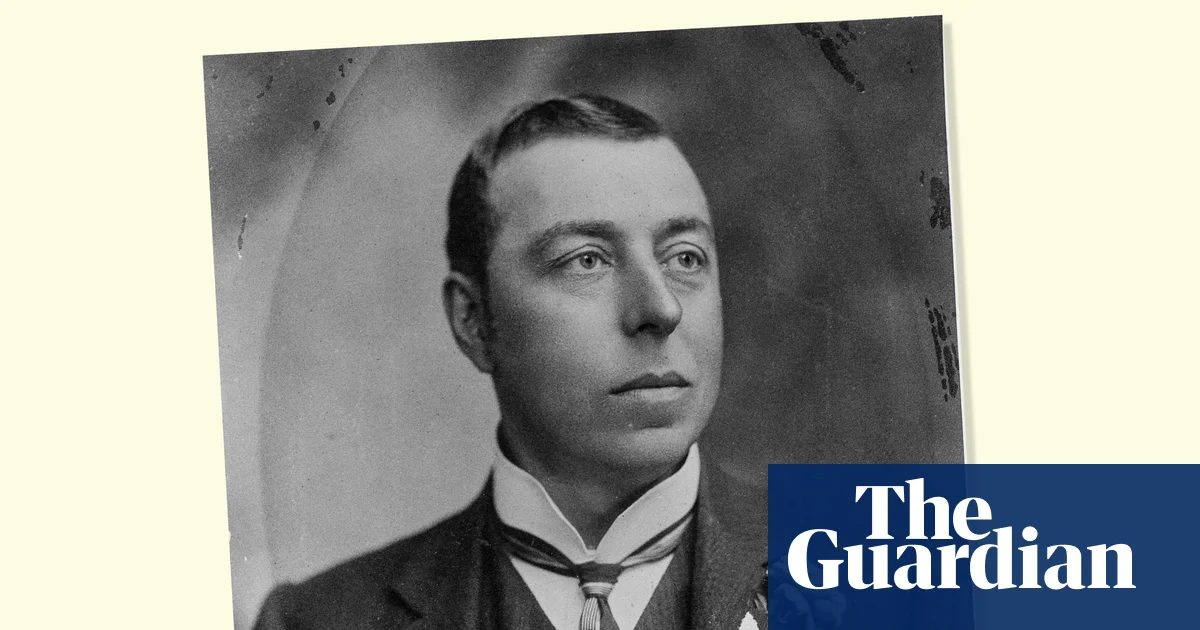
In June 1896, a tall, well-dressed man arrived at the supreme court of New South Wales in Sydney. Flanked by his barristers, Richard Meagher was coming to play his part in the final scenes of a criminal and political scandal that had transfixed the Australian colonies for the past year – the Dean case.The outcome of this hearing was all but pre-determined. Meagher was about to be exiled from the profession he had spent years toiling to enter, that had given him fame and wealth – a profession that he had lately brought into disgrace.The path to that disgrace began in March 1895, when solicitor Meagher defended a Sydney ferryman, George Dean, from charges of attempting to poison his wife, Mary. At trial, Meagher claimed that Dean was being stitched up by Mary and her mother, Caroline Seymour, whom he linked to prostitution and criminality. The jury convicted Dean, but the public outside the court was more doubtful. As disquiet over the verdict stirred, Meagher visited Dean in jail and learned that he was, indeed, guilty.Nevertheless, Meagher decided to fan the public disquiet into a campaign to overturn the verdict. He lied to newspapers and community leaders that Dean was innocent. He retailed dubious information in public hearings, playing on latent gender prejudices and antipathy toward the judiciary. And he painted Dean as a martyr: “What has happened and is happening to George Dean may happen to any innocent man in this community.”Within three weeks, his campaign had become so enormous that the government appointed a royal commission to inquire into the case.Richard Denis Meagher in lord mayoral robes. Photograph: City of SydneyRepresenting Dean before the royal commission, Meagher doubled down on his claims against Mary Dean and Caroline Seymour. This time, he was successful – the women’s evidence was dismissed, Dean was declared innocent and set free, and Meagher was acclaimed as a hero. When elections were called for the following month, Meagher won a seat in parliament.Then word of Dean’s guilt emerged. With the public campaign and royal commission revealed to have been conducted on a fraudulent basis, Meagher’s fall was swift.He was forced to resign his seat, then convicted for conspiring to pervert the course of justice. While the conviction was soon quashed, Meagher’s disgrace was unrelieved.Now, on that first day of winter in 1896, he received the sole remaining penalty that the court could hand out: Meagher’s name would be removed from the roll of solicitors.“I leave this court with clean and honourable hands,” he defiantly told the judges, “and need only add that time will reveal to your Honours that you have unconsciously done me an injustice.”Few at the time believed Meagher. The Dean case had been full of twists and turns: “A two-volume novel,” Mark Twain had dubbed it.Meagher was not deterred. He set out on a 25-year quest to rehabilitate his name. He would, at the same time, rise to positions of power and influence, sit in the parliament, help shepherd NSW into federation – and the Dean case would be rewritten to become part of the narrative that helped him rise again.Researching Meagher’s fall and rise, I was repeatedly struck by the parallels with many other public figures since – men, for the most part, who have been disgraced when their immoral or unlawful actions were brought to light.The first step in rehabilitation is distorting legal judgments and outcomes into simple conclusions. For Meagher, his quashed conviction for conspiring to pervert the course of justice was easy to explain: he talked of it as vindication. The fact that his conviction was overturned because of a technicality – the use of information protected under parliamentary privilege – was immaterial.Next is claiming victimhood. Historian Anne Curthoys has commented there is a “special charge” associated with the status of victim in Australia. Within weeks of his punishment, Meagher drew on that charge to portray himself as a scapegoat.He played on his alleged victimhood again when, in 1898, he decided to attempt a return to parliament. His successful pitch to voters was that they were victims of a neglectful government who needed a champion; that he understood their plight because he was a victim, too; but that he was also a fighter and would fight on their behalf to relieve their plight.Meagher’s rehabilitation was aided by good deeds done elsewhere. Meagher became a key player in ensuring NSW joined the federation of Australia’s colonies. This softened the regard of the political elite who were desperate to bring federation about. When voters gave federation a yes vote, newspapers noted that Meagher’s efforts had won “forgiveness for [his] past infirmities”.Left friendless after the Dean case, Meagher afterward cultivated supporters wherever he could. He probably gained a few admirers when, in the middle of Pitt Street, he horsewhipped a journalist hated by many in NSW’s elite. More notable allies followed over the years – including a bevy of prime ministers in Edmund Barton, George Reid, Chris Watson and Billy Hughes.He also claimed markers of status. With seats in state parliament and local government, Meagher joined the Labor party in 1909 and climbed through its ranks, becoming Speaker in 1913 and lord mayor of Sydney soon after. He was appointed to the legislative council and granted the title of Honourable.Yet, throughout, Meagher continued to portray himself as a victim. The contradiction between that narrative and his high political positions was often noted and even central to his popularity. “Although he has suffered reverses, and received the censure of people in high places,” observed the Daily Telegraph, “a strong current of sympathy runs for him among his own folk. And Mr Meagher adds to the ability of swaying a crowd the capacity of wearing a martyr’s crown with consummate humility.”Time itself helped to rehabilitate his reputation; Meagher would dismiss past scandals as irrelevant and any lingering censure as unjust punishment. Meagher claimed he had endured “years of suffering” and allies followed suit. As the archbishop of Sydney would say of Meagher, “There was no moral fault with him.” Photograph: ScribeBut this reputational resurrection did not go unchallenged. Two governors of NSW opposed Meagher, one writing: “This gentleman’s past and reputation are of the worst description”. The NSW supreme court refused Meagher’s applications to go back on the solicitors’ roll four times but in 1909 it gave way – only for the high court to intervene and remove him again. Both courts rejected two more applications in 1917 and 1920. One judge drew attention to Meagher’s lack of contrition and his inability to recognise his moral errors, adding that “success in politics is no evidence of a trustworthiness of character”.Eventually, his efforts were successful: an act of parliament in 1920 overrode the courts and reinstalled him on the roll of solicitors.The resonances of Meagher’s story endure today in our modern politics: formerly disgraced figures tread the public stage, spouting the same lines and taking on the same poses – as victims and wronged innocents who should be (and are) rehabilitated.Such figures play on the public’s own sense of neglect and disenfranchisement, promising to address it when given the chance. But self-interest has a way of, almost always, ultimately winning out.
Sway a crowd, wear a martyr’s crown: how one NSW politician went from scandal to political success – and wrote a playbook still used today
At the turn of last century, an ambitious young solicitor caused a scandal in a high-profile murder case. Years later he was a political leader in a new nation. How did he do it?
1,198 words~5 min read