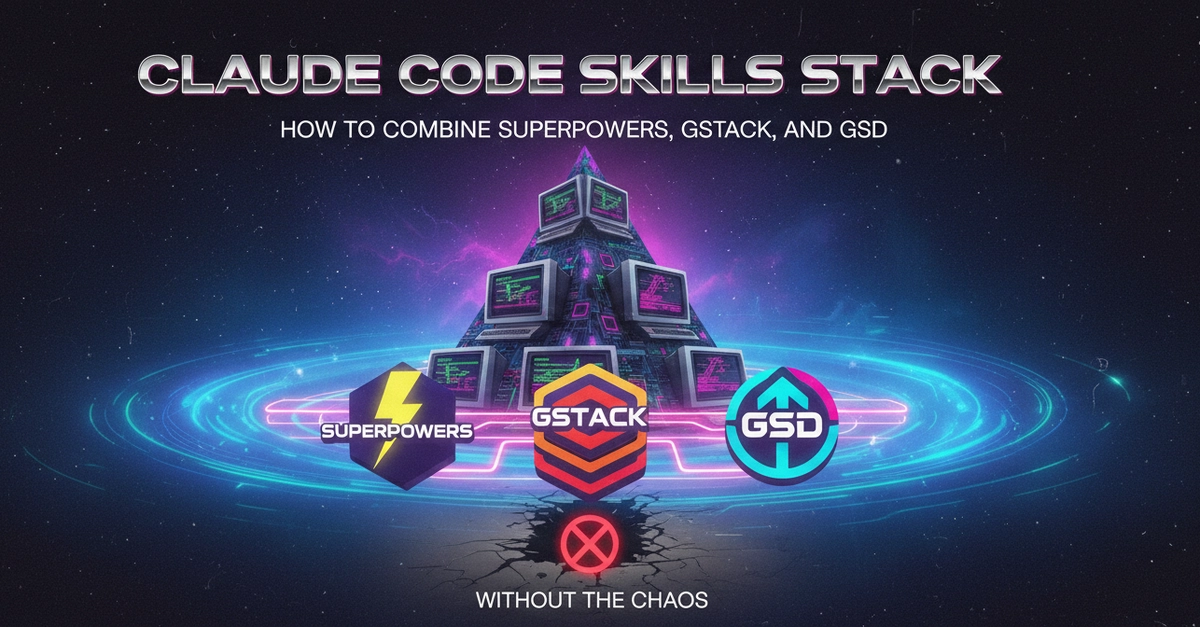
One article to compare the frameworks, see where they overlap, and land on a stable three-layer practice.
Introduction
Claude Code has quickly become one of the most widely adopted AI coding tools. Individual developers, startups, and large engineering teams alike have integrated it into their daily workflows—writing production code, reviewing pull requests, debugging, and shipping features at a pace that was hard to imagine a year ago. As usage has scaled, so has the ecosystem around it. Claude Skills—composable, auto-invoked instruction sets that shape how the agent plans, builds, and verifies—have emerged as one of the most important extension points in Claude Code. They let you go beyond one-off prompts and encode repeatable workflows directly into the agent's behavior. In fact, Anthropic has doubled down on this direction: the latest version of Claude Code consolidates the previously separate "slash commands" and "skills" systems into a single, unified skills format, signaling that skills are now the canonical way to extend the agent.
With Skills now central to the experience, the community has rallied around a handful of open-source frameworks that package best practices into ready-made skill sets. The two most discussed stacks are Superpowers and gstack. Installing both sounds easy; in practice they can conflict, and piling frameworks on without a plan often makes the setup less stable, not more. So where do they differ, and how should you choose?