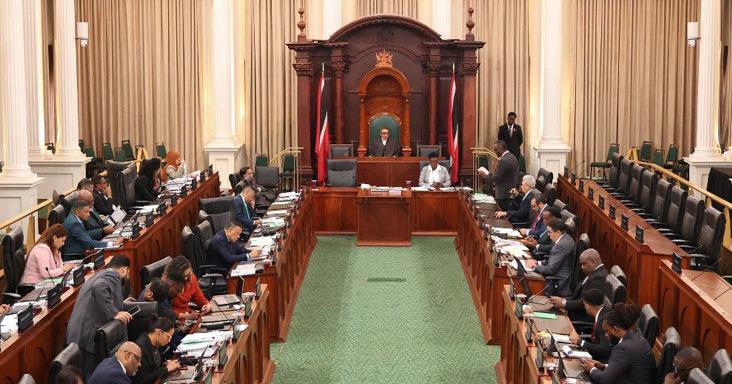
While Trinidad and Tobago often describes itself as a tolerant society, some LGBTQI+ groups and advocates argue that the language and behaviour seen even within Parliament suggest otherwise.Advocates point to repeated taunts and insults directed at male politicians, including insinuations about their sexuality and the deliberate use of feminine pronouns as insults, as evidence that homophobia and gender-based ridicule remain deeply rooted in the country’s political culture.
Community outreach: Caiso director Angelique V Nixon, back row, centre; Chinyere Brown, second from left; and Johannah-Rae Reyes, left, with other members of the Caiso Wholeness and Justice Team during the launch of the Growing Spaces initiative at the Kapok Hotel, Port of Spain.
The term LGBTQI+ refers to lesbian, gay, bisexual, transgender, queer/questioning and intersex people, with the plus sign recognising other gender identities and sexual orientations.Speaking on homophobic remarks and gender-based insults which continue to be witnessed even in spaces such as Parliament and on social media, CAISO: Sex and Gender Justice project and community outreach officer, Johannah-Rae Reyes, said such behaviour reflected wider societal problems.“Homophobia, transphobia, and biphobia is pervasive, and so is gender-based bullying and sexual harassment. No one is safe, especially LGBTQI+ people, women, and persons who are gender non-conforming. This is why we need to have serious conversations about stigma and discrimination and how these forms of violence are connected. No one should be bullied in their workplace for any reason,” Reyes said recently.Reyes added: “The Parliament is a serious place. Many of our ancestors fought and died so we can now take charge of our own affairs, and we’re seeing too many instances of disrespect and personal attacks from both sides of the House happening in Parliament and on social media. Our leaders need to take leadership more seriously. They need to understand the impact this kind of discourse has on society.”Social protectionsReyes said while T&T was often described as “tolerant”, experiences varied widely.“Trinidad and Tobago is very diverse and LGBTQI+ people get a range of responses, from tolerance and acceptance to indifference all the way to hate. There is a lot of misinformation and pressure from religious entities to maintain the status quo of harmful gender and sexual norms and exclude people, especially LGBTQI+ people. But every day we meet people who are willing to bridge the gaps and find understanding. There is hope here.”On the issue of safety, Reyes said experiences differed depending on class, geography and support systems.“It depends on a few other factors—if you’re queer, but you have money and status and live in a city or a town, then there are social protections that would buffer one person from a lot of the challenges that someone who is working class and from a rural area would experience.“One person might be working class, but they have the acceptance and support of their family and community—that person would have a more positive experience than someone who does not have support but may be middle or upper class. Obviously, you can imagine someone who doesn’t have family nor community support, is hustling to make ends meet or living on the streets, they would be even more challenged if they are LGBTQI+,” Reyes said.She further noted: “Imagine if you are living with a disability or a migrant with no protections or documentation and also LGBTQI+. Being safe for many people depends on a range of social factors and legal protections, as well as recognition of human rights and dignity for all,” Reyes said.Poverty and migration statusResearch and programme officer Chinyere Brown said many of the challenges facing LGBTQI+ people were compounded by poverty, disability, migration status and lack of legal protections.“Many of these challenges could be avoided if we ensure the rights of all people, including the LGBTQI+ community. Sexual orientation is explicitly excluded in the Equal Opportunity Act, and the courts have recriminalised consensual same-sex relationships. There are things we can do to improve the circumstances of the most marginalised and make a good life even better for those who have more support,” she said.Brown said many victims also faced difficulties when trying to report violence to the police.“Many LGBTQI+ persons who have experienced violence have faced difficulties when making reports. This sometimes takes the form of being outed, ridiculed and/or harassed by officers. The programme recognises police negligence in these matters to be a form of violence, as it delays or obstructs LGBTQI+ people’s right to equal protection of the law and the administration of justice.“Too often, clients have also been ill-advised or dismissed when they presented cases of same-sex intimate partner violence at police stations prior to intervention by the programme. This not only exposes community members to repeated harm but also fosters a sense of impunity for perpetrators of violence,” Brown said.She added that LGBTQI+ people had also reported being humiliated when seeking help from healthcare workers and other service providers.“Yes, we have had reports of duty bearers; police, as well as healthcare workers, dropping the ball when it comes to their duty to support any person who needs help. This often happens because of biases, stigma and what they may feel like is their ‘right’ to discriminate.“Clients and community members have shared reports to us of being humiliated when attempting to seek needed services. And far too often, the fear of being dismissed or not believed causes LGBTQI+ people to not seek help at all.“This is why our Wholeness and Justice Programme offers support to community members by offering navigation support—from helping to submit reports to accompanying clients to the police station or hospital.“We have also submitted complaints and written communication from our legal team regarding their inaction. We hope everyone can rise to the occasion and do better, if not their absolute best, in their delivery of services to all people,” Brown said.