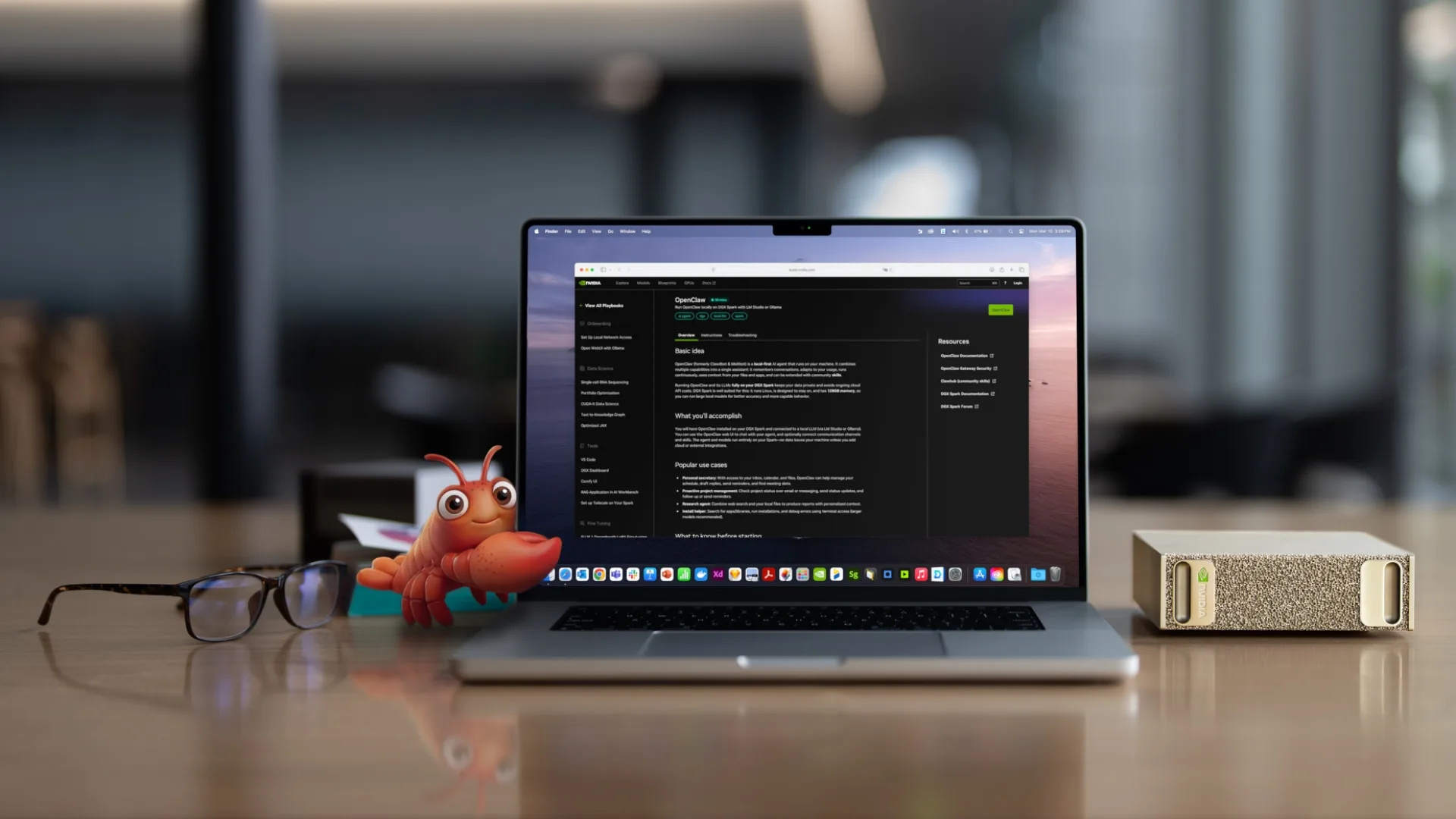
Editor’s note: This post is part of the Nemotron Labs blog series, which explores how the latest open models, datasets and training techniques help businesses build specialized AI systems and applications on NVIDIA platforms. Each post highlights practical ways to use an open stack to deliver real value in production — from transparent research copilots to scalable AI agents.
By early 2026, the open source project OpenClaw had become a phenomenon. In January, its GitHub star count crossed 100,000 as developer interest surged. Community dashboards and traffic analytics showed more than 2 million visitors in a single week. By March, OpenClaw topped 250,000 stars — overtaking React to become the most-starred software project on GitHub in just 60 days.
Created by Peter Steinberger, OpenClaw is a self-hosted, persistent AI assistant designed to run locally or on private servers. The project drew attention for its accessibility and unbounded autonomy: Users could deploy an AI model locally without depending on cloud infrastructure or external application programming interfaces (APIs).
Most AI agents today are triggered by a prompt, complete a defined task and then stop running. A long-running autonomous agent, or “claw,” works differently. These agents run persistently in the background, completing tasks on their own and surfacing only what requires a human decision. They operate on a heartbeat: At regular intervals, they check their task list, evaluate what needs action, and either act or wait for the next cycle.