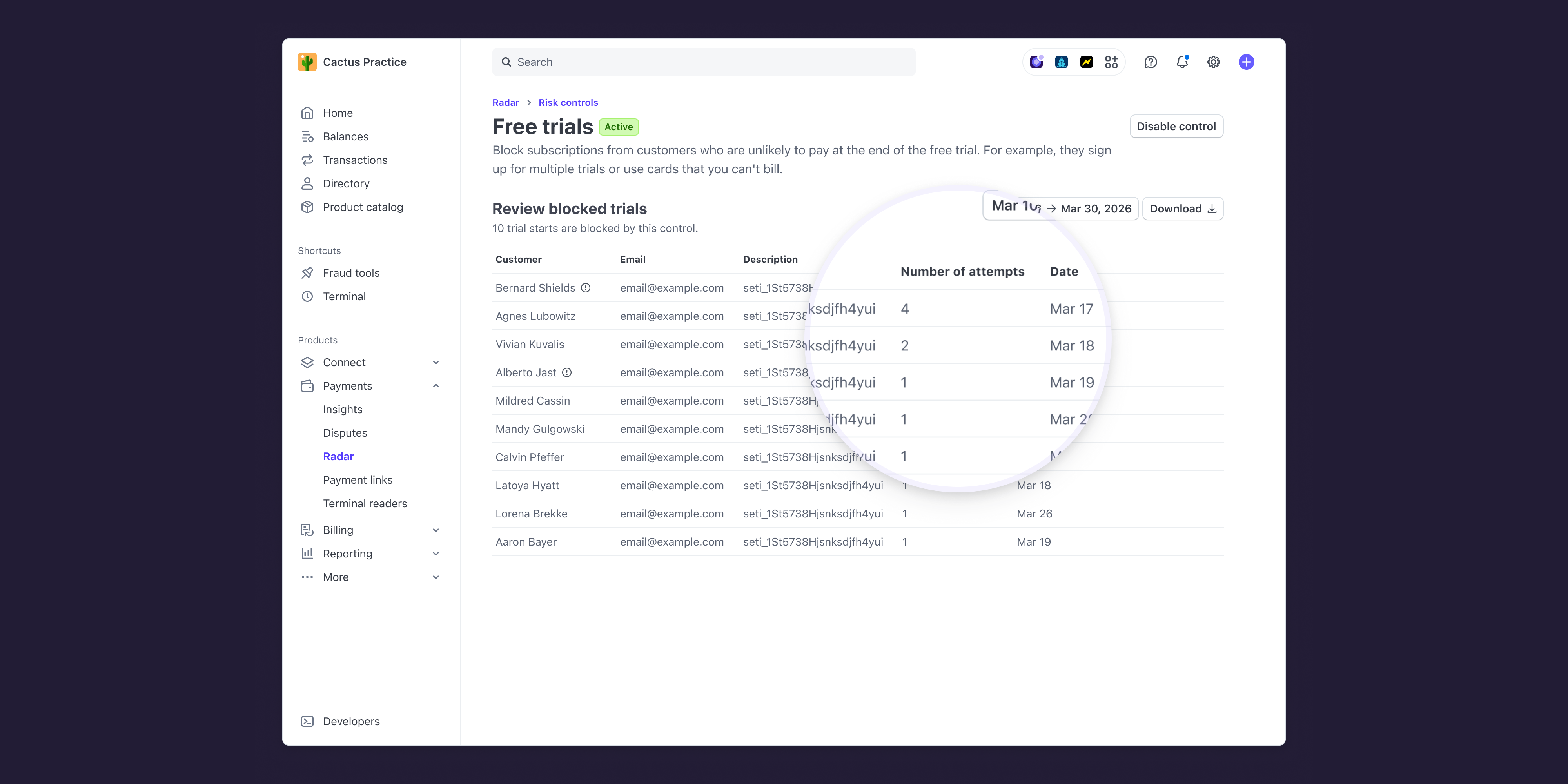
From November 2025 to February 2026, we detected a significant increase in abusive free trials across Stripe’s network.
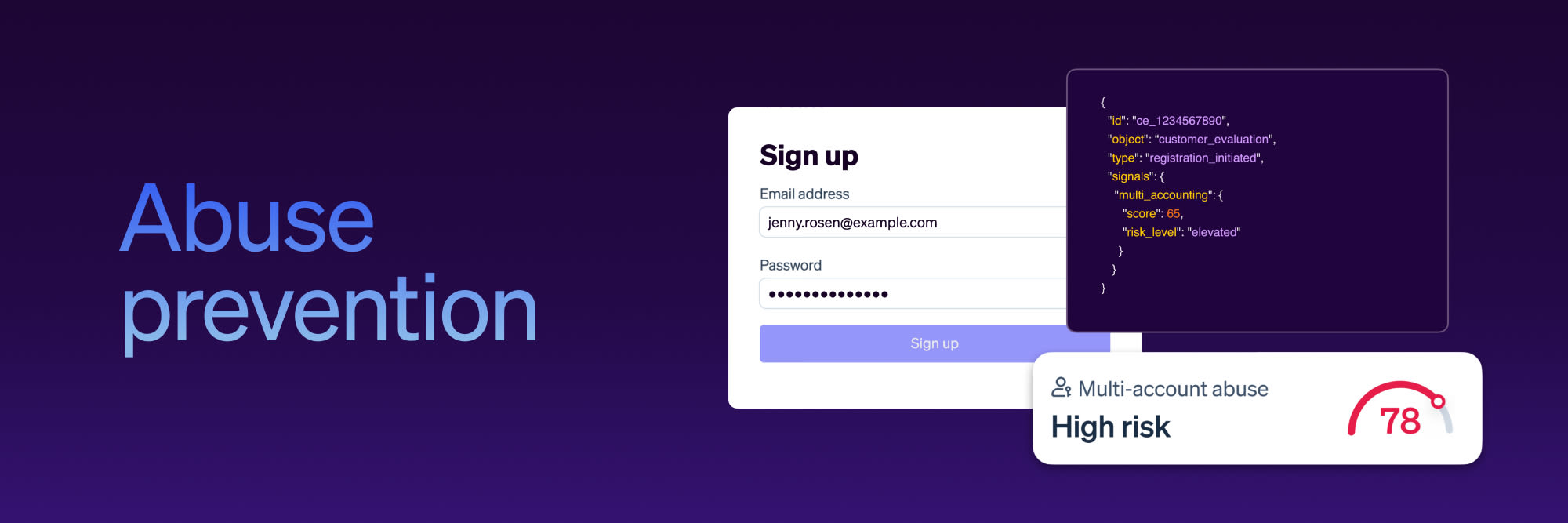
This is part of a broader shift toward first-party fraud, where legitimate users abuse policies by setting up multiple accounts, cycling through free trials, or exploiting refunds. In fact, 62% of merchants have experienced an increase in disputes due to first-party fraud over the past year. Managing it costs businesses $35 for every $100 in disputes. Businesses facing these losses ask us the same questions: is first-party fraud increasing industry-wide as much as it is for my business? What can we do about it?We analyzed hundreds of millions of transactions across the Stripe network to find answers. We identified three of the fastest growing types of first-party fraud, each occurring at a distinct point in the customer lifecycle: account abuse at sign-up, free trial abuse during product evaluation, and refund fraud after a customer has already received goods or services.Here’s what we found about the prevalence of each and how Stripe Radar, our AI-powered fraud product, can help protect your business. Account abuse is especially costly for AI companies, where expensive compute costs are tied directly to usageOne in five consumers admit to using different email addresses or contact information to access promotions and discounts multiple times—rising to 29% of Gen Z and 27% of millennials, according to 451 Research’s Voice of the Connected User Landscape: Connected Customer, Trust and Privacy 2025. This behavior, known as account abuse or multi-account abuse, occurs when a single person creates several accounts to repeatedly abuse free trials, use promotional coupons over and over again, or use their multiple accounts to spread stolen card use and avoid detection for longer. The fraud pattern forms a giant web with a single payment method identifier getting attached to dozens, if not hundreds, of emails, IP addresses, and names.