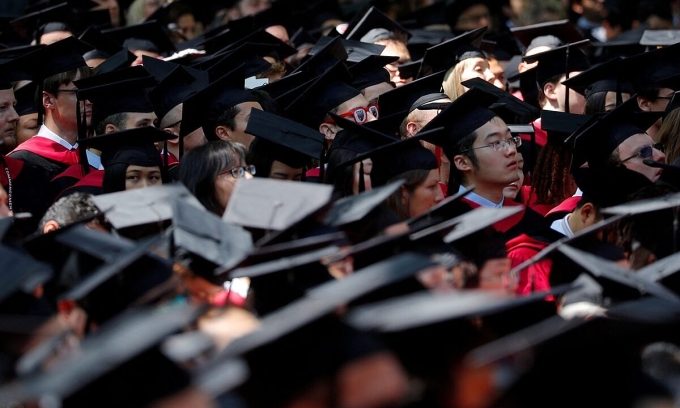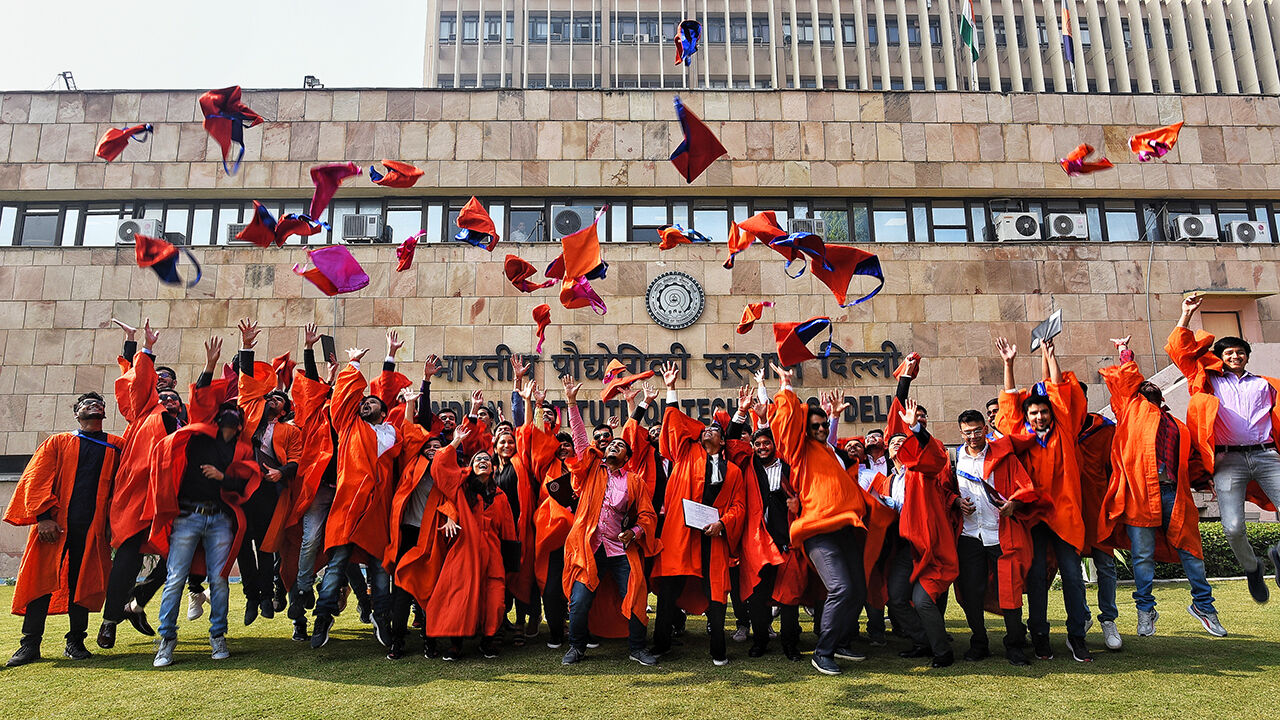
New Delhi: Ivy League colleges and their peers continue to be in vogue among Indian students, contrasting with a broader decline in applicants to US educational institutions, amid the wave of uncertainty caused by the Donald Trump administration's restrictive policies, according to study abroad platforms.Crimson Education, a study abroad firm focused primarily on Ivy League and Top 30 admissions, got 175 applicants in 2025-26, up from 130 in the year before. "And now, we are expecting that number to go to 250+ in the upcoming admission cycle (2026-27)" said Kunal Mehra, CEO-Crimson Education India and regional director, Crimson MENA."Crimson had 15 admits to Stanford and 4 admits to Harvard from India this year (25-26), the highest ever in its history," he said. In the 2024-25 admission cycle, the firm had nine admits to Stanford and one to Harvard. ReachIvy.com, another firm focused only on Ivy League admissions, is seeing a similar trend.TIL CreativesStudents rush to join Ivy League even in uncertain season"Even though as per the Common App data, Indian undergraduate applications to US colleges are down ~14% in the 2025-26 cycle, the demand for Ivy League and top tier colleges remains extremely strong globally," Vibha Kagzi, founder and CEO, ReachIvy.com.Tuition fees at the eight Ivy League colleges is currently about $65,000 per year (₹62 lakhs). This excludes other costs such as living expenses.Strong CompetitionExperts say once housing, meals, books, health insurance, and personal expenses are included, the total cost at an Ivy League or other top universities is typically between $90,000 and $100,000 per year.Many Ivy League schools are providing aid to selected students to ease the financial burden.Experts highlighted strong competition for the top US colleges though not so for the lower-rung ones.“UHNI families and highly competitive applicants are taking a longer-term view as they recognise that policy environments are cyclical, and by the time they graduate, immigration and work policies are likely to evolve,” said Kagzi.Adarsh Khandelwal, founder, Collegify, is seeing a steady 20-25% rise in undergraduate and postgraduate applications for the top 20 US colleges. “However, we have also witnessed a decline in acceptance from these universities; for example, the acceptance percentage is now at 1-2% as compared to 4% last year, which means that more applicants are aspiring,” he said.He added that Collegify is getting more applications from CBSE students with over 95% scores, students at IB schools in metros, and Olympiad and startup-focused applicants for studying in the US.“Pure technology, management, and humanities remain firm favourites of Indian students,” said Akshay Chaturvedi, founder and chief executive officer, Leverage Edu & Ivy100.“But the most telling shift we've seen on our platform is a recent surge of interest in electrical and computer engineering, and mechanical engineering,” he added.Saurabh Arora, founder and CEO of University Living, a student accommodation platform, noted that some Indian students are no longer concentrating heavily on a few Ivy League or the top 20 institutions in the US.“Fewer students are taking a concentrated bet on a small set of top US colleges, even though the aspiration to study at these institutions remains high,” he said. As a result, University Living is seeing about 8% year-on-year drop in enquiries from Indian students for Ivy League undergraduate courses.“Colleges that have reintroduced stricter testing requirements or are perceived as less accessible appear to have seen a sharper correction in applications,” said Arora.Notably, several Ivy League as well as other top US universities have reintroduced SAT, ACT, or equivalent testing requirements for students. A few years ago, the US was often the default dream for high-achieving Indian students. “This year, the first question has changed from ‘Can my child get into an Ivy League college?’ to ‘if not, then let's not look at the US at all’,” said Khandelwal.Indian students are also exploring alternative destinations such as the UK, Germany, Canada, and Singapore.
Students rush to join Ivy League even in uncertain season
Indian students are showing strong interest in Ivy League and top US universities. This trend persists even as overall applications to American colleges decrease. Firms specializing in elite admissions report a significant rise in Indian applicants for upcoming cycles. This indicates a continued aspiration for prestigious education despite global uncertainties. The demand for these top institutions remains exceptionally high.
637 words~3 min read