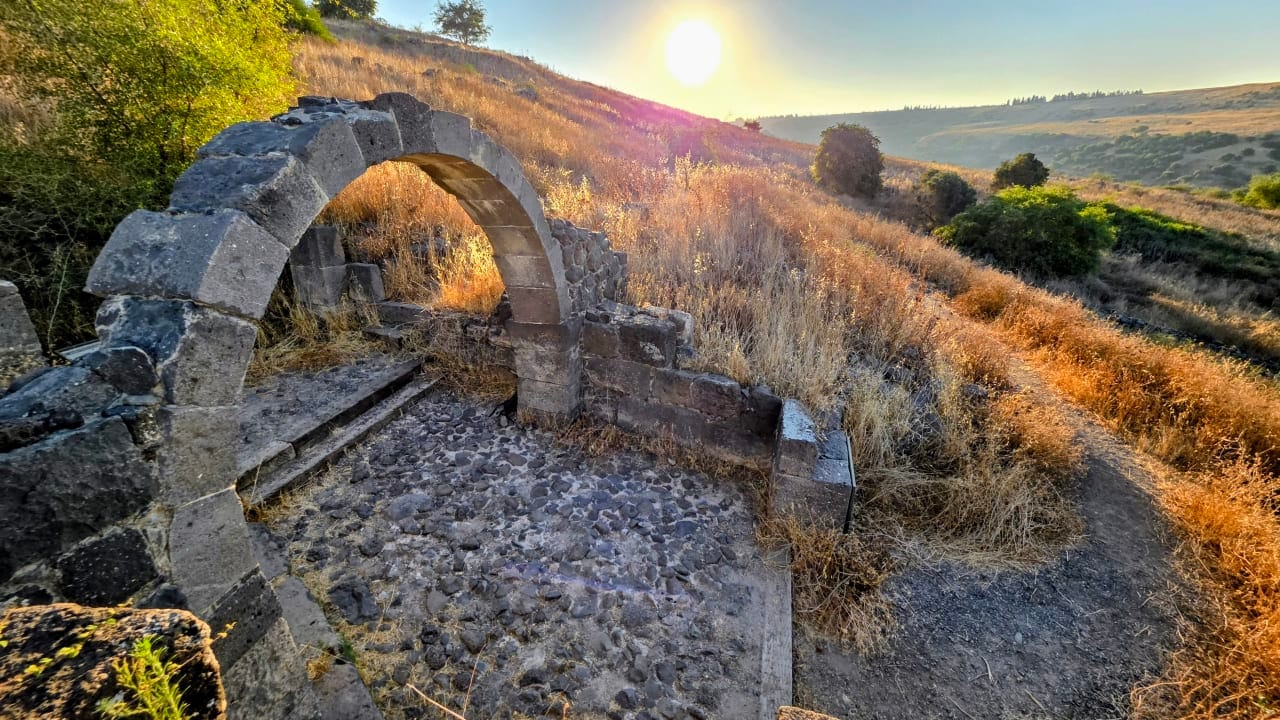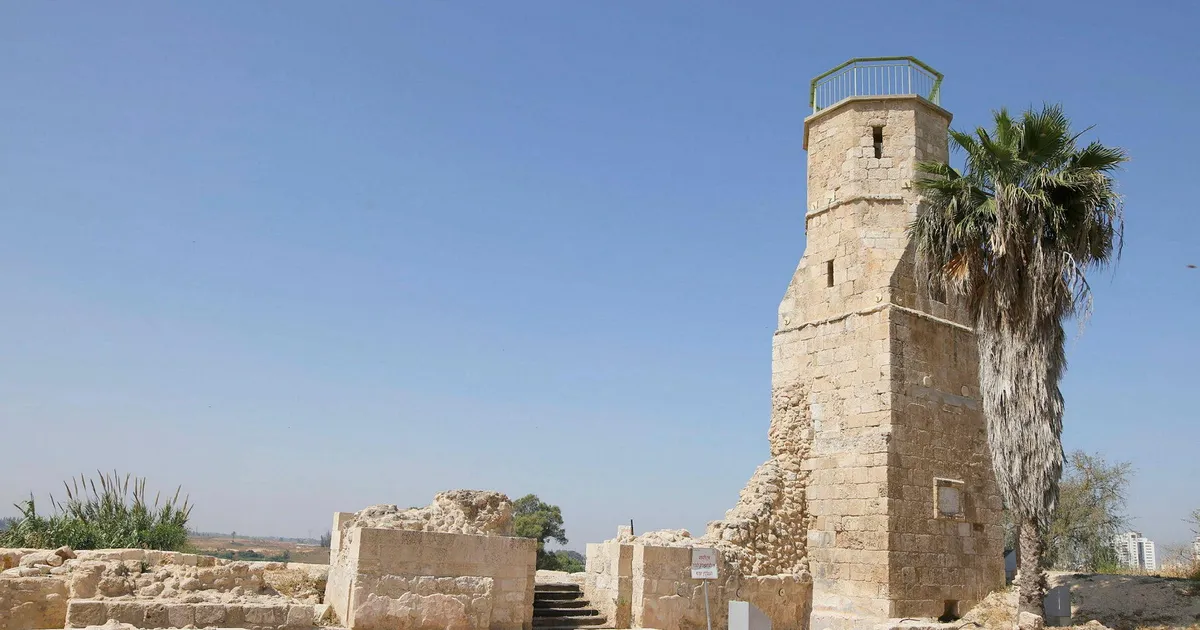
Ancient Yavneh is becoming an urban park, where 4,000 years of history unfold in a short walkIt's a quick flight through the skies of history. For a moment, it seems as if the Philistines and the Crusaders are shaking hands. The Sanhedrin sages of ancient Israel are almost embracing the Prophet Muhammed's companions. The transitions in Yavneh are sharp. There are few places in Israel where one can observe such an astonishing historical cross-section. For two hours, I wandered through Yavneh from a cup of coffee and a hot pastry to 4,000-year-old artifacts that had had time to cool down. Ancient Tel Yavneh is being swallowed up by the modern city. Right now, a new neighborhood is going up to its east, on the other side of the railroad tracks, thus turning the Tel, or archeological mound, once a neglected and even wild area, into an urban park. Recently, major efforts have been made to improve access, with paths laid out, stairs ascending to the top of the mound and pergolas providing shade for visitors. Tel Yavneh. There are wonderful views from the summit in every direction. Credit: Ilan AssayagTel Yavneh. There are wonderful views from the summit in every direction. Credit: Ilan AssayagNumerous signs tell the story of the place, but the nature along the pathways remains untamed. There are all the elements here that testify to the ancient past, and to the Arab village that once stood here: almond trees, prickly pear hedges and countless historical remains from every possible period. During excavations east of the mound, a huge ancient facility was discovered that was used for wine production during the Byzantine period, containing wine presses, warehouses and workshops for producing clay storage jars. Numerous signs tell the story of the place, but the nature along the pathways remains untamed. Credit: Ilan AssayagNumerous signs tell the story of the place, but the nature along the pathways remains untamed. Credit: Ilan AssayagFrom the mound's summit, there are wonderful views in every direction. About 1,000 years ago, the Crusader Fulk, King of Jerusalem, erected a fortress here called Ibelin, whose remains are still visible today. The Crusaders also built a church on top of the hill that, in the 13th century, was converted into a mosque. About a century later, the Mamluks built a minaret next to it. Until 1948, the mosque and minaret were inside the Arab village of Yibna. A month after the establishment of the State of Israel, the village was occupied and nearly all its houses were leveled. The Kibbutz Kvutzat Yavneh and the religious education institute Beit Rabban were built on land that was purchased from Yibna in the 1940s. The city of Yavneh itself and the cooperative farming communities of Kfar Hanagid and Beit Gamliel were founded on the village's land in 1949. The army demolished the mosque in the 1950s, but the minaret at the top of the mound was spared and remains there to this day. It has been repaired and strengthened and looks good. On its northern facade, an inscription thanking the sultan who ordered its construction can be seen. According to Jewish tradition, this is where Rabban Gamaliel is buried, president of the Sanhedrin in the first century C.E. Credit: Ilan AssayagAccording to Jewish tradition, this is where Rabban Gamaliel is buried, president of the Sanhedrin in the first century C.E. Credit: Ilan Assayag A walk of about a few minutes brings you from the mound's summit to the Sanhedrin Garden to the west, where there's a beautiful building topped by a blue dome and stone arches, which began to be called Rabban Gamaliel's Tomb in the 1950s. According to Jewish tradition, this is where the president of the Sanhedrin in the first century C.E. is buried. Muslim tradition, on the other hand, holds that Abu Hurayra, one of the Prophet Muhammed's companions from the 7th century C.E., is buried here. Research, however, shows that neither of them was buried at the site. From the garden, it is a short walk to a nearby bakery. Directions: There are several entrances to the mound. Waze "Tel Yavneh" will bring you to the northern one. Afterwards, you can re-enter at the western entrance and walk to the Sanhedrin Garden. The cleanliness of the mound is average, and that of the garden is good. Both places are accessible to strollers.
Israeli day trip: The ancient mound where philistines and crusaders cross paths
Ancient Yavneh Is Becoming an Urban Park, Where 4,000 Years of History Unfold in a Short Walk
727 words~3 min read