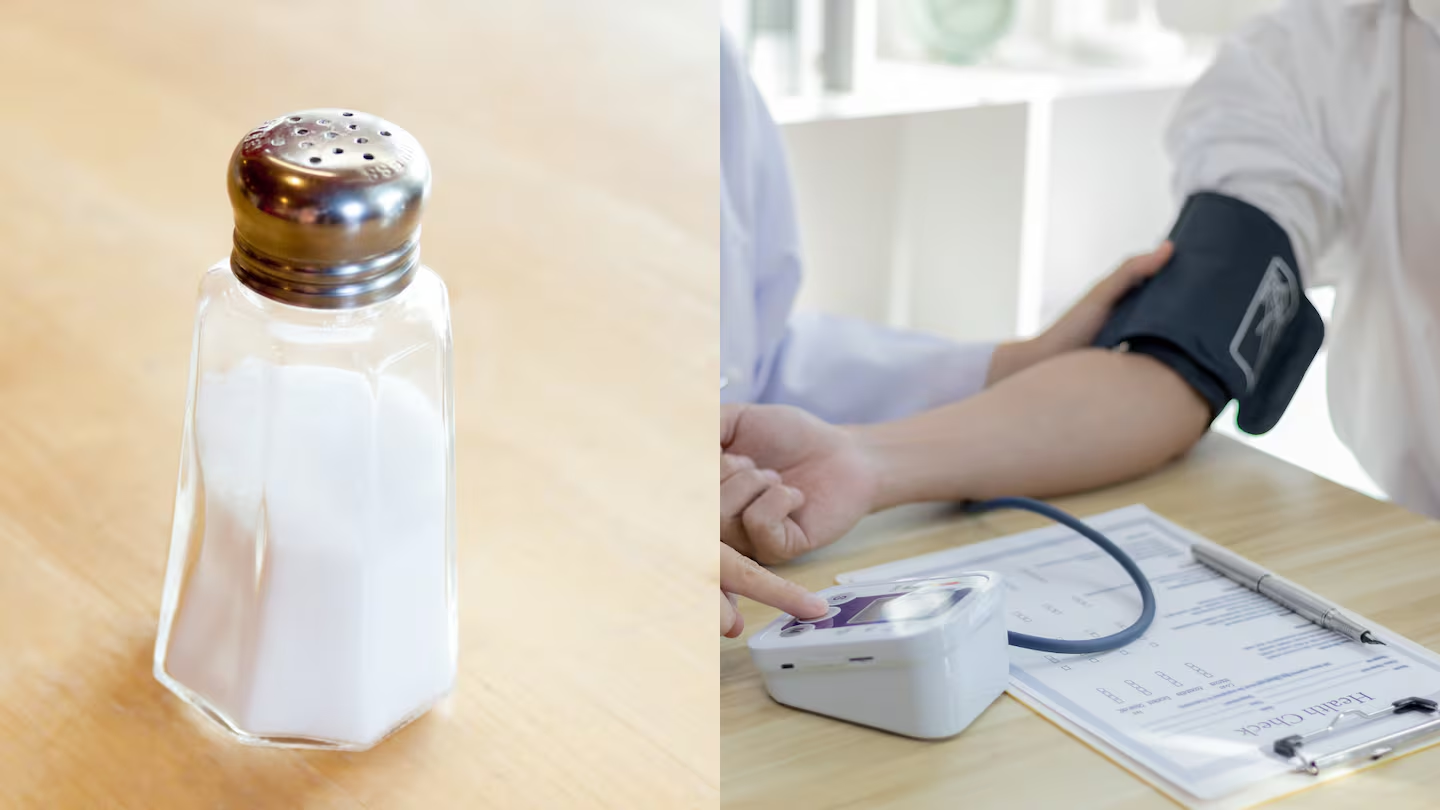
Jamaica’s growing crisis with non-communicable diseases has a direct correlation with what people are eating every day. High salt consumption is one of the key factors driving hypertension, heart disease, stroke and kidney failure. According to the Ministry of Health and Wellness (MoHW), two out of every three Jamaicans, on an average, consume 3.6 grams of sodium daily, which is well above the World Health Organization prescribed guideline of two grams per day. As a result, 73 per cent of Jamaican men and 60.7 per cent of women consume excessive sodium levels. The ministry’s Jamaica Health and Lifestyle Survey reported that roughly one in three Jamaicans is hypertensive, and many are unaware of this condition. Cardiologist Dr Andrene Chung blames processed foods for the recurring problem. In an article in this newspaper, she identified corned beef, sausages, salted fish, instant noodles, seasoning blends, soy sauce, ketchup and packaged snacks – commonly consumed items, being deeply embedded in daily diets. Data from World Heart Federation Observatory shows that 47.8 per cent of Jamaican women and 44.5 per cent of men are hypertensive. One argument is that healthy food items are expensive, so people reach out for the packaged, ultra-processed options. The health implications are substantial. Research conducted through the Caribbean Institute for Health Research found that two-thirds of Jamaicans had high sodium consumption, while more than three-quarters had insufficient potassium intake. The imbalance matters because potassium helps regulate blood pressure. High sodium combined with low potassium creates further cardiovascular risk. Treating non-communicable diseases is costly. Last year, the MoHW allocated J$4 billion to combat NCDs. Treatment for hypertension, dialysis for kidney disease, stroke rehabilitation and cardiac care place sustained pressure on public hospitals and clinics. These conditions also reduce productivity through illness, disability and premature death. It is estimated that Jamaica’s premature death rates (persons dying before their 75th birthday), as a result of non-communicable diseases (NCDs), increased from 17 per cent in 2009 to 21 per cent in 2020. Jamaica cannot continue treating NCDs only after people become ill. And this newspaper notes the health ministry’s public education efforts to encourage people to lower their salt intake. There is, however, a need to have stronger prevention policies, including improved nutrition standards and clearer food labelling. In other words, the response to high sodium intake cannot rely solely on personal responsibility campaigns. Structural measures are critical. Among these measures should be front-of-package warning labels, designed to help consumers identify products that are high in salt, sugar and saturated fats. Clear labelling allows consumers to make informed decisions.This would not mean an end to public education campaigns. Many people still underestimate how much sodium they consume. Foods that do not taste salty can still contain high sodium levels. Dr Chung warned that sodium is often “hidden in everyday foods”. Developing health habits is important and, the earlier this starts, the better. In this regard, vigorous implementation of the School Nutrition Policy, with standards of the kinds and quality of food and snacks fed or sold to children on campuses, is important and can help to reduce long-term health risk.Further in the fight against NCDs, the processed food industry shouldn’t consider itself an adversary, but a partner. It has a stake in keeping consumers well. Healthy people who can work longer and have lower healthcare bills are more likely to afford products – an outcome that in some cases may just require manufacturers making relatively small adjustments to their formulations. Other countries have shown that small reductions in salt intake over time can improve public health without sharply affecting consumer acceptance.The World Health Organization-led ‘SHAKE the salt habit’ package, designed to assist member states with the development, implementation and monitoring of salt-reduction strategies to enable them to achieve a reduction in population salt intake. The SHAKE package envisions a world where average salt intake is ultimately reduced to less than 5g per day for adults and less for children,” the document says.The SHAKE package has recommended some key interventions for the prevention and control of NCDs into a structured approach which includes:food reformulation, which sets maximum limits or targets for the sodium content of pre-packaged foods;front-of-pack labelling (FOPL) which provides interpretive information about sodium content, alongside mandatory declaration;food procurement and service policies which limit high-sodium foods in public settings;food marketing restriction policies to protect children;taxation of unhealthy food;behaviour change communication and mass media campaigns; andlower-sodium salt substitutes (LSSS) to replace regular table salt in appropriate settings.With the requisite framework in place, reducing sodium consumption will require a concerted effort from all stakeholders – government, industry, schools, healthcare providers and consumers alike. Tackling NCDs should be a national priority.
Editorial | The burden of salt
Jamaica’s growing crisis with non-communicable diseases has a direct correlation with what people are eating every day. High salt consumption is one of the key factors driving hypertension, heart disease, stroke and kidney failure.
775 words~4 min read