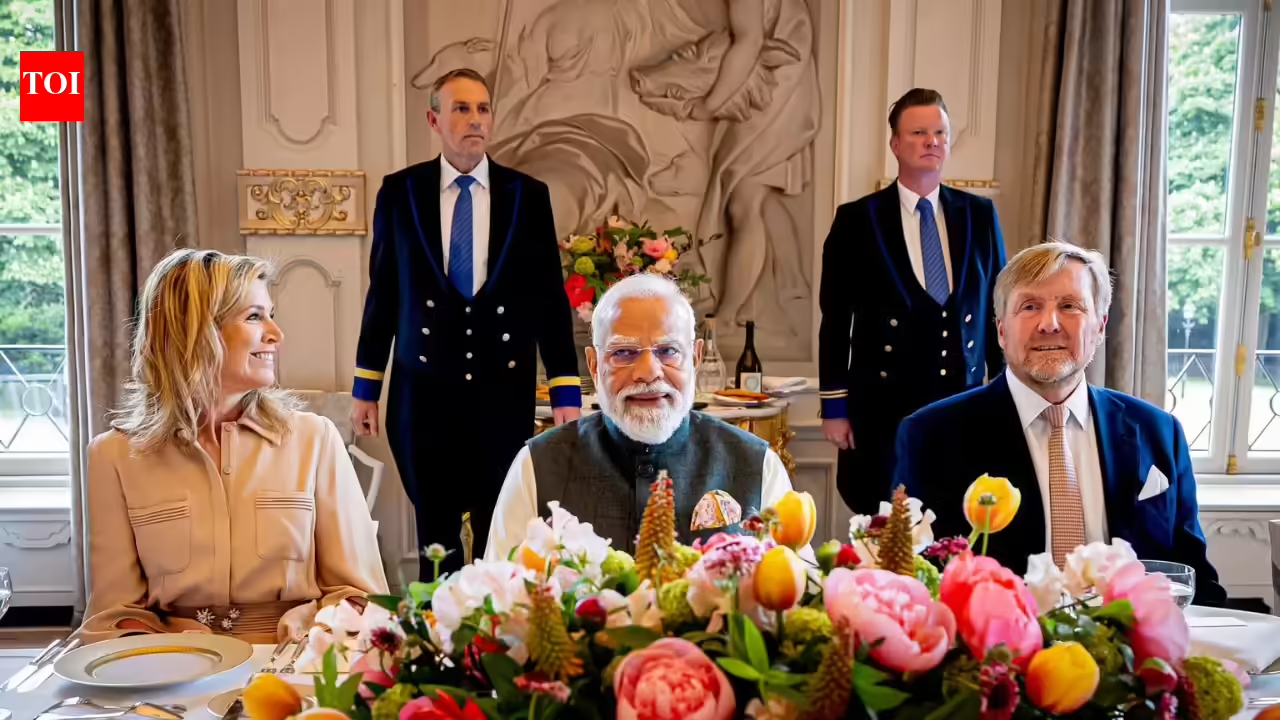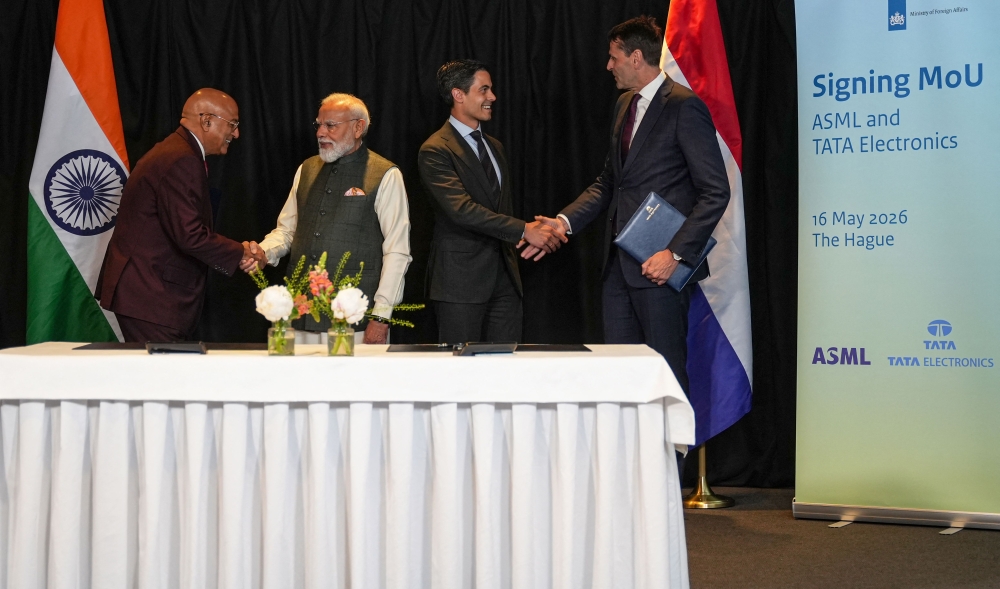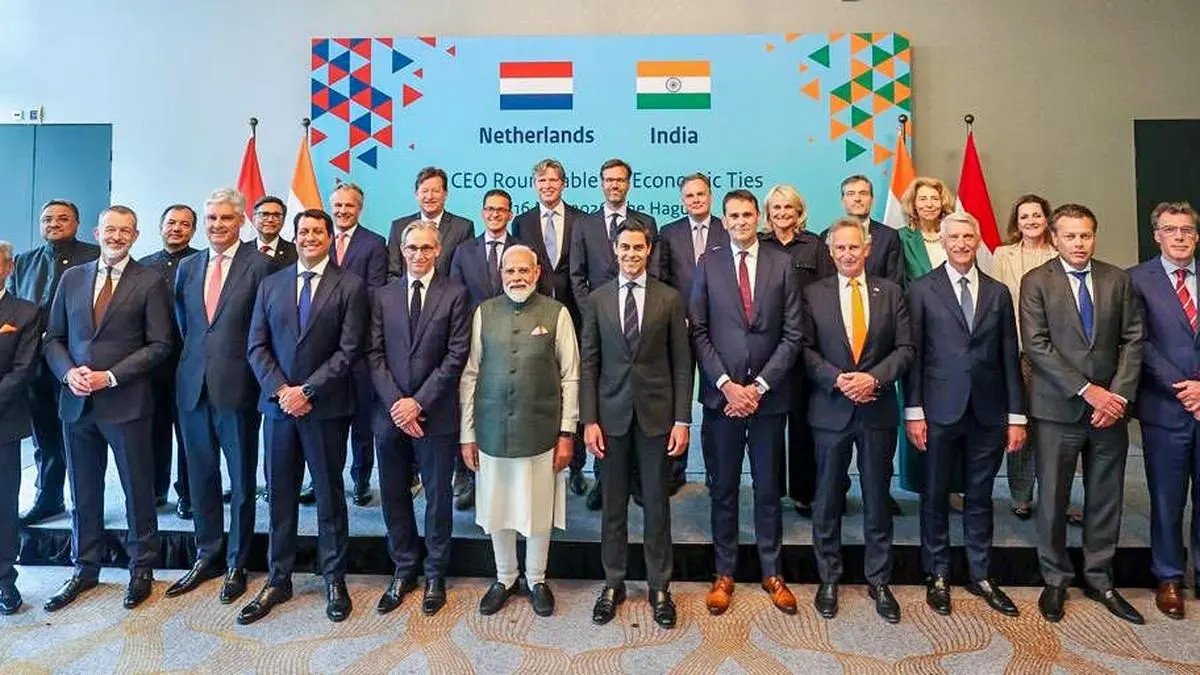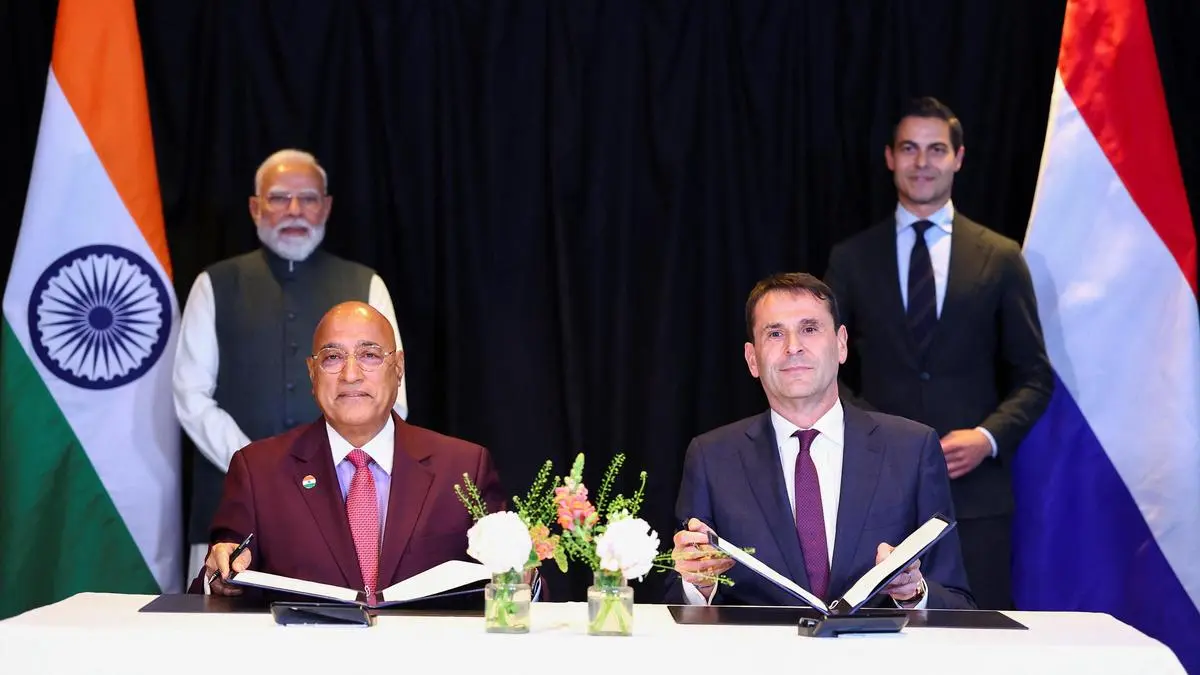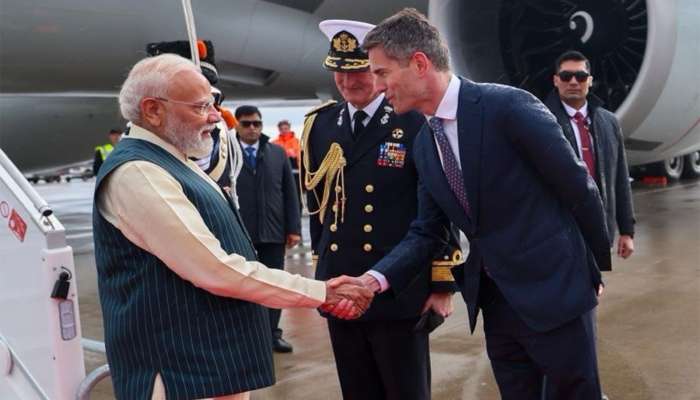
Prime Minister Narendra Modi has arrived in the Netherlands as part of a high-profile European tour focused heavily on clean technologies, renewable energy and advanced manufacturing. While the diplomatic agenda covers a wide range of bilateral interests, the absolute center of gravity for this visit is India's semiconductor project. One single company headquartered in the quiet Dutch town of Veldhoven holds the key to India's chip-making ambitions. ASML, the undisputed global titan of semiconductor lithography equipment, sells machines used to manufacture the majority of chips all over the world. As Prime Minister Modi is expected to interact with top ASML executives during his transit through the country, the meetings will highlight a critical reality for India. Its multi-billion-dollar dream of becoming a global chip manufacturing superpower is fundamentally tethered to the goodwill and supply chains of this single Dutch enterprise. Without ASML, the mega-fabs currently breaking ground on Indian soil cannot produce most semiconductors.The Dutch anchor of India’s silicon dreamsIndia has embarked on an aggressive, state-backed mission to build a domestic semiconductor ecosystem from scratch, committing immense financial resources and diplomatic capital to reduce its dependency on microchip imports. The centerpiece of this industrial push is a massive $14 billion chip manufacturing facility being established by Tata Electronics in Dholera, Gujarat, in partnership with Taiwan's Powerchip Semiconductor Manufacturing Corporation. For this mega-fab to succeed, access to world-class manufacturing equipment is non-negotiable. Union Electronics and IT Minister Ashwini Vaishnaw explicitly confirmed the critical nature of this reliance during a recent official visit to ASML headquarters in Veldhoven, stating that the upcoming fabrication plant in Dholera will be fully utilising ASML’s advanced lithography equipment for its chip production.Lithography is the most complex, precise, and capital-intensive phase of the semiconductor manufacturing process, effectively serving as a highly specialised printing press that burns microscopic circuit designs onto silicon wafers. Because ASML enables almost every cutting-edge chip manufactured anywhere on the globe, the Indian government views the company as an indispensable cornerstone of the India Semiconductor Mission.Also Read| Uber’s next big ride in India is powered by drives, not driversThe momentum has been building steadily since late last year, when ASML Chief Executive Officer Christophe Fouquet attended the Semicon India summit in New Delhi. At the event, Fouquet expressed a strong dedication to supporting India’s tech ambitions through technical collaboration, talent development and knowledge exchange, noting that ASML's advanced lithography solutions would help Indian fabs achieve high performance as they scale up production.The monopoly that runs the digital worldTo understand why a single corporate entity might command immense leverage during a prime ministerial state visit, one must analyze the sheer scale of ASML’s global footprint. Established in 1984, the company has grown to hold an absolute, unassailable monopoly over the production of extreme ultraviolet lithography systems and maintains a dominant market share in deep ultraviolet lithography systems. According to industry market reports, the total semiconductor lithography equipment market is valued at $30.44 billion. Within this critical space, ASML controls over 80% of the global market share for all lithography equipment. For Extreme Ultraviolet (EUV) lithography, the specialised process required to print chips at the 7-nanometer (nm) nodes and below, ASML holds a 100% market monopoly. No other company in the world makes these machines. Thus, ASML stands as the ultimate gatekeeper to advanced computing, supplying the vital hardware that allows chipmaking behemoths like Taiwan Semiconductor Manufacturing Company, Samsung Electronics and Intel to manufacture faster, smaller and more efficient microchips.The monetary and technological barrier to entry for what ASML does is so high that no competitor can realistically replicate its machinery. A single high-end ASML lithography machine can cost hundreds of millions of dollars, containing hundreds of thousands of individual, highly customised components sourced from thousands of specialised global suppliers. It is the only company in existence capable of harnessing short wavelengths of light to print transistors down to the single-digit nanometer scale. This unmatched technological footprint means that every single modern electronic device, from artificial intelligence data servers to smartphones and advanced military guidance systems, is fundamentally a byproduct of ASML technology.At the vortex of geopolitical warfareDue to this unparalleled technological dominance, ASML has found itself squarely at the center of a fierce, multi-year technological cold war between the US and China. Recognising that choking off access to ASML equipment is the most effective way to freeze China's domestic semiconductor advancements, the US has applied intense diplomatic pressure on the Dutch government for years. This pressure successfully forced the implementation of stringent export controls, blocking ASML from shipping its most advanced extreme ultraviolet machines to Chinese customers, and progressively tightening restrictions on less advanced deep ultraviolet systems.These geopolitical crosscurrents have severely complicated operations for the Veldhoven-based firm. Data from last year underlines the delicate balance the company must strike. China was ASML’s second-largest global market, trailing only Taiwan while remaining ahead of South Korea, Japan and the US. The ever-tightening US-led curbs have deliberately eroded ASML's Chinese revenue stream, forcing it to temper its long-term growth outlook due to slowing demand in its restricted markets. It is precisely this geopolitical squeeze that makes Prime Minister Modi’s visit so timely and mutually beneficial. As ASML navigates the fallout from the US-China tech rift and searches for reliable, long-term democratic markets to offset its forced containment in China, India presents itself as an ideal, eager partner with deep pockets, stable policies and a desperate hunger for silicon sovereignty.Building an Indian footprintThe relationship between the Dutch tech giant and India is quickly progressing beyond simple buyer-seller transactions into an integrated operational partnership. To support the upcoming fabrication facilities and ensure seamless machinery maintenance, ASML has initiated plans to open a customer support office in Gujarat’s GIFT City. This strategic location will act as a launchpad for a more extensive operational footprint, eventually expanding into a larger, dedicated facility directly inside the Dholera semiconductor hub. Having a localised support base is incredibly vital for Indian fabs, as lithography machines require constant calibration, specialised engineering oversight and a steady flow of components to prevent costly production downtime.Also Read| Adani Group is jumping into Europe's deep waters. What can happenThis corporate migration coincides with a broader geopolitical trend where Dutch semiconductor firms are actively seeking new geographic markets and supply chain diversification. Triggered by severe export controls and widening trade restrictions linked to the ongoing technology rivalry between the US and China, European equipment manufacturers are increasingly looking for stable, neutral territories. During an Indian trade delegation visit to the Dutch tech hub of Eindhoven, Michiel Smit of the Netherlands Enterprise Agency pointed out that clear opportunities exist for Dutch firms to export high-tech equipment to India first, before eventually utilising the South Asian nation as a broader base for manufacturing due to its vast engineering workforce. Officials from the India Semiconductor Mission have been aggressively pitching a "China-plus-one" manufacturing strategy to these suppliers, inviting them to view India as their primary alternative production hub. India’s incredibly lucrative subsidy programme, which covers up to 50% of project costs from the central government alongside an additional 20% to 25% from state governments, makes the proposition financially irresistible for the ecosystem of suppliers that follow ASML.
Modi in Netherlands: One firm holds the key to India's chip ambition
Prime Minister Modi's visit to the Netherlands highlights India's critical reliance on ASML, the sole provider of advanced lithography machines, for its ambitious semiconductor manufacturing goals. This Dutch company's technology is indispensable for India's multi-billion-dollar chip project, underscoring ASML's pivotal role in India's pursuit of silicon sovereignty amidst global tech rivalries.
1,193 words~5 min read