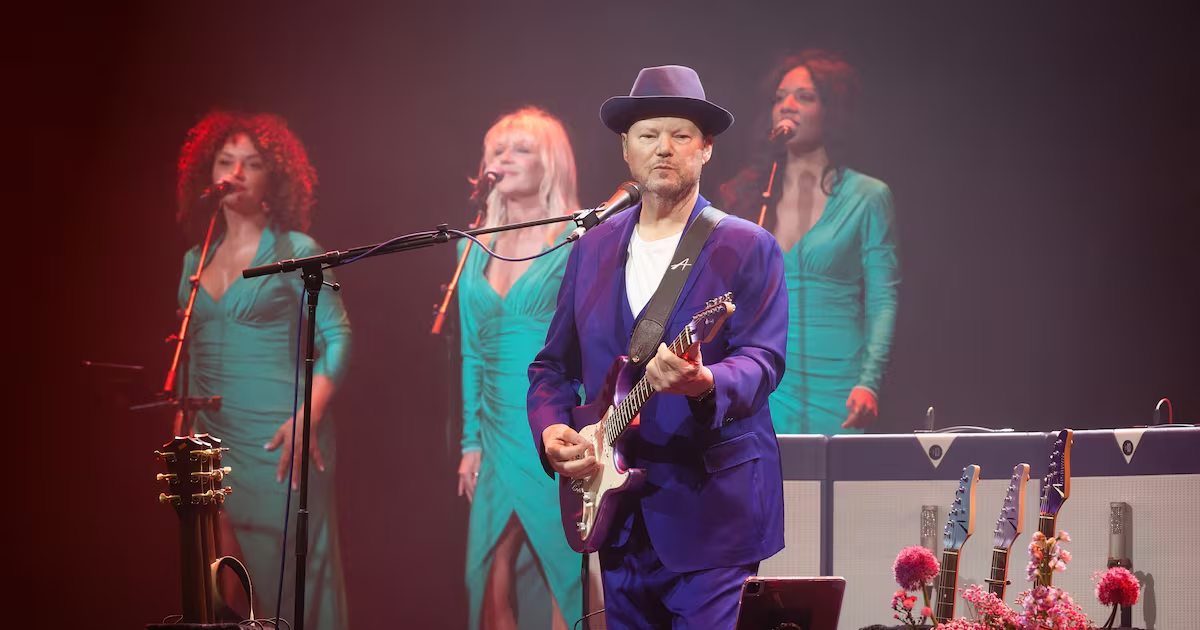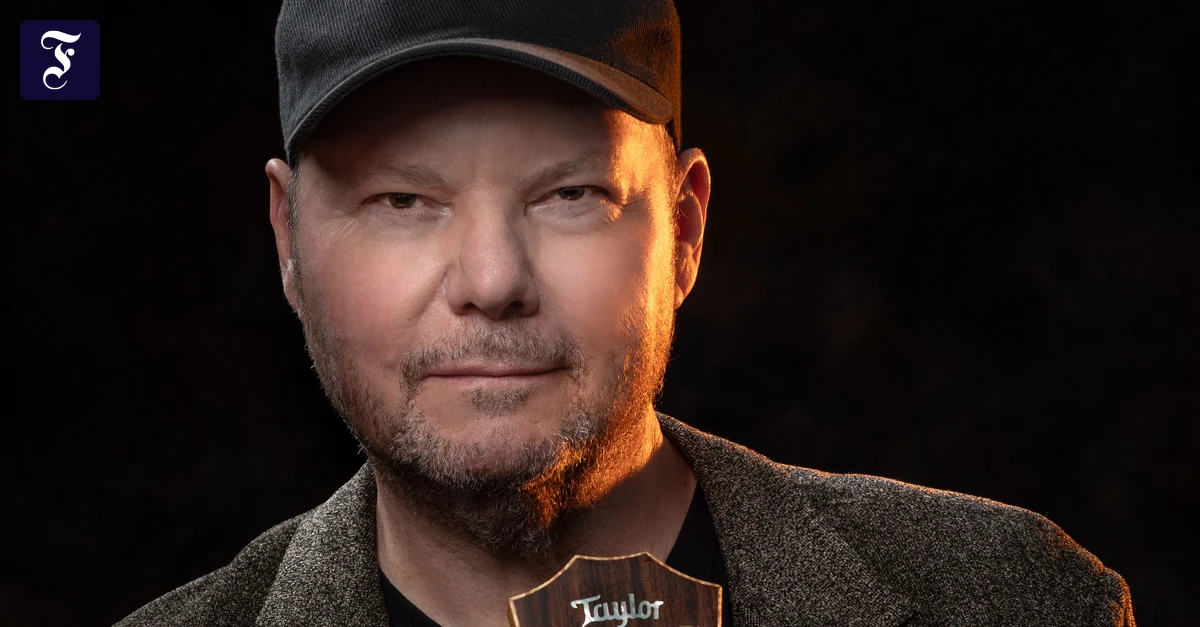
Christopher Cross didn’t know whether to be amused or annoyed the first time he encountered the term “yacht rock”.“I certainly didn’t have the money to have a yacht. Never had one. Don’t have one now,” says the singer behind some of the most enduring soft‑pop hits of the early 1980s. “I was writing songs and trying to get a deal.”“Yacht rock” started as a joke by the online comedian JD Ryznar, who coined the term for a skit video series in 2005 featuring fictional versions of Steely Dan, Toto and The Doobie Brothers. But once the laughter faded people realised that these bands made some of the greatest pop ever, whether it be What a Fool Believes, by The Doobie Brothers; Africa, by Toto; or, in Cross’s case, balmy, wind-in-your-hair classics such as Ride Like the Wind (with backing vocals from his friend Michael McDonald) and Arthur’s Theme (Best That You Can Do).He also wrote Sailing, the yacht-rock equivalent of JRR Tolkien’s One Ring, in that it’s the foundational tune from whence flows the original “yacht” association. The twist, Cross explains, is that Sailing isn’t really about the sea at all: it’s about his quest for mental peace after a sometimes troubled upbringing in San Antonio, Texas. When he croons that “canvas can do miracles” he’s singing not about a yacht’s sails billowing in the wind but about the way painting and art can bring peace to a troubled soul.“The canvas is a painter’s canvas. It has more depth to it than people think. A lot of sailors think it’s their theme song, and that’s fine. Whatever peace it brings to people,” says the 75‑year‑old, who is about to begin an Irish tour that sees him play in Dublin, Castlebar, Belfast and Killarney.What is yacht rock? The simple answer is that it’s a vibe – you know it when you hear it. But there are some agreed parameters: it’s soft, melodic and tied to the session-musician scene of 1980s Los Angeles.“The strict definition of yacht rock is soft pop‑rock music made between 1976 and 1984 in Los Angeles by ace session musicians,” Nicholas Niespodziani, frontman of the covers band Yacht Rock Revue, explained in 2024. “But I like to think of it more as a feeling ... If you can picture Ted Turner sailing his yacht to win the America’s Cup in 1980, and it is something he would be listening to, it’s yacht rock, regardless of when or where it was made.”Cross had been around the block a few times before he became successful. He was 29 and coming out of a long stint as a session player when he released his debut album, Christopher Cross, with its pink flamingo cover. The record was a surprise hit. His label expected it to shift 50,000 copies. It went on to sell six million.[ Eurovision 2026: From boycotts to media blackouts, this is now a spectacle under pressureOpens in new window ]“The album blew up. Who would have guessed? People ask: ‘Is it hard to have such big success?’ I’ll take all my gifts in one year and enjoy it. It’s so rare to have that kind of acceptance. I think it’s wonderful.” In 1981 he became the first of only two artists to achieve what is regarded as a clean sweep at the Grammys, winning album, song and record of the year, plus best new artist. (The other artist is Billie Eilish.) That year he had another global hit when he collaborated on Arthur’s Theme (The Best That You Can Do) – which accompanied Arthur, the hit Dudley Moore romcom, and would win Cross an Oscar – with Bacharach and Bacharach’s then-wife, Carole Bayer Sager.“It was late night. I went up to their house. A beautiful home in Beverly Hills. I walked in and there were already two Oscars on the mantelpiece, for Raindrops Keep Fallin’ on My Head [from Butch Cassidy and the Sundance Kid]. So very intimidated to sit down with Burt. He was very lovely. You never forget he’s Burt Bacharach, but he makes you comfortable. “I’d just won the Grammy. I was pretty hot after that. I was the new kid in town, as The Eagles called me. When I left that night I was still out of body from working with Burt. Carole said: ‘I think this is an Oscar song.’ They know better than me. I didn’t believe it. I was, like: ‘Wow … what a trip.’ And then it happened.”Four Grammys and an Oscar had made Cross one of the most successful artists of the early 1980s. But the industry was changing. The dawn of the MTV era posed an existential threat to yacht rock and its leading lights, who were often bearded and/or partial to dad jeans and generally lacking in glamour.Cross and his peers couldn’t compete in a world where big stars were supposed to look like Duran Duran, Mötley Crüe or Madonna. Forty years later, however, the last laugh goes to Cross. MTV has long since faded as a force in music, yet here he is, playing to some of the biggest crowds of his career.“I’m sure you might remember the song by The Buggles, Video Killed the Radio Star. It was very, very prophetic and clever, and I think it’s true. I started my career watching Joni Mitchell with an acoustic guitar, David Crosby in a T‑shirt. That whole [image] thing wasn’t part of it. It was about the songwriting and about the songs, not about the presentation. “Video was very strange for me. I don’t like people interpreting music totally through a video. They tried to interpret Joni Mitchell’s visual landscape, which I think is a big mistake.“And then you got into this thing with videos where it was totally ‘T and A’ – women scantily dressed. I did a couple of videos and I wasn’t comfortable doing that. There were some valid artists who embraced it. I’ve survived it – because MTV is sort of gone.”Cross has made peace with yacht rock. If he wrinkles his nose at the name, he appreciates that it has introduced younger audiences to his music. “The yacht-rock moniker has given all of us a big boost.”Christopher Cross performs at the Admiralspalast on May 5, 2026, in Berlin. Photograph: Frank Hoensch/Redferns He can’t object too much, because his daughter, Madison, produced a 2024 celebration of yacht rock for HBO. It interviewed many of the scenes’ luminaries, including McDonald, Kenny “Footloose” Loggins, and Steve Porcaro and David Paich of Toto, alongside yacht-rock fans such as Thundercat, Questlove and Mac DeMarco.“People have romanticised this time period in LA, but I think a lot of that goes towards bands like Fleetwood Mac or Eagles,” the film’s director, Garret Price, told Rolling Stone in 2024. “Yet this whole other world was happening in these recording sessions where the Toto members were playing, Michael McDonald was doing background vocals and Christopher Cross was figuring out his first album. That felt like an untapped 1970s.”Untapped or not, appreciation for yacht rock as a concept is not universal, as Madison Cross and her fellow producers discovered when they called up Donald Fagen of Steely Dan only to receive a curt F‑bomb when they mentioned the Y-word.With a chuckle, Cross explains that this was just “Donald being Donald”, adding that Steely Dan have done well from the yacht-rock boom and the popularity of dedicated channels such as SiriusXM’s Yacht Rock Radio, which “celebrates the smooth‑sailing soft rock from the late Seventies and early Eighties”.“Donald doesn’t like to be interviewed. She tried to interview him,” Cross says. “Donald had lost his wife. If you know Donald, it’s very tongue‑in‑cheek. But Donald is like us. He thinks it’s all stupid. At the same time he knows how much they are played on SiriusXM and how it helps the music. He has a love‑hate relationship with it too.”He names Steely Dan’s 1977 album, Aja, as a huge influence on both his songwriting and his outlook on life. He isn’t alone: the record’s fusion of flawless musicianship, state-of-the-art recording techniques, jazz sophistication and pop melodies makes it a foundational text for yacht rock. Or, as Rolling Stone put it, “an awesomely clean and calculated mutation of various rock, pop and jazz idioms”. Given its importance, Cross was delighted to be approached by Fagen several years later to guest on one of Steely Dan’s post-Aja LPs. He ultimately turned the offer down, as he was too intimidated. (Fagen had a reputation for not suffering fools – a definition he frequently appeared to extend to accomplished musicians who knew what they were doing.) It was the best of both worlds, Cross believes. He was flattered to have been approached by the group, but he didn’t have to go through the potential stress of working with them.“They’re brilliant – Walter, God bless his soul,” he says, referring to Walter Becker, Fagen’s partner in yacht rock, who died in 2017. “Aja was such a massive influence on all of us. It changed us – how we approach record‑making.”Cross is less enamoured of another Donald: he was once offered $1 million to play at Mar-a-Lago, Donald Trump’s Bond-villain Florida lair. He politely declined. “I definitely struggled with Donald Trump. I didn’t vote for him. I try not to get too political. I think he’s pretty much destroyed our country,” the singer says. “I don’t wish him any ill will, but I certainly wish he would not be president and that we could try to reset the clock, because every day it’s just getting worse and worse.”Cross has had his own difficulties. He contracted Covid in April 2020, which led to a diagnosis of Guillain-Barré syndrome, a disorder in which the immune system attacks the nerves. It left him temporarily paralysed; for a while it was touch-and-go whether he would be able to play the guitar again.He is now able to tour, something that would have seemed a miracle a few years ago. It’s one of the reasons he has been starting shows with All Right, an upbeat anthem that assures the listener that after the dark will come the dawn (“It’s all right / I think we’re gonna make it”).“People would call me, and I was in intensive care,” he says. “I couldn’t see anyone [because of Covid]. I’d be on the phone with people, and they would say, ‘Can you still sing?’ And I told them, ‘Hey, I’ve had a lovely, wonderful life of singing. All I want to do is walk and get out of here.’ “I really didn’t think about that stuff any more. I thought that was probably over. I was wanting to get out of the hospital, get therapy, get to walk again, which I have.”Cross says that he has been talking “a little bit of politics” on the current tour. But not too much. Whatever people want to call his music, be that “yacht rock” or simply great pop, he knows that it functions as a refuge for many of his fans. A place to go and forget their troubles, like the narrator in Sailing or the guy in his other big anthem, Ride Like the Wind, skipping town and hoping to make it to Mexico.“When you look at what’s going on in Iran, all the troubles in the world, certainly in my country, which is a mess … people come to a show to escape all that. They don’t want to think about their problems. People know what’s going on in the world. They don’t need you to remind them. They want to escape – sail away, if you will. They want to go to a different place and enjoy themselves.”Christopher Cross is at the Bord Gáis Energy Theatre, Dublin, on Sunday, May 24th, and Tuesday, May 26th; Ulster Hall, Belfast, on Monday, May 25th; TF Royal, Castlebar, Co Mayo, on Wednesday, May 27th; and Gleneagle Arena, Killarney, Co Kerry, on Thursday, May 28th
Yacht-rocker Christopher Cross: ‘I certainly didn’t have the money for a yacht. Never had one’
Along with The Doobie Brothers and Steely Dan, the Grammy-winner made some of the greatest pop ever. But success never seemed a given
1,992 words~9 min read