The joint startegic vision is a step in the right direction
| Photo Credit:
Ruskpp
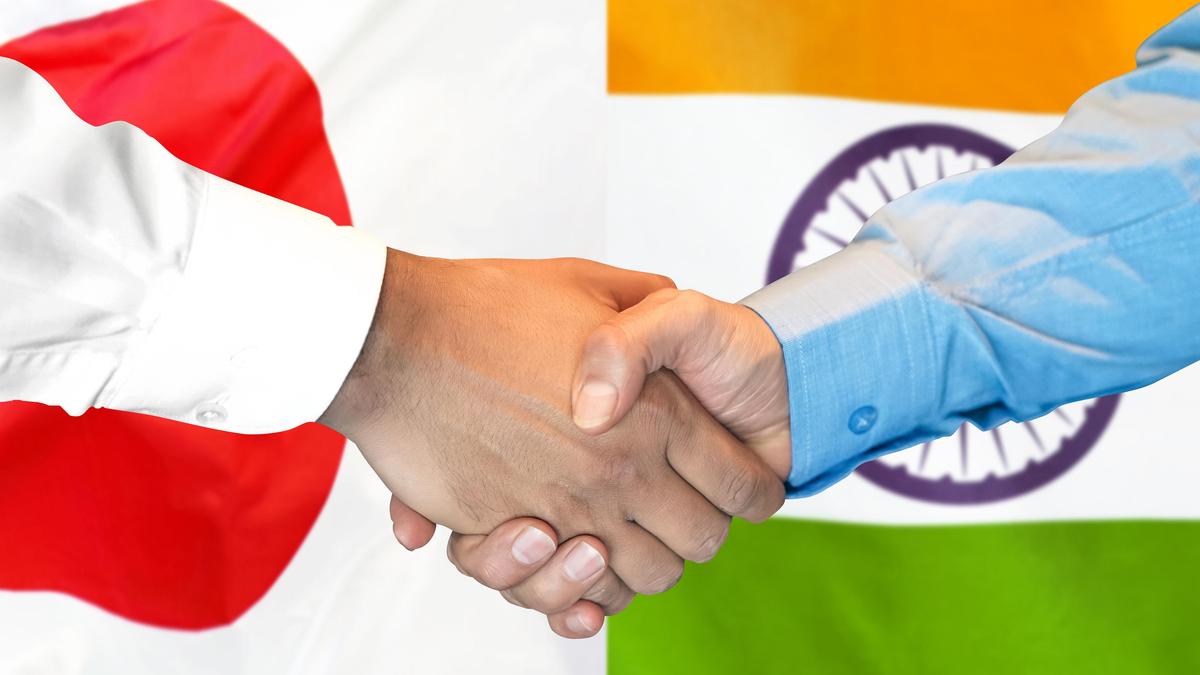
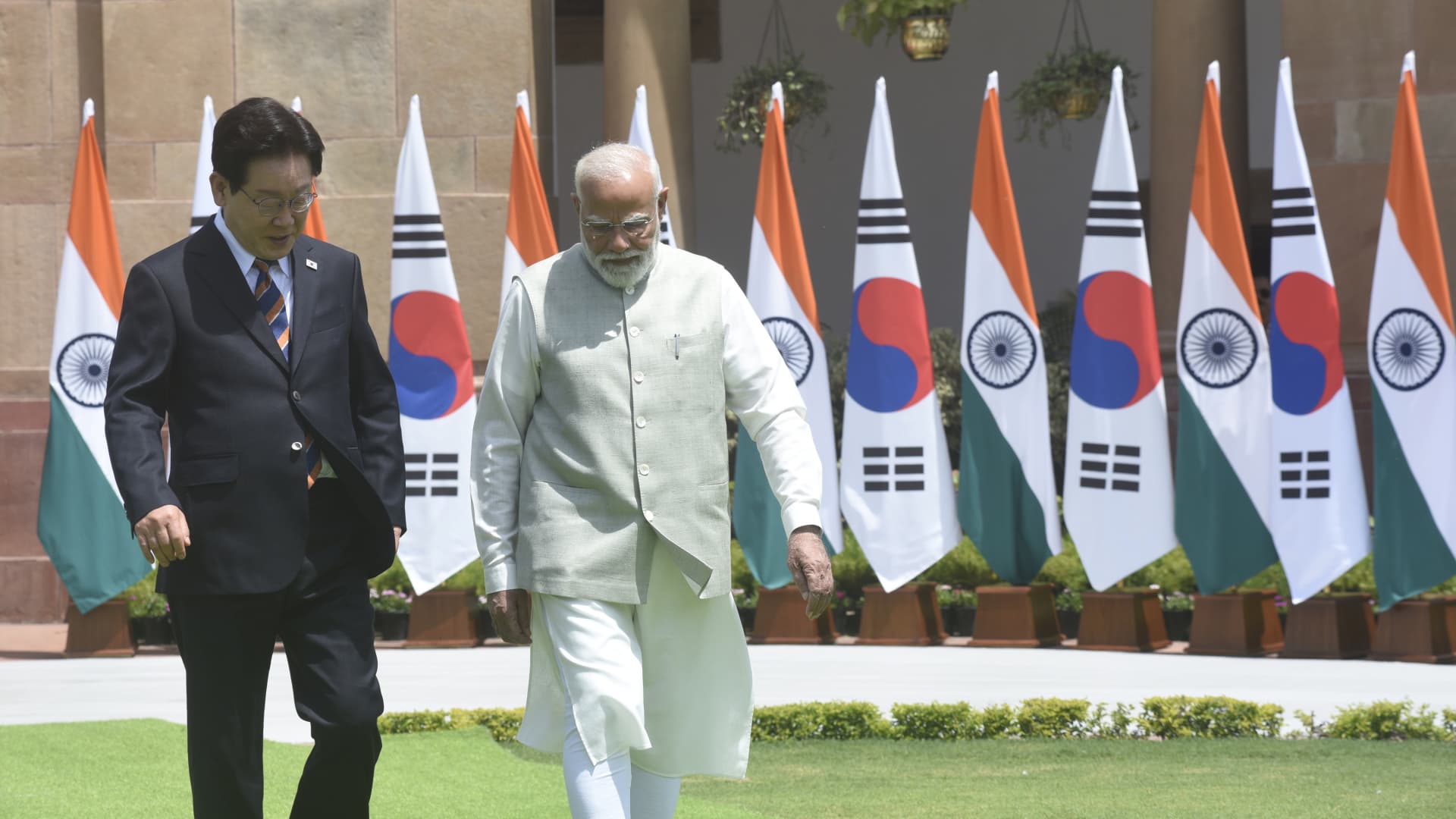
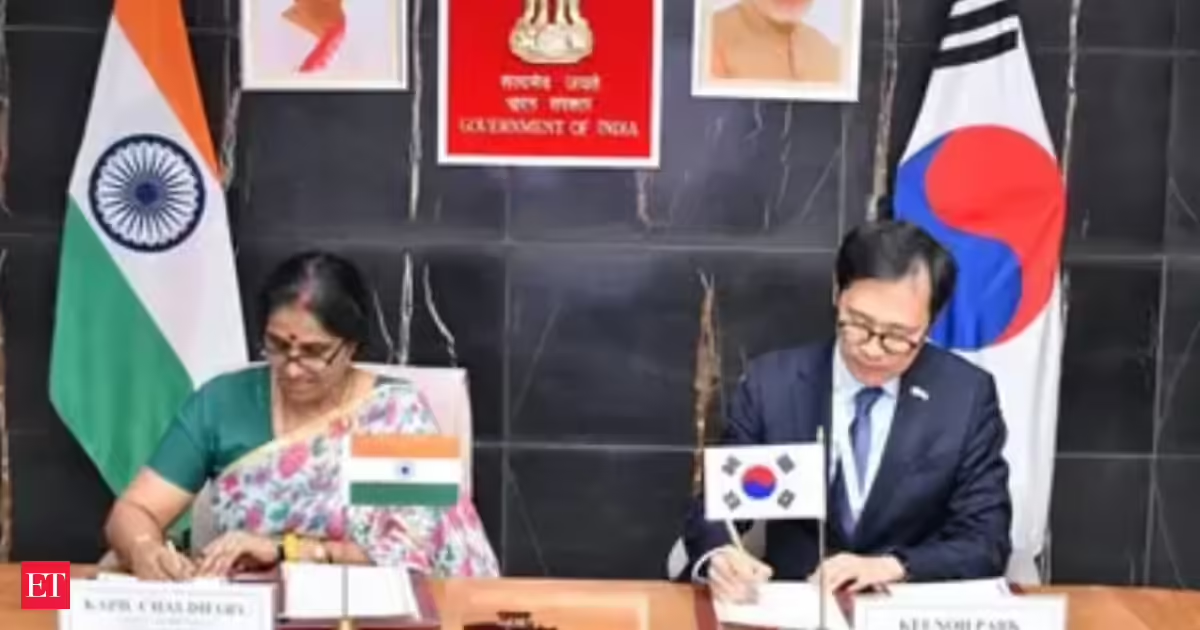
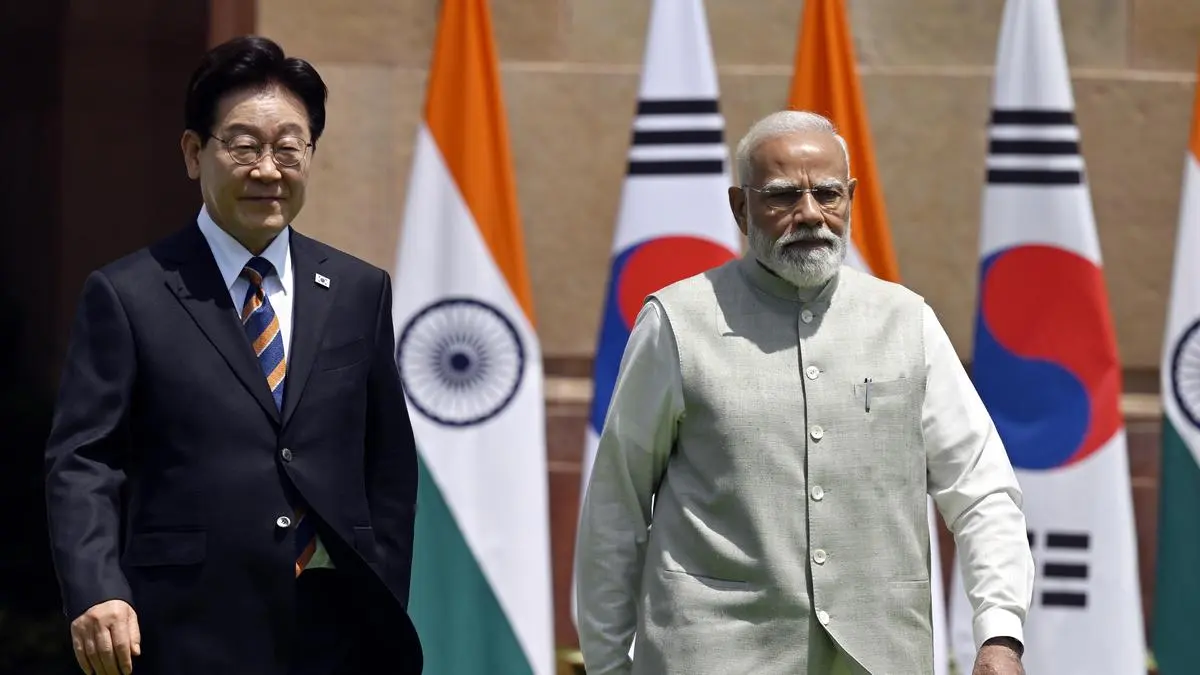
During South Korean President Lee Jae Myung visit to India in April, he announced, with Prime Minister Narendra Modi, a Joint Strategic Vision for the India-Korea Special Strategic Partnership.The vision calls for expanding bilateral trade to $50 billion by 2030, speedy conclusion of the upgrade of the Comprehensive Economic Partnership Agreement (CEPA), in force since 2010, and cooperation in critical areas such as supply-chain resilience, green hydrogen and nuclear power.This is an opportune time for the two economies to tap their complementarities. Korea is a manufacturing powerhouse, and India is determined to transform its manufacturing base. India offers an attractive alternative location for Korean firms looking to diversify their supply chains. India’s deep human-resource pool and software ecosystem also complement Korea’s hardware strengths — a natural fit for collaboration in semiconductors, electronics and artificial intelligence.The key question, however, is why the existing CEPA has not met the expectations of either side. Three issues stand out.One, Indian exporters face major market access barriers in Korea. Despite India’s rising share in global merchandise trade, Korea’s share in India’s exports has declined from 2 per cent in 2009 to 1 per cent in 2024, while India’s merchandise trade deficit with Korea has quadrupled from $4 billion to $16 billion.A study at ISID (https://bit.ly/4d8iQzM) has identified 26 product groups — including pharmaceuticals, textiles and apparel, marine products and leather — where India has a global comparative advantage but only a marginal presence in the Korean market.In pharmaceuticals, complicated import procedures make market access effectively impossible for Indian exporters: though India accounted for 3 per cent of global imports in 2024, its share in Korea’s imports was barely 1 per cent.Investment slowdownTwo, the missing second wave of Korean investment is a serious concern. The first wave came in the 1990s, when Samsung, LG and Hyundai established their operations in India. Korean FDI accounted for close to 4 per cent of India’s inflows in that decade, peaking at 13 per cent in 1999.The post-CEPA period was expected to bring a second wave, with expectations rising further in the wake of Make in India initiatives and the Production Linked Incentive (PLI) scheme. Yet Korea’s share in India’s FDI inflows over the last five years has been only about 0.7 per cent. Korea has been diversifying its outward investment as part of a broader restructuring of its supply chains: its manufacturing OFDI (Outward FDI) in the last two years is more than double pre-pandemic levels.The Fast Track Mechanism set up by DPIIT and Invest India in March 2024 to address the grievances of Korean investors is a useful start, but much more needs to be done to end this elusiveness.Three, Korea has long maintained that India’s commitments under CEPA have not been substantial — pointing to the deeper concessions in India’s other FTAs, for example CEPA with Japan, which came into force a year after the one with Korea. Korea has also flagged that India’s rules-of-origin requirements are unusually stringent and have deterred Korean firms. On the first count, India is now better placed to make deeper commitments in the upgraded CEPA. The second is harder. India is seriously concerned about third-country routing through FTAs and has tightened its rules of origin accordingly.The notification of April 2025 has shifted the regulatory burden from compliance certificates issued by the partner country to a verification-based regime imposed on the importer. Korean conglomerates, whose procurement, pricing and supplier management are generally centralised at headquarters rather than at local subsidiaries, will find the new rules harder to navigate.The Joint Strategic Vision has identified the right priorities and laid down a credible framework for transforming the India-Korea economic partnership. However, market access barriers facing Indian exporters, the missing second wave of Korean investment, and rules-of-origin compliance need immediate attention from policymakers in both countries.The writer is faculty member, Institute for Studies in Industrial Development, New DelhiPublished on May 16, 2026