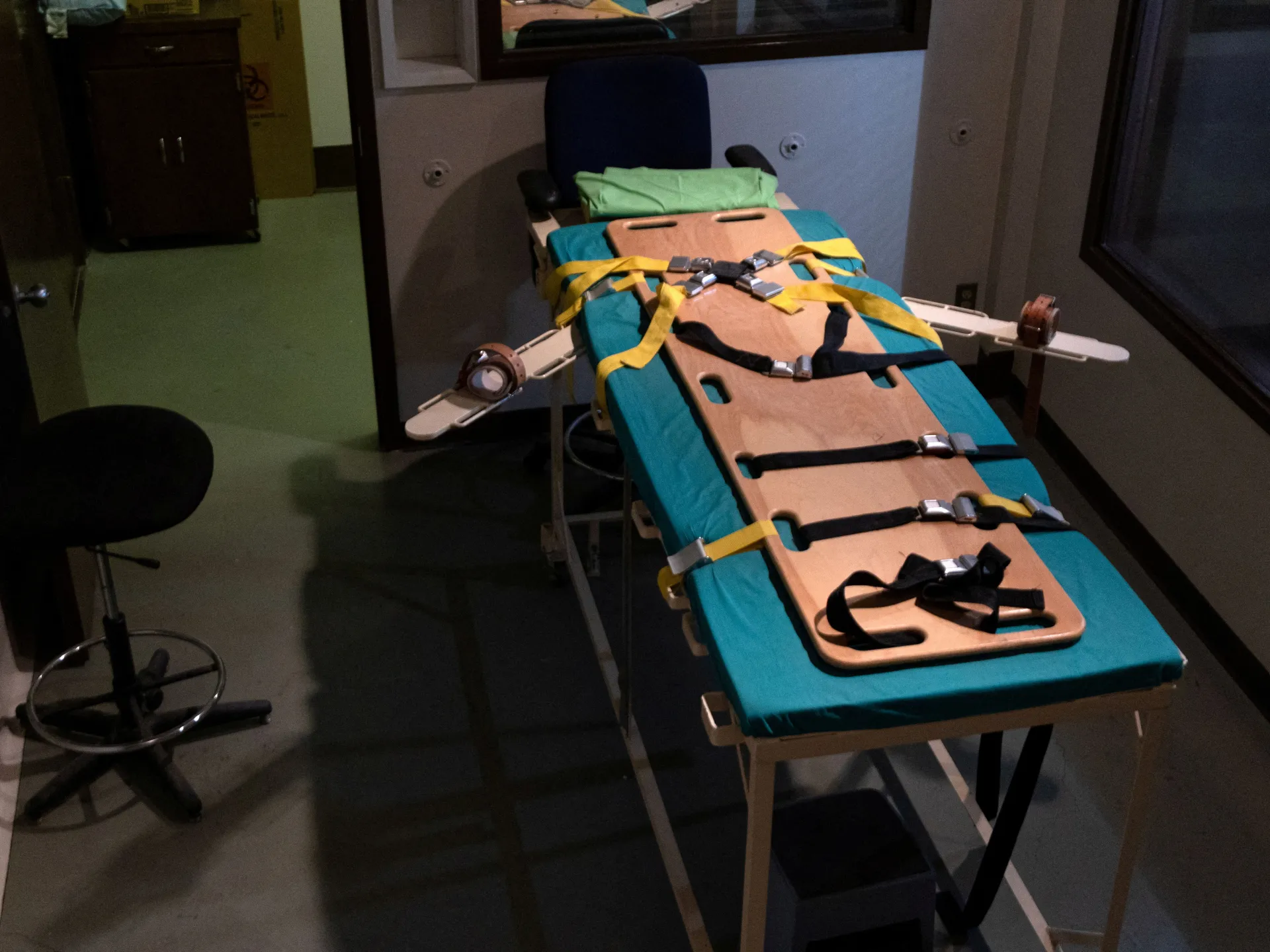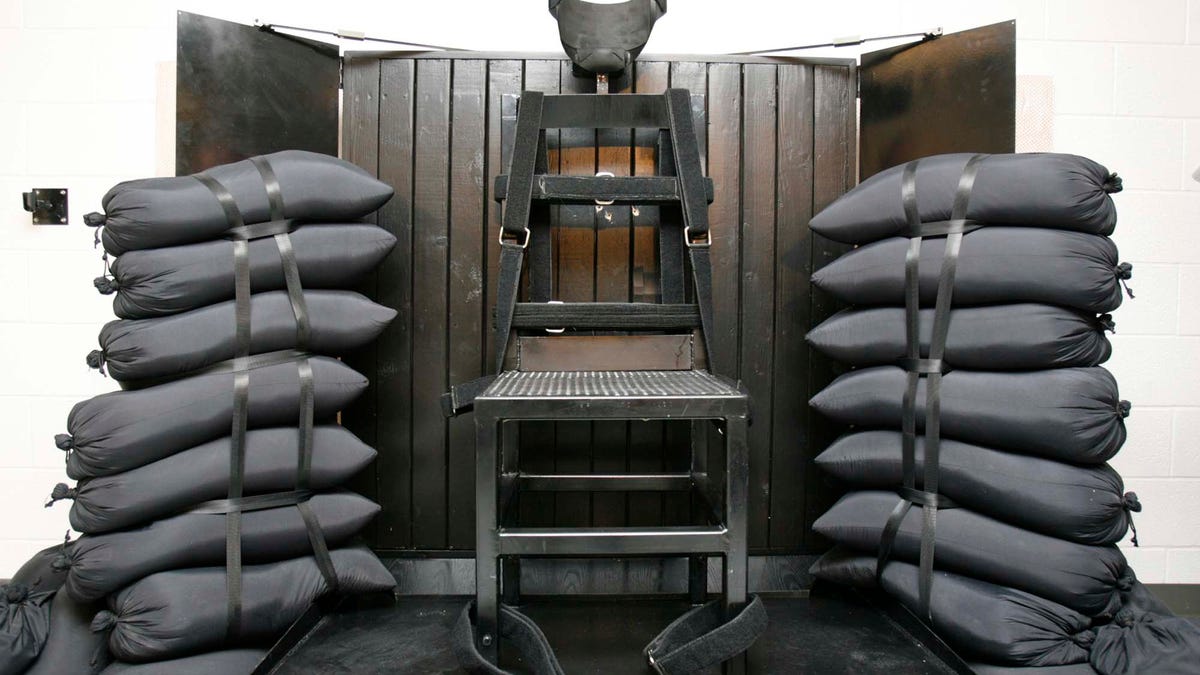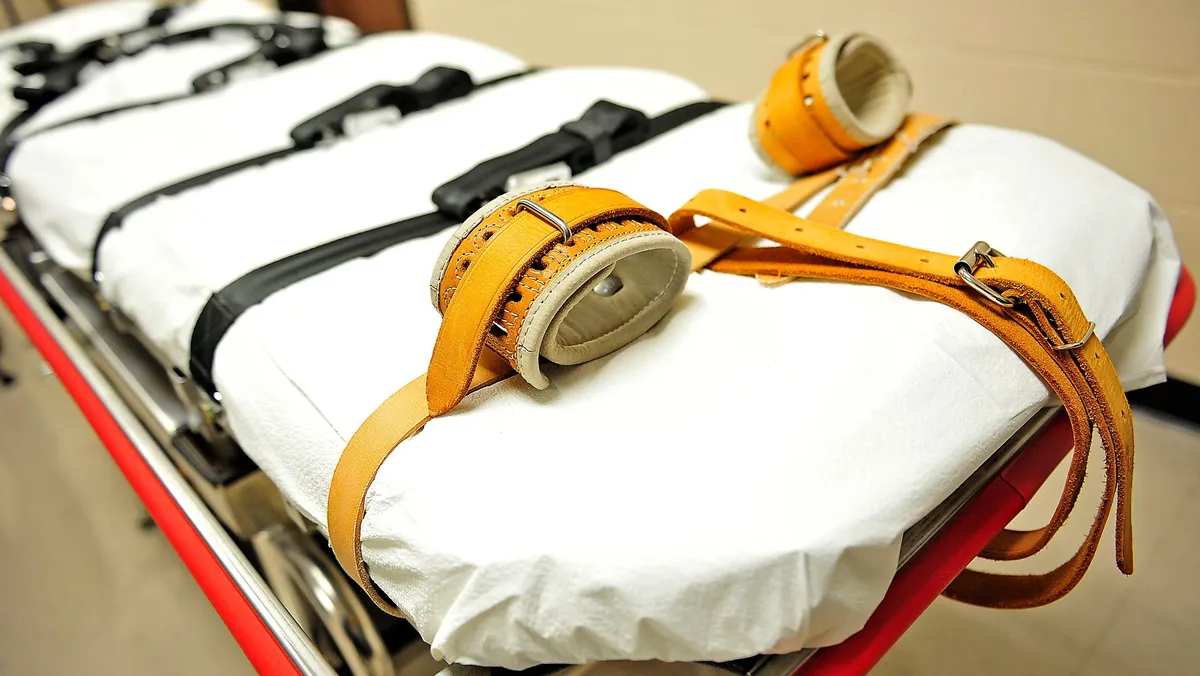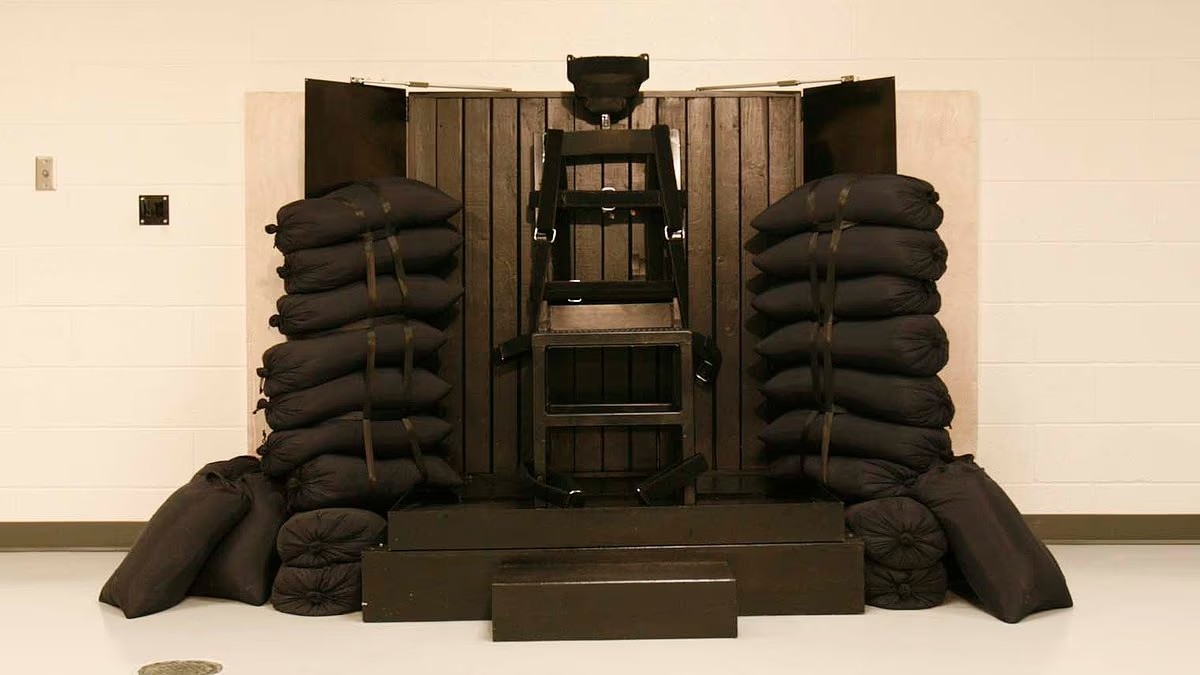
Late one Friday afternoon in March last year, the curtain in the 'witness room' of South Carolina's state execution chamber opened to reveal convicted murderer Brad Sigmon strapped to a chair. A large metal basin had been fitted underneath it to collect his blood and he was dressed all in black to hide the bloodstains that would soon soak through his clothes.With straps around his ankles, lap, waist and even his chin, he could barely move an inch. A black-and-white target had been Velcroed to his clothes over his heart.A black hood was then placed over his head, before another curtain was pulled back to reveal three square gun ports cut into a wall 15ft away from him. Standing behind each was a volunteer prison guard holding a loaded rifle.Without any countdown, they suddenly fired together, the three special bullets -designed to fragment as much as possible on impact - opening up a fist-sized hole where his heart once was. Sigmon, 67, was pronounced dead three minutes later.He had been sentenced to death for murdering his ex-girlfriend's parents, David and Gladys Larke, with a baseball bat in 2001.He'd had the dubious privilege of becoming the first US death row inmate in 15 years to be executed by firing squad, choosing it over lethal injection and the electric chair. Sigmon didn't pick the chair because it would 'burn and cook him alive', said his attorney Gerald King, adding that lethal injection was 'just as monstrous'.Convicted Alabama murderer Kenneth Eugene Smith, on the other hand, became the first American prisoner ever to be executed by nitrogen asphyxiation in 2024. Two years earlier, three executioners had spent 90 awful minutes trying to kill him by lethal injection but had given up after they couldn't find the two veins they needed.
Death row prisoners face grisly decision of how they are executed
Late one Friday afternoon in March last year, the curtain in the 'witness room' of South Carolina's state execution chamber opened to reveal convicted murderer Brad Sigmon strapped to a chair.
2,552 words~12 min read