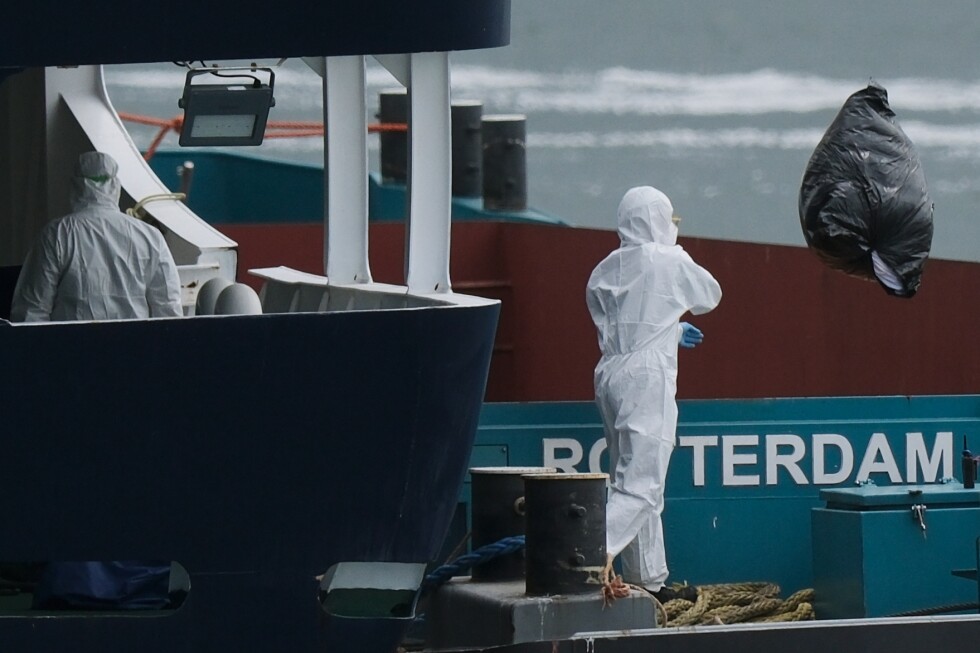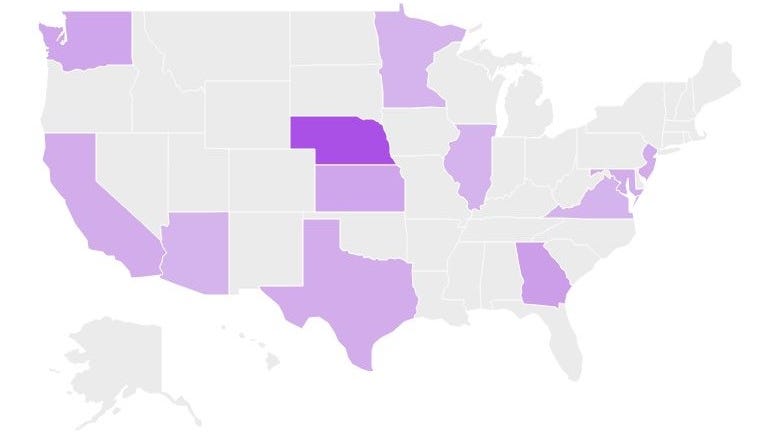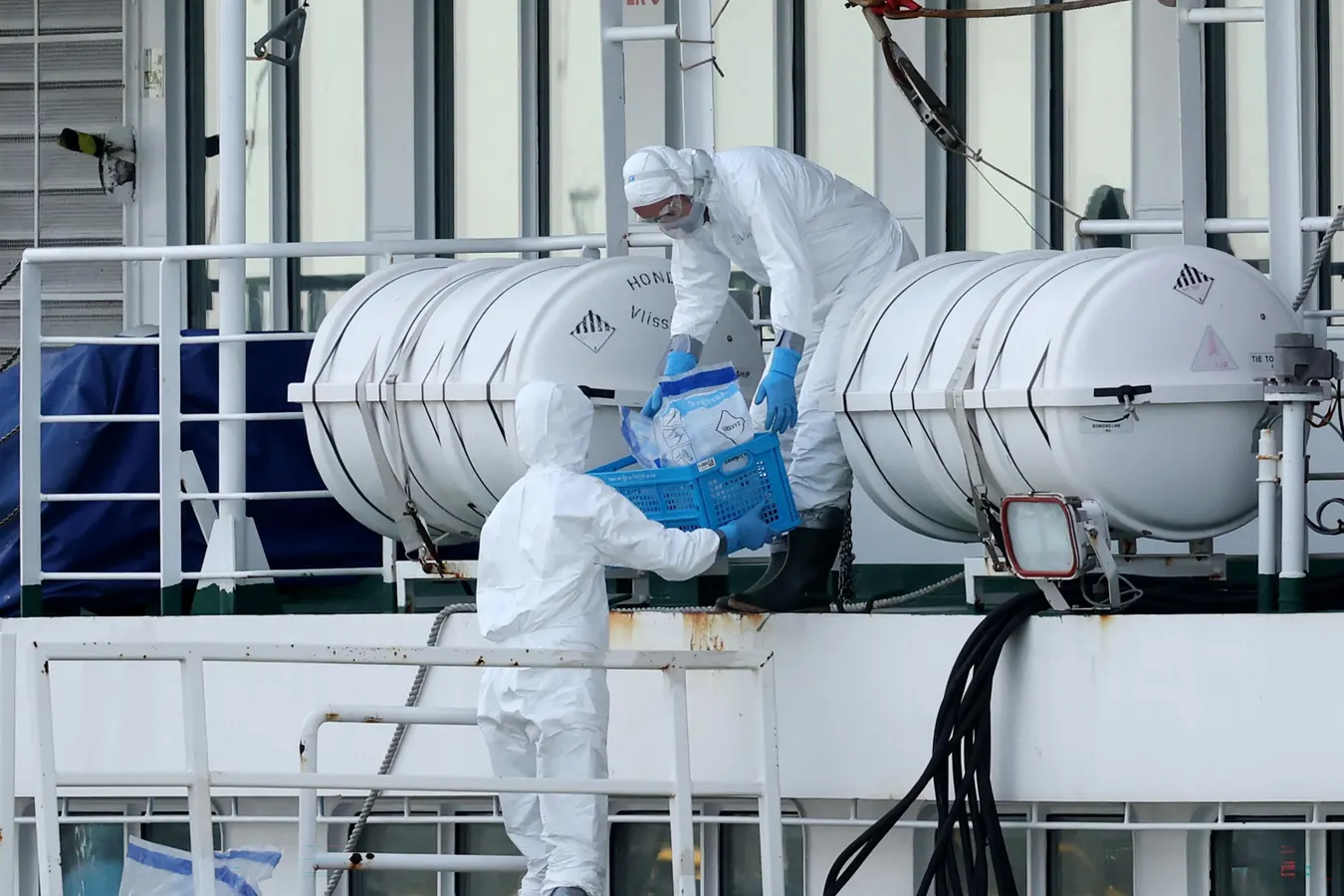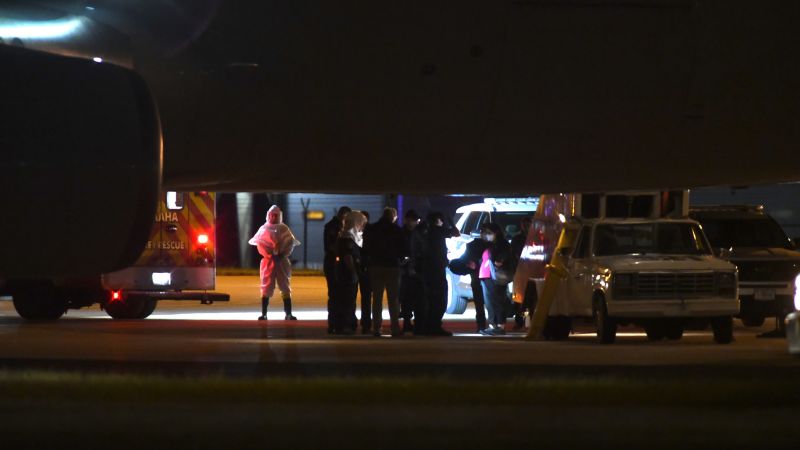
The Centers for Disease Control and Prevention has sharply tightened its guidance for Americans at highest risk of exposure to the hantavirus outbreak linked to a cruise ship, laying out more detailed restrictions that some infectious-disease experts say may be difficult, if not impossible, to follow in practice.David Fitter, the CDC official leading the agency’s hantavirus response, outlined the updated guidance during a briefing Friday. People in the “high-risk” category are instructed to stay home and limit contact with others, avoid being in buildings other than their home and avoid visitors to their residences. They are also supposed to coordinate any essential travel with their state or local health department.The guidance, which was posted online Thursday, escalated monitoring from once-daily check-ins to twice-daily, in-person visits by public health officials.Public health officials have been working to contain a hantavirus outbreak linked to the Hondius, a polar-rated expedition ship that set off from Argentina on April 1. Three people on the cruise died, including a Dutch couple whom health officials believe were the first exposed to the virus while visiting South America. Hantavirus is normally linked to exposure to the urine or feces of infected rodents, but the Andes virus, the strain linked to the Hondius, is capable of limited transmission between humans, according to the World Health Organization and CDC.Officials said there continue to be no hantavirus cases in the U.S. linked to the ship outbreak. But the stricter rules reflect the political and public health tension confronting federal officials as they try to contain a deadly virus without reigniting backlash over government surveillance and pandemic-era restrictions during covid.“They are toeing the line between the conservative pushback against a surveillance state and memories of ‘covid lockdown’ against the real need to prevent a deadly virus from slipping through the cracks,” said Abraar Karan, an infectious-disease physician at Stanford University.Jay Bhattacharya, the National Institutes of Health director who is overseeing the CDC while the agency awaits Senate confirmation of a permanent director, said during the news briefing Friday that Health Secretary Robert F. Kennedy Jr. has been receiving detailed updates on the outbreak response, along with White House officials. Bhattacharya, who said he has participated in several of those, appeared to be addressing questions about Kennedy’s level of involvement after similar questions were sidestepped during a briefing Thursday. The CDC has said 41 people across the United States are currently being monitored. Sixteen passengers from the Hondius are being housed at a federal quarantine facility in Nebraska, while two others are at a separate facility in Atlanta.The remaining 23 people include passengers who had already returned to the United States before the outbreak was identified, as well as individuals who may have been exposed while traveling on flights with a symptomatic patient. Federal officials have declined to disclose where those people are located.Public health officials in at least eight states — Arizona, California, Georgia, Maryland, Minnesota, New Jersey, Texas and Virginia — have confirmed they are monitoring individuals for possible exposure.The outbreak comes as the U.S. heads into summer, when infections from other strains of hantavirus are likely to increase, Fitter said. But unlike the Andes strain of hantavirus in the ship outbreak, these other hantaviruses are not transmitted person to person, but by inhaling dust contaminated with rodent urine, feces or saliva, or through direct contact with rodents.Individuals linked to the outbreak are recommended to monitor for symptoms for 42 days after the last potential exposure, according to CDC guidance. High-risk contacts are supposed to wear a respirator or well-fitting mask that covers the mouth and nose if indoors with others. Deb Houry, a former chief medical officer at the CDC who resigned last year to protest what she described as the politicization of science under Kennedy, said home monitoring is difficult. “When you have a communicable disease with deadly consequences, you need to ensure that we do have good compliance,” she said. “It can be done, but there needs to be very close coordination.”Karan questioned whether the guidance is realistic. “I don’t think that people are going to be able to stay away from face-to-face contact with anyone in their house for 42 days using respirators,” he said. “I don’t think it makes any sense to expect they would do this perfectly for that period of time.”If more other people become infected, health officials will face blowback, Karan said. “People are going to say, ‘Hey, I thought you said this was low risk.’”But he agreed that tougher monitoring measures are warranted, particularly for those who returned to the U.S. before May 10. Public officials have repeatedly stressed that the general public is at extremely low risk. Even though the virus is not known to spread before a person develops symptoms, the CDC’s Fitter said the recommendations are a precaution in case an exposed person develops early symptoms and doesn’t recognize them immediately.“In some cases, Andes virus can cause severe lung disease that can be fatal,” Fitter said. “As there are no specific treatments and no vaccine, it is vital that we take all precautions to prevent spread in the United States.”People infected with the Andes virus strain of hantavirus are thought to be most infectious around the time that symptoms begin, according to the CDC.
CDC tightens home monitoring guidance for high-risk hantavirus contacts
People in the “high-risk” category are instructed to stay home and limit contact with others, avoid being in buildings other than their home and avoid visitors to their residences. They are also supposed to coordinate any essential travel with their state or local health department.
875 words~4 min read