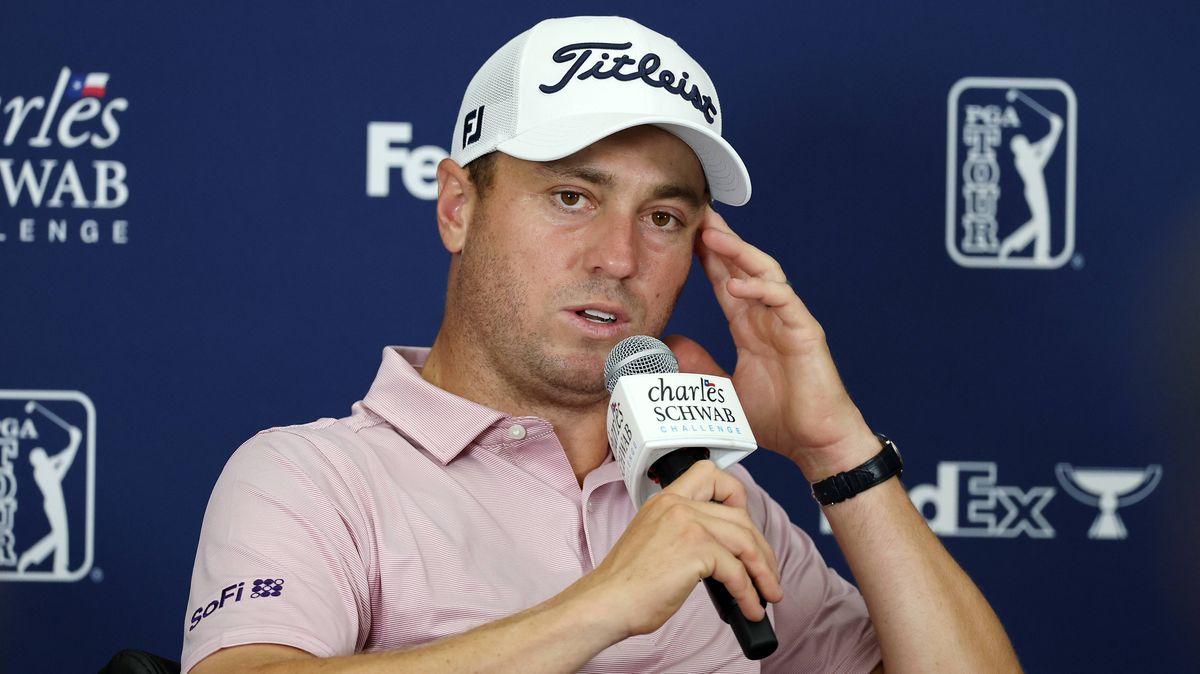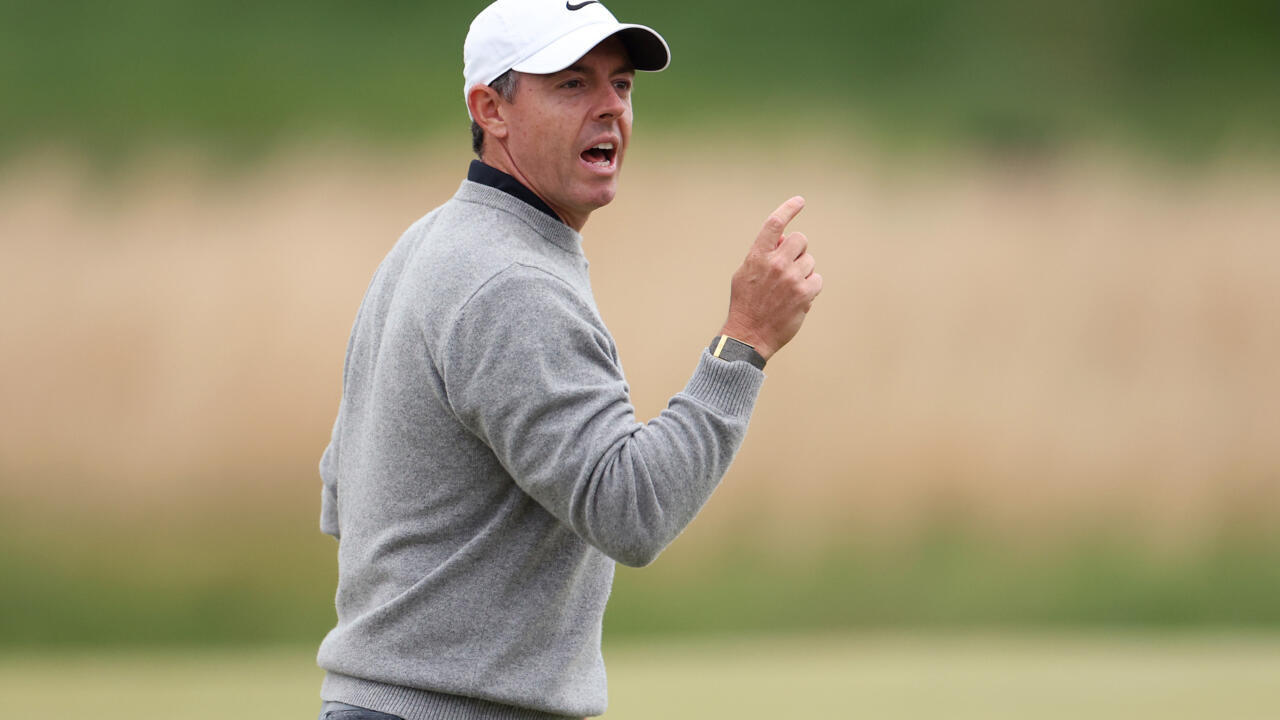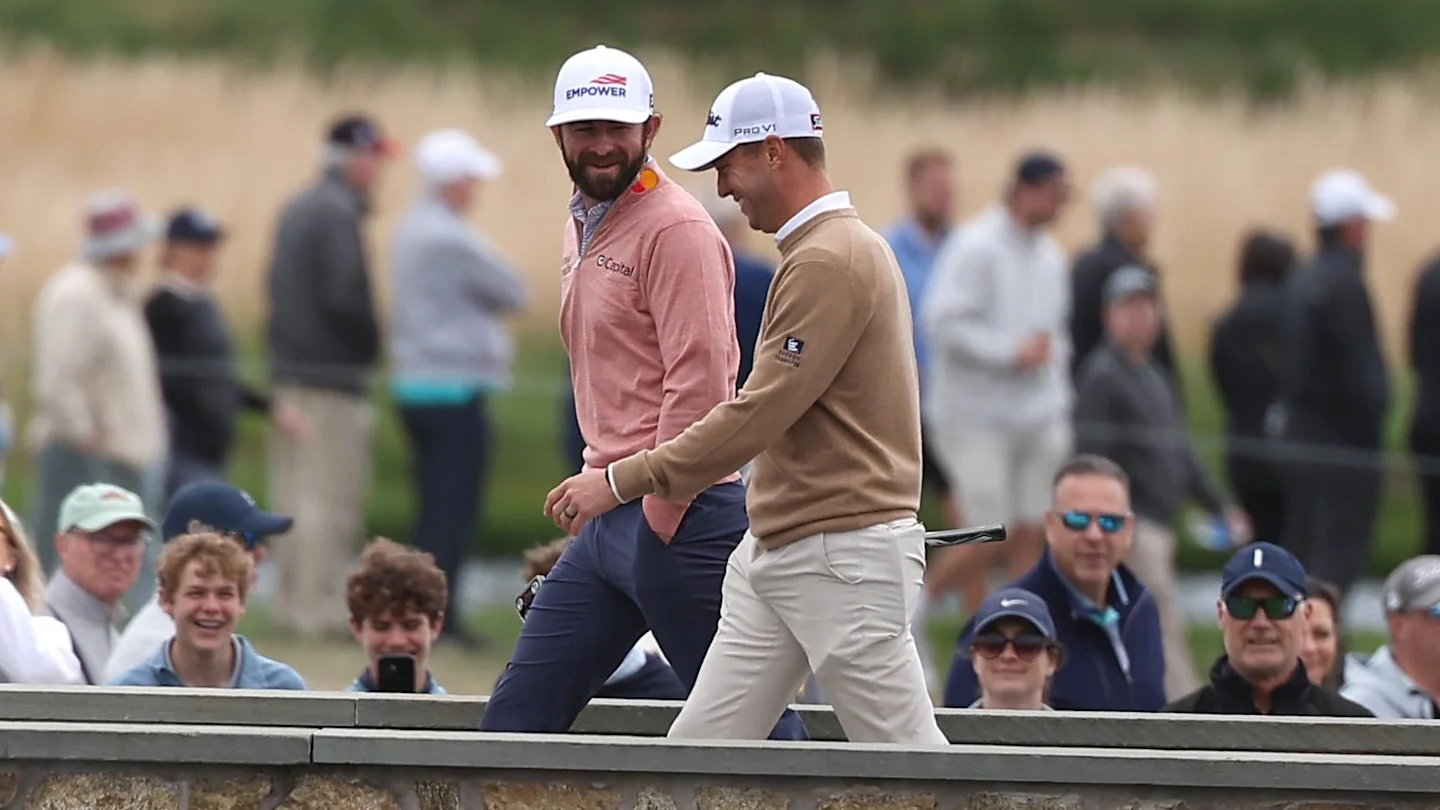
The pace of play at the PGA Championship is slow as molasses. A few threesomes, however, were apparently more sluggish than the rest. One of them was the trio of Justin Thomas, Keegan Bradley and Cam Young. They were put on the clock in the second round for slow play, and when the ESPN telecast showed the official issuing the warning, Thomas and Bradley were particularly annoyed. “Just didn’t really agree with it,” Thomas, who’s at 2 under par, said after the round. “It’s hard because it’s kind of the whole time par thing. What is time par? How can time par on this course be the same when it’s blowing 25 [mph winds] and the pins are tough than if it’s not? And does time par change every day? There's just so many factors that go into it.“We were behind. I’m not—think that wasn’t our issue or being annoyed by it, it’s just the fact that we weren’t holding up the group behind us. They were about—it seemed like every time we were on the green, they were on the tee and so on and so forth.”Groups in the morning wave at Aronimink on Friday took nearly five-and-a-half hours to complete their rounds. And that’s not unusual for a major championship. “The hard part to me with the whole pace of play thing is that you, there’s so much that goes into golf and there’s so much that goes into hole to hole in terms of, ‘Are you hitting it close, are you able to tap it in?’” Thomas said. “Or you have to mark it, stuff like that, to where, are you holding the group up or are you not, to where it’s very hard to make that call. And we just didn't agree with it, to be honest.”We've all been there Justin Thomas.Starter telling us to pick up the pace of play....meanwhile the group ahead of us is taking too long 😂 pic.twitter.com/BAasmwW44j— Ryan Sampson (@RyanMSampson) May 15, 2026Pace of play is a topic in golf that seemingly never goes away. This year, the PGA Tour updated its policy, with a one-stroke penalty at stake if a player is too slow. The PGA of America, which operates the PGA Championship, states: “If a player exceeds the time limit on one (1) occasion, he/she will then be cautioned that if he/she exceeds the time limit on one more occasion, (total of 2), he/she will automatically incur a penalty of one stroke, under Rule 6-7.”Thomas, though, didn’t rush after they were being timed. “Backed off on my first shot being on the clock even,” Thomas said. “It’s just, it’s so hard out here, and that’s the last thing I’m going to do is make a mistake because I feel like I’m rushing. If we were, for some reason, to get in a position where I was getting, we were getting bad times and we were continuing to be on, I would have had more discussions with the rules officials to kind of plead my case. But that was—it’s hard enough—I’m not going to sit out there and take two minutes, like that’s disrespectful to the field and everybody.”Eventually, they were taken off the timer. “A hole later we were caught up,” Thomas said. “So it kind of goes to our point of why we didn’t think we should of, but it is what it is. It’s a part of it.”Thomas’s group wasn’t the only one to receive a warning. The threesome of Alex Smalley, Zach Haynes and Chandler Blanchet was also put on the clock. Yet Smalley took the 36-hole clubhouse lead at 4 under par.“It’s always a little disconcerting when you feel like you kind of have to rush a little bit,” Smalley said. “So I tried not to feel like I was rushed. But I just misjudged the putt from over the green on [hole No. 1], didn’t catch my bunker shot on 2, and then hit a really poor wedge shot on 3. So I really don’t attribute those things to being on the clock. Just kind of comes with playing out here. There’s going to be times where you're timed, and it’s just going to happen.”More Golf from Sports IllustratedAdd us as a preferred source on GoogleFollow
Justin Thomas Disagreed With Slow-Play Warning in a Brutally Long Friday at PGA Championship
Rounds at Aronimink are taking over five hours and multiple groups were put on the clock, including one with the clubhouse leader.
712 words~3 min read