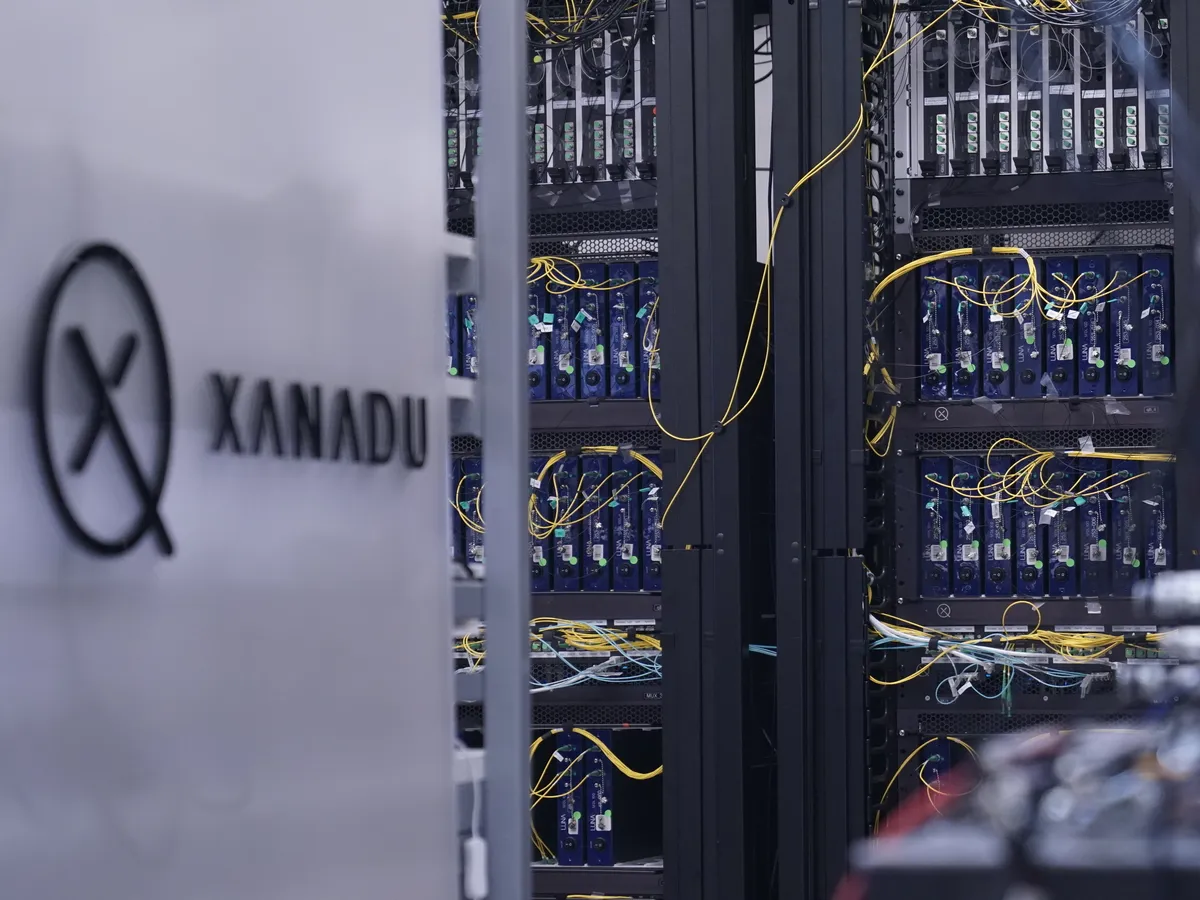
Skip to Content News Archives Economy Energy Oil & Gas Renewables Electric Vehicles Mining Commodities Agriculture Real Estate Mortgages Mortgage Rates Finance Banking Insurance Fintech Cryptocurrency Work Wealth Smart Money Wealth Management Investor Personal Finance Family Finance Retirement Taxes High Net Worth FP Comment Executive Women Puzzmo Newsletters Financial Times Business Essentials More Innovation Information Technology FP500 Podcasts Small Business Lives Told Tails Told Shopping Financial Post Store Obituaries Place a Notice Advertising Advertising With Us Advertising Solutions Postmedia Ad Manager Sponsorship Requests Classifieds Place a Classifieds ad Working Profile Settings My Subscriptions Saved Articles My Offers Newsletters Customer Service FAQ News Economy Energy Mining Real Estate Finance Work Wealth Investor FP Comment Executive Women Puzzmo Newsletters Financial Times Business Essentials HomeInnovationInvestorXanadu stock slumps 10% on US$21-million loss despite revenue jumpFounder and CEO Christian Weedbrook called the stock fluctuations a 'wild ride,' but 'characteristic of the quantum industry'Last updated 4 hours ago You can save this article by registering for free here. Or sign-in if you have an account.Xanadu Quantum Technologies Ltd. posted a US$20.6-million net loss for the first three months ending March 31. Photo by Xanadu Quantum Technologies Ltd.Toronto-based Xanadu Quantum Technologies Ltd.‘s revenue quadrupled in the first quarter compared to a year ago, but it still lost more money as it continued to spend heavily on research and development.Subscribe now to read the latest news in your city and across Canada.Exclusive articles from Barbara Shecter, Joe O'Connor, Gabriel Friedman, and others.Daily content from Financial Times, the world's leading global business publication.Unlimited online access to read articles from Financial Post, National Post and 15 news sites across Canada with one account.National Post ePaper, an electronic replica of the print edition to view on any device, share and comment on.Daily puzzles, including the New York Times Crossword.Subscribe now to read the latest news in your city and across Canada.Exclusive articles from Barbara Shecter, Joe O'Connor, Gabriel Friedman and others.Daily content from Financial Times, the world's leading global business publication.Unlimited online access to read articles from Financial Post, National Post and 15 news sites across Canada with one account.National Post ePaper, an electronic replica of the print edition to view on any device, share and comment on.Daily puzzles, including the New York Times Crossword.Create an account or sign in to continue with your reading experience.Access articles from across Canada with one account.Share your thoughts and join the conversation in the comments.Enjoy additional articles per month.Get email updates from your favourite authors.Create an account or sign in to continue with your reading experience.Access articles from across Canada with one accountShare your thoughts and join the conversation in the commentsEnjoy additional articles per monthGet email updates from your favourite authorsSign In or Create an AccountorThe quantum computing company on Thursday posted a US$20.6-million net loss for the first three months ending March 31, or 28 cents per share, compared to $12.2 million a year ago.“It takes money to achieve the ultimate goal of building a large-scale quantum computer or data centre,” Xanadu founder and chief executive Christian Weedbrook said. “One of the reasons why we decided to go public is the access to additional capital.”Canada's best source for investing news, analysis and insight.By signing up you consent to receive the above newsletter from Postmedia Network Inc.A welcome email is on its way. If you don't see it, please check your junk folder.The next issue of Investor will soon be in your inbox.We encountered an issue signing you up. Please try againQuantum computing technology is still in its early stages, and companies such as Xanadu have to figure out how to scale hardware while reducing error rates to build commercially viable machines. Xanadu is aiming to build a large-scale quantum data centre in Toronto by 2029 or 2030 and estimates the price tag will be around US$1 billion.Its first-quarter revenue jumped to US$2.8 million, beating analyst expectations of US$1.1 million, largely due to Xanadu’s involvement in the Quantum Benchmarking Initiative managed by the United States Defense Advanced Research Projects Agency, which aims to find a path to building a useful, fault-tolerant quantum machine by 2033.Three Canadian companies, including Xanadu, have advanced to the second stage of the initiative.Weedbrook said the company’s active partnerships will help advance its hardware milestones and contribute to revenue growth.For example, Xanadu in March announced a government partnership that could see Ottawa and Ontario funnel up to $390 million into the company to manufacture quantum computing hardware in Canada. It also announced a tie-up with Telus Corp. that same month to explore jointly developing quantum computing infrastructure.Weedbrook said the company’s joint initiative with U.S. defence contractor Lockheed Martin Corp. to advance quantum machine learning applications and theory will be a revenue driver and it now has a “strategic partnership” with chip giant Advanced Micro Devices Inc.“Our main priority is to build the best partnerships … rather than chasing one-off revenues,” he said.Shares of Xanadu, which are dual-listed on the Nasdaq and the Toronto Stock Exchange, slid nearly 10 per cent Friday morning.Xanadu made its public market debut in March through a merger with a special purpose acquisition company. Its stock has experienced major volatility since then, soaring 486 per cent in the first two weeks of April, but then crashing in early May.Weedbrook called the stock fluctuations a “wild ride,” but “characteristic of the quantum industry.”He said Xanadu has a “low float,” so there are few shares available for trading. But company employees will be able to sell their shares after a six-month lockup period ends, which he said would be beneficial as the company tries to secure more institutional investors.“Things will smooth out over time as we get closer to this quantum data centre,” he said. “We do our best to not keep track of the stock price. We’re long-term thinkers.” Join the Conversation This website uses cookies to personalize your content (including ads), and allows us to analyze our traffic. Read more about cookies here. By continuing to use our site, you agree to our Terms of Use and Privacy Policy.
Xanadu stock slumps 10% on US$21-million loss despite revenue jump
Xanadu Quantum Technologies Ltd. posted a US$20.6-million net loss for the first three months ending March 31. Find out more.
1,004 words~5 min read