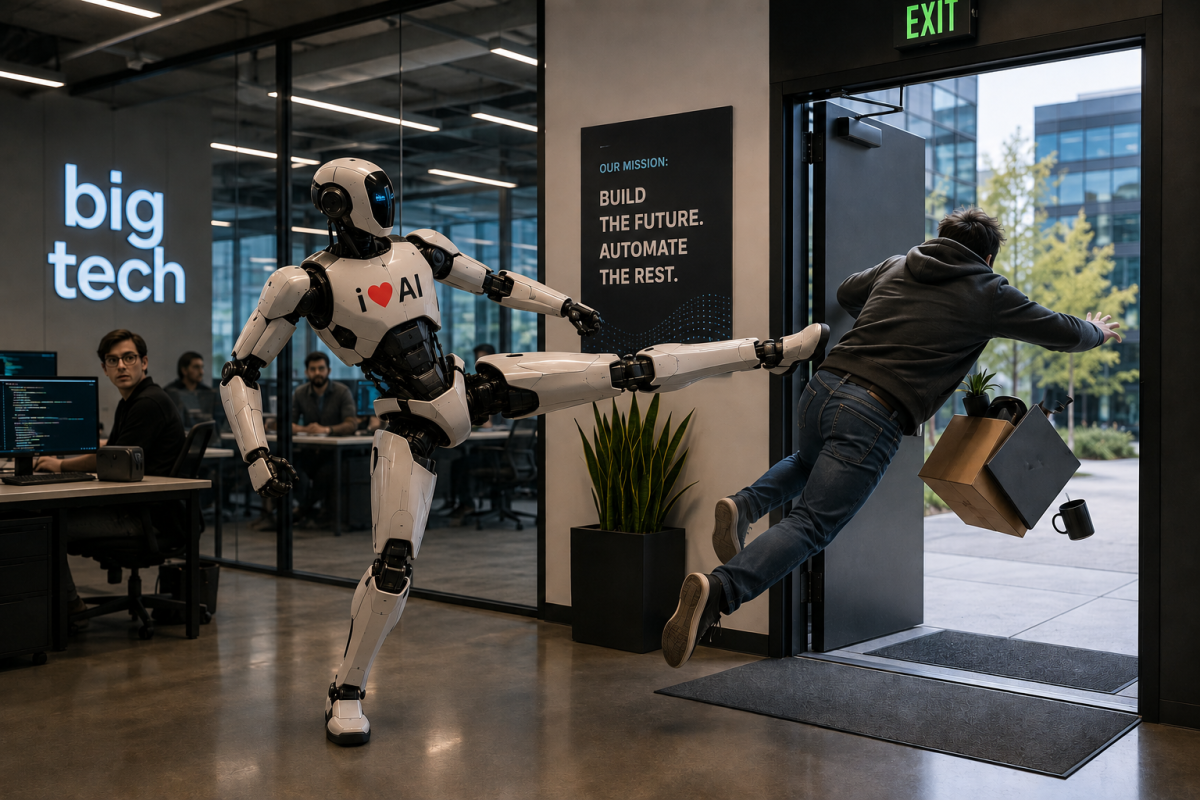
The tech industry is cutting jobs at a brutal pace in 2026. More than 1 lakh workers have already lost their jobs this year, with companies slashing teams even as they spend record amounts on artificial intelligence. The latest to join the layoff wave is LinkedIn, which is cutting around 875 employees, nearly 5% of its workforce. The layoffs mainly hit engineering, product, and marketing teams. And LinkedIn is far from alone. Cisco reportedly cut close to 4,000 jobs. PayPal eliminated 4,800 roles. Coinbase reduced 700 jobs, while Meta is preparing another round expected to remove 8,000 employees. Amazon and Oracle have also shed tens of thousands of corporate roles. The contradiction is hard to miss: humans are being cut while AI spending explodes. According to industry estimates, major tech companies are expected to spend nearly $725 billion on AI infrastructure and expansion in 2026, sharply up from around $410 billion last year. In simple terms, payroll is shrinking while GPU budgets are booming. But amid the bloodbath, one category of engineers is quietly becoming more valuable than ever. Not coders. Not managers. AI translators. Companies are now aggressively searching for experienced engineers who can actually integrate AI into real business systems. Recruiters told the Wall Street Journal that firms increasingly prefer senior individual contributors with AI fluency over large management-heavy teams. The emerging roles include AI operations engineers, AI maintenance specialists, and solutions engineers who can connect AI tools with existing banking systems, manufacturing software, healthcare platforms, or enterprise workflows. Box CEO Aaron Levie reportedly believes almost every industry—from pharma to banking—will need these hybrid engineers who understand both AI and traditional enterprise systems. The reason is simple: AI still makes mistakes. Companies now want engineers who can supervise AI agents, catch hallucinations and bugs, communicate with teams, and turn AI output into usable products. In many cases, one highly skilled engineer equipped with AI tools can now perform work that previously required entire teams. That shift is also changing what makes someone “AI-proof.” Technical skills alone are no longer enough. Recruiters say communication, collaboration, and consulting-style thinking are suddenly becoming critical because engineers increasingly act as coordinators between humans and AI systems. Meanwhile, entry-level tech hiring continues to weaken. Data cited by the WSJ shows senior-level tech openings are rising, while fresher hiring is shrinking. Companies appear less interested in training beginners and more focused on hiring professionals who already have proven AI experience. One rare exception is Amazon Web Services, which plans to hire 11,000 interns and early-career software engineers this year despite earlier layoffs. But analysts say such cases remain uncommon. The message coming out of Silicon Valley is becoming painfully clear: learning to code may no longer be enough. Learning how to work with AI could soon decide who survives the next wave of tech layoffs.
‘No coders or managers’: 1 lakh tech jobs gone, but one type of engineer is becoming untouchable, and the ₹60.5 lakh crore reason why
Tech giants are shedding over 1 lakh jobs in 2026, including significant cuts at LinkedIn, Cisco, and PayPal, despite record AI investments. Companies are prioritizing experienced engineers who can integrate AI into business systems, leading to a surge in demand for AI translators and hybrid roles.
471 words~2 min read