India has detailed systems for measuring poverty. But when it comes to wealth, the data goes dark. Understanding who the rich are is essential to building fairer taxation, climate policy, and social programs.
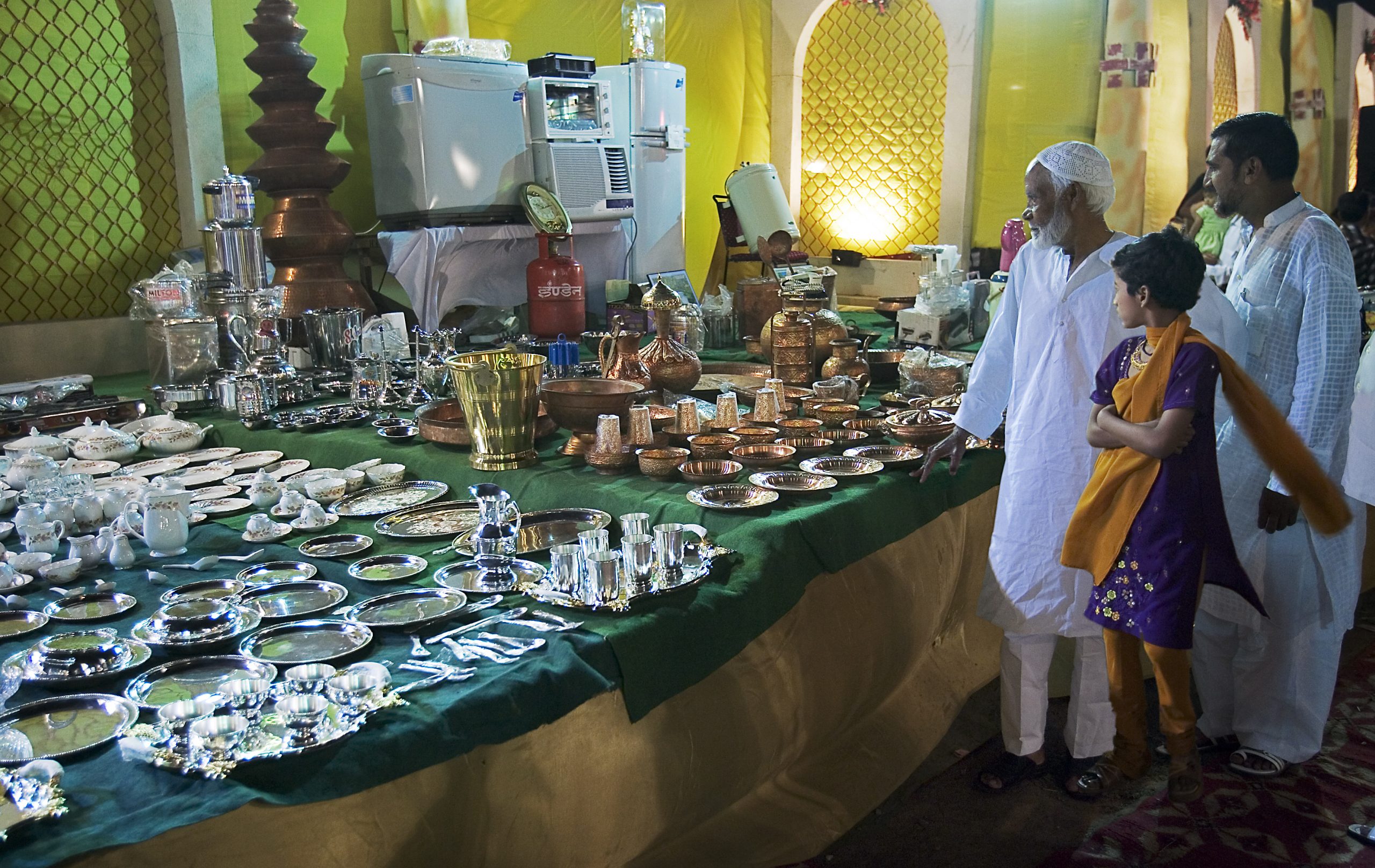
Gifts for the groom at an Indian wedding. Indians might be uncomfortable disclosing their income, but have no qualms about displaying wealth at weddings. Hence, questions around durable goods like air conditioners, refrigerators — combined with housing quality and land ownership — can reveal more about long-term financial stability than questions around income. Photo by Jorge Royan/Wikimedia Commons/CC by 3.0
India has detailed systems for measuring poverty. But when it comes to wealth, the data goes dark. Understanding who the rich are is essential to building fairer taxation, climate policy, and social programs.
India knows how to count the poor. From ration cards to multi-decade surveys such as the National Sample Survey , there are sophisticated systems to track deprivation — who’s getting by, who’s falling behind, who needs support.
But when it comes to the rich — or even just the securely well-off — we’re oddly clueless.