Despite calls for mediation, the grouping has remained fragmented, highlighting its role as a ‘club’ like the G7 rather than a forum for collective action.
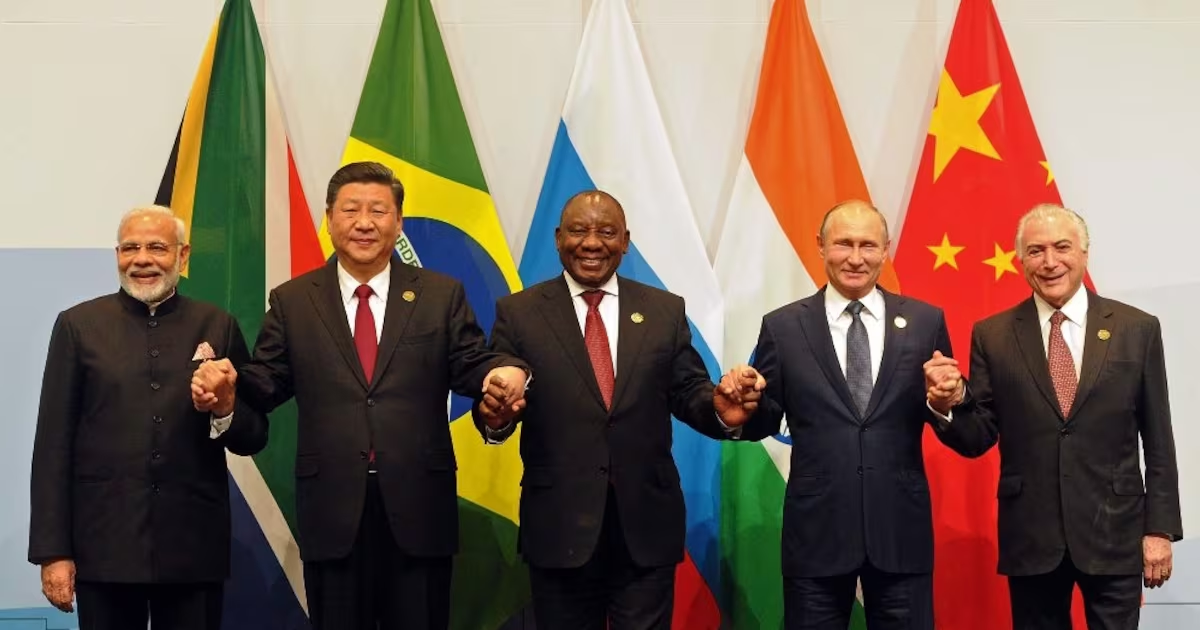
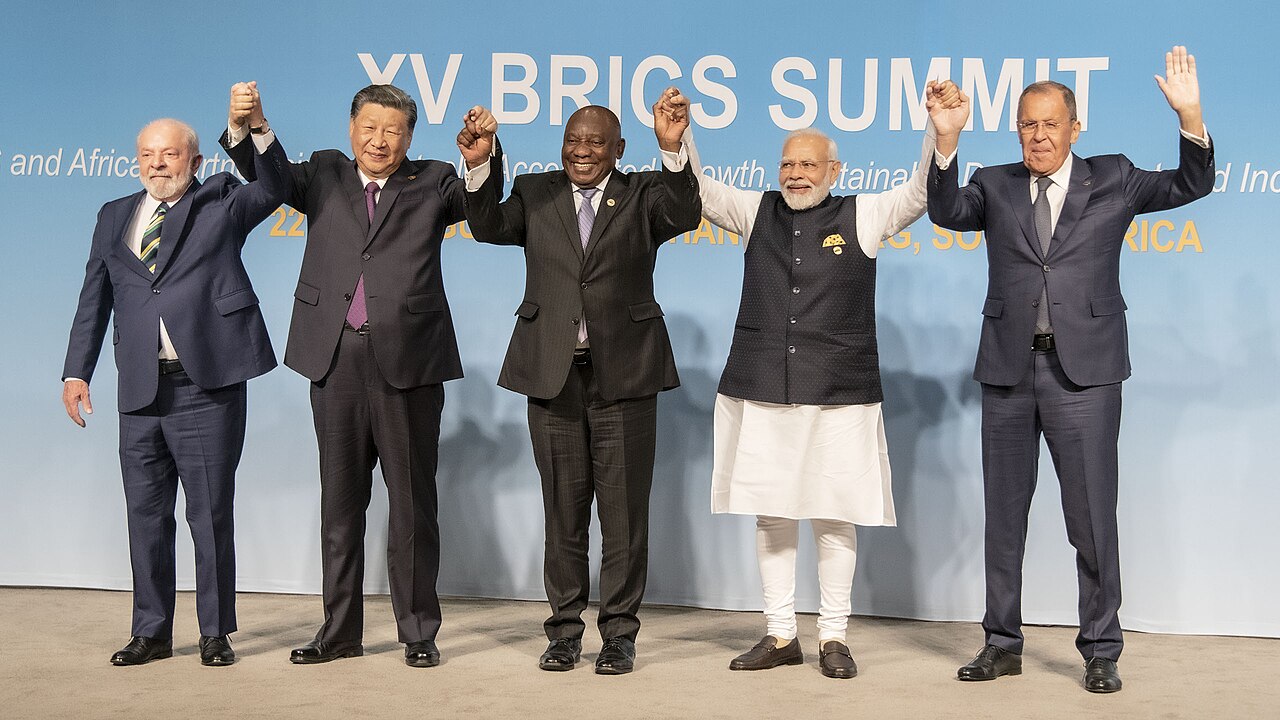
(From left) President Lula da Silva of Brazil, President of China Xi Jinping, President of South Africa Cyril Ramaphosa, Prime Minister of India Narendra Modi and Foreign Minister of Russia Sergei Lavrov join hands at a BRICS summit. Photo: Public Domain
Despite calls for mediation, the grouping has remained fragmented, highlighting its role as a ‘club’ like the G7 rather than a forum for collective action.
More than two months after the US and Israel launched military attacks on Iran, the conflict is poised on the edge of a fragile ceasefire. The cost in human suffering for Iran and Lebanon has been high. Israel has also suffered civilian casualties from Iranian missile attacks. However, the economic pain caused by the closure of the Strait of Hormuz and the destruction of energy infrastructure on both sides of the Persian Gulf is already being felt around the world.
Fuel prices in the Philippines have more than doubled since the start of the conflict, affecting households across the country. A rise in LPG cylinder prices on the black market has forced migrant workers in India to leave cities. The odds of a US recession in the next 12 months have risen to nearly 50 percent. Food prices in Gulf countries, which import 70–80 percent of their food, have surged. Global food availability is also at risk, as fertiliser supplies that transit through the Strait remain disrupted.