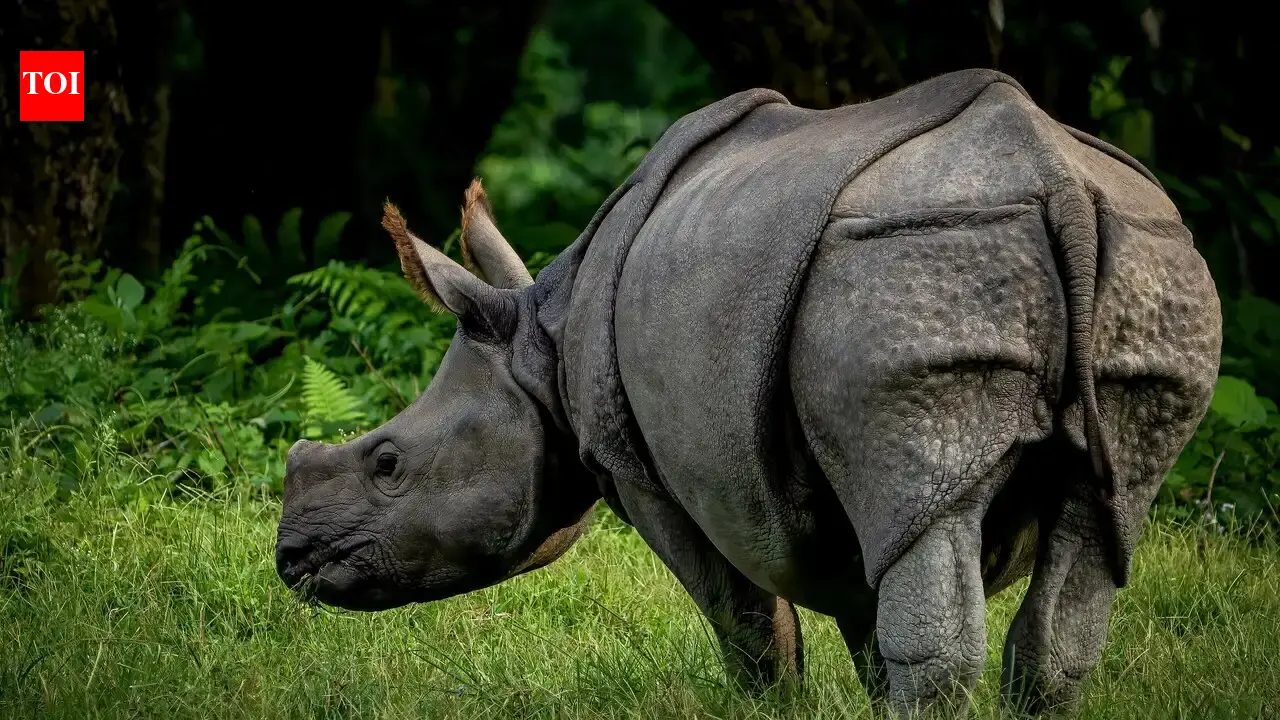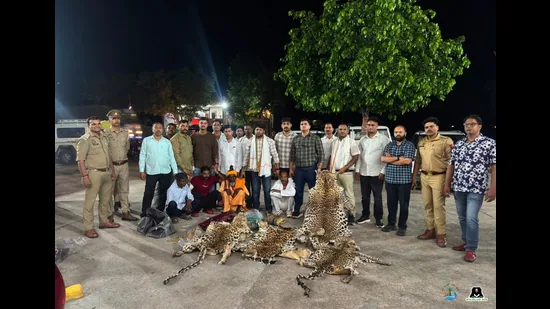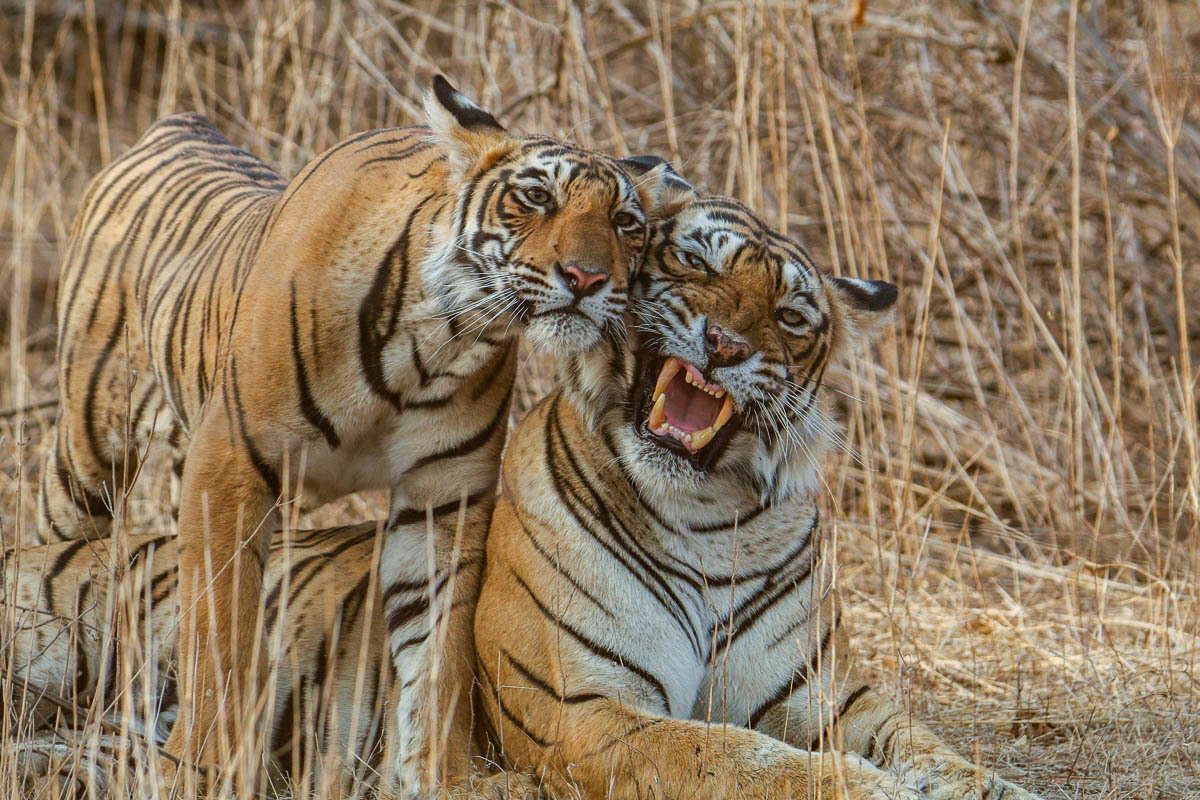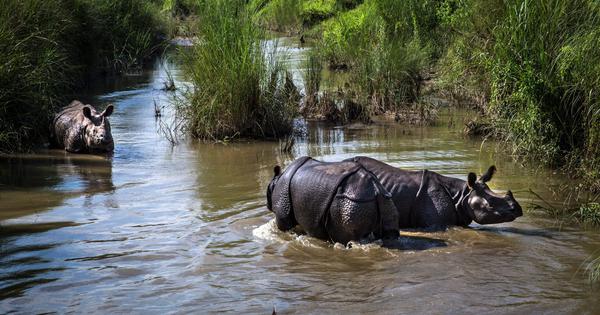
In February this year, 45 people headed towards jewellery shops in Rohru, a town in Himachal Pradesh. But shopping was not their agenda. The group was a squad of forest rangers, guards and van mitras, on a mission, Operation Clawing Back, to raid shops to seize jewellery allegedly made from claws and teeth of leopards and feathers of protected birds. This raid illustrates a wider phenomenon in the Himalayas.Illegal wildlife trade is happening across eight countries in the Hindu Kush Himalaya region and has doubled from 2019 onwards compared to 2018 and previous years, found a study published in January 2026. The research was conducted by Babar Khan and Kesang Wangchuk at the International Center for Integrated Mountain Development in Kathmandu, Nepal.India and China recorded thousands of seizure incidents, with carnivores, elephants, pangolins, and various endangered animals trafficked for live trade, body parts, and traditional medicine, according to the research. Illegal wildlife trade is the fourth largest illicit transnational activity in the world. It remains an attractive business for poachers and smugglers, with Southeast Asia at the epicentre of much of this crime. Over 12,000 species of animals and plants have been traded internationally in recent years.A threat to biodiversity and the mountain ecosystemThe Hindu Kush Himalaya stretches over 3,500 kilometres from west to east, spanning either all or part of these eight countries – Afghanistan, Bangladesh, Bhutan, China, India, Myanmar, Nepal, and Pakistan. The region hosts four global biodiversity hotspots – Himalaya, Indo-Burma, and the Mountains of Central Asia and the Mountains of Southwest China.It is home to rare and endemic species such as red pandas, snow leopards, one-horned rhinos, Asian elephants, and Bengal tigers.A view of Skardu in Gilgit-Baltistan, Pakistan. The Hindu Kush Himalaya stretches over Afghanistan, Bangladesh, Bhutan, China, India, Myanmar, Nepal, and Pakistan, and is home to rare and endemic species. Illegal wildlife trade in these countries has doubled from 2019 onwards compared to 2018 and previous years. Image by Alex Treadway/ICIMOD.There is also a link between illegal wildlife trade and zoonotic diseases, where more than 75% of pandemics can be traced back to wildlife. The increase in wildlife trade from 2019-21 has been linked to the Covid-19 pandemic, revealed the study. Due to lockdowns, there was less law enforcement and surveillance.People also faced economic hardship and the food supply chains were disrupted, which pushed communities towards poaching. For instance, the study showed that India reported a 151% increase in poaching during the pandemic and Nepal and Bangladesh also recorded a rise in such incidents.“It’s not about a few species being killed, taken away from their habitats or trafficked to another place. Actually, it’s a big threat and menace to the mountain ecosystem, which unfortunately is very fragile,” said Babar Khan, regional lead at ICIMOD. Wildlife being sold within the Hindu Kush Himalaya region and across its borders also has high human stakes — 1.8 billion people living in the high mountain systems and downstream Asia depend on this biodiversity for their livelihoods and other ecosystem goods and services, Khan told Mongabay-India.Drivers of wildlife tradeThe foremost driver of this illicit trade is the consumer demand for wildlife products, according to the study. People acquire wildlife as luxury and fashion items, speciality foods and exotic pets. There is also a growing demand for traditional Chinese and Tibetan medicines and folk remedies, which use wildlife derivatives. “As far as Tibetan and Chinese traditional medicine are concerned, we cannot just paint them with a broad brush. We have to look at the nuances,” said Tsewang Namgail, a wildlife biologist and director at the nonprofit Snow Leopard Conservancy India Trust. He pointed out that other traditional healing systems in the Himalayas such as Ayurveda also use biological materials and should be considered in the bigger picture to avoid bias.To meet consumer demand, a large variety of species is taken from the wild. The study lists carnivores, elephants, pangolins, testudines, antelopes, snakes, birds, lizards, amphibians, crabs, insects, and flowering plants as trafficked species. While live animals made up the largest trafficked group to be sold, the commodities included specimens, skins, ivory artefacts, roundwood, scales, horns, tusks, bones, claws, teeth, meat, shells, gall bladders, skulls, feathers, and furs.These species then become a part of crossborder trade, found the study. “The illegal goods were taken through porous borders and also high mountain passes that were poorly monitored. Because of difficult terrain and complex geography, monitoring has been difficult,” said Kesang Wangchuk, who works as intervention manager for human-wildlife coexistence at ICIMOD.
Increase in illegal wildlife trade in the Himalayas endangers the fragile region
Better cooperation among the countries, including India and China, is needed, say researchers.
1,491 words~7 min read