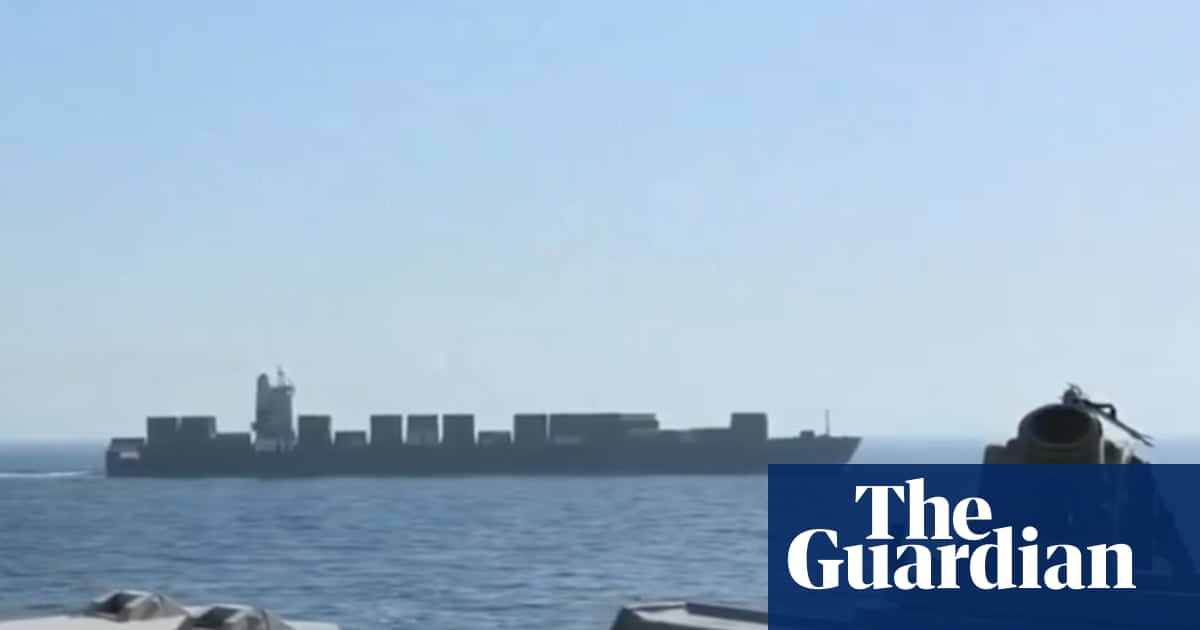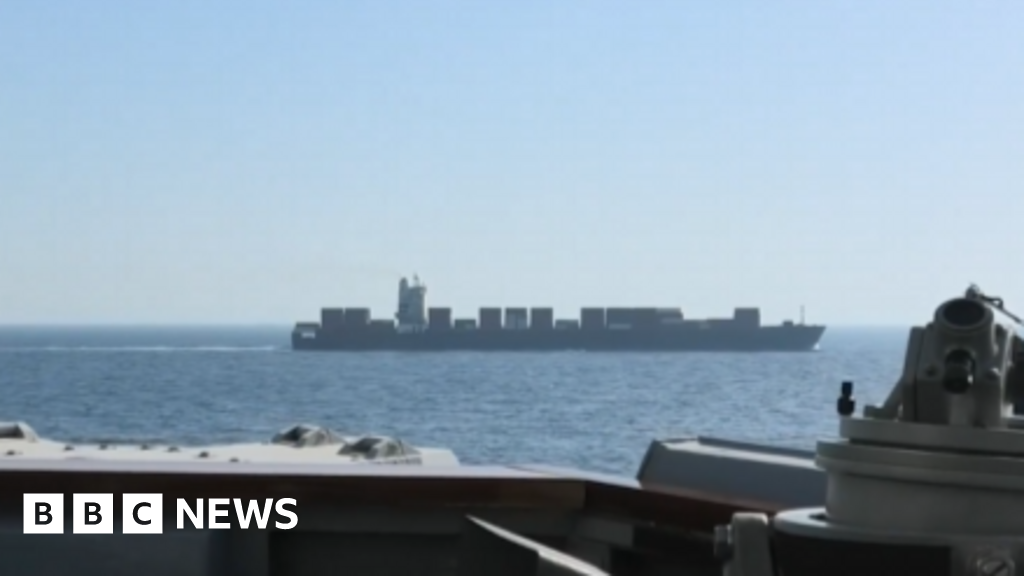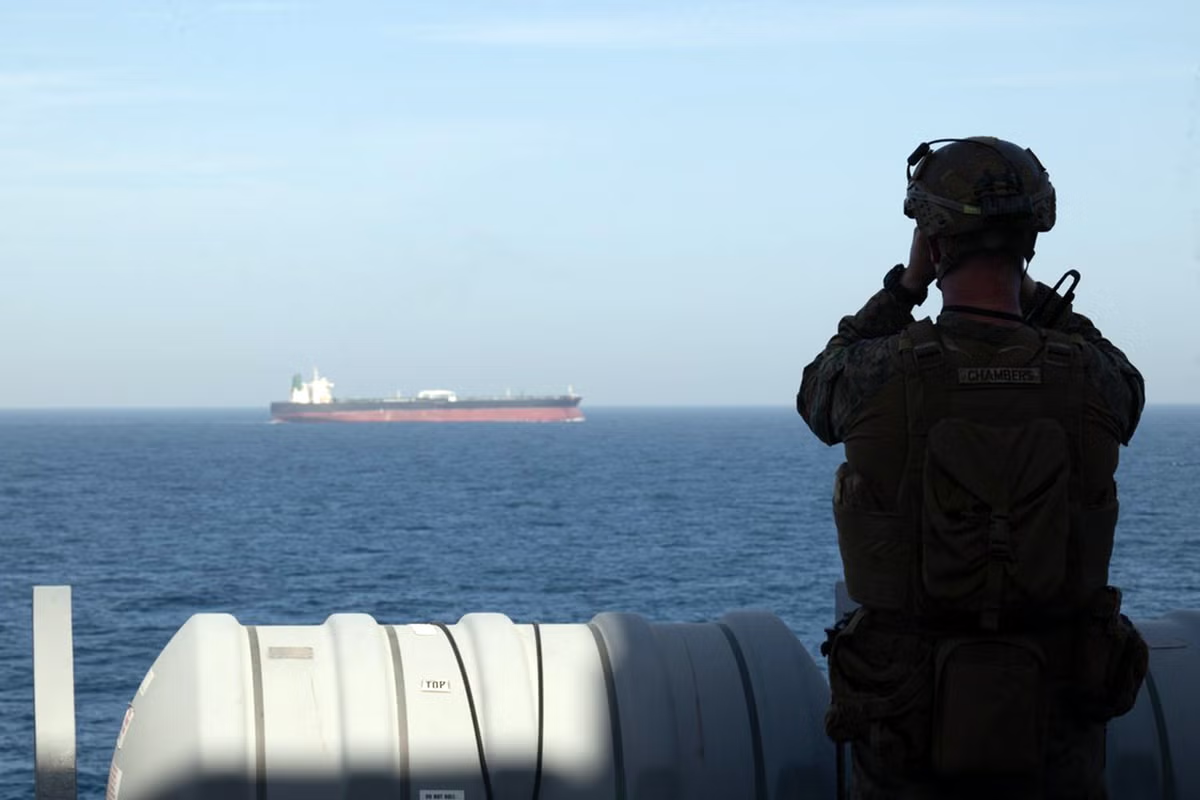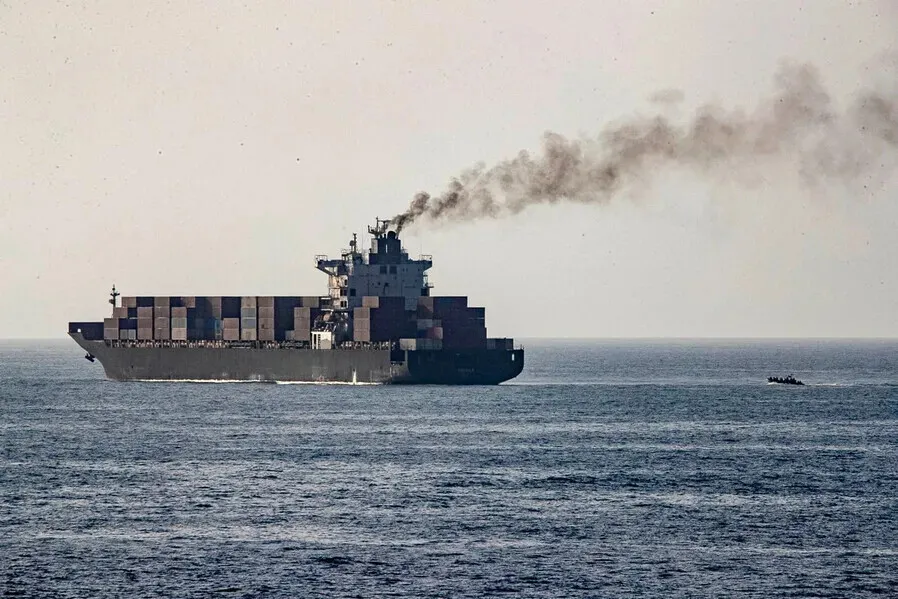
US forces patrol near the Iranian-flagged cargo ship M/V Touska after it was boarded and seized by US forces in the Arabian Sea (US Central Command via X/Reuters/Yonhap)
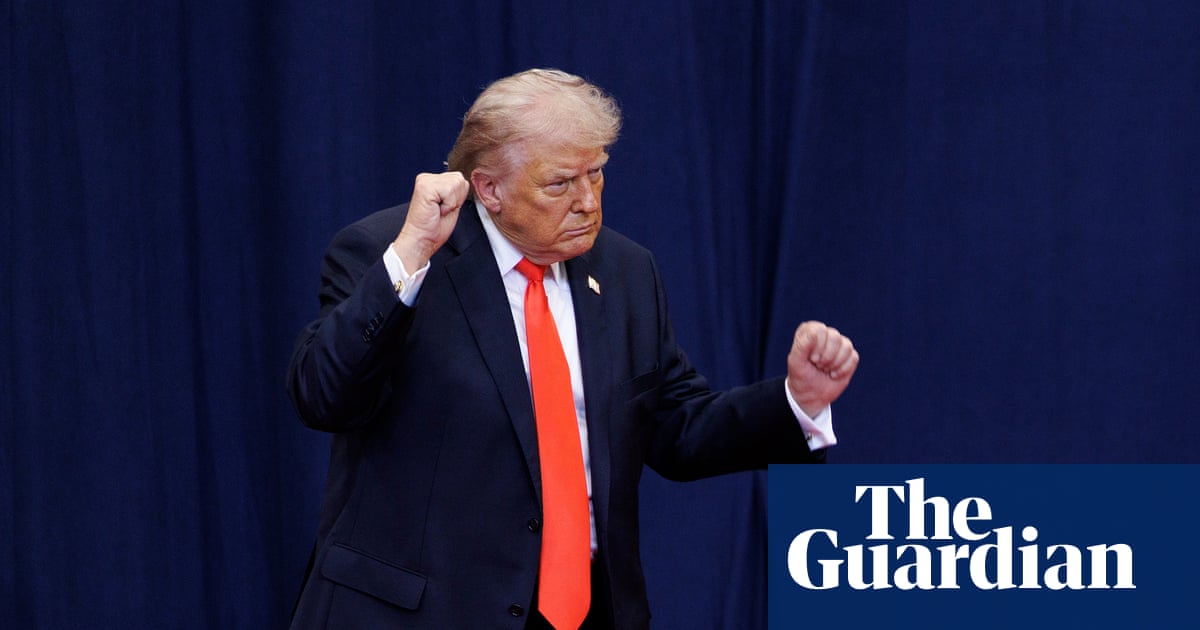
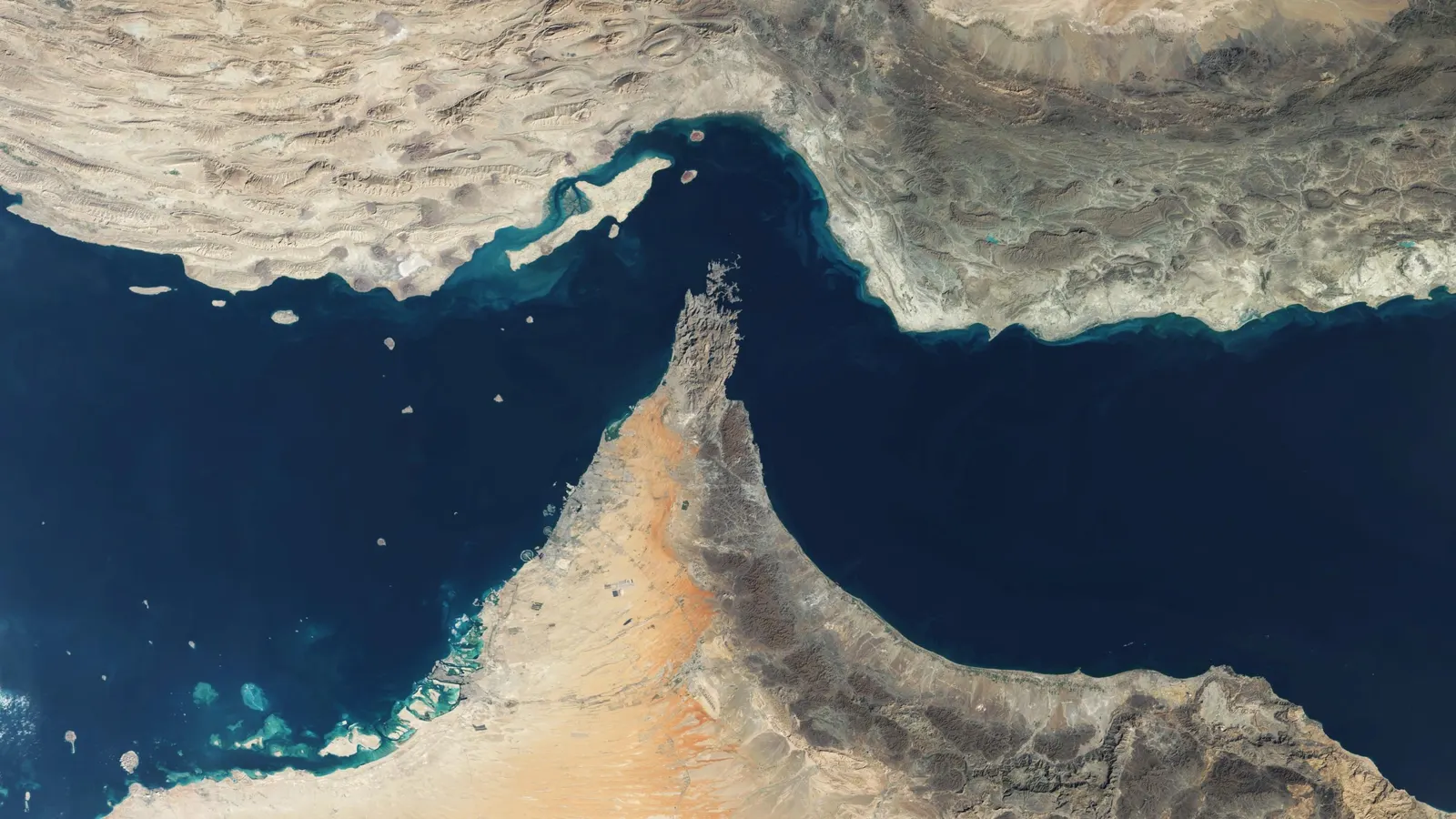
US President Donald Trump offered an unvarnished account of the US Navy’s blockade of Iran in remarks in Palm Beach, Florida, on May 2.When the Iranian cargo ship Touska attempted to break through the blockade last month, it was forcibly stopped and seized by the USS Spruance, a destroyer in the Arleigh Burke class (the backbone of the US Navy).Trump described the scene as follows.“One shot into the engine room blew up the engine room. The ship stopped,” Trump said. “Then we landed on top of it [. . .] and we took over the ship. We took over the cargo, took over the oil. It’s a very profitable business. Who would have thought we were doing that? We’re like pirates. [. . .] But we’re not playing games.”Trump’s remarks evoke scenes of pirates ransacking trading vessels in the Indian Ocean in the 18th and 19th centuries. It’s almost too surreal to view this as an operation carried out by the world’s most powerful navy. But as Trump said, the US is “not playing games.” From financial sanctions to naval blockadesIran isn’t the only country facing such measures.After imposing a naval blockade on Venezuela last December, the US inserted special forces in early January to seize Venezuelan President Nicolás Maduro and bring him to New York.Then, in late January, the US expanded its blockade to include Cuba. Oil shipments have been blocked for four months now, leaving the Cuban government basically unable to function. This is the first time since the Cuban Missile Crisis of 1962 that Cuba has faced such a blockade.Since the end of the Cold War, the US has generally used financial sanctions to force “rogue states” to change their behavior. Such sanctions exploit dollar hegemony to freeze countries out of the global financial system.Previous US administrations have preferred the sanctions approach as a means of exerting pressure without a military clash.But Trump wasn’t satisfied with this slow and sometimes unreliable method. Sanctions also don’t jibe with Trump’s insistence on immediate results.The method Trump has chosen is the naval blockade. Deploying naval assets to block maritime access to the targeted country is a direct way of squeezing the economy.But when the Venezuelan blockade didn’t yield results right away, Trump promptly pivoted to the special forces.In the case of Iran, Trump began by ordering decapitation strikes on the leadership, as Israel had requested. Later, he responded to Iran’s blockade of the Strait of Hormuz by ordering a counterblockade of Iran.Under international law, a naval blockade is regarded as more than mere sanctions — it’s an act of war. That shows the US’ foreign strategy has entered a new phase. Regional powers challenge US sanctionsCountermeasures by countries under sanctions have been rapidly evolving. Rather than simply submitting to sanctions as in the past, they’re taking steps to circumvent or explicitly defy them.A prime example is Iran and Russia’s “shadow fleet,” a network of ships organized to secretly export Iranian crude oil. The network is believed to consist of around 1,000 Russian ships and 600 Iranian ships.These ships conceal their true origins by turning off transponders and engaging in ship-to-ship transfers in international waters.Iran and Russia also duck US financial sanctions by handling transactions in Chinese yuan, rather than US dollars.Now that the US has expanded its blockade to the Indian and Pacific oceans, Iran’s evasive strategies are leading to a cat-and-mouse game ranging across the Seven Seas. Those efforts enjoy the tacit support of members of the BRICS organization, including China.After Western countries moved to restrict Russia’s exports, Russia has been selling crude oil to such countries as China and India at a discount. Iran also sells 90% of its oil to China.There are evident examples of more overt responses to US’ sanctions — including Iran’s blockade of the Strait of Hormuz and China’s controls on the exports of critical minerals.Last April, China responded to the Trump administration’s ruinous tariffs by restricting exports of rare earths, immediately damaging the US manufacturing sector and defense industry. In the end, the US agreed to ease tariffs as part of a temporary “truce.”When the US recently slapped sanctions on China’s small-scale “teapot” refineries, the Chinese government countered by prohibiting Chinese companies from complying with the sanctions.“Teapot” refineries originally referred to facilities set up at newfound oil fields, with the moniker inspired by their diminutive size. China is understood to have more than 100 such refineries, each processing less than 100,000 barrels per day.Economic sanctions are no longer the sole preserve of the US. The world is moving into reciprocal and bidirectional economic warfare.Nicholas Mulder, a history professor at Cornell University and author of “The Economic Weapon: The Rise of Sanctions as a Tool of Modern War,” wrote in the Financial Times that “the era of US dominance in economic warfare is over.”According to Mulder, the history of economic coercion shows that when sanctions are sustained over time, affected countries respond by growing more self-sufficient and finding loopholes even as hostility increases between the two countries.“Instead of averting military action, sanctions are now just as frequently paving the way to violent escalation,” he warned. Trump’s self-defeating blundersTrump’s blockades may be an attempt to dominate regional powers with the US’ current military supremacy before China can grow more powerful. While the US has not targeted China directly, its series of moves against Venezuela, Iran and Cuba — all countries friendly with China — is ultimately an attempt to seize the high ground in the two countries’ hegemonic struggle.But for a blockade to bite, it needs to be enforceable. And that requires a powerful navy and a network of alliances.The reality is the US is deficient on both fronts. Its war with Iran has shown that the US Navy’s operational capabilities are weaker than before.Concentrating forces in the Middle East has meant siphoning off assets from the Asia-Pacific.The USS Abraham Lincoln, which had been stationed in the South China Sea, was redeployed to the Middle East, and two Marine Expeditionary Units, consisting of around 4,400 service members altogether, were redeployed from the Pacific region.Even so, the US has been unable to break Iran’s stranglehold on the Strait of Hormuz. The US has 11 aircraft carriers, but only one-third of them are ready for action. The others are busy training or are being repaired.While the US sent three aircraft carriers to the war against Iran, one of those (the USS Gerald Ford) returned to the US this month. The carrier remained on deployment for a record-breaking 300-plus days.A fire that broke out in the carrier’s laundry department in March hinted at the crew’s exhaustion after moving straight from the blockade of Venezuela to the Middle East, symbolizing the structural limitations facing the US Navy.Princeton University professor Aaron Friedberg argued in his monograph “The Weary Titan” that the decline of the British Empire’s naval power began in the early 20th century, when it was no longer able to control all the seas at once.At the time, the British had adopted its “two-power standard” of naval power, which stated that it should maintain a number of battleships equal to the combined strength of the next two largest navies in the world. But by the time the late 19th century rolled around, this was proving difficult to sustain. In 1883, the British had 38 battleships, comparable to the combined 40 held by France and Russia. But by 1897, it had only 62 compared to a combined 97. The rapid augmentation of naval power by the US and Germany that soon followed rendered the two-power standard a dead letter. Today, the US is lagging behind China in terms of total quantity of warships in operation (excluding auxiliary and support vessels), 219 to 234. While the US Navy may have the qualitative edge, China is quickly making ground on that front as well. Bit by bit, it is beginning to resemble the situation the British Empire found itself in at the turn of the 20th century. As if that weren’t enough, its alliance networks are also beginning to unravel. Trump has ordered the withdrawal of a portion of the US troops stationed in Germany after it refused to support his war with Iran. The fact that Trump reached for troop withdrawals after tariffs goes to show just how desperate the US is. Bit by bit, the transatlantic alliance is coming undone.As for how this latest war will affect the global power competition between the US and China, Friedberg said on a recent podcast that “it’s hard [. . .] to see how it ends in a way that enhances [the US] position in the world generally.”His argument is that while China stays focused on consistent strategic objectives, the US is overextending itself across a number of new fronts and losing strategic focus. “We’re in danger of taking our eye off the ball, and that can only worsen our position in the long run,” he warned. According to Friedberg, now’s the time for the US to focus on its fronts in Europe and Asia, where Russia and China are trying to expand their power. Trump’s truculent and erratic foreign policy is self-destructive. The US is trying to return to the era of unipolarity in which it was the world’s only superpower, but contrary to its intentions, it is only eroding its own hegemonic position and pouring gas on the multipolar competition. By Park Hyun, editorial writerPlease direct questions or comments to [english@hani.co.kr]