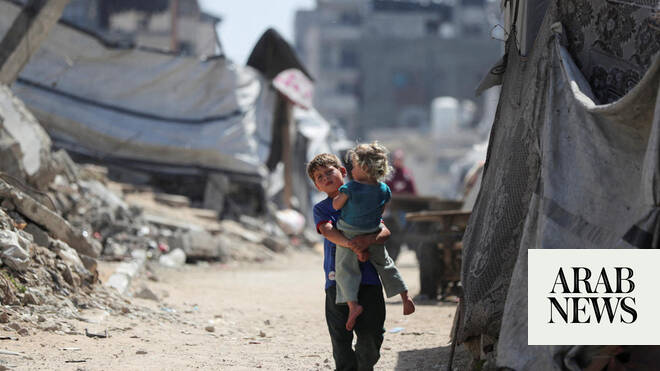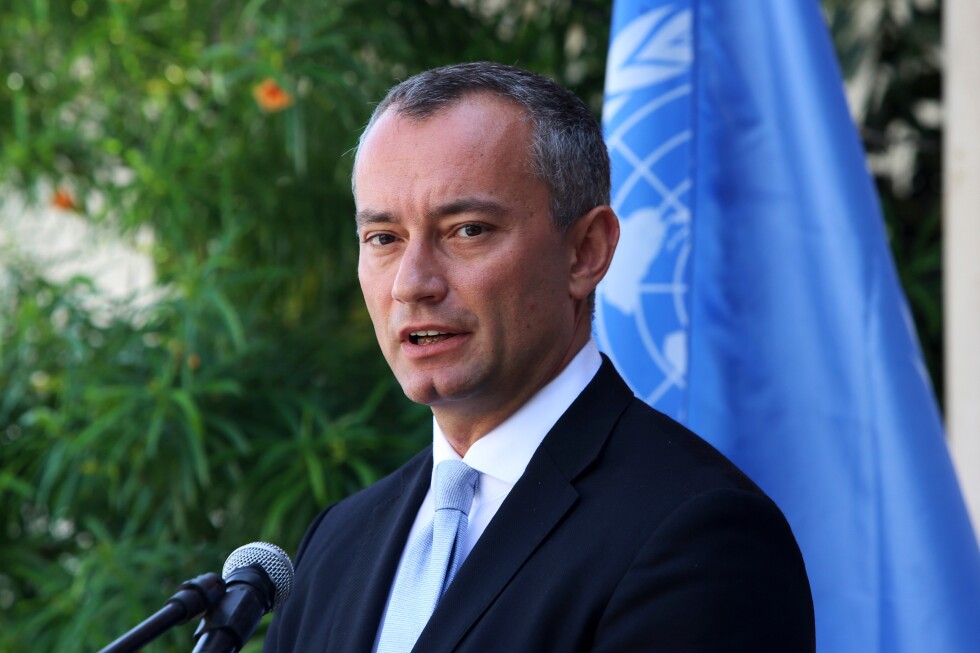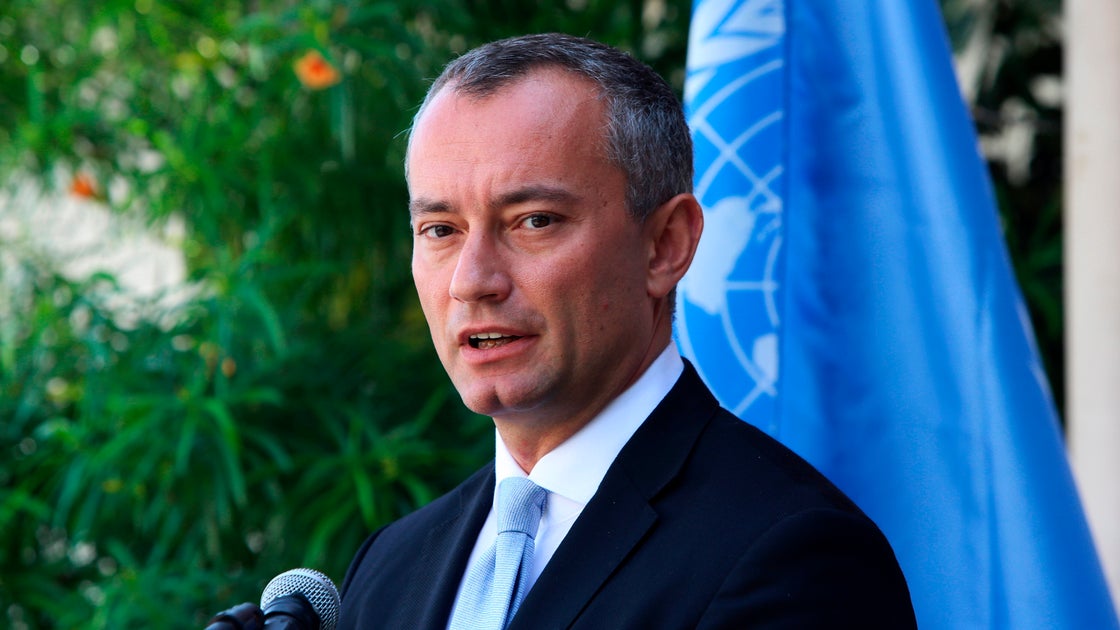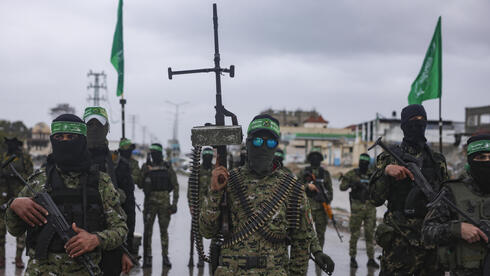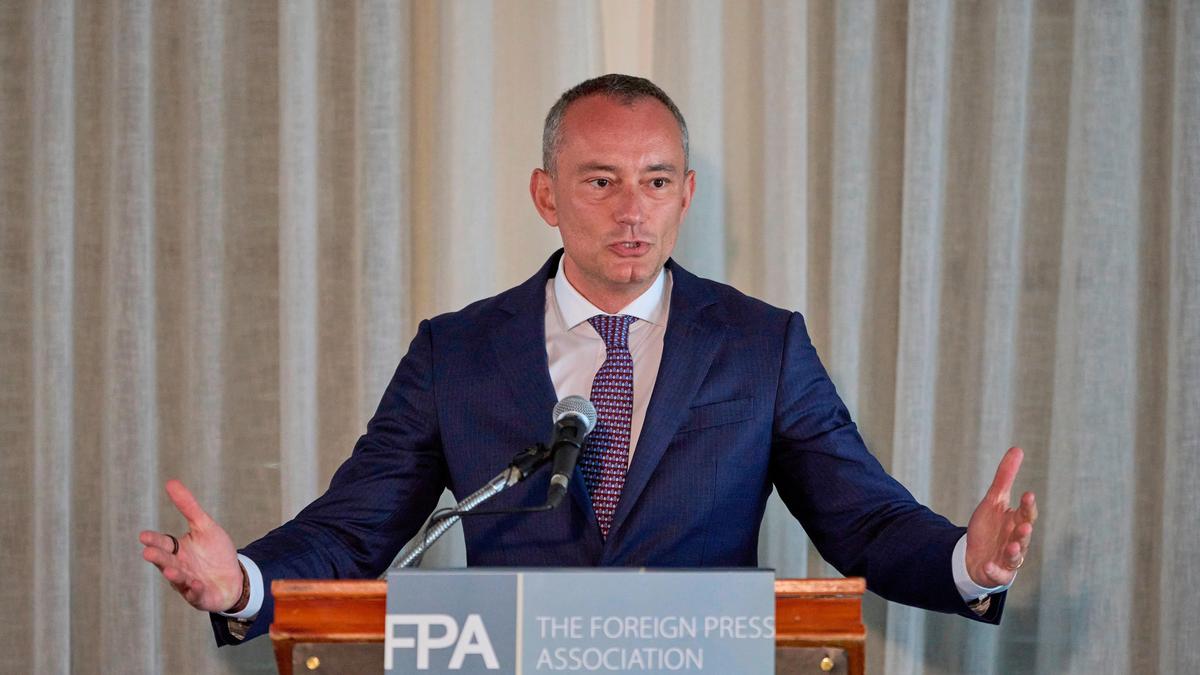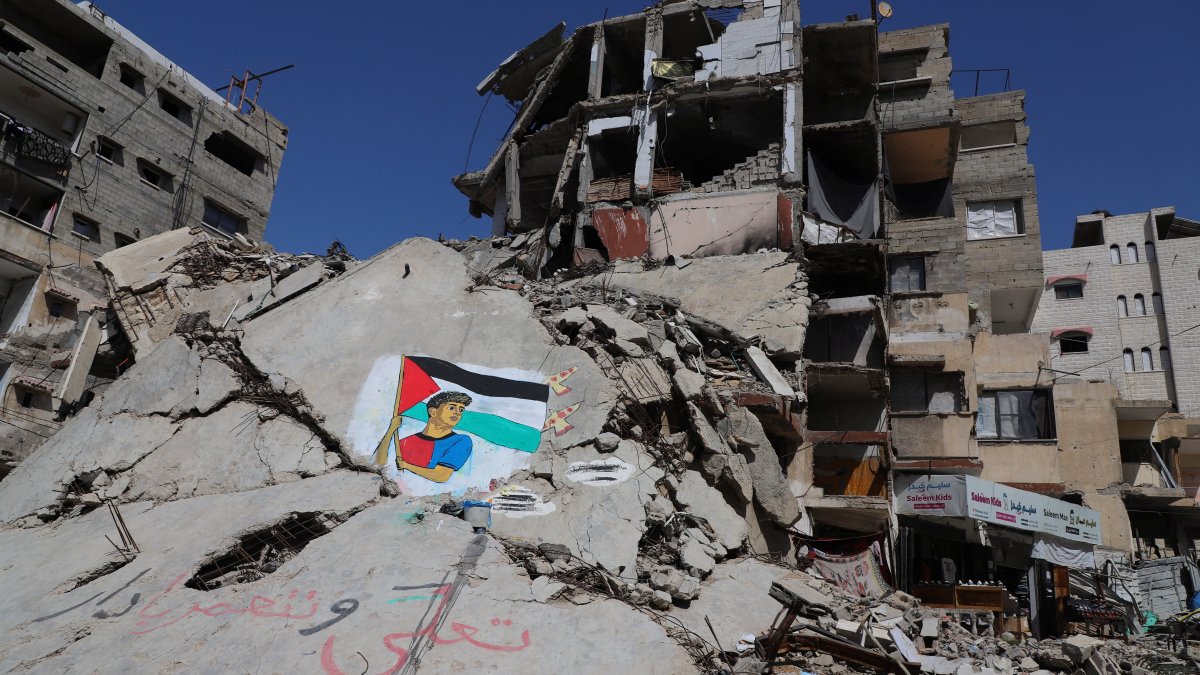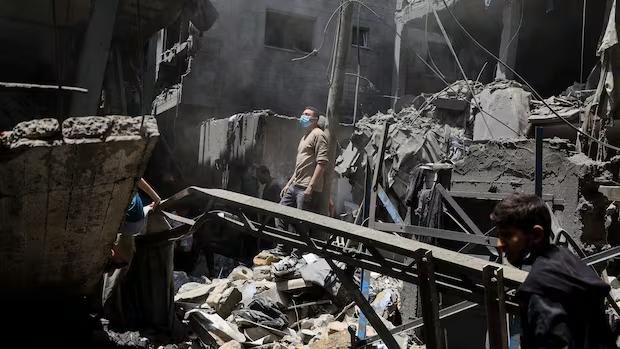
Continued fighting in Gaza risks territory's future: Board of Peace envoyMay 13|Duration 2:58Nickolay Mladenov, the diplomat overseeing the U.S.-brokered ceasefire in Gaza, says there is a plan to rebuild the Palestinian territory and money to do so. But, he says, it can't happen until Hamas disarms and Israel withdraws.Nickolay Mladenov, the top diplomat overseeing the U.S.-brokered ceasefire in Gaza, said Wednesday the truce hinged on Hamas' disarmament, a sticking point that has stalled progress on other fronts, including rebuilding the mostly destroyed enclave.The high representative for U.S. President Donald Trump's International Board of Peace in Gaza, Mladenov, said months without progress implementing the deal benefited neither Israel nor Palestinians. He said the phased deal was paralyzed over Hamas not yet disarming, calling it "not negotiable," and that progress on all other issues — including reconstruction, Israeli troop withdrawals and the establishment of a new Palestinian government — was being held up. "You cannot build a future with armed groups running the streets, hiding in tunnels and stockpiling weapons. You cannot deliver reconstruction with militias on every corner," Mladenov told foreign reporters in Jerusalem. He did not say what was planned if Hamas does not disarm, but warned that without it, Gaza faced a future of prolonged "misery." International mediators have long said disarmament is core to the ceasefire, to which Hamas has agreed, but no significant progress has been made toward it. The Palestinian militant group has sought to link any demilitarization to Israeli troop pullbacks. Israel's military remains in control of more than half of Gaza."The only way that we believe that we can ensure that Israeli withdrawal takes place to the perimeter is if we have the full element of the plan unfolding in Gaza," Mladenov said at a rare news conference in Jerusalem after meeting with Israeli Prime Minister Benjamin Netanyahu. Mladenov stated plainly that the plan envisioned in the ceasefire was off to a rocky start. He also said conditions remain dire and miserable for the more than two million people in Gaza. The ceasefire gave Israeli military control of half of Gaza east of a "yellow line," hemming Palestinians into squalid tent camps along the beach where rights groups say food, water, and healthcare are in short supply, and rodent infestations are spreading disease. Mladenov accused both sides of violating the ceasefire but said it had mostly held and staved off the return of full-scale war.Disarmament is among the most challenging elements of the ceasefire. Hamas, whose founding charter calls for armed resistance against Israel, has been reluctant to give up its arsenal, including rockets, anti-tank missiles, and explosives.WATCH | Gazans still starving despite ceasefire:Gaza ceasefire at 6 months: Israel, Hamas still fighting, Gazans still starvingApril 10|Duration 2:03Six months after Israel and Hamas agreed to a ceasefire, deadly Israeli strikes have killed hundreds, while insufficient food aid causes widespread hunger and sickness. Mladenov criticized Hamas for consolidating power in parts of Gaza under its control, saying it hoped "to squeeze better terms of a negotiation."He also said that he could envision a role for Hamas in postwar Gaza if it disarms."We are not asking Hamas to disappear as a political movement," Mladenov told reporters. "A political party that disavows armed activity can compete in national Palestinian elections." Israel and Hamas trade accusationsIsraeli leaders have said they want to destroy the militant group that has governed Gaza for two decades and orchestrated the attack on Israel on Oct. 7, 2023, killing some 1,200 people and taking 251 as hostages, according to Israeli tallies.Israel's ensuing offensive has killed more than 72,724 Palestinians, including some 850 since a ceasefire took hold last October, according to Gaza's Health Ministry.Mladenov's remarks came as the Board of Peace faces scrutiny, with efforts to advance the phased ceasefire stalled.The truce envisioned Hamas handing over its weapons, Israeli forces withdrawing and rebuilding destroyed swaths of the coastal enclave after more than two years of war.'The rats are like a storm': Palestinians seeking refuge in rubble struggle with rodent infestationsTwo Canadians on aid boats intercepted by Israel have been released, organizers sayInstead, the seven months since the ceasefire have seen Israel and Hamas trade accusations of violations. Aid groups say Israel has not allowed the promised amount of aid in. Hamas has not disarmed and remains in control of roughly half the strip.Trump's 20-point plan says that all of Hamas' "military, terror and offensive infrastructure, including tunnels and weapon production facilities" in Gaza must be destroyed. It also says that weapons must be placed "permanently beyond use."Israel and the U.S. say this language is clear and that Hamas must surrender all of its weapons.Hamas has sought to differentiate between "heavy" weapons, such as rockets, and "light" weapons like rifles and pistols, Hamas officials and mediators say, speaking on condition of anonymity to discuss the negotiations.Tents sheltering displaced Palestinians sit near the rubble of residential buildings destroyed during the two-year Israeli offensive in Gaza City on Monday. (Dawoud Abu Alkas/Reuters)Meanwhile, a new report says that Israel has escalated its attacks in Gaza in the five weeks since halting its joint bombing with the U.S. in Iran, redirecting its fire back on the decimated Palestinian enclave.According to the Gaza Health Ministry, 120 Palestinians, including eight women and 13 children, were killed in Gaza since the Iran war was paused on April 8 — 20 per cent more than in the five weeks prior when Israel was flying sorties over Iran.Attacks increase by 35% in AprilConflict monitor ACLED, which tracks Israeli attacks in Gaza, said in a monthly report for April that Israel had carried out 35 per cent more attacks last month than in March."The war is still ongoing," said Lafi Al-Najjar, 36, a blind Palestinian, one of whose sons was killed on April 28 in an Israeli attack."It stopped in the announcement, but in reality and on the ground, the war has not stopped," said Najjar, whose family have been living in a tented camp in the ruins of Khan Younis, once Gaza's second-largest city.The Israeli military did not immediately provide comment on the reasons for its stepped-up strikes in Gaza. But four Israeli defence officials have told Reuters that the military had warned Prime Minister Benjamin Netanyahu's government in recent weeks that Hamas has been tightening its grip, rebuilding its forces and making weapons.Palestinians inspect the site of a Friday Israeli airstrike on houses, at Shati (Beach) refugee camp in Gaza City on Saturday. (Dawoud Abu Alkas/Reuters)Another Israeli military official, speaking on condition of anonymity, said the Gaza ceasefire allows for Israel to act against imminent threats. The official said the military was prepared for any scenario, including having drawn up wider battle plans for a resumption of fighting in Gaza, though no such order had yet been given.Nasser Khdour, a researcher with ACLED, said that over roughly 30 separate incidents in April, Israel carried out attacks targeting Hamas, other militant groups, police personnel and police stations, and security checkpoints.Most of those attacks took place in areas under Hamas control, "while shelling, drone strikes, and gunfire continued to take place near the [armistice line], targeting militants and civilians, including women and children, approaching soldiers," Khdour said.
Board of Peace envoy says stalled ceasefire hinges on disarmament of Hamas | CBC News
The top diplomat overseeing the U.S.-brokered ceasefire in Gaza, said Wednesday the truce hinged on Hamas' disarmament, a sticking point that has stalled progress on other fronts, including rebuilding the mostly destroyed enclave.
1,192 words~5 min read