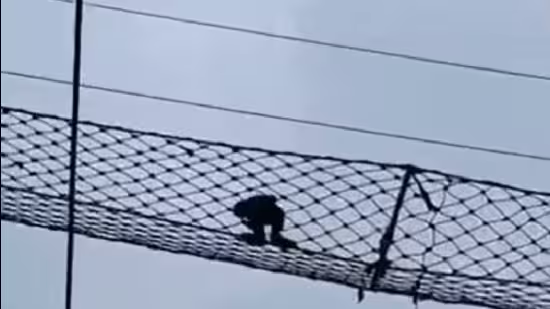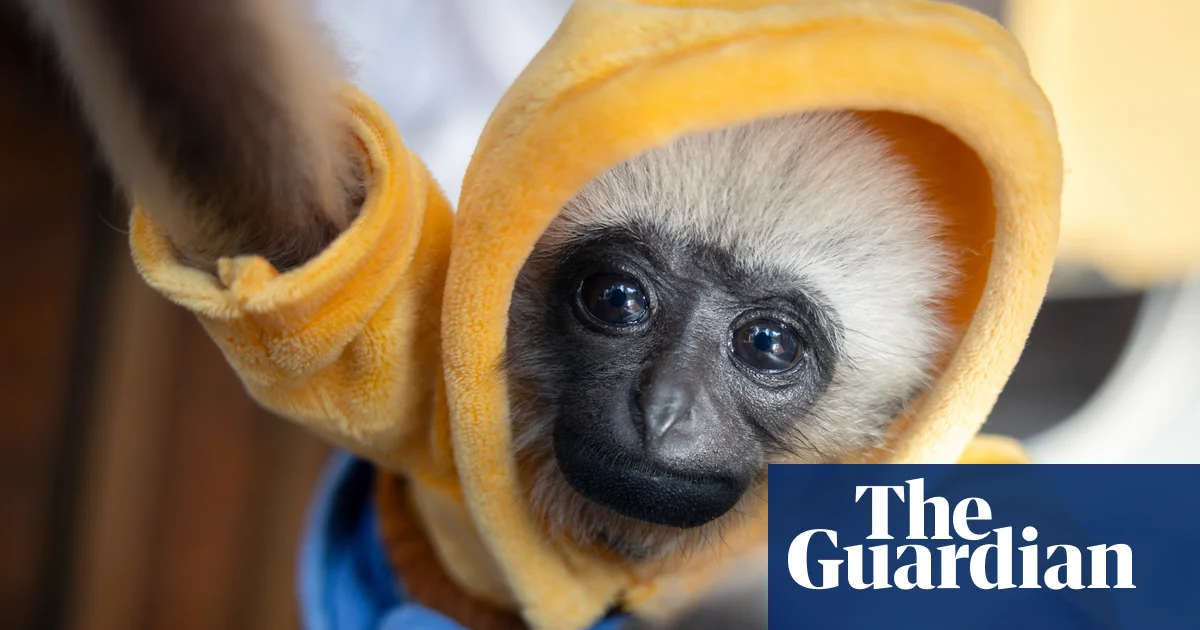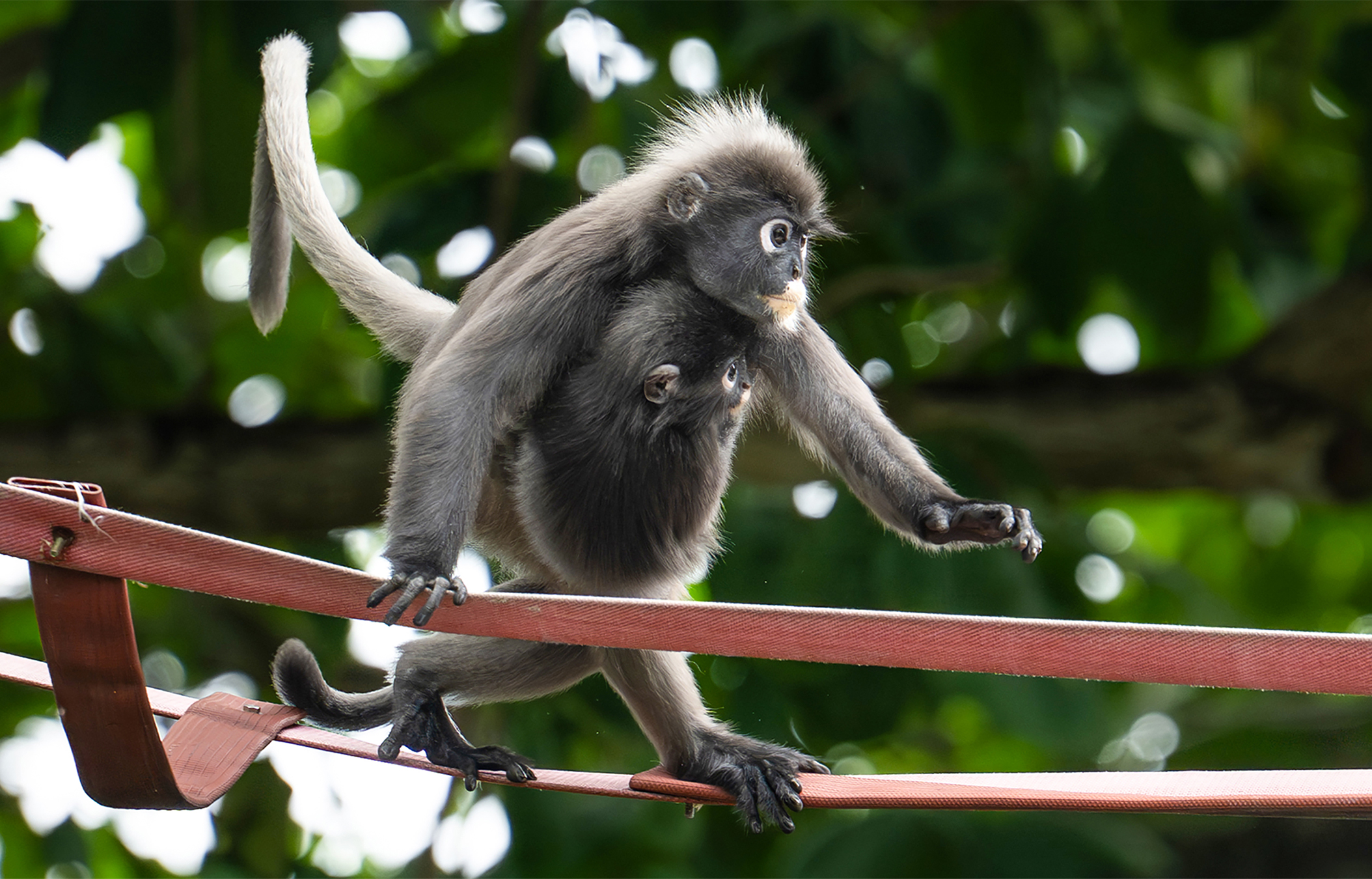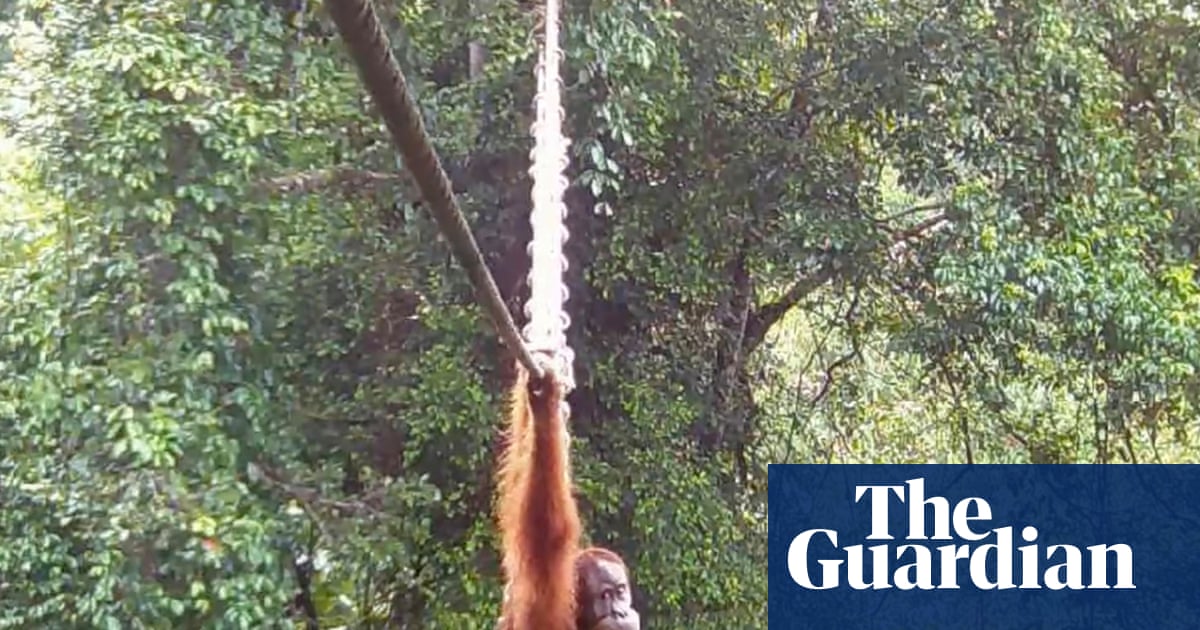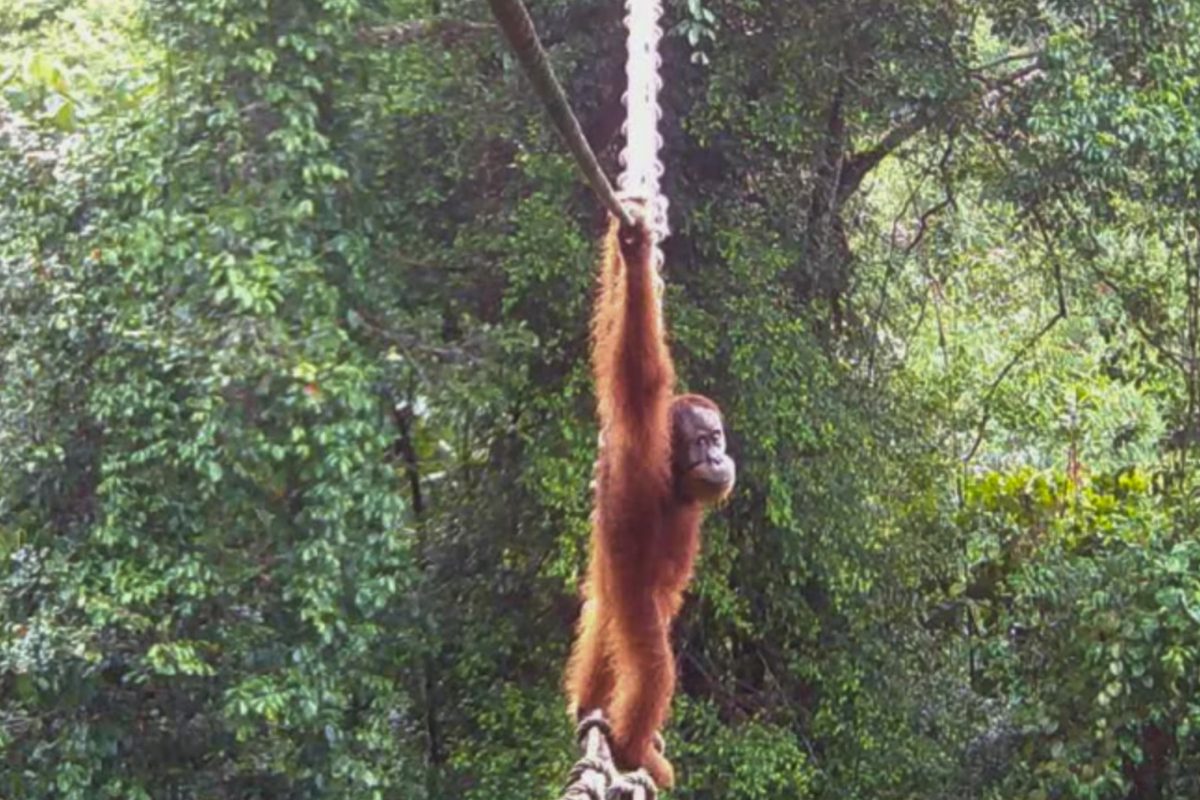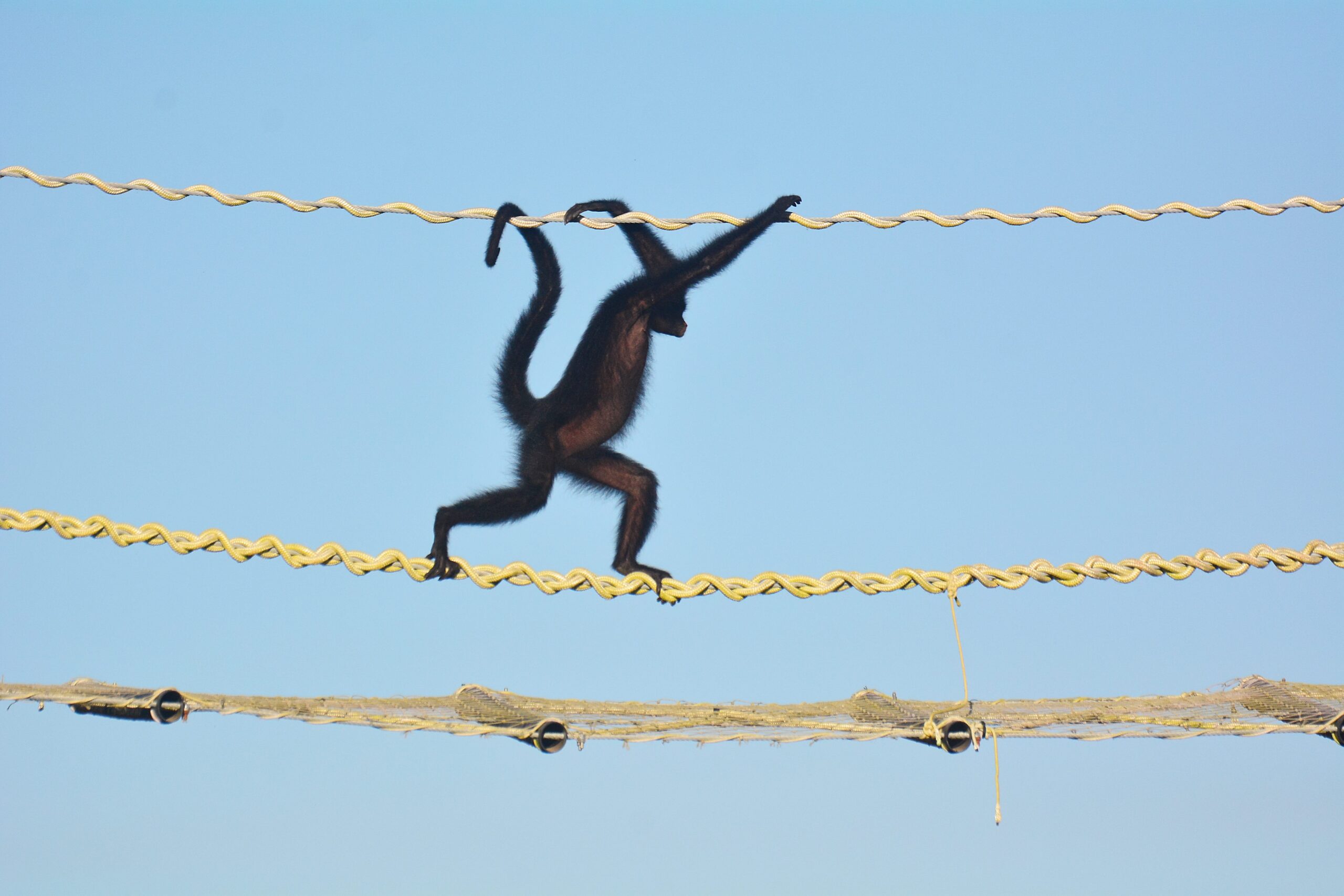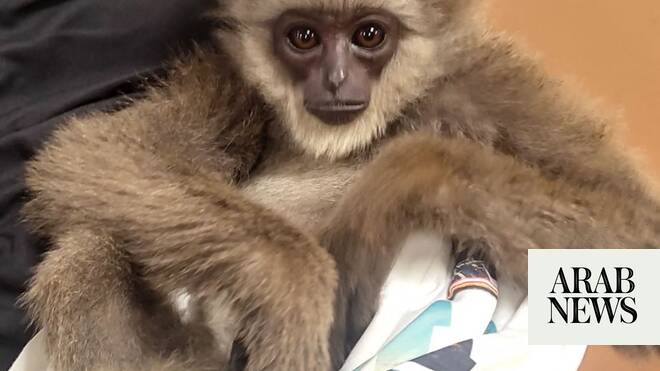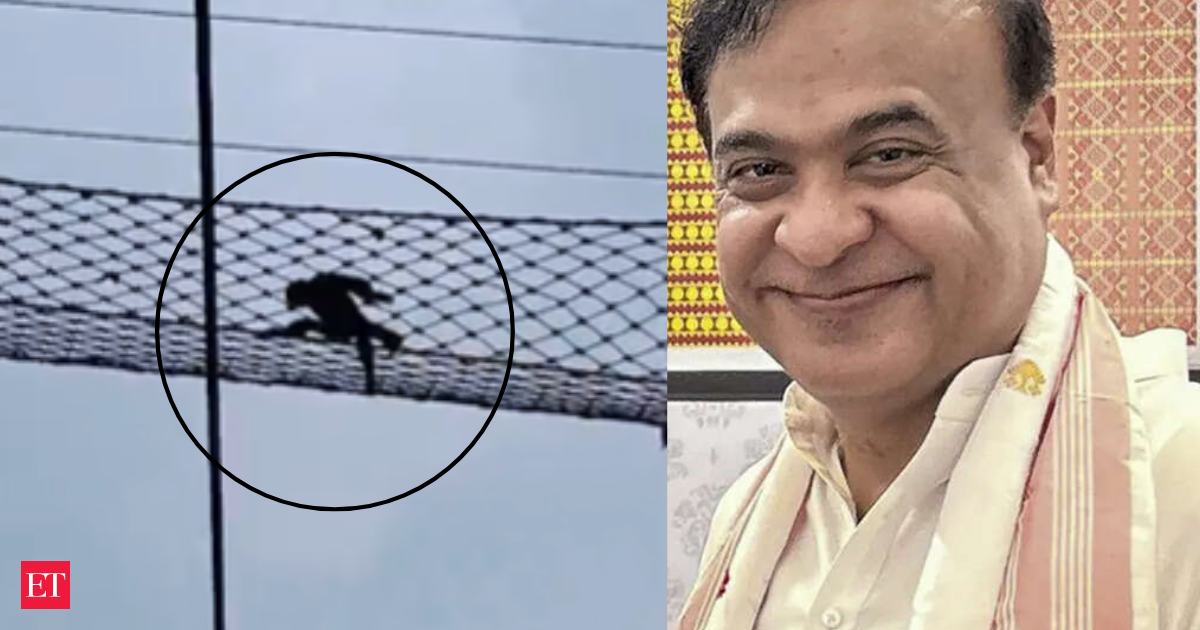
Himanta Biswa Sarma on Friday shared what he called a “heartening moment” from Hollongapar Gibbon Wildlife Sanctuary after an endangered Hoolock Gibbon was spotted successfully using a specially designed canopy bridge to cross a railway track safely.Posting a video on X, Sarma said the primate used the netted arboreal bridge nearly a year after it was installed inside the sanctuary in Jorhat.“A heartening moment from Hollongapar,” Sarma wrote.— himantabiswa (@himantabiswa) “A year after installing the arboreal canopy bridge, a Hoolock Gibbon is now using it to safely cross the railway track.”Special Canopy Bridges Built To Protect Endangered PrimatesThe canopy bridge was introduced as part of Assam’s wildlife conservation efforts aimed at protecting endangered primates from accidents while crossing busy roads and railway lines cutting through forest areas.The bridge is made using strong rope-net structures with protective safety features, allowing tree-dwelling animals to move naturally above the ground without coming into contact with vehicles or trains.Sarma described the moment as an important example of how scientific interventions can support wildlife conservation in practical ways.“A small but significant example that shows how science-led interventions can make a real difference in conservation,” he added.Hoolock Gibbon Is India’s Only Ape SpeciesThe Hoolock Gibbon is India’s only ape species and is mainly found across parts of Assam and other northeastern states.The Hollongapar Gibbon Wildlife Sanctuary remains one of its most important habitats, housing a significant population of the endangered primate.Last year, the Assam government announced plans to install multiple scientifically designed canopy bridges across vulnerable wildlife crossing points in the state.Apart from Hoolock Gibbons, the bridges are also expected to help protect other arboreal species including Golden Langur and several smaller forest-dwelling animals.Unlike ground animals, primates such as gibbons rarely descend naturally and often struggle when forest connectivity is broken.The new canopy bridges aim to restore that movement safely while reducing human-wildlife conflict and accidental deaths in protected areas.Inputs from PTI
Watch: India’s only ape species safely crosses Assam railway track using special bridge, Himanta shares ‘heartening’ video
A Hoolock Gibbon, India's only ape species, was recently seen using a specially built canopy bridge. This structure helps protect endangered primates crossing railway tracks in Assam's Hollongapar Gibbon Wildlife Sanctuary. The bridge, installed a year ago, allows arboreal animals to move safely above ground. This initiative showcases science-led conservation efforts in the state.
316 words~1 min read