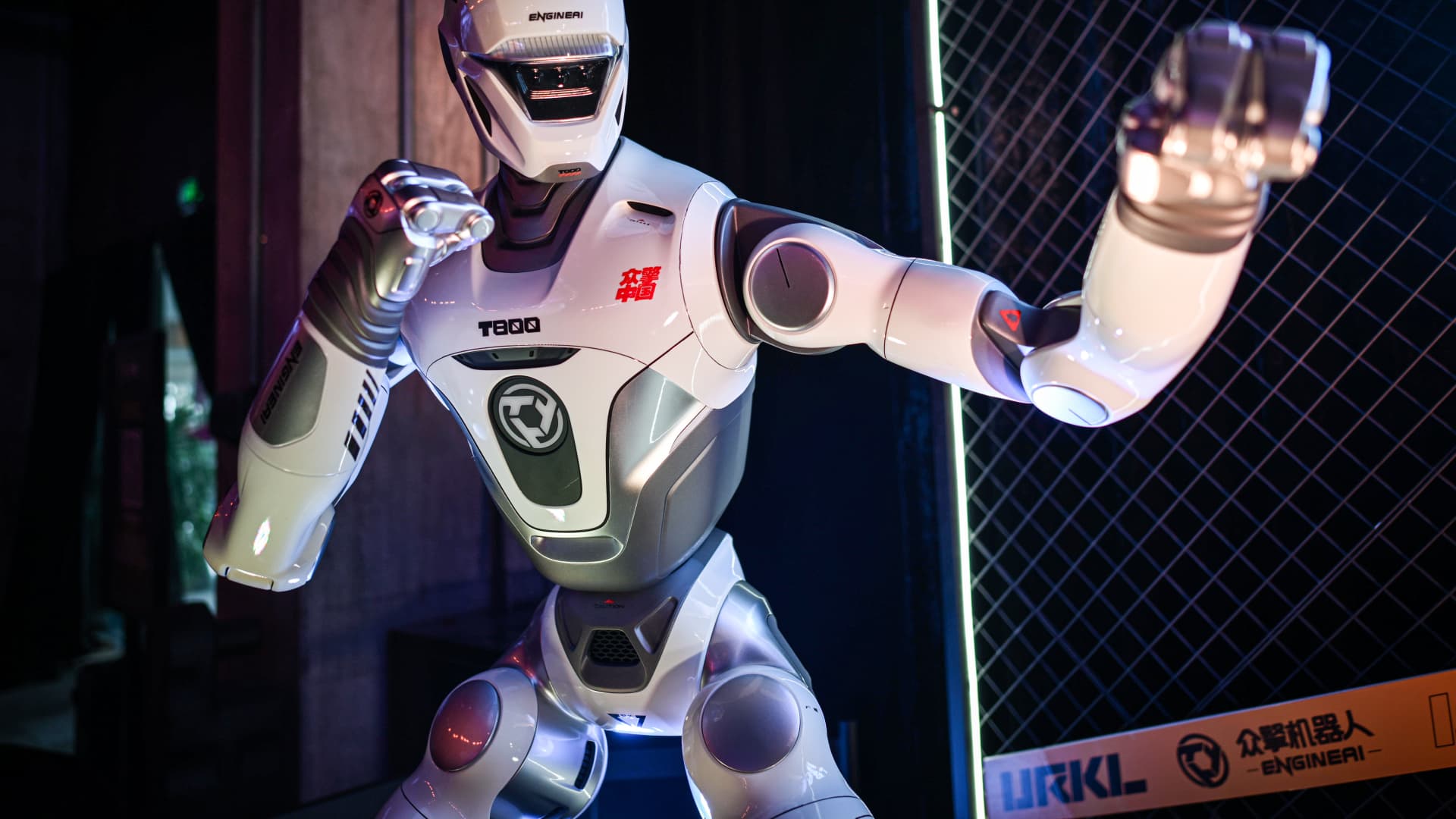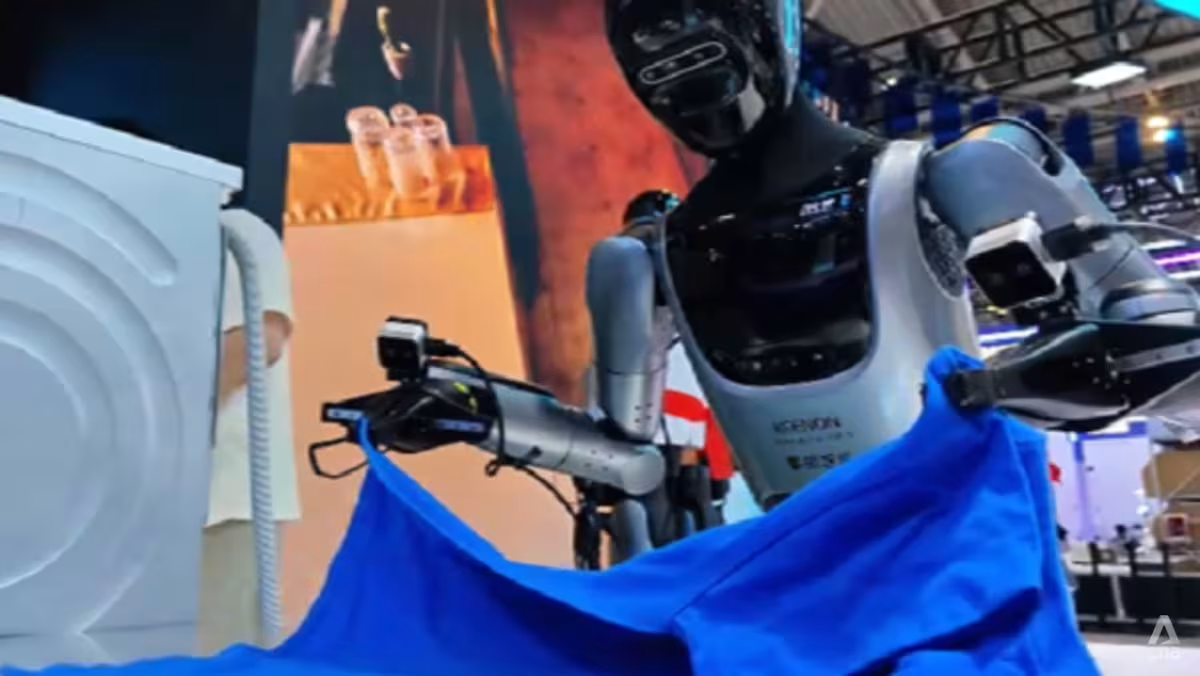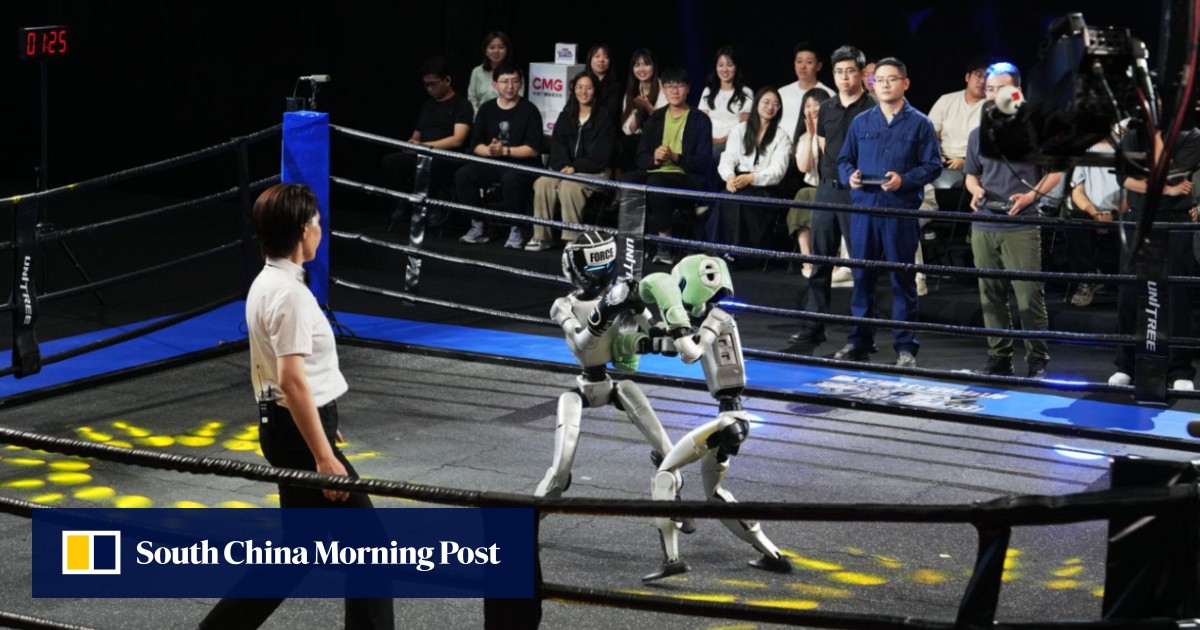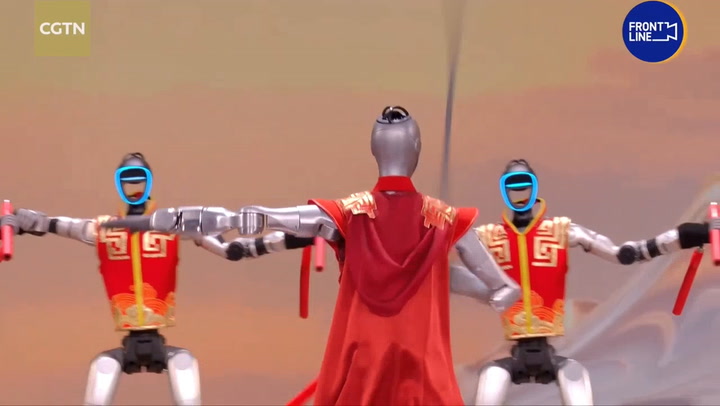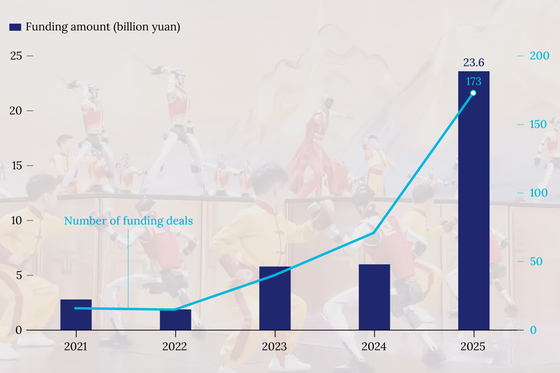
1. Four Chinese embodied artificial intelligence (AI) companies—Unitree Robotics, Galbot, MagicLab, and Noetix Robotics—showcased their advanced humanoid robots at this year’s nationally televised Spring Festival Gala, performing complex martial arts, comedy sketches, and starring in a short film alongside top human entertainers. The event demonstrated a significant technological leap from last year, where robots only managed simple dance routines. The improvement was attributed to new AI algorithms and 3D lidar technology, enabling robots to execute acrobatics like table-vaulting parkour and aerial flips. Despite these advances, real-world applications of these robots remain mostly limited to entertainment and basic customer service, with broader industrial and consumer usage just starting to emerge due to ongoing technological and cost barriers [para. 1][para. 2][para. 3][para. 4][para. 5][para. 6].2. Chinese robotics companies are pushing to transition their humanoid robots from stage performances to industrial and consumer use. For instance, UBTech Robotics has deployed robots for vehicle assembly lines and aims for its robots to reach 80% human worker efficiency by 2027, from about 30% today with over 90% accuracy. Robot Era's logistics robots perform at about 70% of human worker efficiency, with the goal of reaching 90% for mass marketability. Consumer-targeted robots are also being introduced, like Noetix's home education robot set for release in April. However, no robot currently delivers a positive return on investment in any single application, and many units have been removed from factories due to performance shortcomings [para. 7][para. 8][para. 9][para. 10][para. 11][para. 12][para. 13][para. 14][para. 15][para. 16].3. One of the main obstacles to advancing humanoid robots is the lack of sufficient real-world training data. Unlike large language models trained on vast internet data, robots need physically recorded motion data, which is much scarcer and harder to compile. Most training is through human demonstration, which is insufficient for robots to generalize and handle unfamiliar tasks in varied environments. Fu Zipeng, a Stanford AI researcher, explains that skills like locomotion can be trained in simulation, but manipulation skills—like grasping objects—rely on real-world data. Integrating movement and manipulation remains a core technical challenge, and more robots must be trained on data from natural human activities rather than purely remote-controlled demonstrations [para. 17][para. 18][para. 19][para. 20][para. 21][para. 22][para. 23][para. 24][para. 25].4. High production costs continue to limit the widespread adoption of humanoid robots. Consumer models, like those seen at the Gala, range from 39,800 to 200,000 yuan ($5,700–$28,000), while industrial models can cost 500,000 to 1 million yuan ($71,000–$142,000). Low demand prevents economies of scale, as upstream suppliers are hesitant to invest in mass production. According to a Morgan Stanley survey, only 23% of users are satisfied with current offerings, and 2026 is projected to be a year of ongoing iteration rather than rapid mass adoption, though robot deliveries in China could reach 28,000 units in 2026—double those in 2025. Deployment in factories is also expensive since robots generally lack flexible generalization and require costly customization for each task [para. 26][para. 27][para. 28][para. 29][para. 30][para. 31][para. 32].5. Investment interest in the sector is robust, with major players racing for public listings to raise expansion capital. However, regulatory approval for many loss-making firms is uncertain, with even venture capitalists becoming selective, prioritizing scalable production and proven demand over cutting-edge innovation or high-profile founders. Unitree is among the few profitable companies in the industry, while others may struggle if they cannot achieve positive cash flow. The competitive environment is expected to intensify in 2026, favoring firms with robust hardware design and steady product shipments [para. 33][para. 34][para. 35][para. 36][para. 37][para. 38][para. 39].AI generated, for reference only
In Depth: China’s Humanoid Robot Boom Faces Reality Check
Spectacular performances at the annual Spring Festival Gala highlight progress, yet developers still face steep hurdles in gathering training data, costs and real world applications
590 words~3 min read