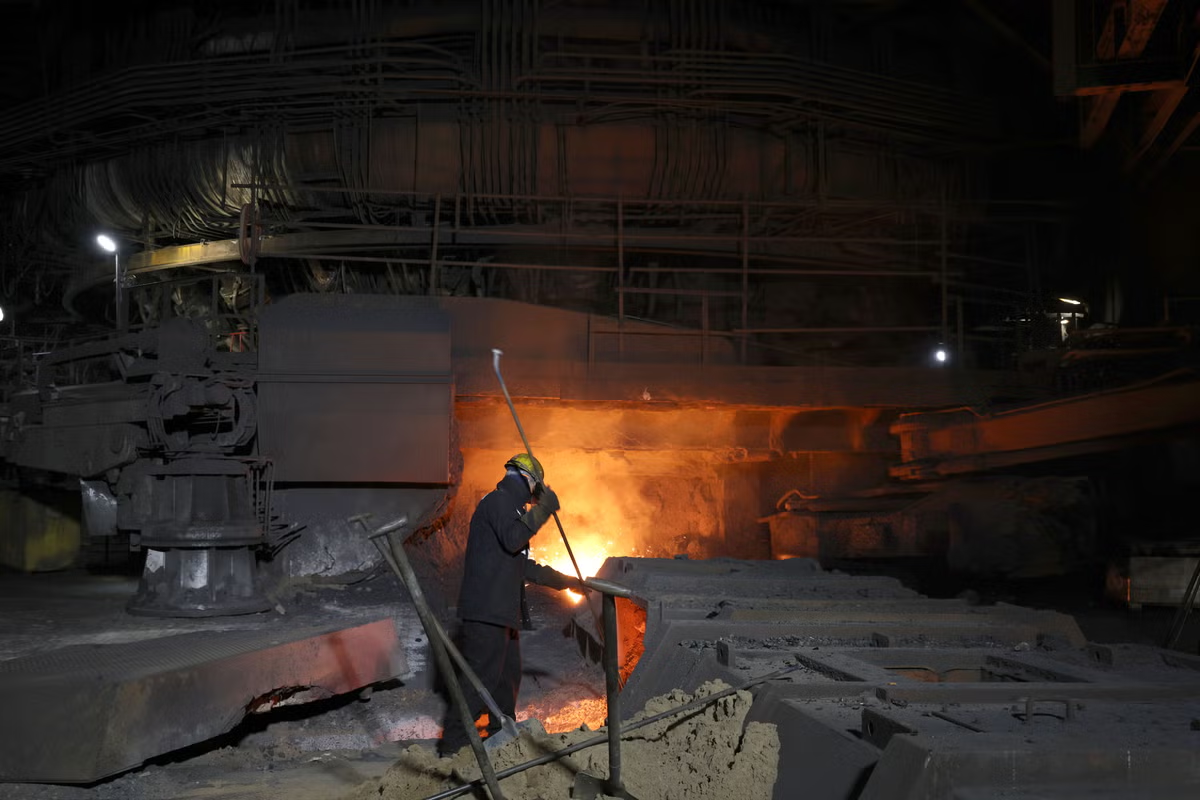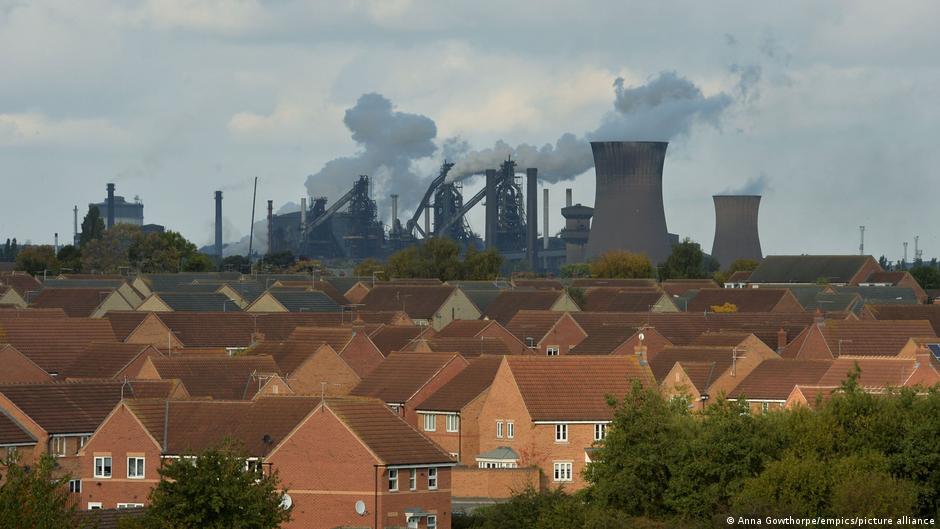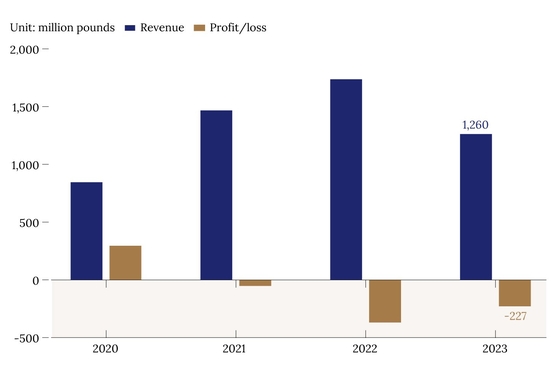
In April 2024, the UK government convened Parliament during its Easter recess to urgently pass legislation granting it authority to take over British Steel, the country's last virgin steel producer, from its Chinese owner, Hebei Jingye Group. This move aimed to safeguard the continued operation of Britain’s final two remaining blast furnaces, crucial for maintaining the UK’s capacity to produce steel from raw materials. The intervention came after British Steel announced it would consult on closing its Scunthorpe operations as early as June, citing unsustainable finances due to poor market conditions, tariffs, and elevated costs for high-carbon steel production. At the time, Jingye was reportedly losing £700,000 (almost $940,000) a day at the plant,[para. 1][para. 2][para. 3][para. 4] causing it to halt raw material orders and triggering fears of an imminent shutdown and forced the government’s swift action.[para. 4]Jingye acquired British Steel in March 2020 for £53 million, pledging to turn the company around, save jobs, and invest £1.2 billion, which secured its bid over rivals. The company’s founder, Li Ganpo, known for buying distressed assets and executing turnarounds, led the acquisition. Jingye’s strategy was to capitalize on British Steel’s 4.5-million-ton crude steelmaking capacity—obtained at a low cost compared to the expensive process of expanding capacity in China. Ambitious plans were set to return the company to profitability and position it as a leading European producer by 2025. Initially, 2020 saw a brief profit of £295 million, but subsequent years brought heavy losses: £50.8 million in 2021, £367 million in 2022, and £227 million in 2023. In September 2023, Conservative MP David Davis reported British Steel lost £408 million the previous year, with projected 2024 losses at £250 million. Reasons included high fixed and operational costs, weak domestic demand, complex trade environments, Brexit, high energy and carbon costs, and shifting political circumstances. Jingye also struggled with adjusting to unfamiliar UK political and legal landscapes, compounded by Brexit, the pandemic, and the Russia-Ukraine conflict.[para. 5][para. 6][para. 7][para. 8][para. 9][para. 10][para. 11][para. 12][para. 13][para. 14][para. 15][para. 16][para. 17][para. 18][para. 19][para. 20]Further turmoil was sparked in March 2024 when US President Donald Trump reinstated a 25% tariff on all steel imports, hurting British Steel’s exports to the US (3–6% of its annual revenue). A subsequent tariff exemption still excluded companies that didn’t meet strict US supply chain and ownership criteria—reportedly aimed at Chinese firms—leaving British Steel’s eligibility uncertain.[para. 21]The Steel Industry (Special Measures) Act provided the UK government with operational control but not legal ownership, which remained with Jingye. The government installed new British Steel leadership, and nationalization at effectively zero compensation remained a possibility—British Steel had a negative net asset value of £250 million at the end of 2023. The state supported operations using a £2.5-billion fund and loans, but the sustainability of such aid was questioned by industry sources and opposition MPs, who also cited past failures following the 1967 renationalization of the steel industry. The decision marked a break from the privatization trend since 1979, raising questions about future UK industrial policy.[para. 22][para. 23][para. 24][para. 25][para. 26][para. 27][para. 28][para. 29][para. 30]Jingye had financed British Steel through shareholder loans, growing from £143 million in 2020 to £711 million in 2023. While this gives some protection in a liquidation scenario, Jingye could seek redress through UK judicial review or international arbitration, potentially under the 1986 China-UK investment treaty. However, such legal efforts could be prolonged and uncertain. Legal experts advised Chinese firms to better anticipate political, legal, and environmental risks and foster strong local ties when investing abroad, given the increasingly volatile climate for international infrastructure investments.[para. 31][para. 32][para. 33][para. 34][para. 35][para. 36][para. 37][para. 38]AI generated, for reference only
In Depth: British Steel Takeover Leaves Chinese Firm in Limbo
While Westminster’s long-term plans for the steelworks remain unclear, Jingye Group doesn’t know how much money it stands to lose
607 words~3 min read