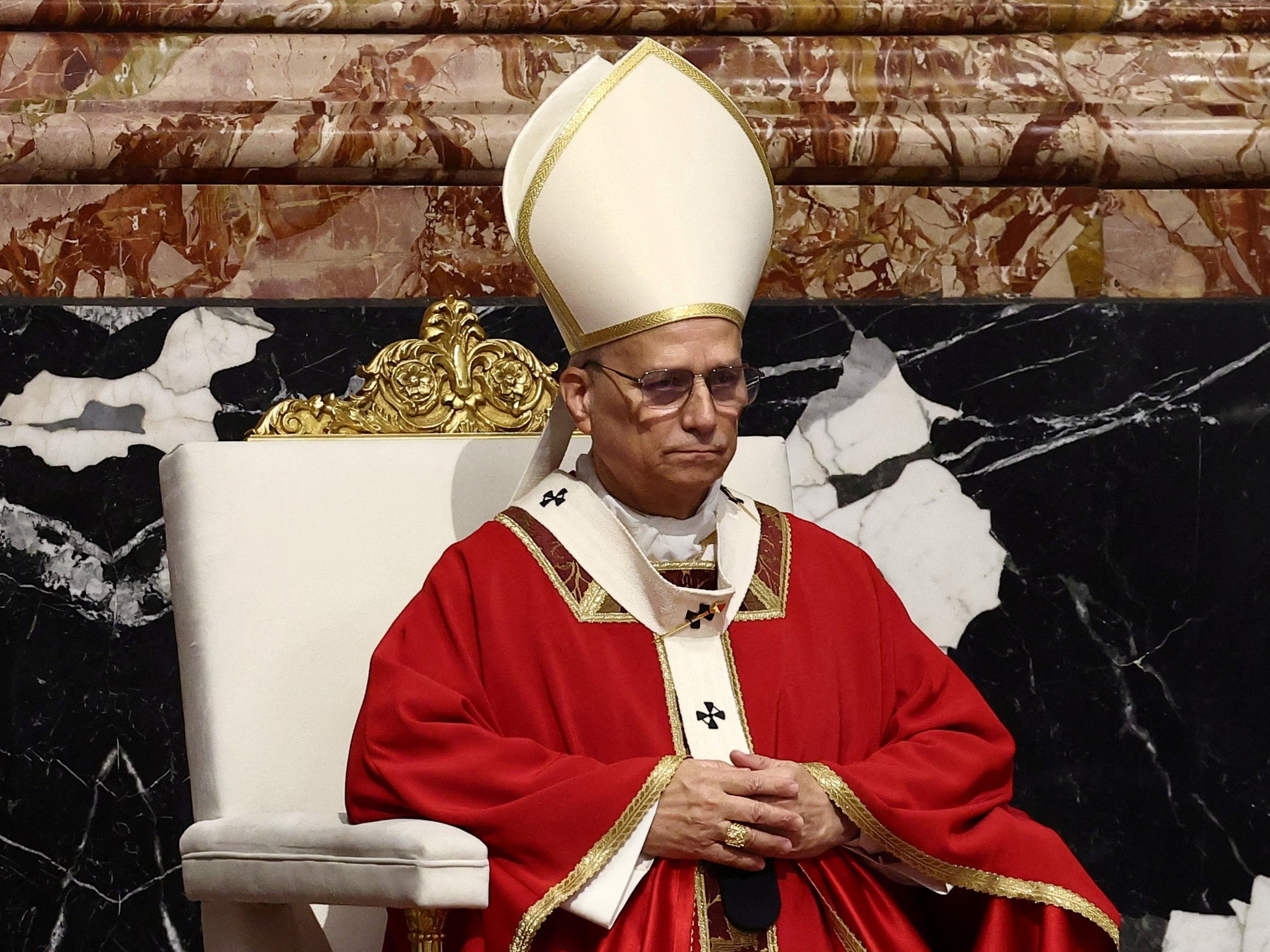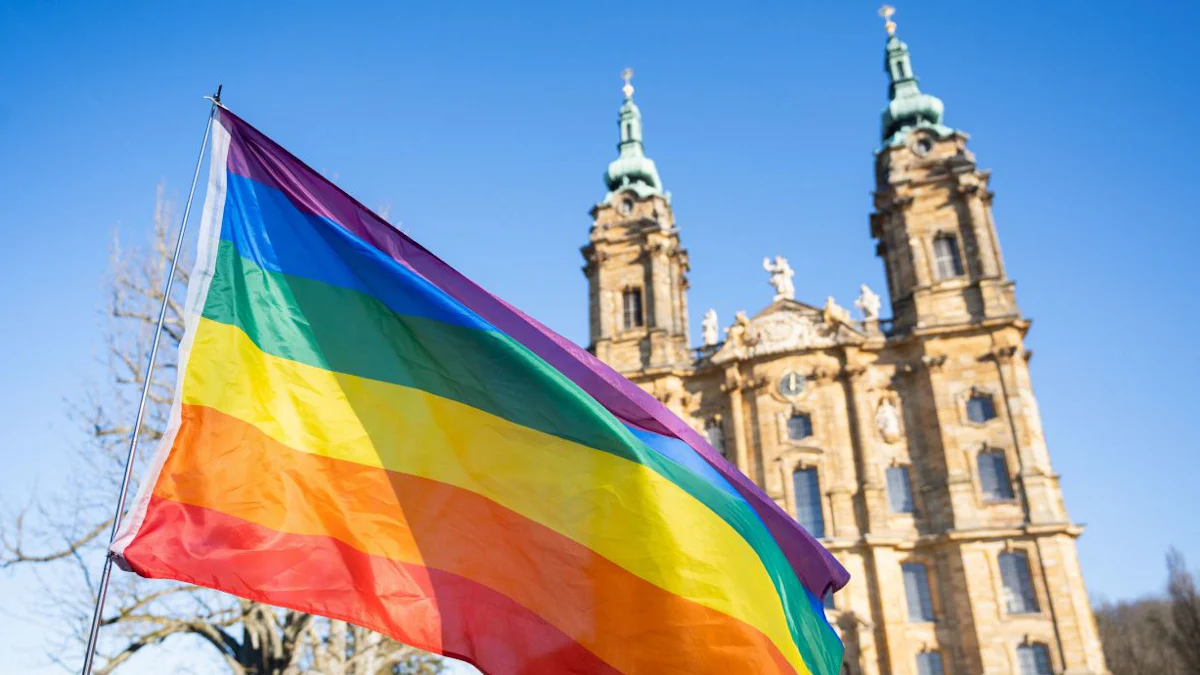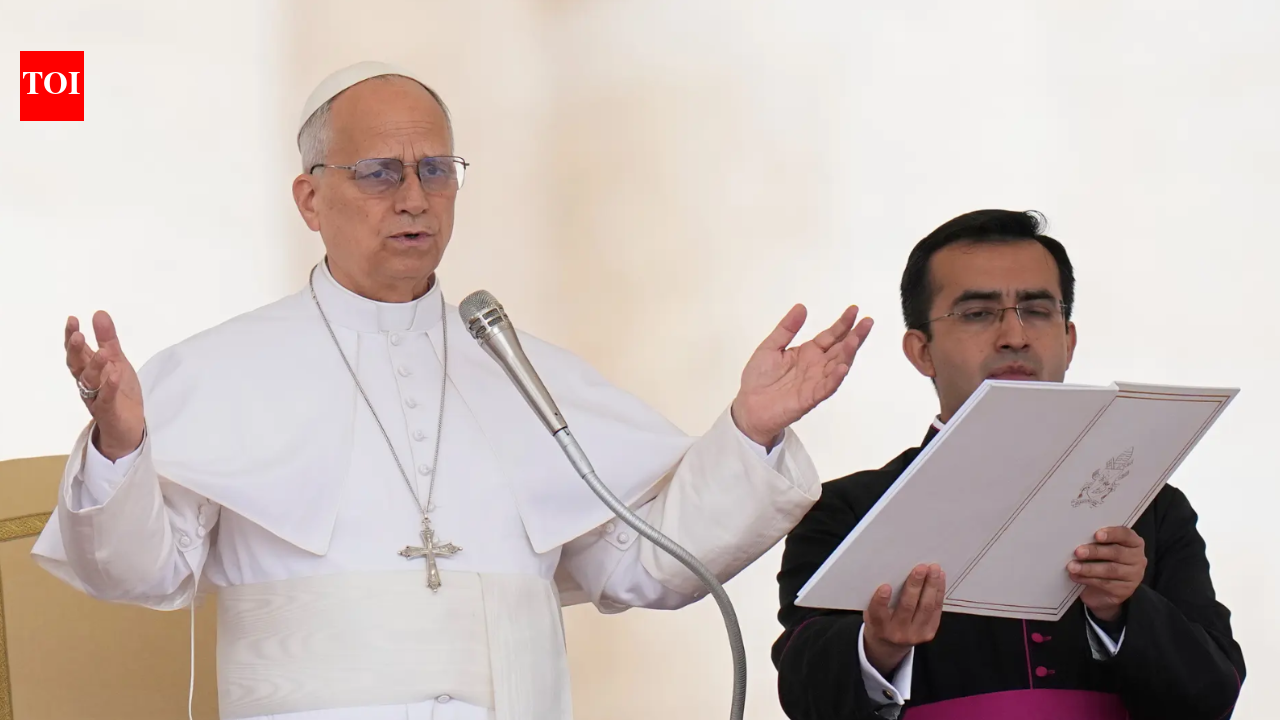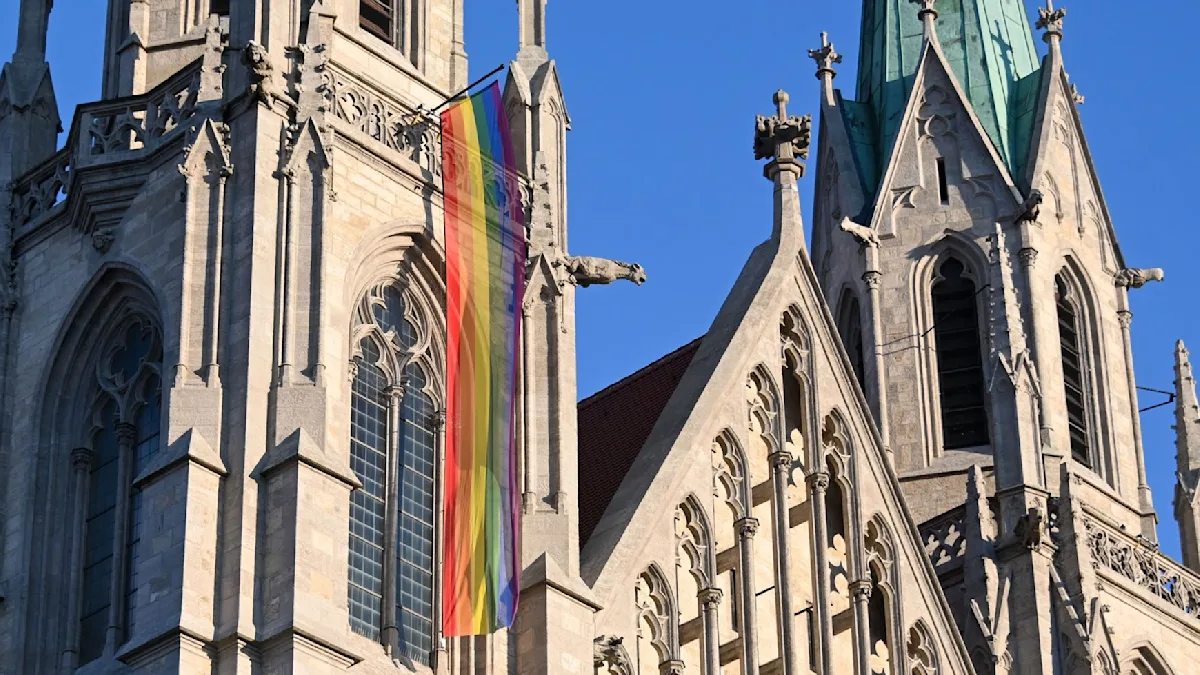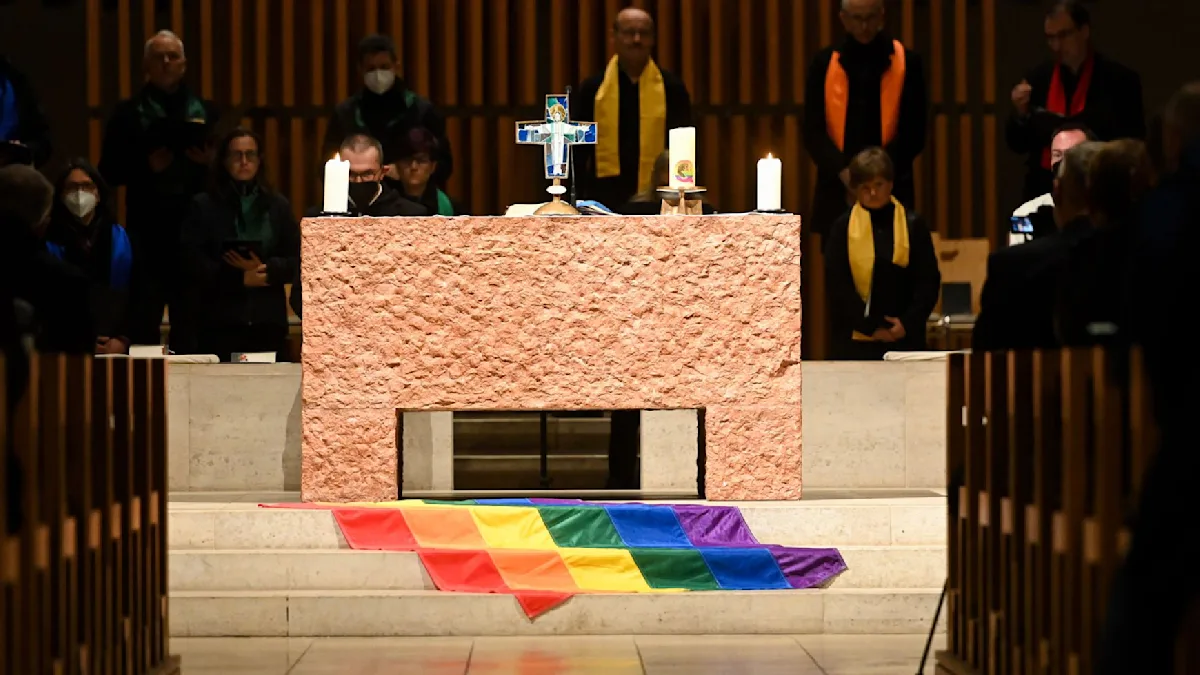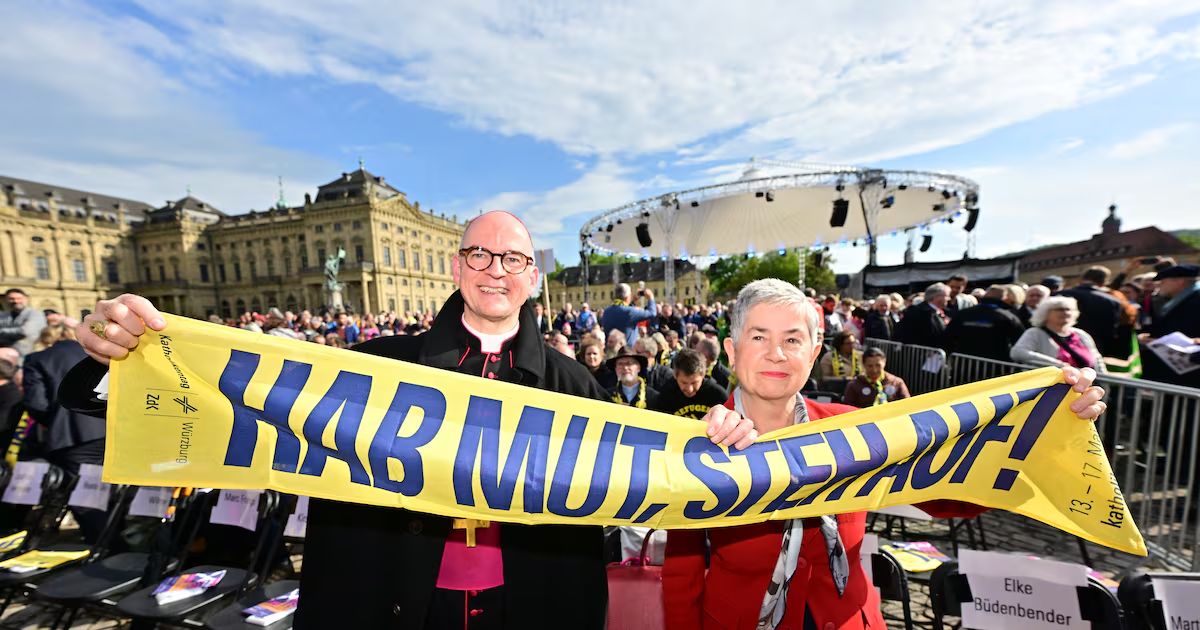
What do you call a Catholic wedding that’s not a wedding?In Germany, at least, you call it a “blessing ceremony for loving couples”.That’s the term devised by bishops and lay Catholics in new guidelines allowing priests bless all couples, including remarried and same-sex couples.It’s a new departure for the Catholic Church, which views marriage as a sacrament exclusively available for previously unmarried, chaste heterosexuals.And the shift has attracted disapproving attention from Rome, where senior Curia members view German Catholics’ new blessing regime as a curse.Before we go forward, it’s worth going back to 2013 when Pope Francis, asked by a journalist about the Catholic position on homosexuality, gave a memorable and historic response: “Who am I to judge?”Sr Fancin-Marie and Sr Felizitas of the Schoenstaedter Marienschwestern (Sisters of Mary) attend the opening of the 2026 Catholic Convention in Wurzburg, Germany. Photograph: Thomas Lohnes/Getty Images Though he made clear he wasn’t changing church teaching, liberal Catholics in Germany heard a signal of papal approval for an, in their eyes, overdue reform of social teaching.The time had come, they argued, to make the church a more welcoming place to halt the march of secularisation. That took root in the Synodal Path process, a lengthy period of public and private consultation that produced a final reform document, including a blessing option for all couples. [ Is Angela Merkel set to return as EU envoy on Ukraine?Opens in new window ]The document recognises “the God-given dignity of every person in word and deed”. It notes, too, the diversity of couples “united in love, who meet each other with full respect and dignity, and who are prepared to live their sexuality with mindfulness for themselves, for each other, and with social responsibility in the long term”.With such couples in mind, the document “recommends that blessing ceremonies be made available to couples who do not wish to enter into a church-sanctioned sacramental marriage or for whom such a marriage is not open”. It is a non-binding document, but was backed by a majority of bishops and the Central Committee of German Catholics (ZdK), a leading lay organisation. When it was finally published a year ago, two days after the death of Pope Francis, a red flag went up in Rome.Now, amid what looks like a continuing standoff, the Curia has published a private letter of concern sent last November to German bishops. In the letter Cardinal Victor Manuel Fernández, head of the Dicastery for the Doctrine of the Faith, said the church in Germany had no grounds to offer a “liturgical blessing” that “in any way gives moral legitimation” to sex outside marriage or “anything pretending to be marriage”. The letter, and its publication, surprised many reform-friendly German Catholics. They see their document, Blessings Empower Love, as a legitimate and considered response to a 2023 papal document, Fiducia Supplicans, that explicitly allows priests bless partners “in irregular life situations”. [ Trump says Pope Leo is ‘endangering a lot of Catholics’ in continuing row over Iran warOpens in new window ]Such language infuriated conservative bishops so much, particularly in African countries, that they secured an opt-out and clarification from Rome.Fernández said any such blessing must be a “spontaneous pastoral practice” of a few seconds’ duration. No lengthy Celine Dion-inspired his-and-his extravaganza, please.This is the position Fernández underlined in his more recent letter to German bishops. He warns against offering blessings that resemble a “kind of liturgical rite” for same-sex couples.The German episcopate, in damage-limitation mode, insisted the November letter from Rome drew on an outdated version of the document.The final guidelines make clear that “no liturgical celebration or prayers are foreseen”. “The blessings should be organised in a way that they are not confused with the celebration in mass of the sacrament of marriage,” the guidelines add. (As well as annoyance, the document has drawn some smirks for suggesting, with true Germanic seriousness, that the “greater spontaneity” of blessing ceremonies require “careful preparation”.) [ Catholic weddings in Ireland drop by more than half in 10 yearsOpens in new window ]So what happens next in this standoff? No one seems sure. Some 500 years after Germans’ last big row with Rome split the western Christian church, the new rules have already divided the German church. More conservative bishops, such as in Cologne, fear a slippery slope and have refused their priests permission for blessing ceremonies. More liberal dioceses such as Berlin have given the green light. Some other bishops have decided to look the other way.According to a leading LGBT+ Catholic group, just 13 of Germany’s 22 dioceses are on board.“This patchwork approach with different implementation, right up to outright refusal, makes our church appear inconsistent and lack credibility,” said Hendrik Johannemann, co-speaker of Germany’s Catholic LGBT+ Committee. “We demand comprehensive and full implementation.”This week, at a significant gathering of German Catholics, the ZdK lay organisation insisted it would not back down.ZdK head Irme Stetter-Karp said the new rules “drew a clear dividing line” between traditional marriage and blessing ceremonies.And, in an apparent side-swipe at Fernández, Stetter-Karp noted remarks by Pope Leo XIV that questions of sexuality should not be allowed dominate – or divide – the church as they had in the recent past. “I believe there are much greater and more important issues, such as justice, equality, the freedom of men and women and religious freedom,” he said, “that would all take priority before that particular issue.”
Rome sees German Catholics’ new blessing regime as a curse
Red flag raised over blessing ceremonies for remarried and same-sex couples
901 words~4 min read