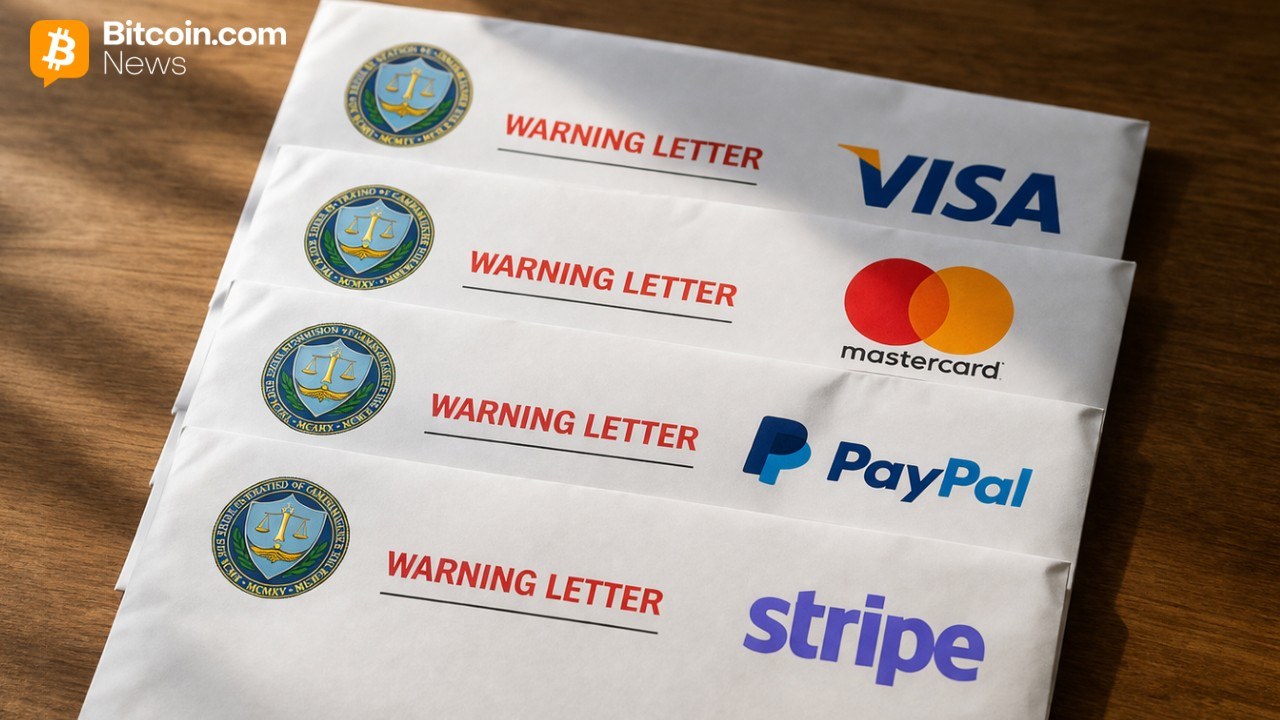
FinancePublished:Mar 26, 2026, 10:30 PMFederal regulators intensify scrutiny of payment giants, signaling potential enforcement over account restrictions that may conflict with consumer expectations and disclosed policies, raising stakes for Paypal, Stripe, Visa, and Mastercard.WRITTEN BYSHAREPublished: Mar 26, 2026, 10:30 PMUS Debanking Fight Ignites as FTC Targets Visa, Mastercard, Paypal, and Stripe Practices Access to financial services has become a focal policy concern as federal regulators scrutinize industry practices. Federal Trade Commission (FTC) Chairman Andrew N. Ferguson issued warning letters on March 26 to Paypal, Stripe, Visa, and Mastercard, addressing customer access and compliance with the FTC Act. Regulatory attention centers on whether platform decisions to restrict users align with contractual obligations and consumer expectations. The correspondence highlights reported instances in which customers were denied services tied to political or religious positions, raising potential concerns about unfair or deceptive conduct. Ferguson wrote: “Full participation in commerce and public life necessarily requires that law-abiding individuals can access, and freely participate in, our financial system.” The warning signals that actions inconsistent with stated terms or reasonable expectations could trigger investigations or enforcement measures. Enforcement Risks Expand Across Financial Ecosystem Concerns outlined in the letters extend to the broader financial ecosystem, including the role of payment networks in enabling or restricting transactions. Companies are cautioned that facilitating third-party decisions to remove users from services may also fall within regulatory scope if such conduct conflicts with disclosed policies. Ferguson stressed: “It is inconsistent with American values to deny law-abiding individuals the ability to run their legitimate businesses and feed their families because they attracted the ire of rogue American officials, overzealous activists, or, more worryingly, foreign governments seeking to control public discourse.” Enforcement history reinforces the agency’s posture, as the FTC has pursued cases against payment platforms over misleading fee disclosures, contract terms, and conduct that enabled fraud. The latest outreach underscores that similar scrutiny could apply to account restrictions or service denials if they diverge from representations made to users. Officials also referenced a 2025 executive order emphasizing that denying services based on political affiliation, religious belief, or lawful activity is unacceptable, framing expectations for compliance across major payment providers. FAQ 🧭 Why are payment companies facing FTC scrutiny?
FTC Warns Visa, Mastercard, Paypal, Stripe as Debanking Concerns Shake US Financial Access
Federal regulators intensify scrutiny of payment giants, signaling potential enforcement over account restrictions that may conflict with consumer
437 words~2 min read