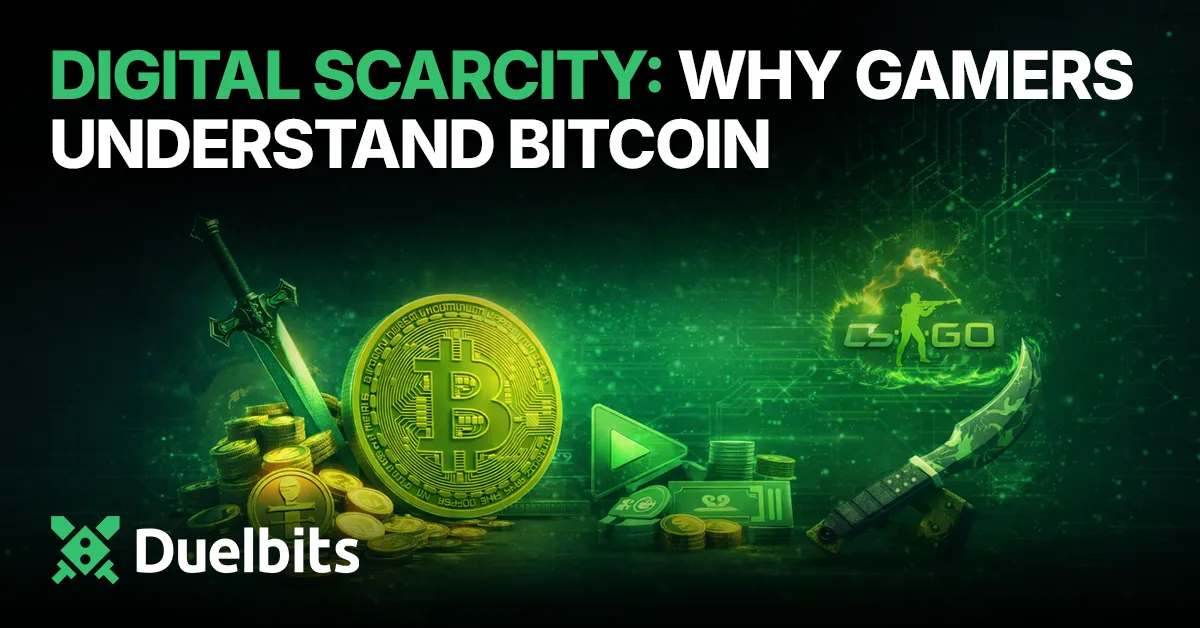
Millions of people already understand digital scarcity. They learned it in Counter-Strike & RuneScape.
Before anyone had heard of a blockchain, gamers were already building some of the most sophisticated digital economies in history. They traded scarce items, watched supply shocks play out in real time, and learned – often the hard way – what happens when a centralized authority controls the money supply. Millions of people have lived this experience. Most of them just haven’t connected it to Bitcoin yet.
The parallels aren’t loose analogies. They’re the same underlying mechanics, playing out in different arenas.
When Valve introduced weapon skins to Counter-Strike: Global Offensive in 2013, few people expected a purely cosmetic item to become a billion-dollar secondary market. Today, the CS2 skin economy is estimated to generate over $1 billion in annual trading volume. A single knife skin – the right pattern, the right float value – can sell for tens of thousands of dollars.
What made it work wasn’t hype. It was engineering. Valve built scarcity directly into the system: condition ratings, float values that determine exactly how worn a skin looks, and strict rarity tiers that cap how frequently any given item can drop. The result is an asset class with a verifiable, fixed supply and a global open market that prices it in real time. Players who spent years flipping skins on the Steam Community Market weren’t just gaming – they were developing an intuition for how digital assets behave under conditions of genuine scarcity.