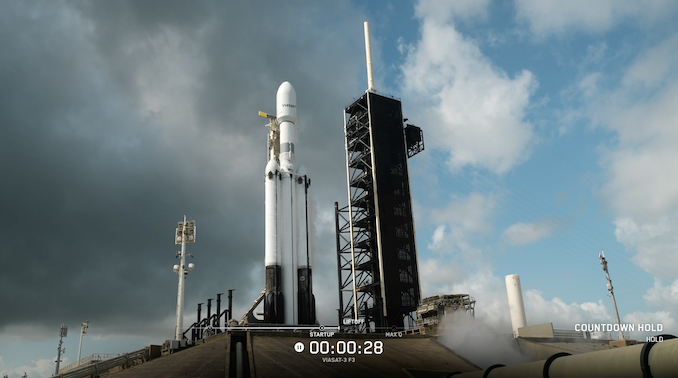
Update April 29, 3:30 p.m. EDT (1930 UTC): SpaceX confirms successful deployment of the ViaSat-3 F3 satellite.
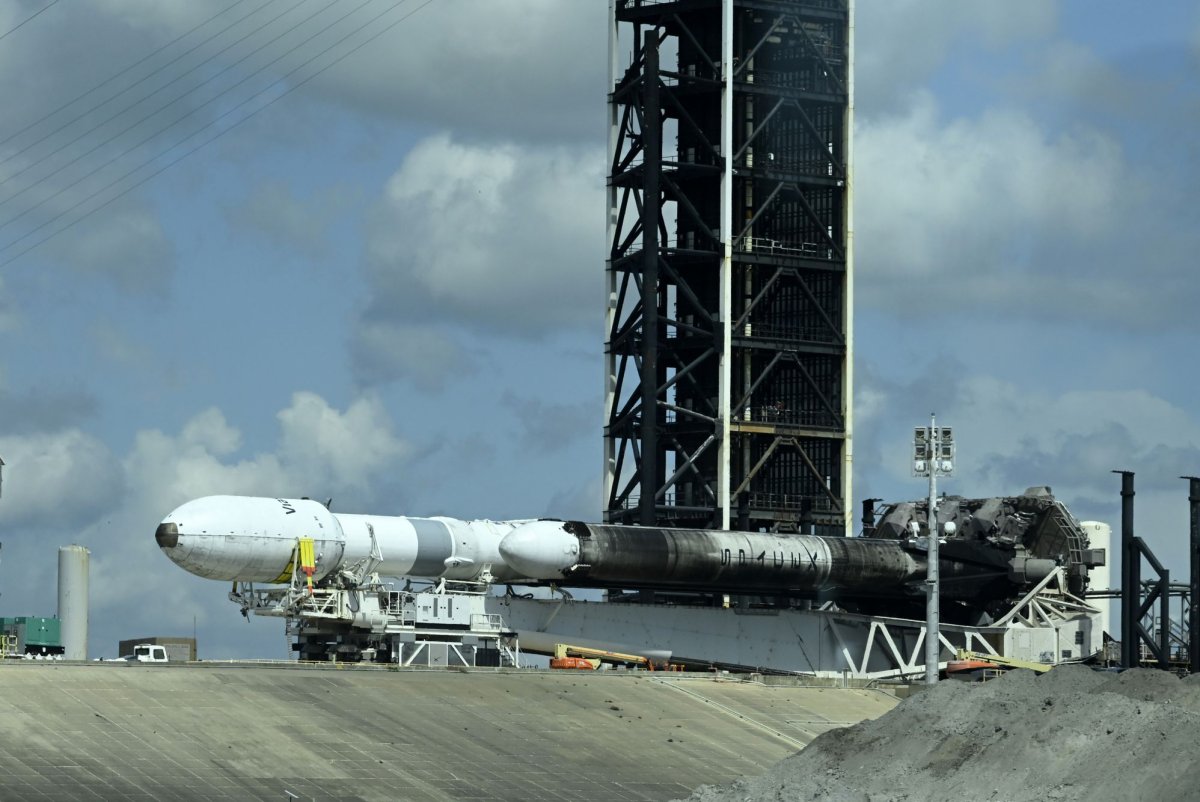
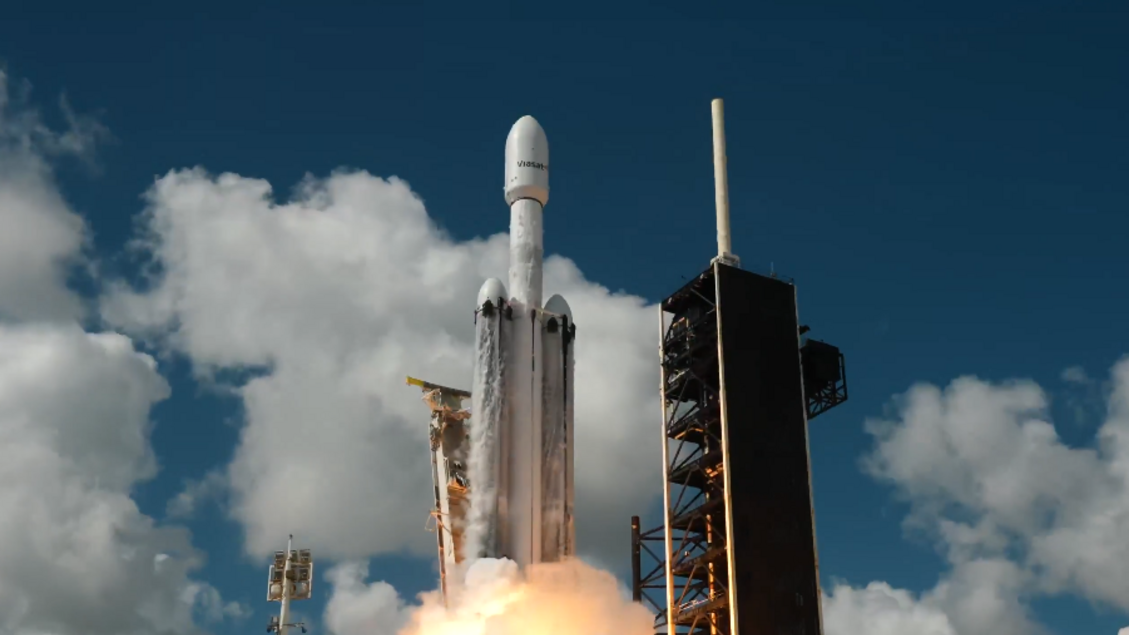
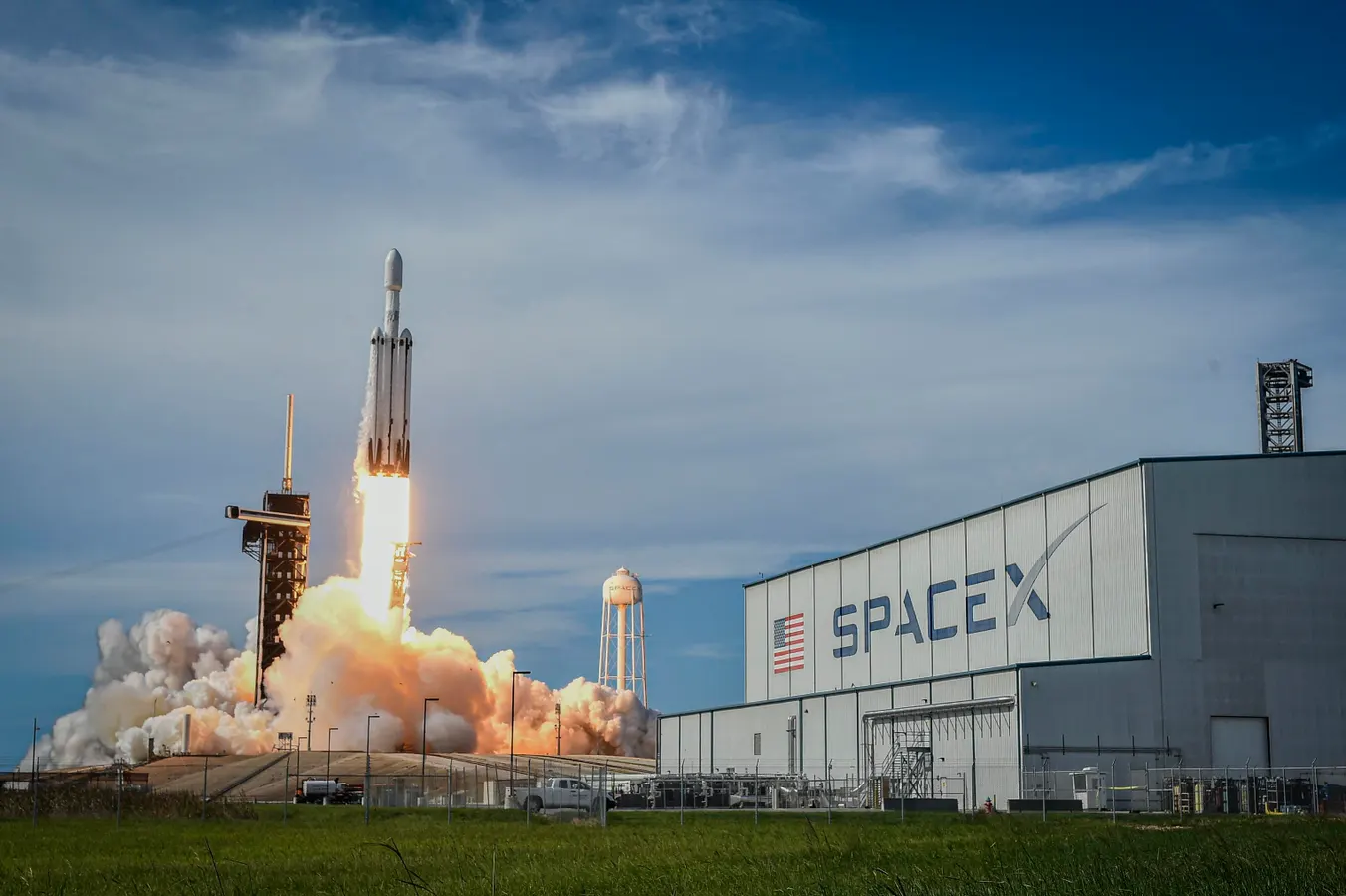
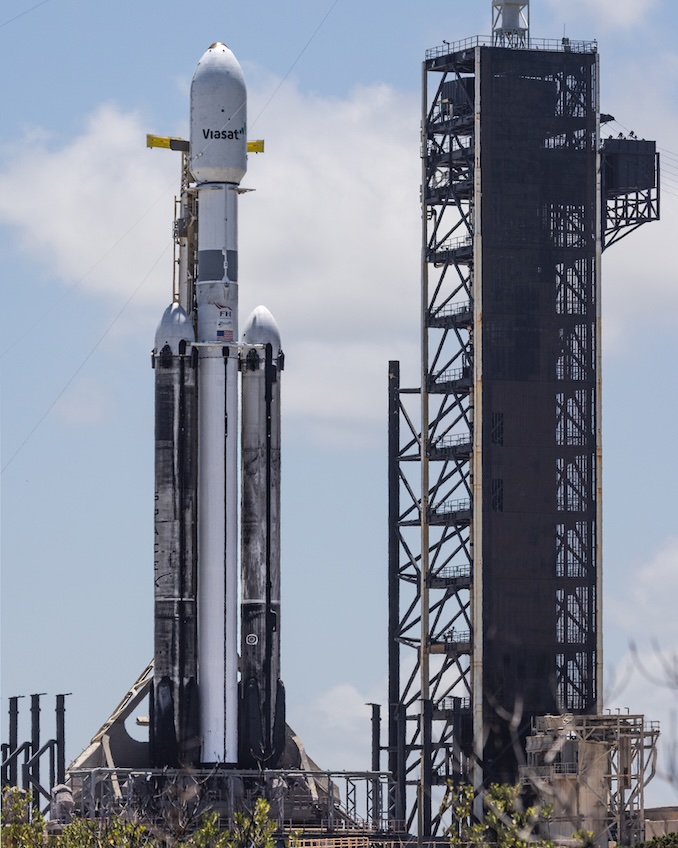
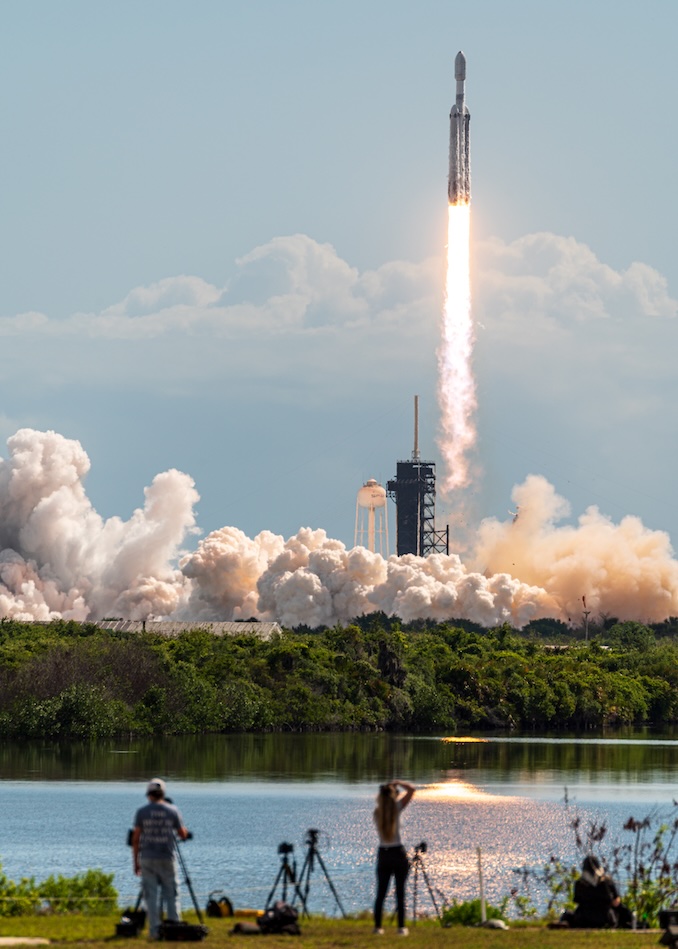
SpaceX’s most powerful operational rocket, the Falcon Heavy, lifted off Wednesday carrying a massive communications satellite on its 12th flight since 2018.
The 27 Merlin engines of the three Falcon boosters roared to life at 10:13 a.m. EDT (1413 UTC) and the 70-meter-tall (229.6 ft) rocket thundered away from Launch Complex 39A propelled by 5 million pounds of thrust.
Less than 2.5 minutes after liftoff, the side boosters, tail numbers B1072 and B1075, throttled down on their engines and separated from the center core, tail number B1098. Both side boosters performed a boost back burn lasting more than a minute to put them on track towards two landing pads at Cape Canaveral Space Force Station. The center core, B1098, continued on for another 90 seconds before the second stage separated and began the first of three burns over five hours to deliver the ViaSat-3 F3 satellite to a geosynchronous transfer orbit.
Less than eight minutes after the flight began, B1072 and B1075 reignited their center engines and touched down at Landing Zone 2 and Landing Zone 40. This was the first Falcon Heavy rocket launch to use SpaceX’s newest landing pad at Space Launch Complex 40. As with most Falcon Heavy missions, SpaceX did not recover the center core.