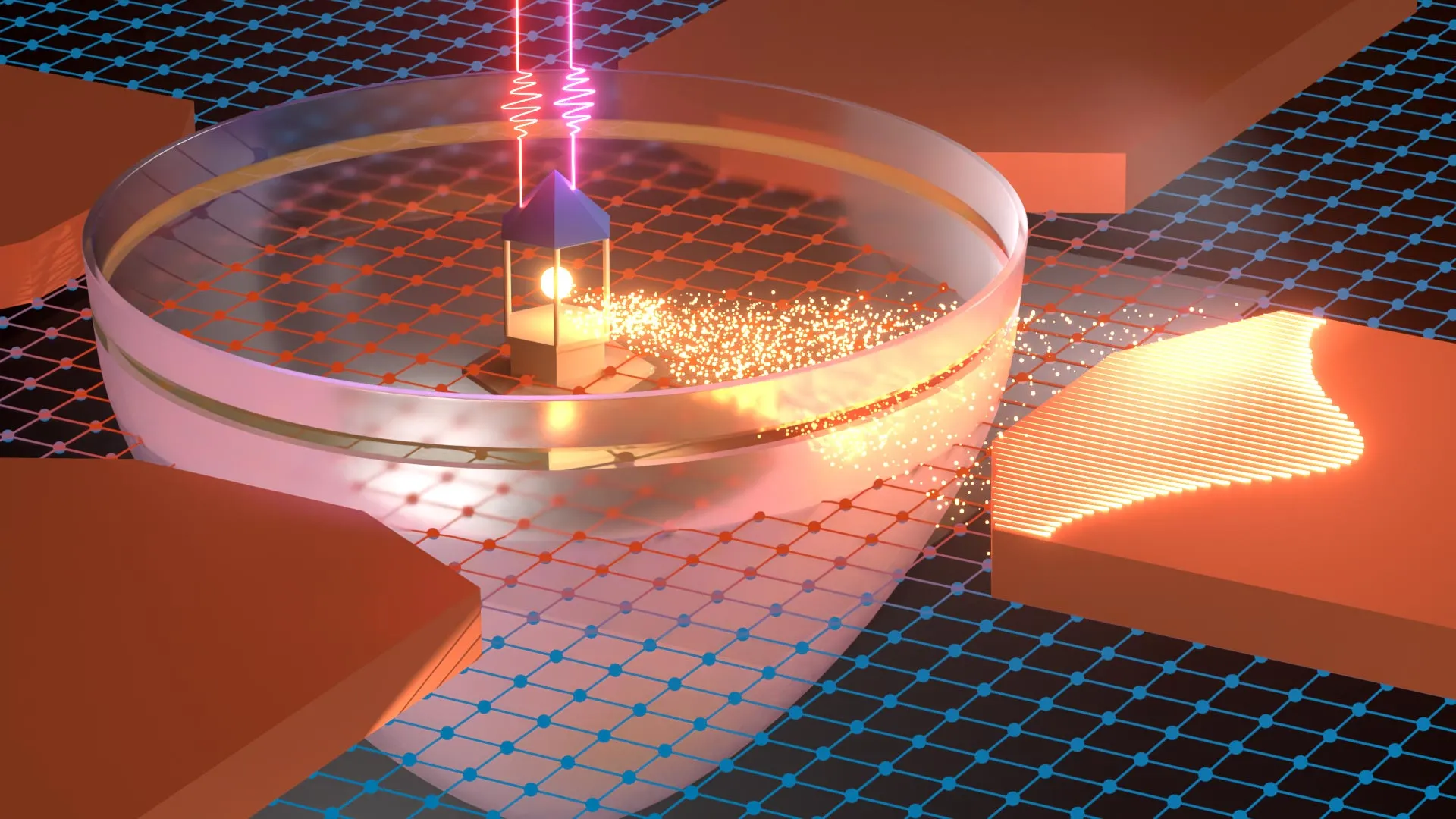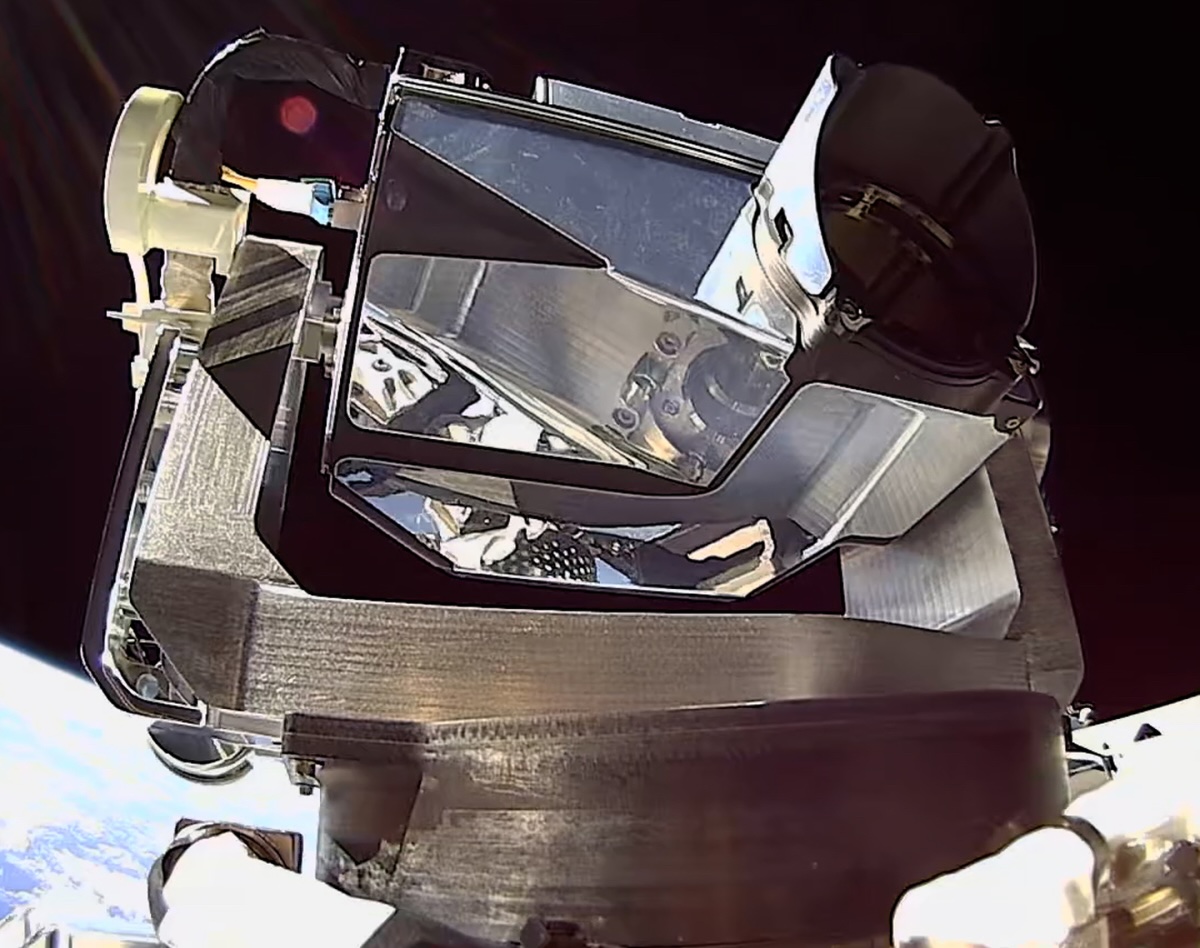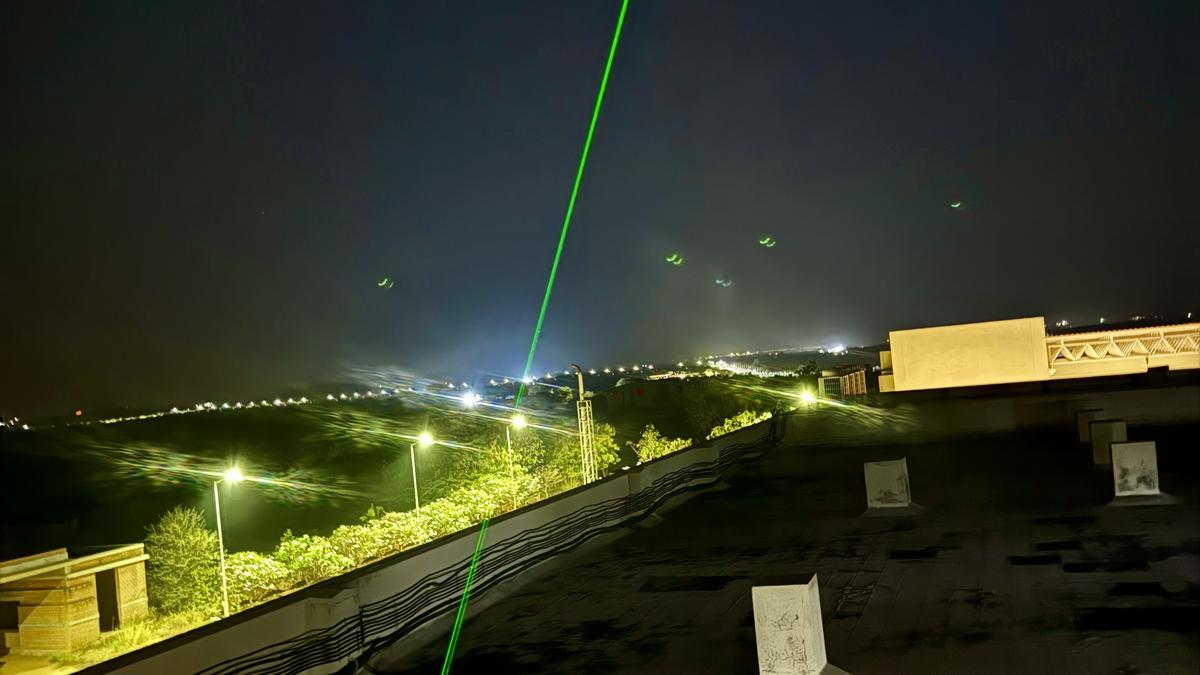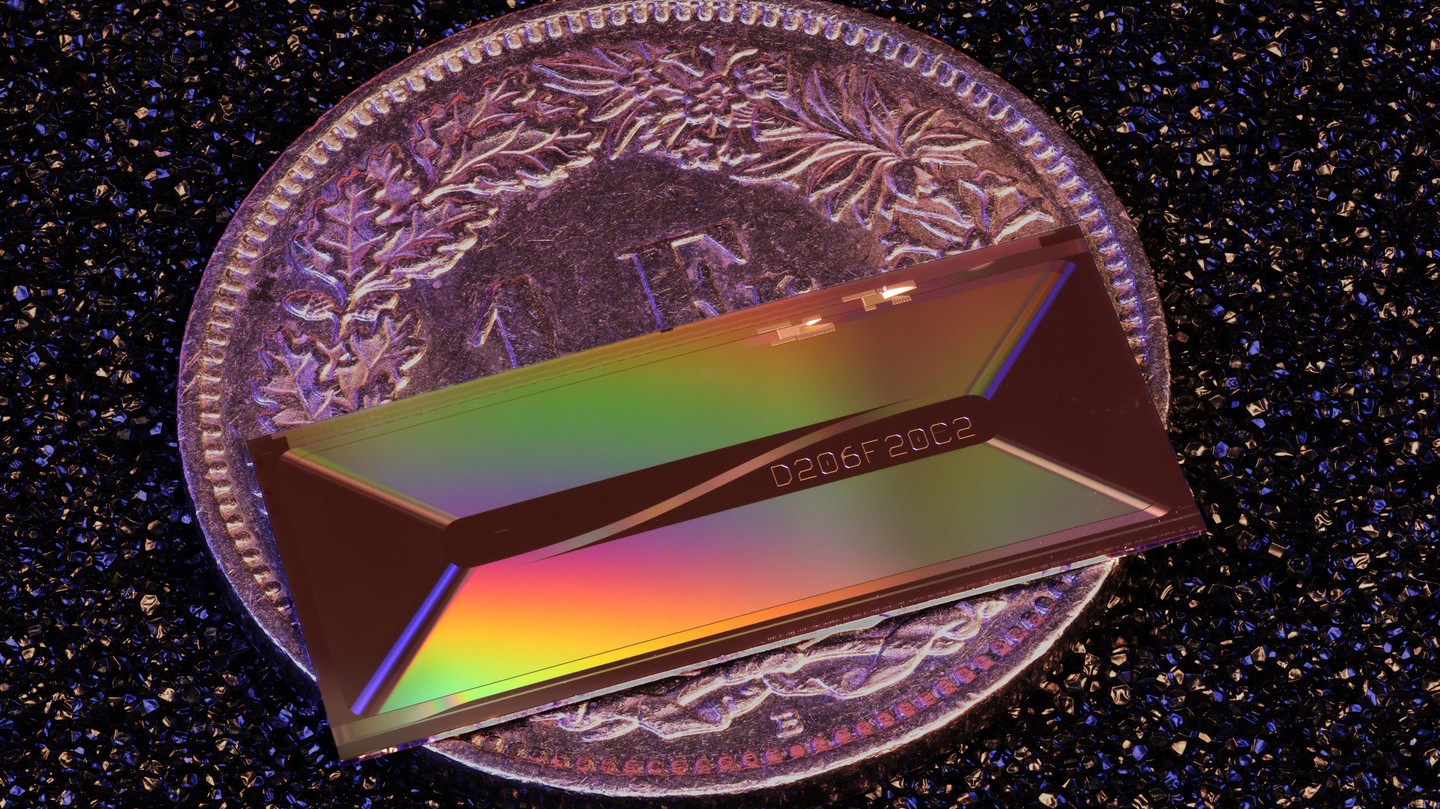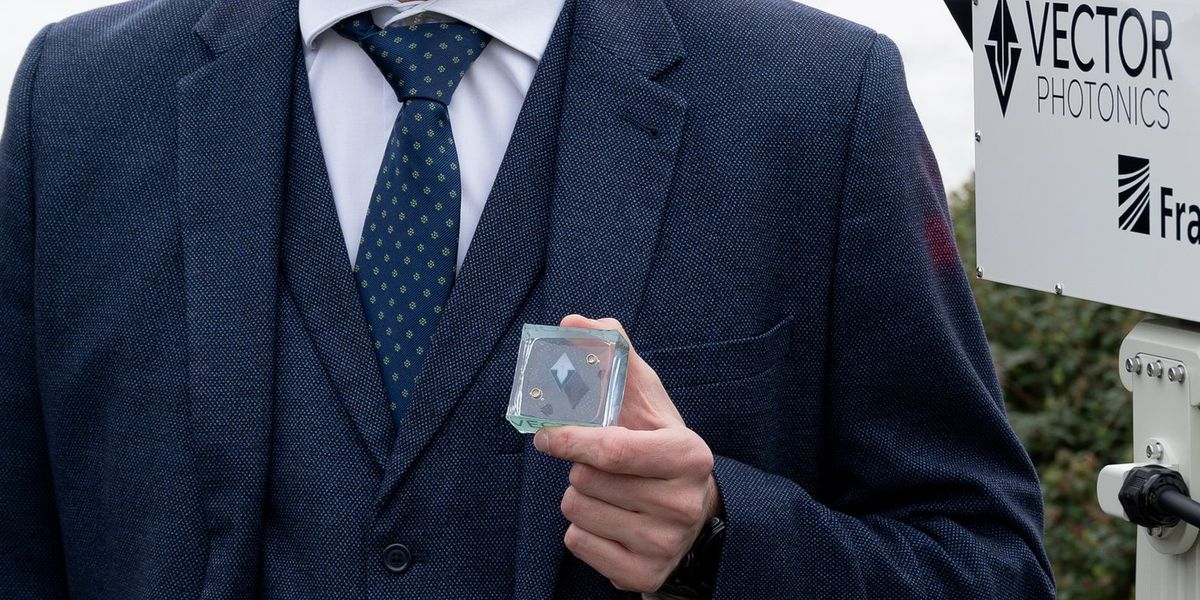
Conventional semiconductor lasers are compact and efficient—but also dim and dependent on bulky, complex optics. However, a new generation of semiconductor lasers that use photonic crystals are bright enough to melt steel and require simpler optics to transmit data. And now a startup in Scotland has for the first time used the new lasers outside the lab for data transmissions capable of carrying HD video.“We see applications for our lasers in all communications in general—data centers, telecommunications, free-space optical communications,” says Richard Taylor, CEO and founder of the University of Glasgow spinoff, laser startup Vector Photonics, in Glasgow. “And we’d like to transmit to and from satellites, or between satellites, where distances are less affected by atmospheric turbulence and absorption.”Photonic crystals possess a lattice of features smaller than the wavelengths of light they are designed to interact with. These structures essentially behave like a hall of mirrors that control which wavelengths can pass and which are reflected. Since the turn of the millennium, researchers have developed photonic-crystal lasers that are tiny, energy-efficient, highly controllable, and can emit very bright, narrow beams. These photonic-crystal surface-emitting lasers (PCSELs), if used in free-space optical communications, says Taylor, “can have a much simpler lens array for transmissions, and so reduce the size, weight, and cost of systems, and transmit signals further distances.” PCSELs Delivering on Their Free-Space Communications PromisePreviously, using PCSELs for optical communications systems across free space was limited to lab experiments. Now, using a system designed and built by the Fraunhofer Center for Applied Photonics in Glasgow, Vector Photonics’ PCSELs transmitted data through open air at the near-infrared wavelength of 1,310 nanometers—in telecom’s O-band, a familiar wavelength for fiber-optic communications.Vector Photonics has developed PCSELs made of indium phosphide and indium gallium arsenide phosphide that a commercial fab could reproduce and manufacture reliably. The semiconductor lasers were then incorporated into a system in a university clean room, using off-the-shelf electronics to drive the system, Taylor says.The startup achieved data-transmission rates of 50 million bits per second (Mb/s) over 300 meters across the River Clyde from the Glasgow Science Centre to the Clydeside Distillery. “It is encouraging to see PCSEL technology transition from the laboratory to a real-world setting,” says Susumu Noda at Kyoto University, who with his team built the first PCSELs in 1998. “Demonstrating a stable link across the River Clyde is a positive milestone for the photonics community, validating the technology’s performance outside of controlled environments,” he adds.Vector Photonics also transmitted data at 50 Mb/s over 500 meters across a field, Taylor says. “This demonstration proves that PCSELs can function under fluctuating environmental conditions, such as temperature, humidity, and atmospheric turbulence,” says Noda, who did not take part in the current work. “It confirms that PCSELs are a viable candidate for free-space optical communication in practical applications.”However, the 50 Mb/s transmission rate “is remarkably low,” Noda says. “In our own laboratory experiments, we have already demonstrated that PCSEL technology can achieve speeds of 16 gigabits per second.”Taylor concurs, noting that in the lab, they also reached much faster speeds than what they showed in the field. He explains that their latest results were performed for a project for Innovate UK where Vector Photonics had to show 22 Mb/s transmission rates—”the data rate to send HD video”—after eight months of work. “We’re pretty confident we will soon be able to achieve 1 Gb/s at a kilometer, and after that, a couple of gigabits per second over a couple of kilometers."
Scottish Startup Fires Laser Data Beams Across the Clyde
The semiconductor device could one day link satellites in orbit
578 words~3 min read