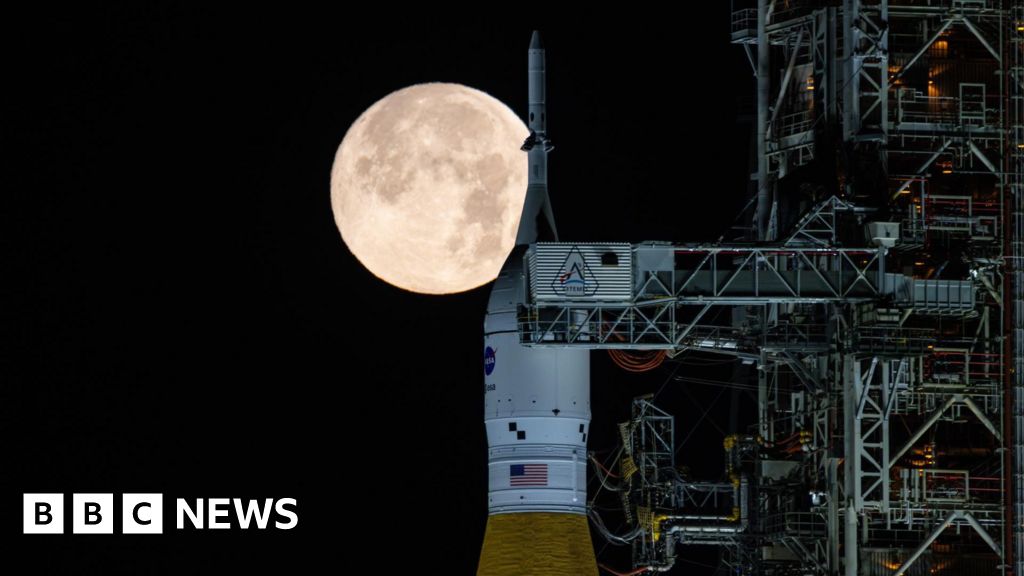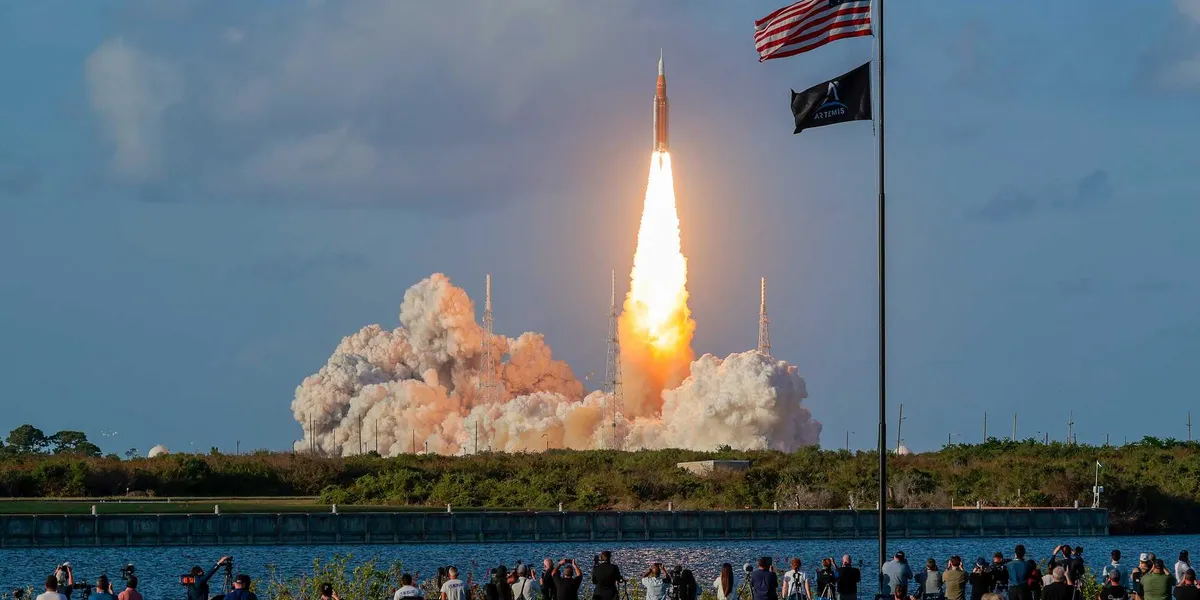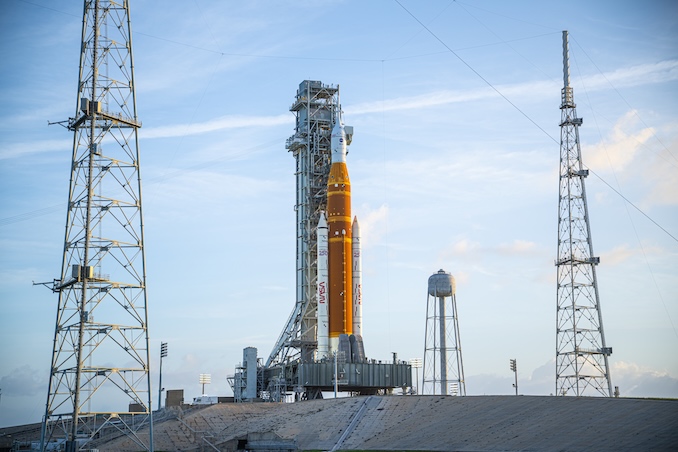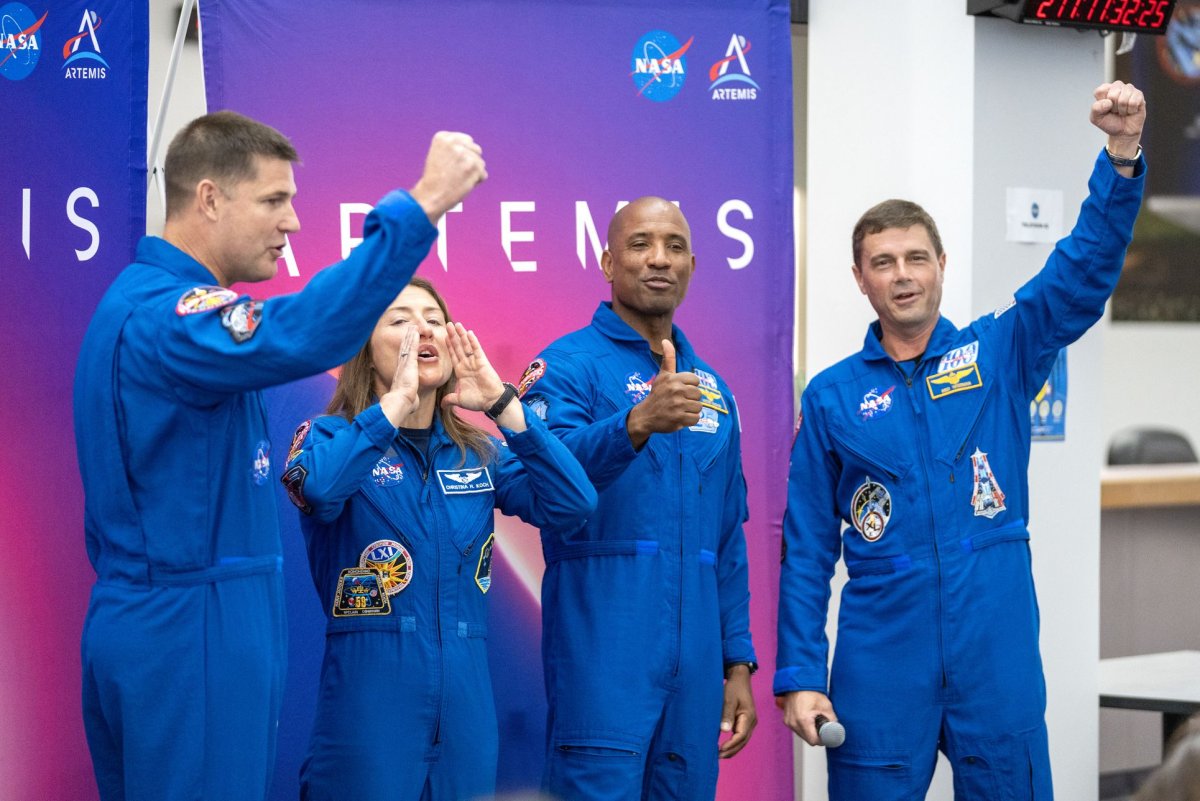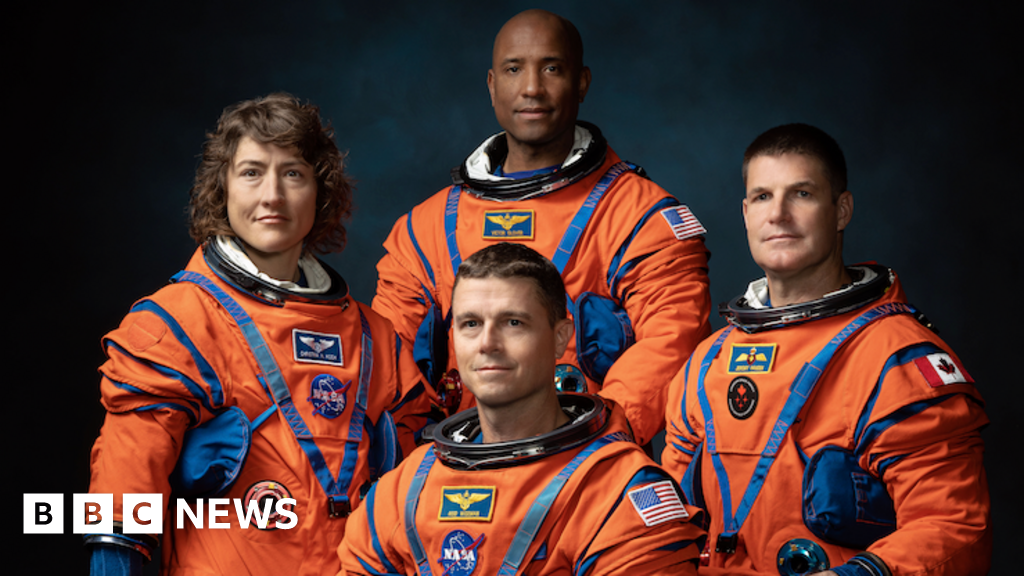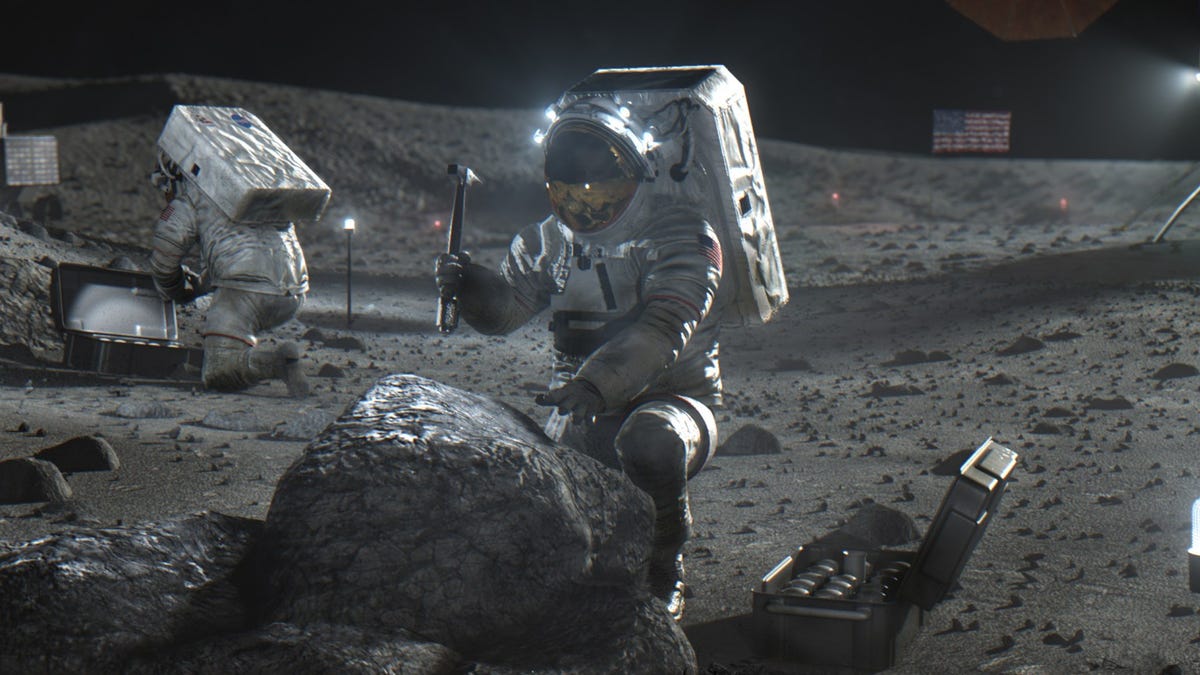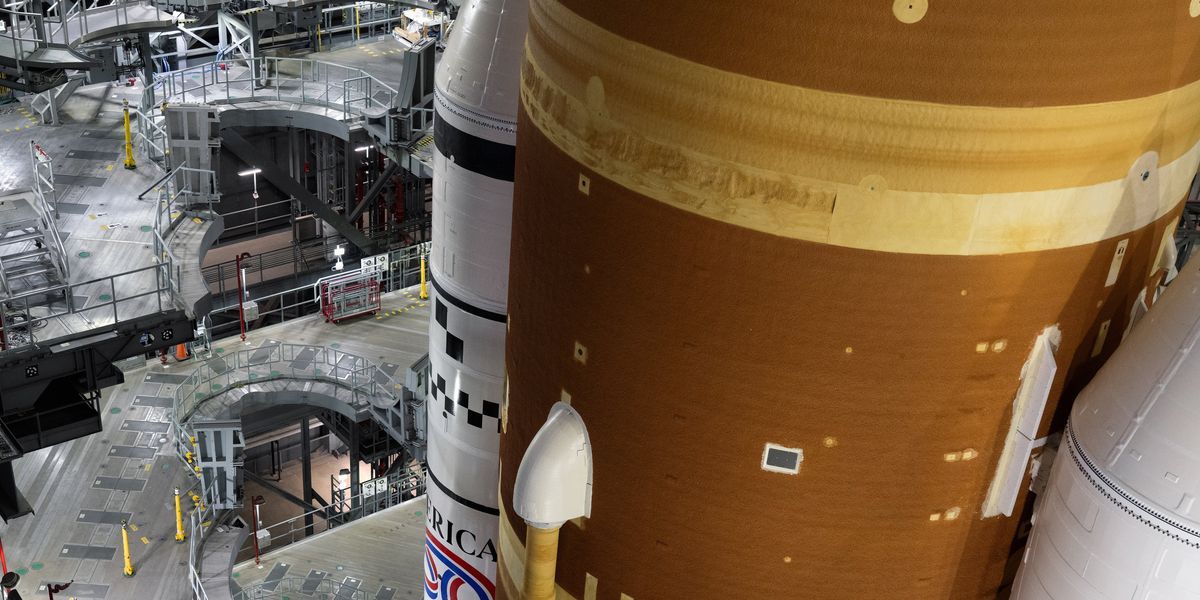
UPDATE 1 MARCH, 2026: NASA announced on 27 February that the agency will launch an additional test flight after Artemis II and before a lunar landing attempt. The new Artemis III, in 2027, would have an Orion spacecraft attempt to rendezvous and dock with one or more proposed lunar landing craft in low Earth orbit. The first moon landing of the project would come on Artemis IV or V, still currently scheduled for 2028.All mentions of Artemis III in the original story refer to NASA’s previous program structure, in which that third flight would have been the crewed landing on the moon. —IEEE SpectrumOriginal article from 29 January, 2026 follows:“We’re going to the moon.” Reid Wiseman, the commander of Artemis II, said the words emphatically, his way of opening a news briefing last September. He may have practiced the line, but he said it with such force that it underscored the moment—the Artemis II astronauts will be the first to circle the moon in more than 50 years, a risky and complicated mission.So yes, humans are going to the moon. Artemis II is now aiming for launch, perhaps in March. But target launch dates have also come and gone in 2024 and 2025. Wiseman and his three crewmates—Victor Glover and Christina Koch of NASA and Jeremy Hansen of the Canadian Space Agency—were publicly assigned to this mission in April 2023. “We really see the light at the end of the tunnel,” said Wiseman at the September briefing.The Artemis spacecraft, with its Orion crew capsule atop the giant Space Launch System (SLS) rocket, has never carried astronauts before. The uncrewed Artemis I flew in 2022. This year’s flight, if all goes well, will be the one test with a crew before astronauts try to land near the lunar south pole on Artemis III.RELATED: NASA’s Rivalry/Not-Rivalry With China’s Space Agency Takes OffTension is building, not only because of the upcoming launch but also because of staff and budget cuts, leadership changes at NASA—and a chorus of voices warning that the Chinese space agency may actually beat Artemis III to the moon.So how, after all these years, changes of plan, delays, and so much money spent, is Artemis II going to do it? Artemis II Builds on the PastAlthough the Artemis spacecraft is on a new mission, in many ways, the vehicle is not new at all. It relies heavily on mature technologies from earlier phases of the U.S. space program—the space shuttle, the International Space Station, and Apollo itself.That’s not necessarily a bad thing, say engineers who’ve worked on Artemis. When you’re trying to do something very difficult, the best systems aren’t always the newest. “We try to rely on proven technology, as much as we can, as long as it meets our needs for performance and weight,” says Tim Straube, Orion’s deputy manager for avionics, power, and software at NASA in Houston.Artemis isn’t reusable, but it’s built from many used and spare parts. It will leave from Pad 39B at the Kennedy Space Center in Florida, a launch pad built in the 1960s and used for two Apollo flights, three Skylab flights, and 53 space-shuttle launches. The SLS rocket, 98 meters tall with Orion on top, uses four engines originally built for space shuttles. The SLS main stage is mostly orange because its liquid hydrogen and liquid oxygen tanks are covered with insulation very much like that used on the space shuttles’ giant external tank. The two strap-on solid-rocket boosters are made from casings previously used on shuttle flights; they helped power a shuttle for its first two minutes after liftoff, then were jettisoned, recovered, and refurbished. An expanded view shows NASA’s SLS Block 1 moon rocket.John MacNeill/IEEE SpectrumThree of the booster’s four RS-25 engines flew on space-shuttle missions, one of them on 15 flights dating back to 2001. The fourth was assembled late in the shuttle program but never used. L3Harris, the contractor responsible for the engines, points out that all four include refurbished components that were carried on the very first shuttle flight in 1981. The Orion crew module has the classic truncated cone shape that engineers calculated back in the 1950s as optimal for dissipating heat on reentry. Five meters wide at the base, it has about 9 cubic meters of habitable space for the astronauts, compared with about 6 for Apollo. Its exterior is covered with about 1,300 thermal tiles, similar to those used on the space shuttles and wrapped in a silvery reflective coating, like Apollo’s. At its base is a heat shield made of an ablative mixture called Avcoat, reformulated from the Apollo era. An exploded view shows the Orion spacecraft.John MacNeill/IEEE SpectrumOrion is the only part of the Artemis vehicle that is intended to make the 2.25-million-kilometer round trip, from launch to lunar flyby to splashdown in the Pacific Ocean, about 100 km off the coast of Southern California. At launch, it will be nestled under a protective cover with an abort rocket at its apex. Behind it is the ship’s service module, supplied by the European Space Agency, carrying consumables, electronics, four photovoltaic arrays, attitude-control thrusters, and a rocket engine, which, like the RS-25s in the booster, is a veteran of space-shuttle missions. ESA says the engine flew on six flights of the shuttle Atlantis between 2000 and 2002, then was kept in storage for 20 years.New Tech in Artemis II“You’ll find a lot of heritage throughout this vehicle,” says Paul Benfield, Orion Artemis II mission senior manager at Lockheed Martin, the prime contractor for the crew module. He has worked on its development since before it was even given the Orion name in 2006. And while much of its design dates back to then, it also takes advantage of systems that have grown increasingly sophisticated in the years since.Multiple redundancy is critical, says Benfield. Orion is controlled by two vehicle-management computers, each of which has two flight-control modules, or FCMs, to handle its major systems. If at any point one of the four FCMs disagrees with the others, it will take itself offline and reset itself to make sure its outputs are consistent with the others’. If all four FCMs fail, there is a fifth, entirely separate computer running different code, to get the spacecraft home.Guidance and navigation, too, have advanced. Orion uses three inertial measurement units and two star trackers to determine its position and trajectory. An optical navigation camera takes shots of Earth and the moon so that guidance software can determine their distance and position and keep the spacecraft on course. When Orion is in range, it can even use GPS signals for guidance.All that makes for a very complicated vehicle. But as a result, other things can be simpler. Of the four astronauts, only Wiseman, the commander, and Glover, the pilot, have a control panel in front of them, with three flat readout screens, a cursor control (a mouse wouldn’t work in microgravity), and two joysticks for attitude and translational movement of the spacecraft. Whereas a space shuttle’s flight deck had more than 2,020 displays and controls, Orion has about 60. “As you climb into Orion, it’s going to look more like a modern airliner cockpit, with a glass-cockpit-type design, than what you would have seen in Apollo and the shuttle,” says Benfield.Flight Plan for Artemis IICountdown, ignition…and liftoff. The vehicle will take the astronauts on one 95-minute elliptical Earth orbit with an apogee of about 2,300 km, then a higher 23-hour orbit with an apogee of about 75,000 km, and then, if all is working well, on a path to the moon that will bring them within about 6,500 km of the lunar surface before they head back to Earth. The mission is supposed to take about 10 days, though specific numbers depend on the actual launch date.During those 10 days, Wiseman and Glover expect to spend less than 2 hours manually flying their ship. Most of that will be on the first day, when they practice flying in formation with their rocket’s spent upper stage. Almost everything else—engine firings, attitude adjustments—will be controlled by the vehicle’s computers, based on commands from the ground.The high point should come as the astronauts swing around the moon’s far side. They will not go into orbit, but for about 45 minutes they will be out of touch with Earth, peering out of Orion’s four main windows, cameras firing.“We could see parts of the moon that never have had human eyes laid upon them before,” said astronaut Koch. “And believe it or not, human eyes are one of the best scientific instruments that we have.”Orion should be on a free-return trajectory, which would bring it back to Earth with minimal course corrections. Four days later, the capsule and crew should be bobbing in the Pacific, west of San Diego, to be recovered quickly by a U.S. Navy amphibious transport ship. NASA’s Space Launch System (SLS) rocket and Orion spacecraft, secured to the mobile launcher, were rolled out of the Vehicle Assembly Building to Launch Pad 39B on 17 January 2026, at NASA’s Kennedy Space Center, in Florida. Joel Kowsky/NASANext Step: Artemis IIIIf the mission goes well, Artemis III should be next up, but there’s a lot of work still to be done. SpaceX, which won a contract in 2021 to build a lunar-landing version of its massive, reusable Starship, is behind schedule. It has promised, under pressure from NASA, to speed things along with “a simplified mission architecture.” Meanwhile, competitors, including Blue Origin and Lockheed Martin, have signaled they’re working quietly on alternative vehicles. Without major progress on a landing ship, some prominent space experts warn that NASA cannot expect to beat Chinese astronauts to the moon by 2030.RELATED: NASA Still Has a Lot of Work to Do to Return to the MoonBut first things first: The Artemis II team says it’s ready.“Going to the moon is crazy. It’s nuts,” said Jeremy Hansen, the Canadian member of the crew, at a briefing in November. “I mean, it’s 400,000 km away, and when you start to really look at how difficult this is and how precise your trajectory has to be, this stuff is crazy.” “But,” he added, “it’s super cool that we can do it.”This is part 1 of a three-part series, Back to the Moon. Part 2 looks at China’s lunar ambitions. Part 3 discusses the organizational challenges faced by NASA in returning astronauts to the moon.This story was updated on 3 February 2026 to change the expected launch window for Artemis II. At the time of publication, NASA was targeting a launch window beginning on 6 February 2026. The agency has now said it will aim for March 2026.
Artemis II Prepares to Return Humans to the Moon After 50 Years
Artemis II is set to take astronauts around the moon for the first time in over 50 years. How will this mission build on past space achievements?
1,780 words~8 min read