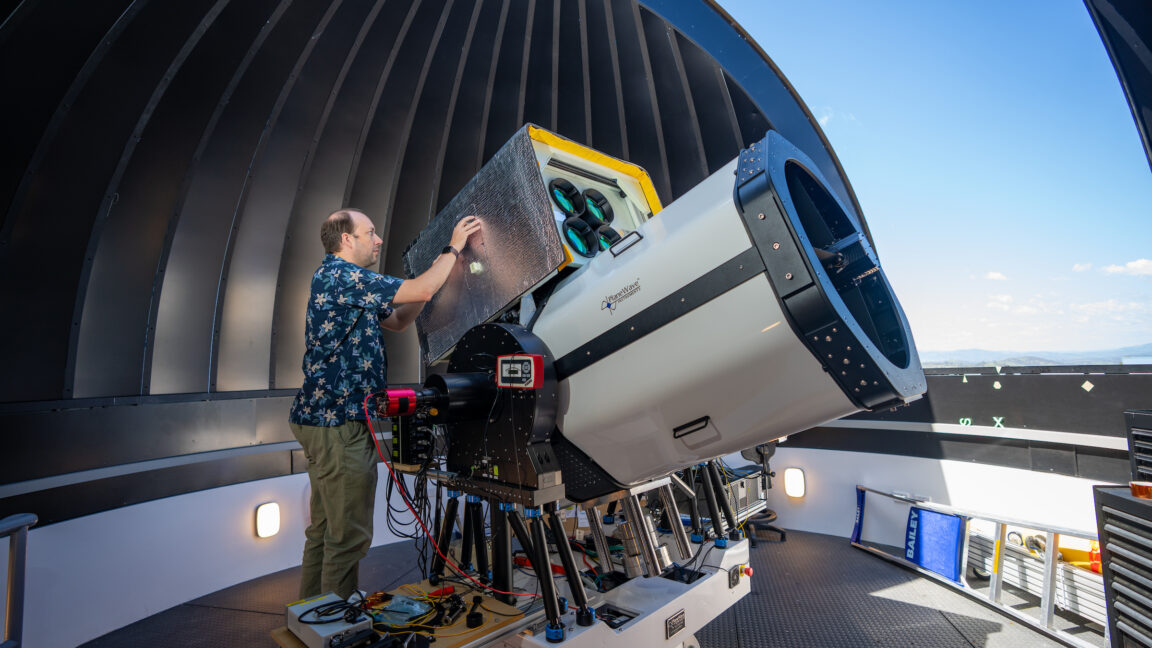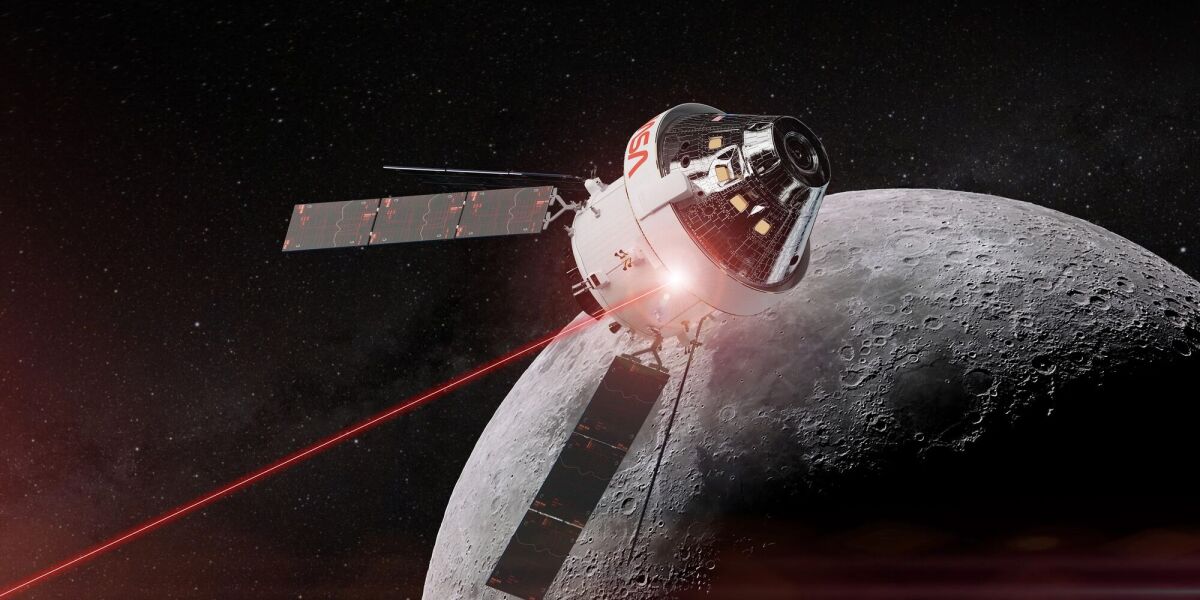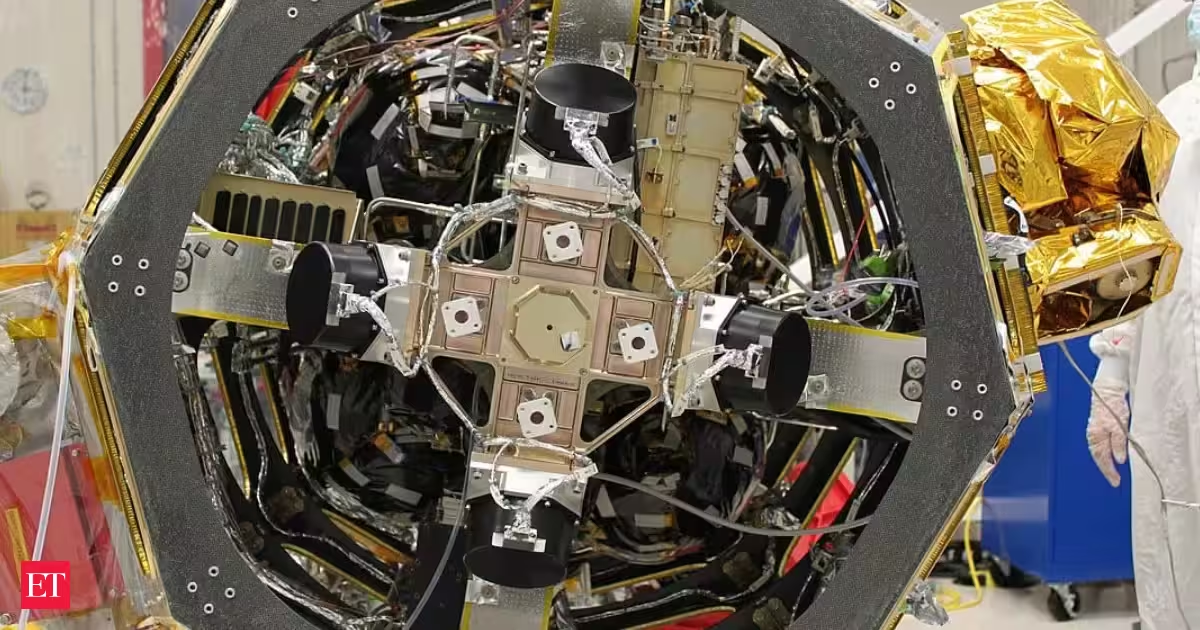
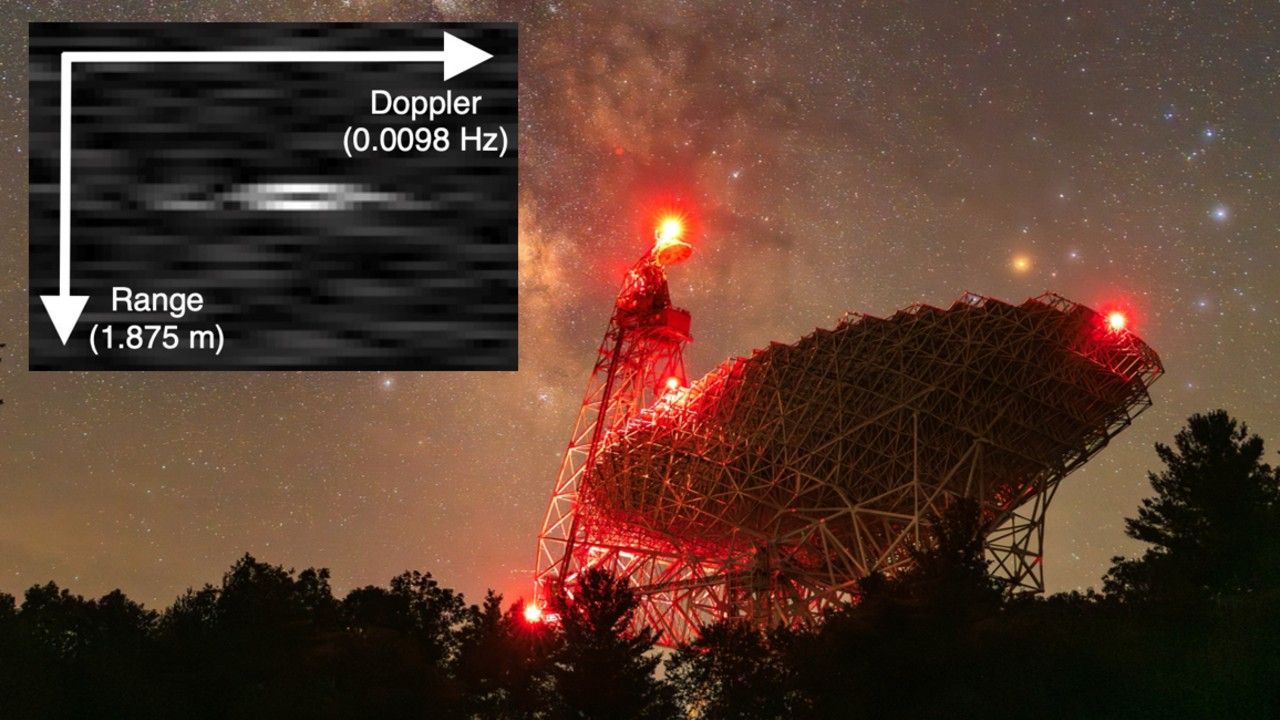
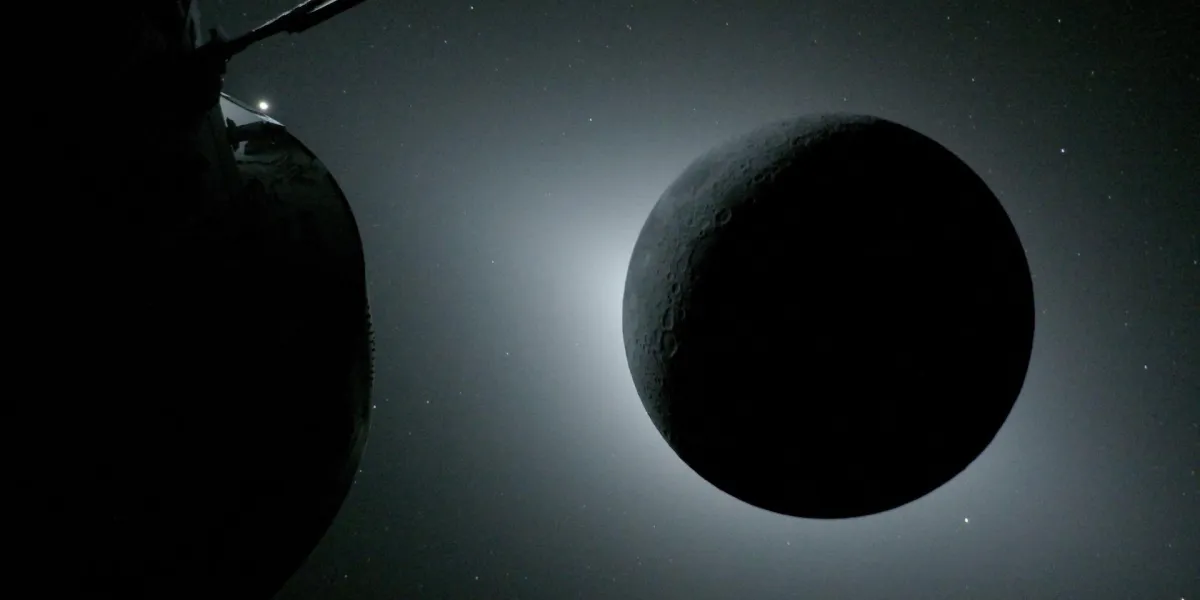
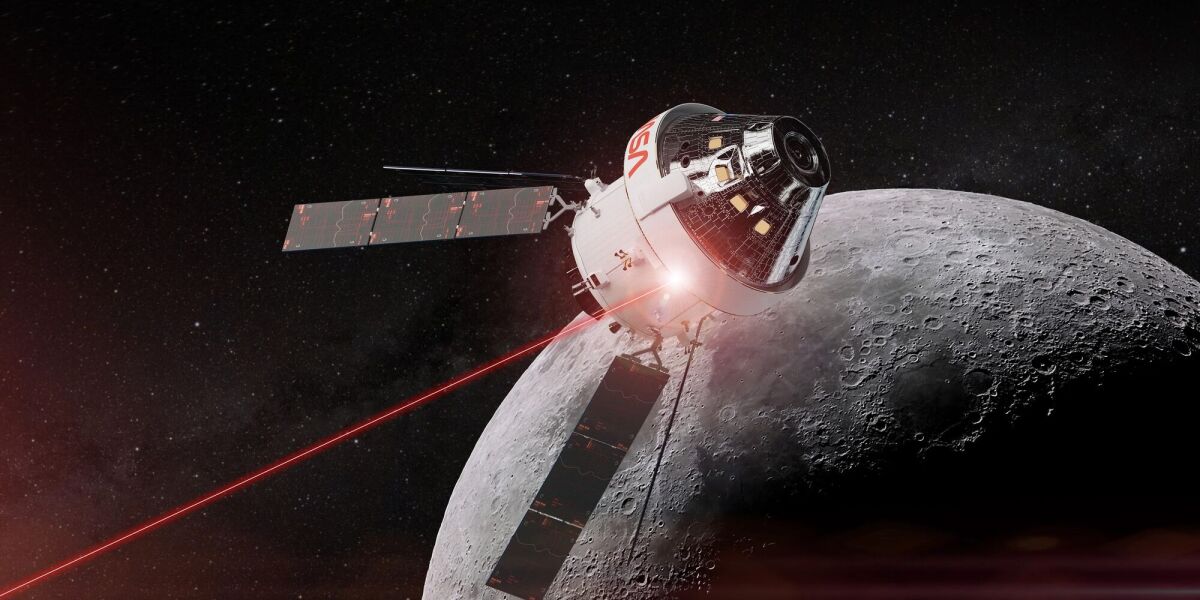
For 10 days last month, Artemis II astronauts sent live HD video back to Earth using experimental laser links that cost a fraction of what ground stations might normally run. The connection ran through a telescope on a hillside near Canberra, Australia, which complemented two traditional receiving telescopes in the United States. Compared with radio communications, infrared laser light packs up to a thousand times as much data, because of its higher frequency. Laser communications tech provides broadband connectivity from deep space, where previous missions had to make do with tenuous radio links of a few megabits per second. The Artemis II mission, among its many other accomplishments, served as a proof of concept for reliable and inexpensive space communications. And NASA’s latest moonshot is hardly alone in that technological distinction. SpaceX, for example, uses laser links to haul large amounts of data between satellites of the Starlink constellation. Other companies have plans to build laser-based space relay networks around Earth that could replace undersea high-throughput fiber-optic cables in the future. But laser comms have an Achilles’ heel when trying to deliver data to Earth, said former NASA astronaut Josh Cassada. Once clouds intervene, data links break. Radio waves, despite their considerably lower bandwidth, can pierce through clouds with no difficulty.Cassada, who retired from his astronaut career in 2024, is a cofounder and head of R&D at Quantum Opus, a Michigan-based startup developing ultrasensitive photon detectors, which helped NASA secure Artemis II’s laser links against inclement weather.“If you’ve got clouds, the 1,550-nanometer wavelength that we’re using will scatter and never make it to the telescope,” Cassada said. “You need geographic diversity to immediately switch to another site that has good weather.”During the 10-day journey to the moon and back, Artemis II’s Optical Communications System (O2O) laser terminal mounted on the Orion spaceship transmitted 450 gigabytes of data. Two ground stations in the U.S. (in Las Cruces, N.M. and on Table Mountain in Southern California) and one on Mount Stromlo near Canberra, Australia, served as Artemis’s terrestrial downlink sites. The Australian site tested a low-cost ground-terminal system developed by Quantum Opus, Los Angeles–based telescope manufacturer Observable Space, and Australian National University, in Canberra.“In prior systems, you were looking at ground stations that cost tens of millions of dollars,” said Connor Poole, chief technology officer at Observable Space. “Our systems are in the single-digit millions.”That fact alone could resolve the reliability problem. It means a network of ground stations worldwide can be built affordably, ensuring clear skies over an available ground terminal somewhere on the planet.The Australian telescope helped reduce “a large portion of the ‘blind spot’ created by only using U.S. ground stations,” according to a press release from Observable Space. It noted that a network of 15 to 20 ground stations could provide round-the-clock connectivity for future missions to the moon and Mars.During the Artemis II tests, the Australian ground station performed as well as the two American telescopes, transmitting 260 megabits of data per second, enough to stream 4K video and run multiple conference calls in parallel.“The [Mount Stromlo] site was officially a demonstration to see if this would work,” said Cassada. “But about two or three days into the mission, NASA had transitioned it to [routine] operations. It was a mid-mission upgrade, which was really exciting to see.”How Single Photons Carry Streaming Data From the Moon The ground station relies on a 0.7-meter telescope from Observable Space fitted with a fast-steering mirror that focuses the incoming stream of photons onto a deformable mirror, controlled by actuators, which counteracts distortions to the signal from Earth’s atmosphere. “You’re getting multiple orders of magnitude higher bandwidth at almost an order of magnitude lower size, weight, and power on the spacecraft with this technology,” said Poole. At the heart of the system sits a single photon detector developed by Quantum Opus that intercepts the faint signal that traveled hundreds of thousands of kilometers on its way from the moon.Quantum Opus CEO Aaron Miller describes the cryogenic detector as “the world’s most sensitive.” Cooled to near absolute-zero temperatures, the superconducting nanowire single-photon detector catches over nine in 10 arriving photons. When a particle of light strikes the wire, the energy released makes the material briefly transition from a superconducting to a normal state, creating a sudden voltage pulse, Miller said. “By exploiting this discrete electronic trigger, [the detector] can register the smallest possible increment of energy with nearly perfect efficiency,” he said. “The active area of these sensors is usually only about 50 micrometers across or less—less than half the width of a human hair.”In fact, because signals from the Quantum Opus detector were arriving too brightly, researchers had to reduce the device’s sensitivity.Artemis II Tested How Future Missions Will Communicate Artemis II’s data-transmission rate via O2O was around 5,000 times as great as the rate that Apollo-era missions of the late 1960s and early 1970s used. That said, Poole added, the technology could still be scaled up to support communications at several gigabits per second.Miller said the technology could also one day pave the way for quantum communication from space—for example, for quantum cryptography–secured communications. Laser communications networks would also provide a stepping-stone for constant high-bandwidth connectivity between the Earth, moon, and Mars, he added. Mars ranges from about 55 million kilometers at opposition to over 400 million kilometers at its most distant. Even at opposition, a signal from Mars arrives far fainter than one from the moon—and such a signal already has roughly 1/10,000 the strength of a comparable one from low Earth orbit. NASA “It’s a good stepping-stone for much farther things,” said Miller. “If you want to go to Mars, you really have to push the detectors, the telescopes, all the technology harder, to get this sort of data rate from farther away. But it’s a proof of principle to even go to weaker signals.”During the mission, NASA still relied on radio signals received via the agency’s Near Space Network and the Deep Space Network of radio ground stations. The O2O laser system transmitted less critical scientific information and enabled the crew to live stream their adventure in real time and in high definition. “During Artemis II, the O2O system downlinked high-definition images from the lunar flyby shortly after they were captured,” said Jan Wittry, news chief at NASA Glenn Research Center, in Cleveland. “Because laser communications handled the high-bandwidth imagery, the mission’s radio-frequency links could remain focused on critical spacecraft telemetry and command data. Without O2O, those images would have either arrived with significant delay or at reduced quality.”During the Artemis 2 mission, communication was lost only for about 40 minutes, when the Orion spaceship passed behind the moon. The station in Australia helped to minimize other communication blackouts caused either by clouds or by Earth’s rotation.
Laser Ground Stations Slash Costs for Moon and Mars Data
The cost of laser space communications continues to drop
1,129 words~5 min read

 aboutamazon.com