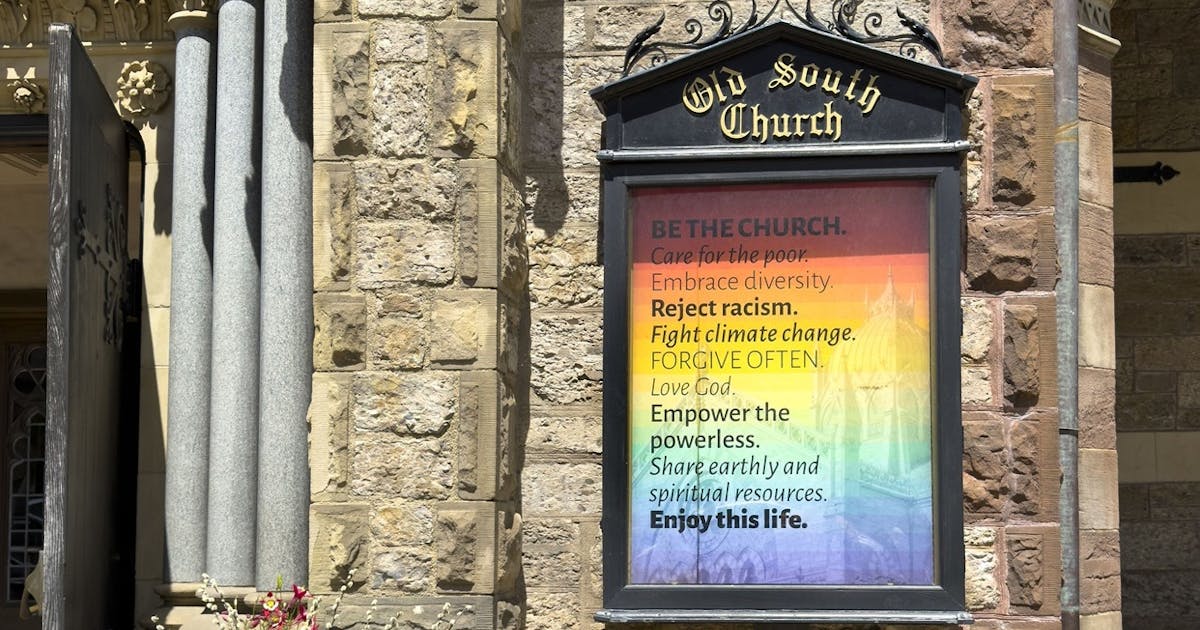
When Linnea was younger, she would attend a Christian summer camp in western Michigan, far outside of the liberal bubble of her Shaker Heights neighborhood in Cleveland, Ohio. Now a 19-year-old student at Case Western University, Linnea had grown up attending a progressive, mission-oriented Protestant church active in the local community. She remembered the summer camp as being “politically neutral,” but given its location in a deep-red region, many of Linnea’s peers had a more conservative understanding of the teachings of their mutual faith.
“It was in those moments where I would see, Wow, we’re both Christian, but we’re moving through the world in completely different ways,” recalled Linnea, who is a member of her university’s branch of the progressive faith network United Protestant Campus Ministries.
As a faithful Christian and young woman who identifies as queer, Linnea is among a relatively small number of Gen Z Americans who are both religiously affiliated and politically progressive. Gen Zers are less likely to identify as Christian than older generations, and less likely to regularly attend church, according to the most recent Census of American Religion by the Public Religion Research Institute, or PRRI. Progressive Christians thus have the burden of convincing ideologically aligned young people that worship is a meaningful way to engage in society.