Imagine you are scrolling through your phone between lectures and you come across a video showing bombing or violent protests, with a caption that reads: “Happening now.” Within minutes, your classmates have shared it on study groups or their personal accounts, and perhaps you did the same, without asking: Is this video current? And was it actually filmed in the place it claims to document?
During times of crisis—such as wars, elections, or protests—video becomes one of the most widespread and influential types of content on social media. We often treat what we see in a video as direct evidence of what is happening because images and scenes appear inherently “real.”
However, the problem is that many videos circulated during crises are not technically fake, but rather real footage that has been taken out of its temporal or spatial context, and then re-shared as documenting current events. In this case, the content publisher does not need to manipulate the video itself; merely changing the title or the time of publication is enough to make it misleading.
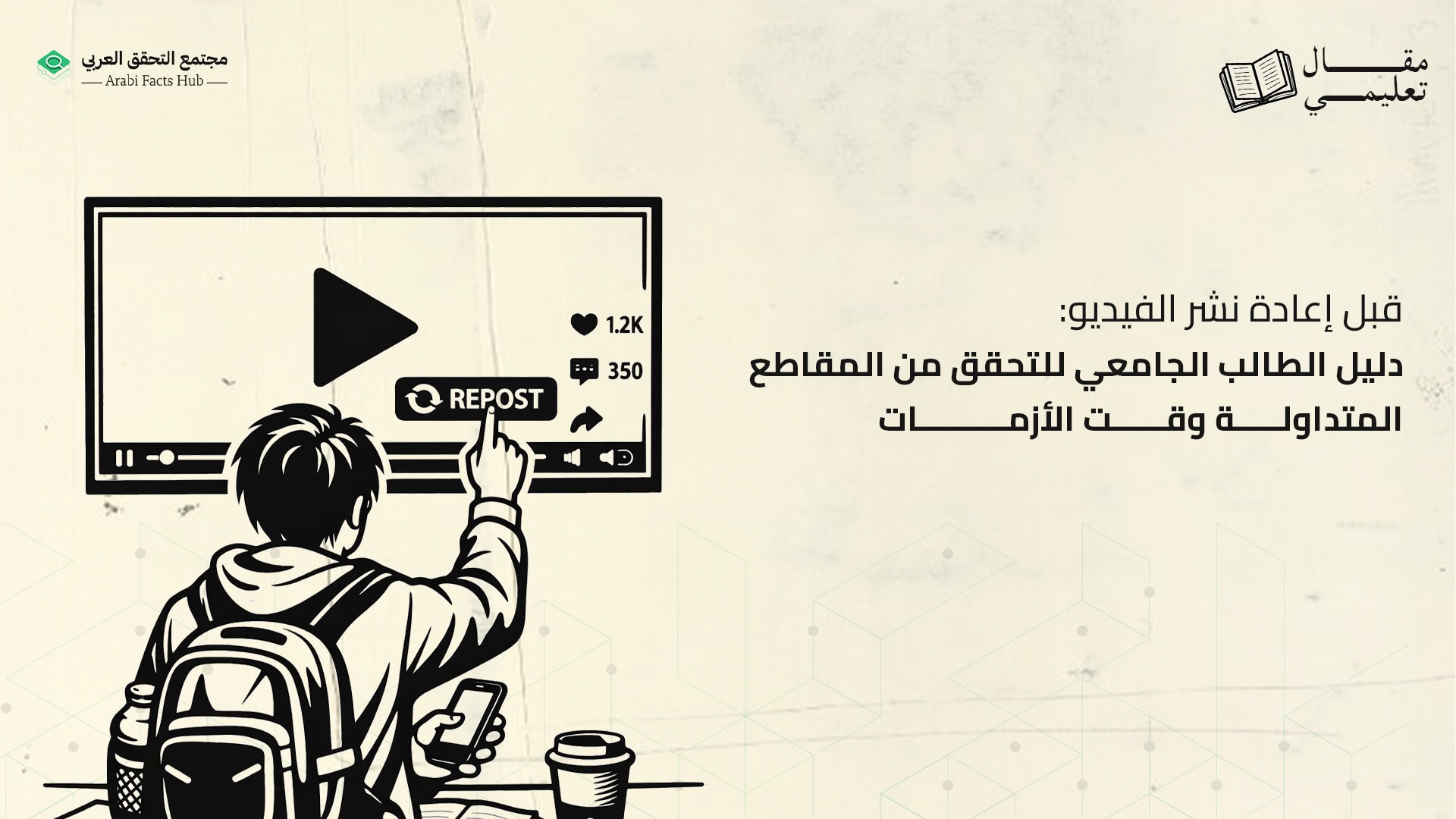
This article provides a practical guide for university students on how to verify videos before resharing them, using simple steps based on Open-Source Intelligence (OSINT) methodologies adopted in newsrooms and fact-checking platforms worldwide.