Outside the rarefied world of agri-business, not many may have heard of Olam Group. Nevertheless, headquartered in Singapore and majority owned by Temasek, it is a global behemoth with revenues exceeding $50 billion. It is one of the world’s major suppliers of food and industrial raw material, with operations in more than 60 countries.
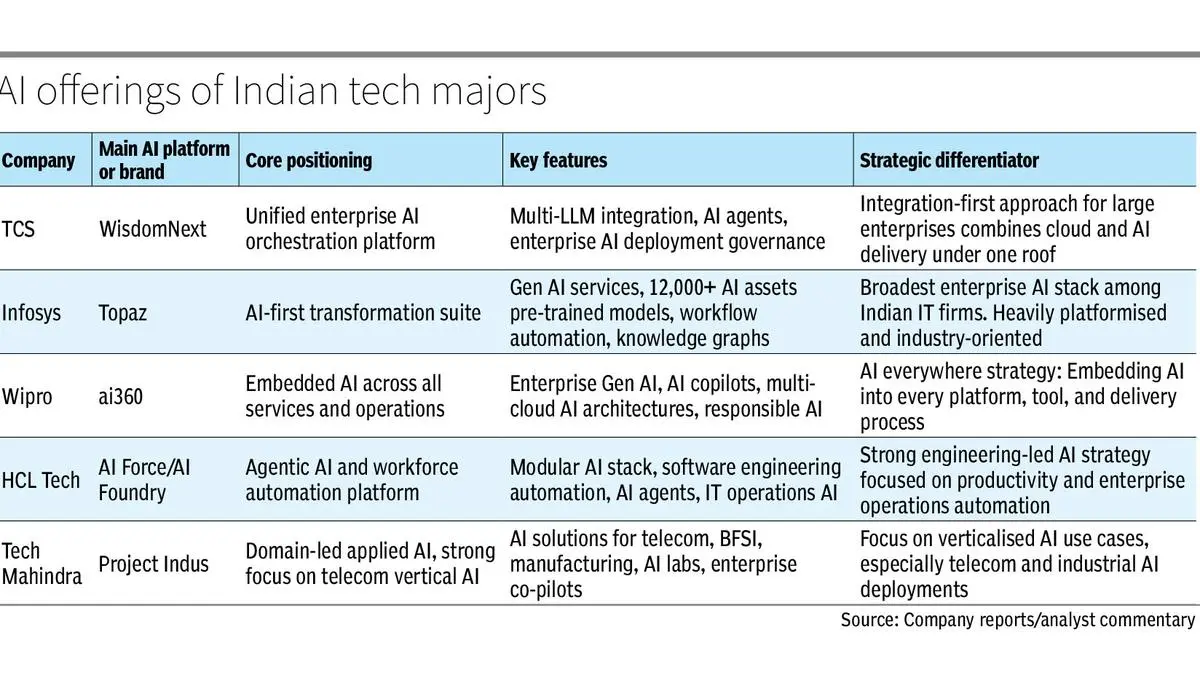
In April, Wipro, India’s fourth-largest IT services company by revenue, secured a massive eight-year, $1 billion-plus strategic transformation deal from Olam. Wipro will deliver end-to-end transformation services using its AI-powered suite, Wipro Intelligence, across Olam’s ‘farm-to-fork’ value chain — farming, forecasting, trading, supply chain operations, and customer engagement.
This deal is not unusual.
The Indian IT services industry currently faces its biggest structural shift, driven by AI. It is changing not just the nature of services firms deliver, but also how they price projects, hire talent, structure teams, and compete globally. As Venu Lambu, CEO and MD of LTM, says, AI is fundamentally reshaping the industry.
At Wipro, for instance, during the company’s Q4 earnings conference call, CEO and MD Srini Pallia highlighted a strategic pivot: “We have launched a dedicated AI-native business and platforms unit to expand beyond a services-only model to a services-as-a-software approach. This unit will operate with dedicated leadership, focused investments, and a distinct operating model to accelerate enterprise-grade agentic AI solutions.