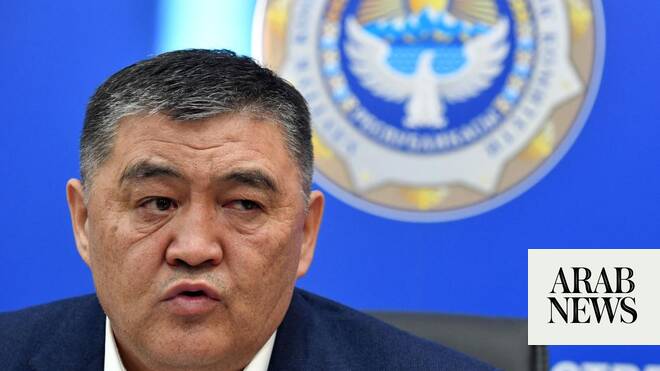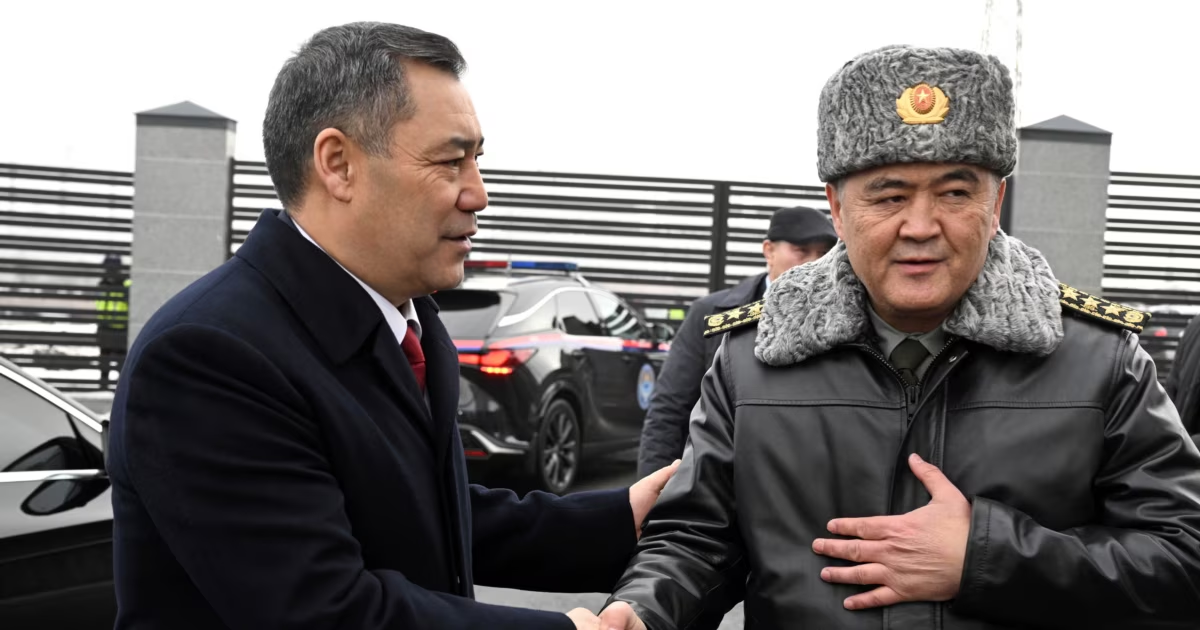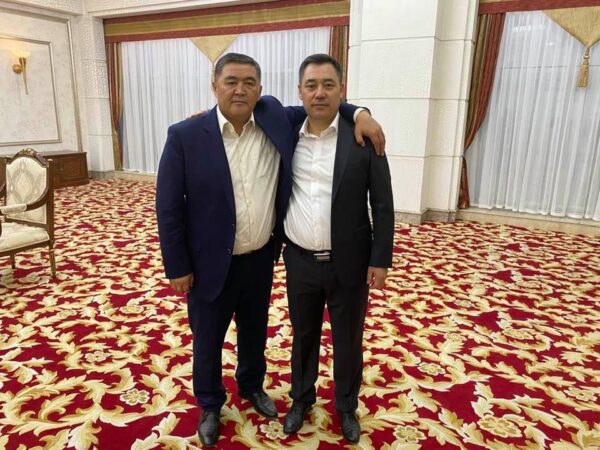
On 10 February 2026, Kyrgyzstan’s President Sadyr Japarov abruptly dismissed his political partner and close friend Kamchybek Tashiev from his posts as deputy prime minister and head of the State Committee for National Security (GKNB). The ousting was particularly jarring given the preceding years of political stability that have sustained Japarov’s presidency through significant domestic and geopolitical challenges. Kyrgyzstan’s political future now hangs in the balance of the collapsed diarchy.
Japarov and Tashiev’s association dates back to 2010, when both men took part in the South Kyrgyzstan ethnic clashes. Since the 2020 Kyrgyz Revolution, they have governed in tandem, ostensibly transcending the traditional political divide between northern and southern elites. Japarov, a northerner, held formal authority legitimised by elections while Tashiev, a nationalist from the southern region of Jalal-Abad, acted as the regime strongman, eliminating opposition, cracking down on radical Islam and uprooting criminal networks. In public, they often appeared as back-slapping buddies, but beneath the surface, disagreements were simmering.
The immediate cause for Tashiev’s dismissal was the publication of an open letter signed by 75 eminent Kyrgyz figures, including former ministers, retired generals and public intellectuals, calling for early presidential elections. The letter argued elections are warranted in accordance with a 2021 constitutional norm that stipulates a five-year presidential term, rather than the six-year term prescribed at the time of Japarov’s election. It praised achievements of the preceding five years in areas where Tashiev had led, such as national defence and law enforcement, and opined that ‘a newly elected president and his new team’ would lead Kyrgyzstan to prosperity.