Read The Diplomat, Know The Asia-Pacific
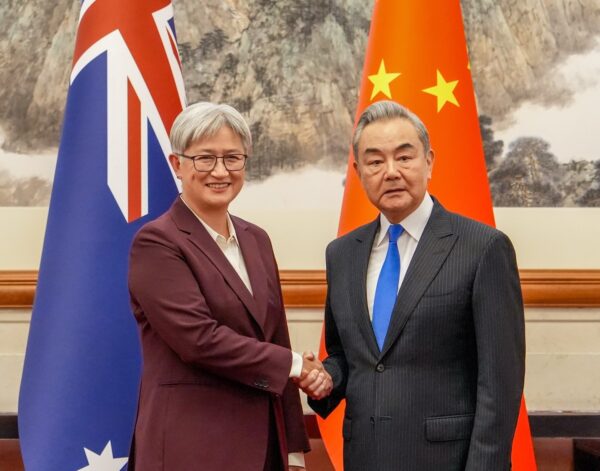
Stopping in Japan, South Korea, and China, Foreign Minister Penny Wong met with three of Australia’s four largest trading partners.
After both Australia’s prime minister and foreign minister made recent trips through Southeast Asia with the intent of securing Australia’s fuel supply, this week Foreign Minister Penny Wong traveled to northeast Asia with the same intent. The trip was designed to not just ask for assistance during an energy crisis, but to acknowledge where Australia has leverage in its ability to negotiate with Japan, South Korea, and China.
The conflict in the Middle East and the effective closure of the Strait of Hormuz has exposed a structural vulnerability for Australia. Australia imports the vast majority of its refined fuels, and it has low domestic fuel reserves, making it disproportionately reliant on Asian refining hubs that source oil from the Middle East. When oil is flowing unimpeded, this isn’t a problem, but when a crisis hits it leaves Australia exposed.
Although low on oil, Australia has the world’s second largest liquified natural gas (LNG) export capacity and Japan, China, and South Korea are the world’s three biggest LNG importers. Australia is consistently Japan’s dominant supplier and usually second to Qatar for China and South Korea. It is also a major supplier of coal and agricultural products to the Northeast Asian region. This gives Canberra a strong hand to play, and reflects a broader shift toward “economic statecraft,” where trade interdependence is actively used to manage strategic risk.