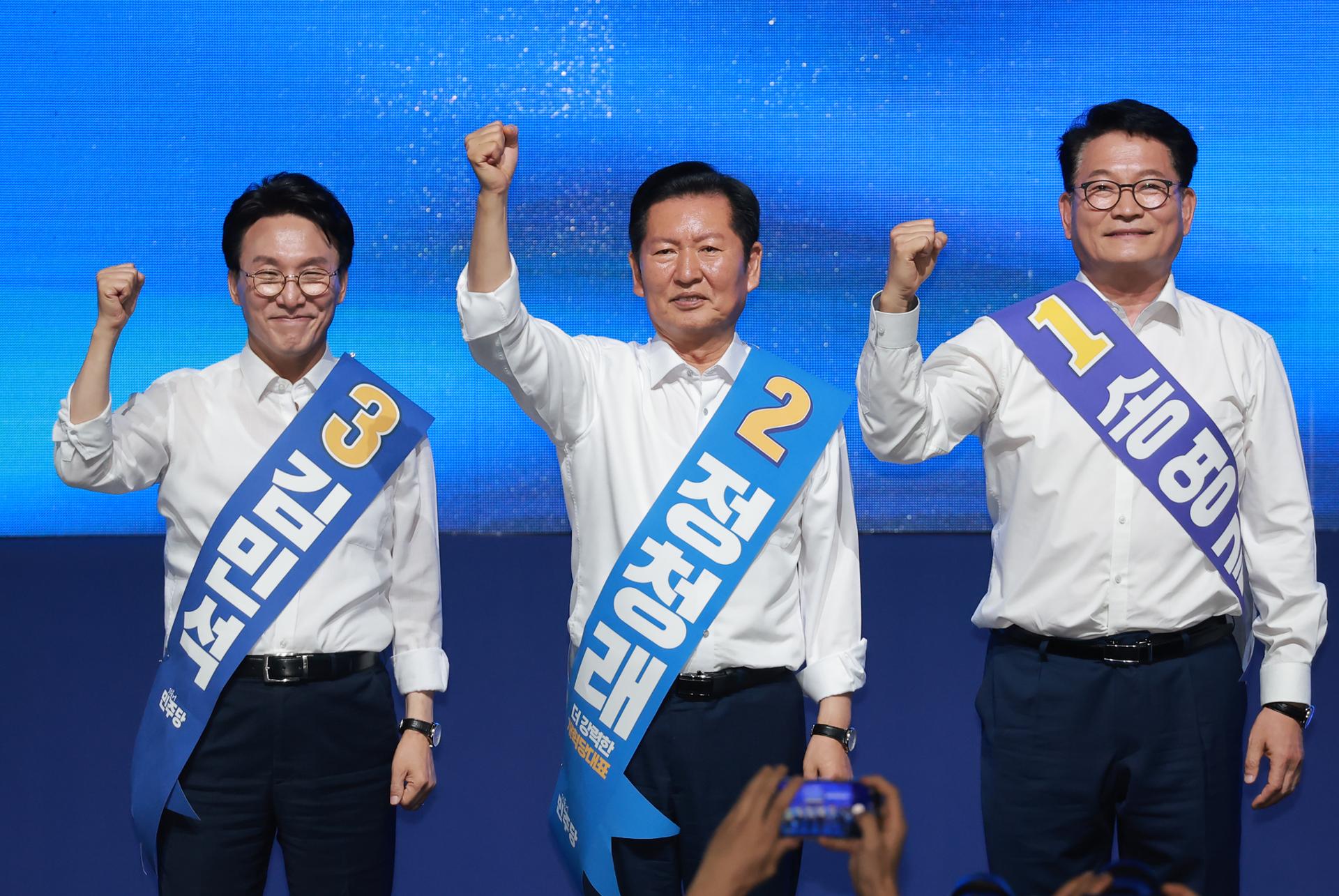
South Korean President Lee Jae-myung’s approval rating stands at 59.8 percent, according to Real Meter’s latest survey, and the ruling Democratic Party (DP) enters the June 3 local elections as the overwhelming favorite. It is widely expected to capture at least 15 of 17 metropolitan governorships. By nearly every conventional measure, this should be the political equivalent of a victory lap.
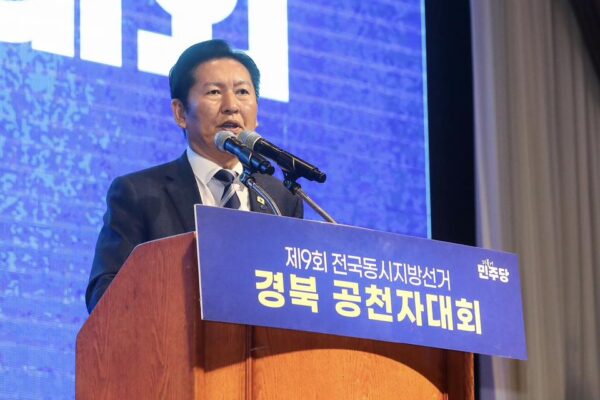
Instead, the DP is contending with a self-inflicted distraction in the form of the party’s leader, Jung Chung-rae.
The latest episode came on May 3 when Jung was campaigning in Busan on behalf of Ha Jung-woo, the DP’s candidate for the by-election of the National Assembly seat. Footage captured Jung approaching a first-grade girl and prompting her, twice, to address Ha as “oppa,” a Korean term of endearment typically used by younger women toward men close to their own age. Ha is 49 and Jung is over 60.
Opposition lawmakers were swift to condemn the exchange as inappropriate, with some characterizing it as a form of child coercion. Both Jung and Ha subsequently issued apologies, though the framing of those apologies drew a second round of criticism from the opposition and the media. Their apologies were centered on the child having been “placed at the center of controversy” rather than on the conduct itself.