Vermont’s effort to make fossil fuel companies pay for damage caused by climate change was tested Monday in a federal courtroom, where the state argued that two lawsuits challenging its groundbreaking 2024 law should be thrown out.
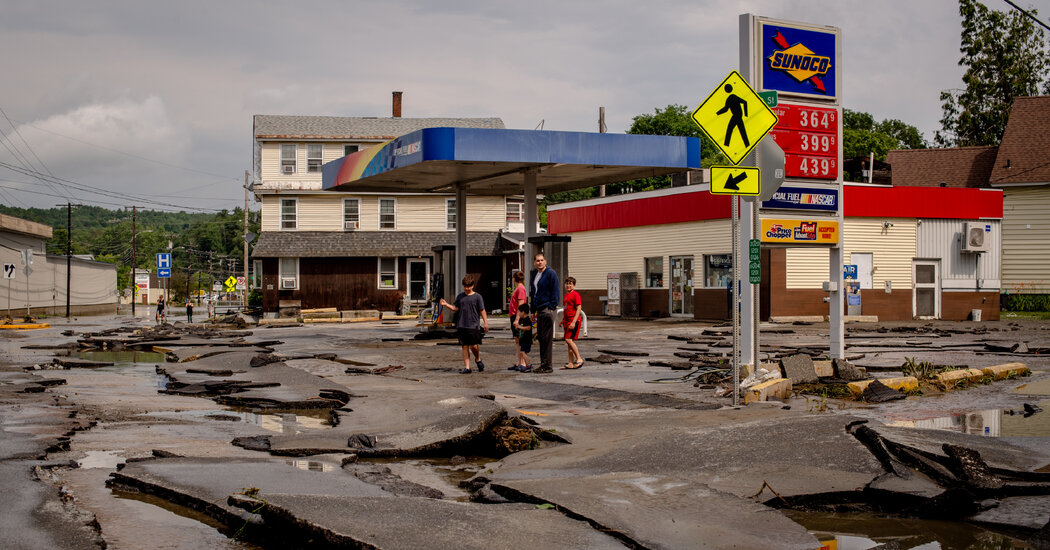
Vermont became the first state to enact a climate superfund law, modeled on the federal superfund law that taxed petroleum and chemical companies to pay to clean up sites polluted by toxic waste. It took action after suffering catastrophic summer flooding in 2023 as well as damage from other extreme weather, which scientists say is occurring more frequently due to climate change. The money it collects would be used for climate adaptation projects, such as upgrades to stormwater drainage systems, sewage treatment plants, and roads.
The U.S. Chamber of Commerce and a top oil and gas industry trade group, the American Petroleum Institute, sued Vermont over the law in December 2024, calling it unconstitutional and a violation of federal law. The Department of Justice also sued Vermont and New York after President Donald Trump ordered Attorney General Pam Bondi to take action against states that may be overreaching their authority in how they regulate energy development. In suing, Bondi called the laws “burdensome and ideologically motivated” and said they threaten American energy independence and national security.