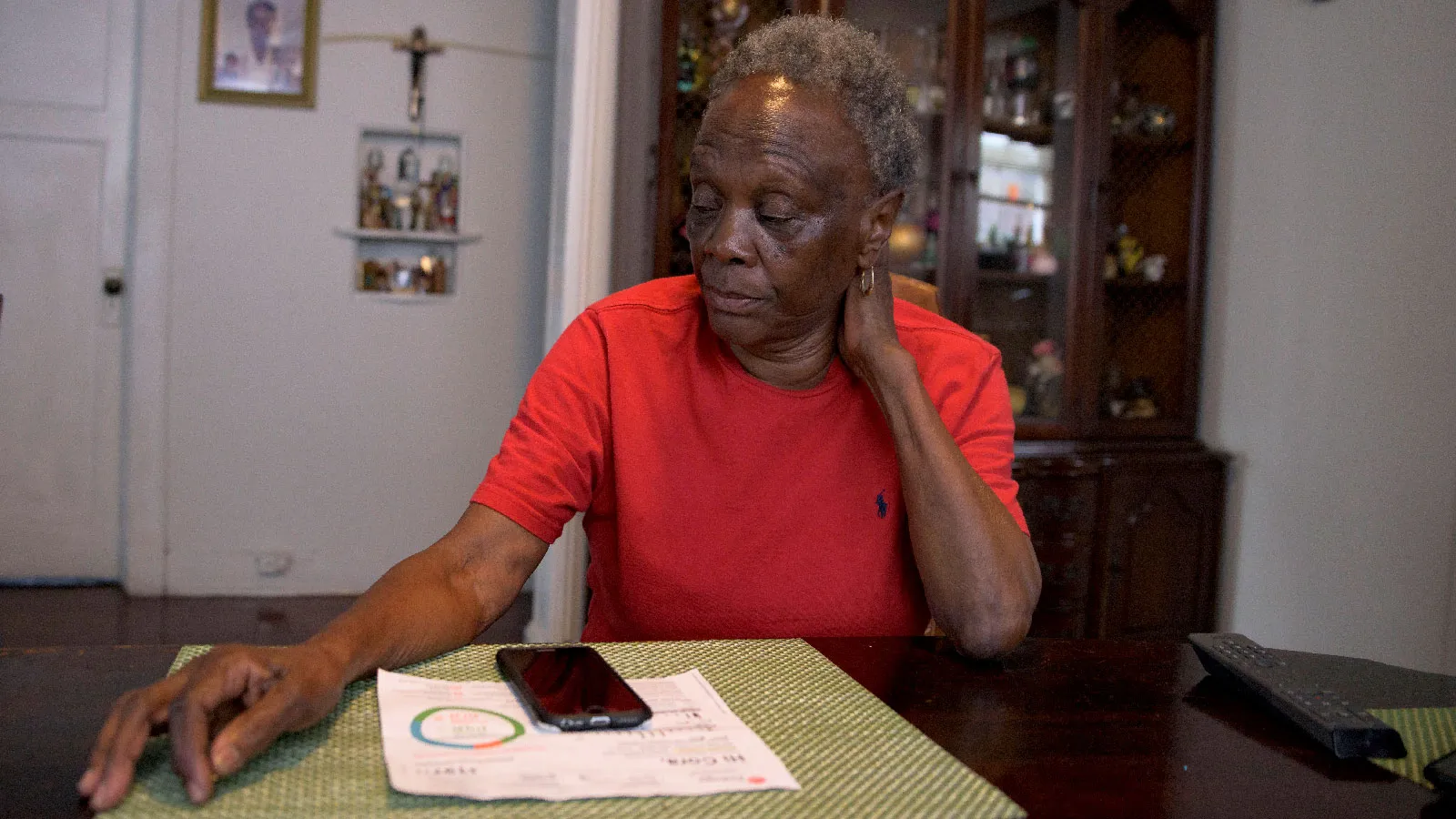
Mary C. Williams sits in her home in New Orleans on Friday, Feb. 4, 2022. Williams, who lives on a low fixed income, has high utility bills from Entergy, a major utility provider in Louisiana and three other Southern states, causing her to stress about keeping her lights on. (AP Photo/Matthew Hinton)
Preliminary data from the U.S. government suggest that one in three American households struggles to pay their energy bills. Unsurprisingly, there’s been much talk in recent years around dinner tables and in political speeches about the rising cost of electricity. But whose bills have risen? By how much? Why? Are AI and data centers to blame? Renewable energy mandates? Corporate profits? A cold winter in the Northeast? Wildfires and hurricanes?
Well, it’s complicated, and the U.S. and Israel’s bombing of Iran has made it even more so. The methane gas market has been disrupted by the conflict, and 40% of U.S. electricity is still generated with gas, often called natural gas. But many forces factor into electric bills. Perhaps surprisingly, when the numbers are adjusted for inflation, some bills haven’t risen at all, while others have gone up a lot, and the reasons vary by location.
These articles map the territory of electricity pricing.