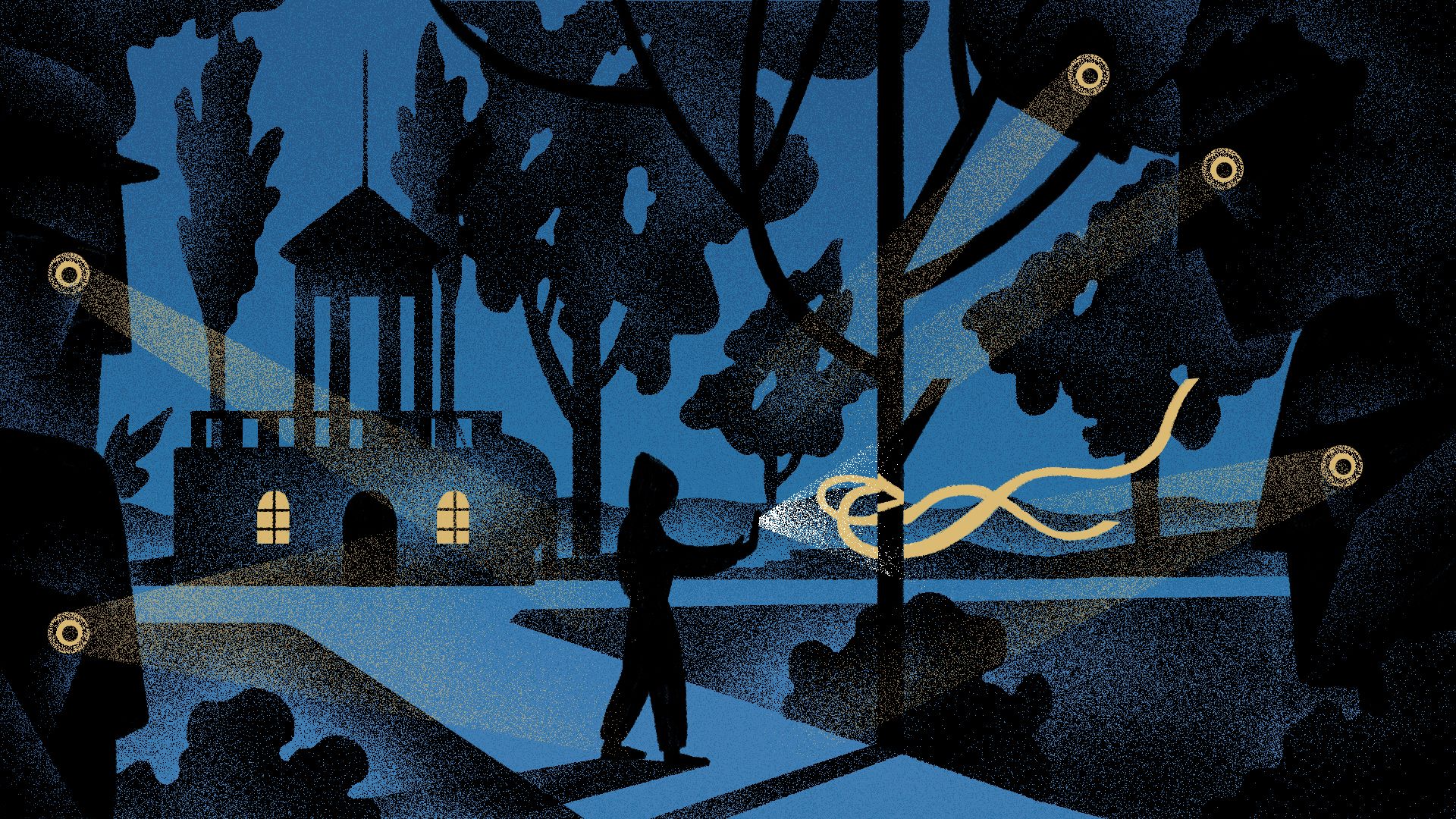
The Kyiv Independent investigation reveals a Western-funded classified program that left Ukrainian civilians vulnerable to torture and death at the hands of the Russian security services. (Kseniia Stepas / The Kyiv Independent)A Western-funded classified program supported a "non-violent resistance" initiative inside Russian-occupied Ukraine for more than three years that encouraged civilians to engage in "suicidal" activities despite credible reports of the deaths, torture, and imprisonment of activists, the Kyiv Independent can reveal.Russian-occupied Ukraine is one of the most heavily surveilled and most repressive territories in the world, and some of the activities Yellow Ribbon and its sister initiative Zla Mavka continue to promote are breathtakingly dangerous, including listening to Ukrainian songs in public, taking photographs in public places with pro-Ukrainian symbols, burning Russian flags in public places, and even poisoning Russian soldiers with laxatives.The Kyiv Independent investigation exposes how a program, generously funded by Western governments, relied on activists risking their lives in occupied Ukraine to keep running, but took no responsibility for their safety.Recruitment and training of Yellow Ribbon’s activists — usually civilians with no military experience or professional training — consists of a minutes-long exchange with an unencrypted Telegram bot. Comprehensive safety information is optional.A Dubai-based British communications firm, IN2, employing consultants including prominent Ukrainian think-tanker Hanna Shelest, and British journalist David Patrikarakos, secured sums of funding from the British and Canadian governments that vastly surpassed Yellow Ribbon and Zla Mavka’s operational costs, while simultaneously downplaying the risks of the program, and attempting to silence critics who raised the alarm.According to multiple sources, spoken to at length by the Kyiv Independent over the course of a months-long investigation, the program’s leaders ignored repeated and continuing warnings of critical flaws in the program’s operational security that could be exploited by Russia's Federal Security Service (FSB) to track and detain activists.Further, these same sources allege the primary concern of all involved was maintaining Western funding, not the safety of activists, despite Yellow Ribbon publicly stating as far back as 2022 that "at least 30" of them had been "arrested or something along those lines," and that "some people from our organization have been killed."When asked about the tragic fates of some Yellow Ribbon activists, both IN2 and Shelest falsely represented independent research as evidence that no harm had ever come to any civilian undertaking activities with the movement."I don’t understand what motivates these projects to use methods that are so dangerous for people living under occupation," Artem Karyakin, a former partisan in the occupied territories and one of the program’s most prominent public critics, told the Kyiv Independent."Representatives of Yellow Ribbon couldn't explain to me in private why they do this. It seems to me that their interest is not in the actions themselves, but in maintaining the projects for their own personal benefit."Western funding 'supporting' resistance programWorking for IN2, which had previously worked on British government strategic communications campaigns in Syria, Hanna Shelest was the company's in-country liaison with the Yellow Ribbon initiative, and its smaller sister program, Zla Mavka.The program that was meant to support non-violent resistance movements in Ukraine was funded to the tune of millions of dollars by the Canadian and British governments since 2022, according to multiple sources familiar with the events, as well as documents obtained by the Kyiv Independent.Despite working for IN2 for several years, Shelest’s public income declarations, which she filed in 2024 and 2025, do not mention any income from IN2 or any other foreign company.David Patrikarakos, also working for IN2 as a contractor, worked as a "Network Director," according to internal IN2 documents obtained by the Kyiv Independent.L: Ukrainian think-tanker Hanna Shelest in a photo published on Jan.16, 2020. (Hanna Shelest / Facebook) R: British journalist David Patrikarakos in a photo published on July 10, 2021. (David Patrikarakos / Facebook)His role included "support(ing) delivery of training and campaign activities by contributing to planning, logistics, and cascading security guidance and best practices" and "play(ing) an active role in maintaining the physical and digital safety of activists, supporting risk management protocols and continuity planning."Patrikarakos was given this role despite having no relevant professional experience in the field, not speaking Ukrainian or Russian, never having worked in the occupied territories, and holding a prominent public profile — which he used to promote Yellow Ribbon.In a written response to the Kyiv Independent, Patrikarakos denied this was his role within IN2's Yellow Ribbon program, saying he was never in charge of security.In a statement to the Kyiv Independent, IN2 did not attempt to dispute the veracity of the documents, but claimed it was an early draft of a later document and that Patrikarakos’ role was merely supportive.Working on a day rate of 800 pounds ($1,080), Patrikarakos was paid a total of 15,200 pounds ($20,520) over a seven-month period in 2025, according to IN2 documents.According to the documents, a total of 17 people were on the IN2 payroll in relation to Yellow Ribbon and Zla Mavka, with an operational cost over one four-month period totaling 259,830 pounds ($350,219), the equivalent of nearly 780,000 pounds ($1,050,000) annually.Publicly available Canadian government documents show payments to IN2 covering the periods of 2022-23 and 2023-24 totaling $2,327,000 Canadian dollars ($1,700,955). There are no public records that show how much of it went to support Yellow Ribbon and Zla Mavka."They're endangering the lives of their activists for no reason, and profiting from it," a member of Ukraine's Military Intelligence (HUR), speaking on condition of anonymity due to threats to his personal safety, told the Kyiv Independent.When approached by the Kyiv Independent, both Shelest and Patrikarakos denied claims that their work with IN2 could have contributed to endangering activists in occupied territories.IN2 has denied causal links between its work and activists' persecution.A spokesperson for IN2 said: "IN2 categorically denies the false allegations presented by the Kyiv Independent regarding the Yellow Ribbon initiative. These claims are factually incorrect and lack any credible evidence."David Patrikarakos said: "These allegations are entirely false and I have provided full off the record guidance to the journalist from the Kyiv Times (sic) that will enable them to make an informed decision based on best practice journalism."All parties denied having any responsibility for the safety of resistance activists in the occupied territories.Special Forces investigating Yellow RibbonAccording to the Kyiv Independent’s sources, involved in Yellow Ribbon's operations in Ukraine was Lieutenant Colonel Andriy Klimin, formerly with the 72nd Psychological and Information Warfare Center, a part of Ukraine’s Special Operations Forces.Klimin categorically denied any involvement in Yellow Ribbon. However, in at least one meeting in 2025, he discussed the initiative with insider knowledge, and mentioned its classified British funding. He was also dismissive of the consultants he said were involved in it, including Patrikarakos.Concerns about how the program was run and funded prompted Ukraine’s Special Operations Forces (SSO) to start an internal investigation.The SSO confirmed to the Kyiv Independent that within the investigation, they questioned Klimin and "reached out" to Shelest and Patrikarakos but "had not heard back yet" as of mid-April.In a statement to the Kyiv Independent, Shelest said allegations she was being investigated by the SSO were "false," adding she had, "double-checked to confirm that SSO, as well as other security services, had not had any investigations regarding me."In written responses to the Kyiv Independent, Shelest confirmed she has been working for IN2 "for about four years" including on the Yellow Ribbon program. She, IN2, and Patrikarakos all denied all allegations made in this article.In off-the-record conversations with the Kyiv Independent, a source close to the SSO claimed the organization lacked sufficient investigatory powers which have enabled third party organizations such as IN2 to take advantage of the opacity of the occupied territories of Ukraine.The movementThe Yellow Ribbon movement began as a grassroots expression of Ukrainian protest in territories recently occupied by Russia in 2022, such as in the city Kherson, which saw a wave of public protests and resistance activity during the period of Russian occupation between March and November 2022.The campaign encouraged civilians in the occupied territories to engage in non-violent, symbolic acts of resistance, primarily taking photographs of themselves holding Ukrainian symbols, flags, or signs proclaiming pro-Ukrainian messages.Zla MavkaZla Mavka is "an all-female Ukrainian non-violent resistance movement that emerged in the occupied city of Melitopol in early 2023," according to the initiative’s website.The group encourages Ukrainian women living in the occupied territories to conduct a variety of highly dangerous acts of "non-violent" resistance against occupying Russian forces, including defacing Russian currency, reporting the location of Russian troops, and most dangerously, poisoning Russian soldiers with laxatives and other non-lethal poisons.According to multiple sources and documentary evidence obtained by the Kyiv Independent, Zla Mavka was created as a sister program to "Yellow Ribbon" and was run by the same personnel. Internal IN2 documents do not distinguish between the two programs.It is difficult to overstate the level of repression in the Russian-occupied territories of Ukraine, the danger inherent in any form of resistance activity, and Moscow's determination to stamp out even the slightest hint of dissent.People inside Russia itself have been fined just for wearing blue and yellow shoes. Inside occupied Ukraine, those who take a stand in the form of non-violent resistance risk being detained, tortured, or simply disappeared.Former Ukrainian Partisan Vladyslav Ovcharenko gathered information for Ukraine's Armed Forces in occupied Luhansk from 2014-2016 when he was arrested and sentenced to 17 years in prison before being freed in as part of a Russian-Ukrainian prisoner exchange in late 2018."At that time, the influence of the Russian Federal Security Service (FSB) in the occupied areas was not as extensive yet I was still captured," he told the Kyiv Independent."With the start of the full-scale war, the situation only changed for the worse. The FSB took control of the occupied cities of Ukraine, including external surveillance systems."In Luhansk, for example, cameras appeared on every street — you can’t even walk 10 meters without being noticed."A paper sign saying "Luhansk is Ukraine!" in front of the railway station of occupied Luhansk, Ukraine, in a photo published in August 2023. (Yellow Ribbon / Telegram)The recruitment chatbotRecruitment of potential Yellow Ribbon activists relies on communicating via an unencrypted Telegram bot — a fatally flawed method in an environment where all cellular traffic is heavily monitored by Russian security services.Andrei Soldatov, a London-based Russian investigative journalist who is an expert in the Russian security services, and who himself has been targeted by the FSB on multiple occasions, told the Kyiv Independent that cellular communications in the occupied territories of Ukraine are more heavily monitored by the Russian security services than in Russia itself.The Kyiv Independent contacted the bot — which is still active — to recreate the process of signing up to take part in the Yellow Ribbon movement.The process took only 13 minutes during which we stated in which area of the occupied territories we lived in, and confirmed we were over 18-years-old.Security protocols for both communicating with the bot and carrying out the task were limited to a basic guide on making Telegram more secure with steps like an account password and enabling the "encrypted chat" feature, and "ideally" using a second phone."But don't worry if you don't have access to another phone right now or ever! We're glad to have you with us!" the bot said.Perhaps of most concern, an extensive list of security protocols — nearly 4,500 words covering things including "phone security basics," "how to avoid being tracked," "precautions for women," and how to safely plan the activity from start to finish — are optional."Would you like to read other safety recommendations first?" the bot asks.If skipped, the next message presents several activity options including "take a picture of the cover of your Ukrainian passport against the background of the city," and "tie a yellow ribbon," two of the activities most heavily promoted on Yellow Ribbon social media accounts.After choosing the former, and without seeing the extended safety protocols, the chat ends with: "Cool task! Waiting for the result!"The Kyiv Independent tested the active Yellow Ribbon bot and found a sign-up process that takes just 13 minutes, allowing users to bypass critical safety protocols before encouraging them to engage in high-risk resistance activities in Russia-occupied territories. (Kseniia Stepas / The Kyiv Independent)Other tasks presented by the bot as options for new participants carry far more risk, including reporting the positions of Russian troops, wearing Ukrainian national dress, and listening to Ukrainian music in public. Choosing one of these riskier options comes with no further warnings or safety instructions.Despite the multiple flaws in Yellow Ribbon's main method of recruitment, not only did those working for IN2 fail to rectify them during the three years they were involved, one of the main figures assisting the program was not even aware of the most dangerous tasks activists were being asked to carry out.In a conversation with the Kyiv Independent, Shelest denied it instructed people to play Ukrainian music in public, claiming that to do so would be "suicidal," suggesting it was a misinterpretation of the instructions.
Investigation: A secret program, 'suicidal' missions, and death, torture in occupied Ukraine
A Western-funded classified program supported a "non-violent resistance" initiative inside Russian-occupied Ukraine for more than three years that encouraged civilians to engage in "suicidal" activities despite credible reports of the deaths, torture, and imprisonment of activists, the Kyiv Independent can reveal. Russian-occupied Ukraine is one of the most heavily surveilled and most repressive territories in the world, and some of the activities Yellow Ribbon and its sister initiative Zla Mav
5,491 words~25 min read