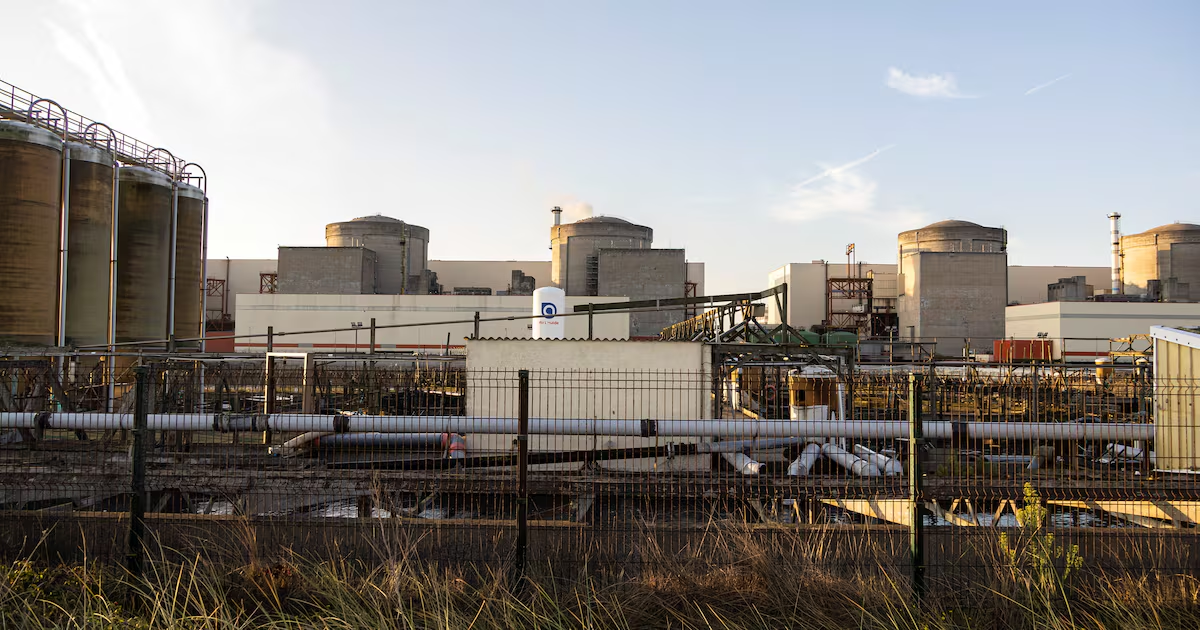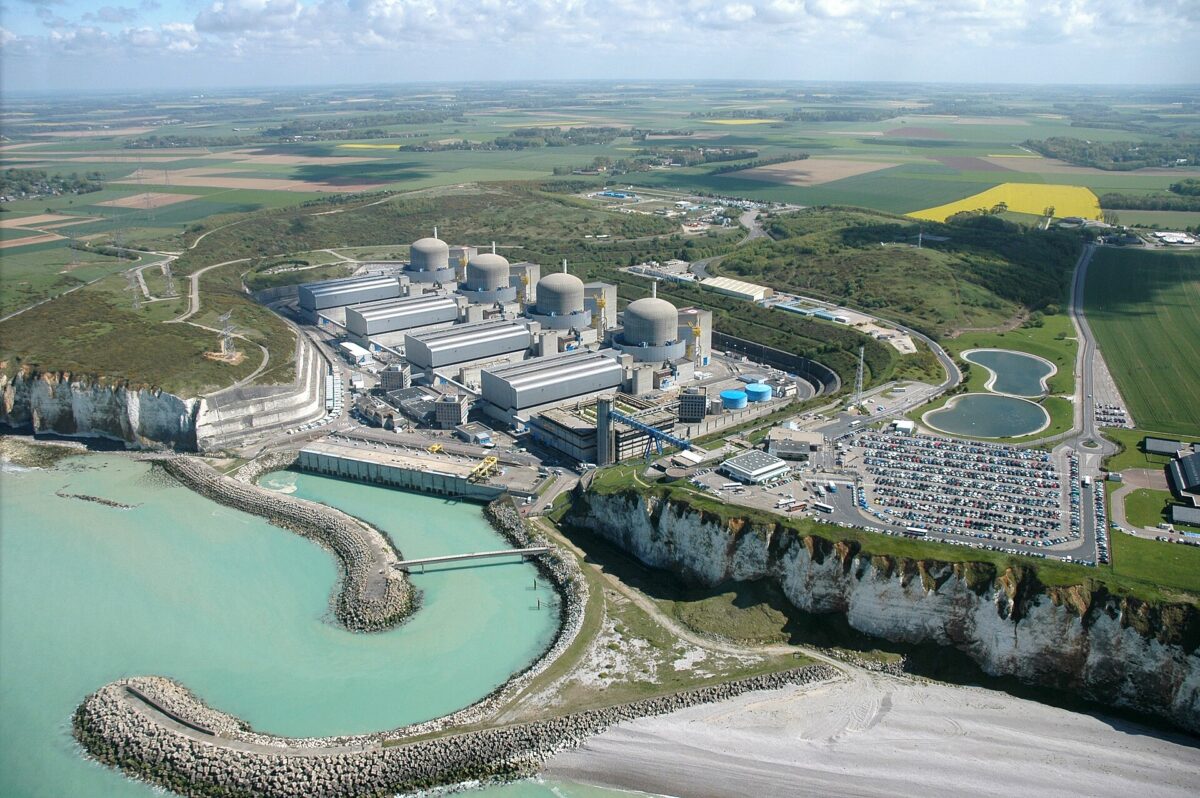
For most of the past four decades, French nuclear has been the closest thing Europe had to a real baseload backbone. Reactors ran flat through the day, only reducing output at night, when domestic demand was lowest. Hourly data from the ENTSO-E Transparency Platform show that pattern has flipped. Between 2019 and 2025, the average swing between midday and evening output across the April to September window grew from 582 MW to 4,426 MW. That is close to an order of magnitude. During the hours when European solar is at its peak, French reactors are no longer behaving like baseload.
Nuclear modulation in France, where reactors operate below their maximum capacity, reached 33 TWh in 2025, more than double the 15 TWh recorded in 2019. The shift is unambiguous in both the annual totals and the hour-by-hour flows. The diurnal price shape Europe has been forecasting for the late 2020s has already arrived in France.
An order-of-magnitude change, year by year
The graphics below plot full-year diurnal averages of French nuclear output, solar generation, total load and net exports for three reference years: 2019, 2023, and 2025. The 2019 nuclear curve is flat across the day. The 2023 curve sits lower, with the fleet still recovering from the maintenance outages caused by the 2022 stress-corrosion issue and is only mildly concave. The 2025 curve is, however, unambiguously concave. It shows a clear midday dip relative to morning and evening levels. The same panel shows the inverse on the solar side. The 2025 solar curve peaks during exactly those midday hours, and the 2025 net export curve peaks at the same time, when the rest of Europe takes the surplus.