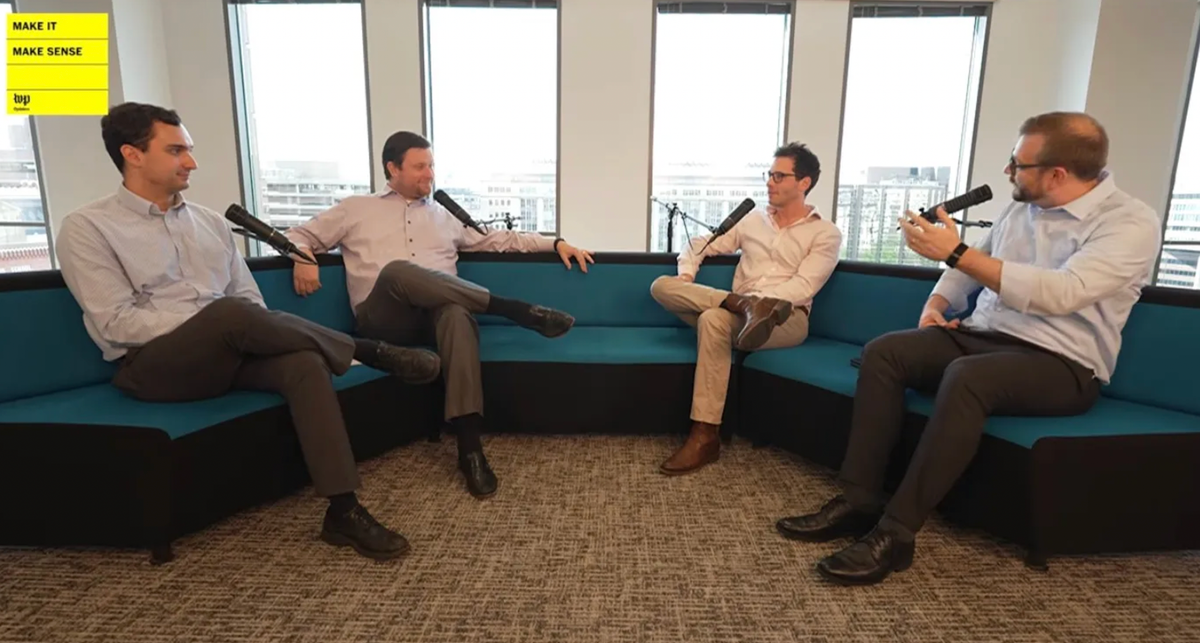
An eon ago, in the year 2012, an editor at my first job at U.S. News and World Report had the idea that we should have a YouTube channel. It wasn’t a pivot to video, exactly, but it would be a bet on an emerging platform where some creators were beginning to go viral with news content. The idea was to put the journalists in front of the camera and have them talk about their articles and the news of the day. It did not go well. I was nervous, unconfident, had a bad haircut, and, like everyone in Washington, D.C. then and now, was very unfashionable. I had no media training, had never been on TV or video of any sort. I did not have a smartphone. I was socially awkward and spoke in monotone. I blinked endlessly while I talked and fidgeted like crazy with my hands. I constantly said um, tripped over my words, and generally had no idea what I was doing. We made a series of videos with titles like “Head Injury Studies Continue to Cause Alarm in NFL,” “Are the Politics of Climate Change Shifting?,” and “Which Party Will Get the ‘Internet Vote’?” The videos were poorly edited, sounded weird, and got zero traction. I did not want to make these videos but it was a newsroom-wide initiative and so I did it anyway. Thankfully and mercifully, almost no one watched any of these videos, because they were bad. Then and now, they are the opposite of what anyone watches on the internet. And yet, these videos were roughly about as good as a series of podcast videos being released by the Washington Post’s new and drastically worsened Opinion section, apparently at great expense to the outlet. They were also about as popular, with many of my videos garnering upwards of several dozen views.On Sunday, the very good media newsletter Status reported that the Washington Post recently invested $80,000 on new audio and video gear for its new Make It Make Sense podcast, which features the Washington Post Editorial Board. It has also remodeled a studio in its office, which seems apparent in a very bad trailer for the show titled “A News Show You Can Trust, Finally,” but not in any of its previously recorded videos (some of which were released this week). All of this has happened at the behest of opinion editor Adam O’Neal and Washington Post owner Jeff Bezos as part of the section’s shift rightward to focus on billionaire- and free market-friendly content.
At Least We Know the Washington Post Isn't Buying Views
Jeff Bezos learns being good at YouTube is not so easy.
470 words~2 min read