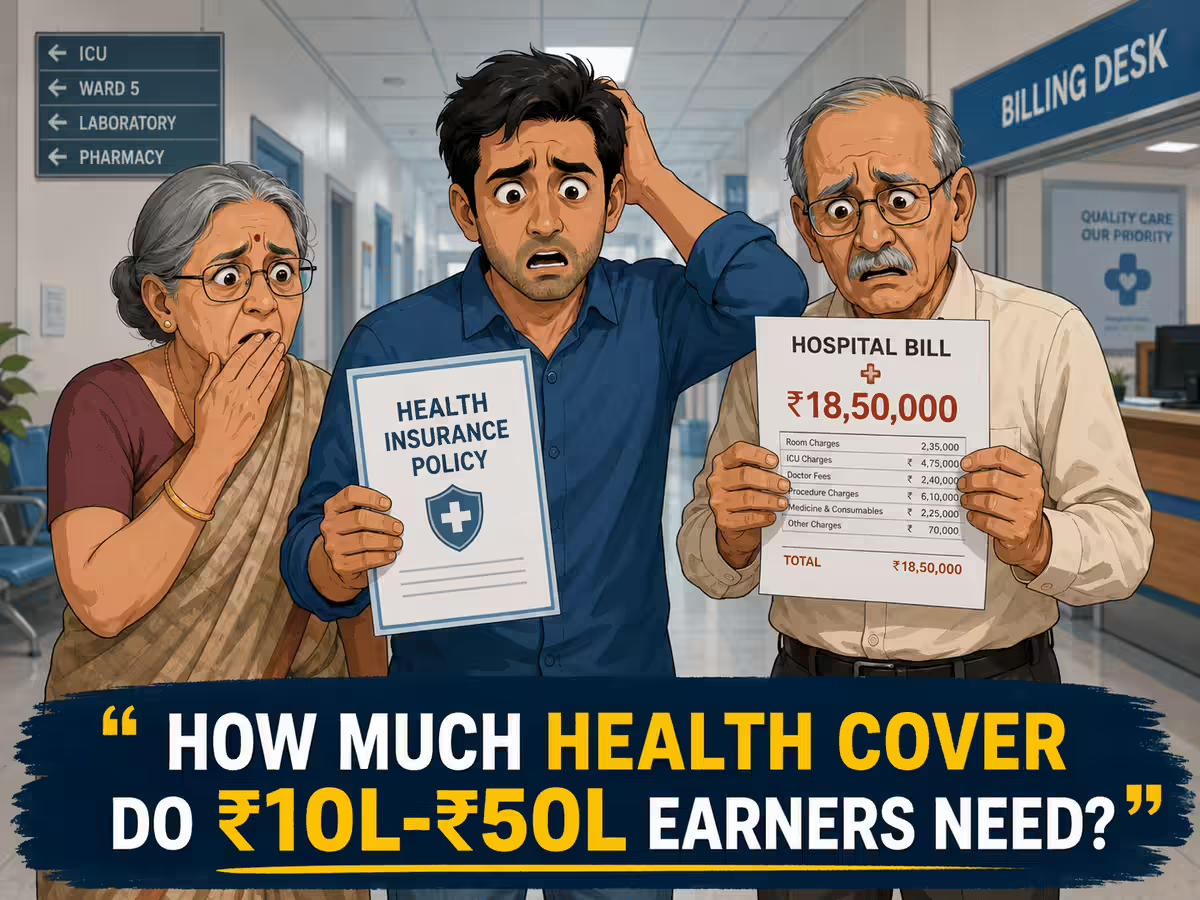
You bought a health insurance plan a few years ago, hoping it would provide adequate health insurance coverage. However, in the last few years, medical inflation has grown faster than the average inflation rate. As a result, you feel the health insurance cover that you bought a few years back is inadequate as of today. In such a scenario, you can buy additional coverage in the form of a top-up or a super top-up health insurance plan. In this article, we will understand what is a top-up and a super top-up health insurance plan, the differences between them, and which one you should take.
What is a top-up health insurance plan?
A top-up health insurance plan pays when the hospitalisation claim is above a specified threshold, known as the deductible. For example, suppose you buy a top-up plan with a sum assured of Rs. 10 lakhs and a deductible of Rs. 3 lakhs. In this case, the top-up plan will pay only if the claim amount exceeds Rs. 3 lakhs.
If the claim amount is Rs. 4 lakhs, the top-up policy will pay Rs. 1 lakh after considering the Rs. 3 lakhs deductible. If the next claim amount is Rs. 2 lakhs, the top-up policy will not pay, as it is below the Rs. 3 lakh deductible.
How to pair the top-up health insurance plan with your base plan?