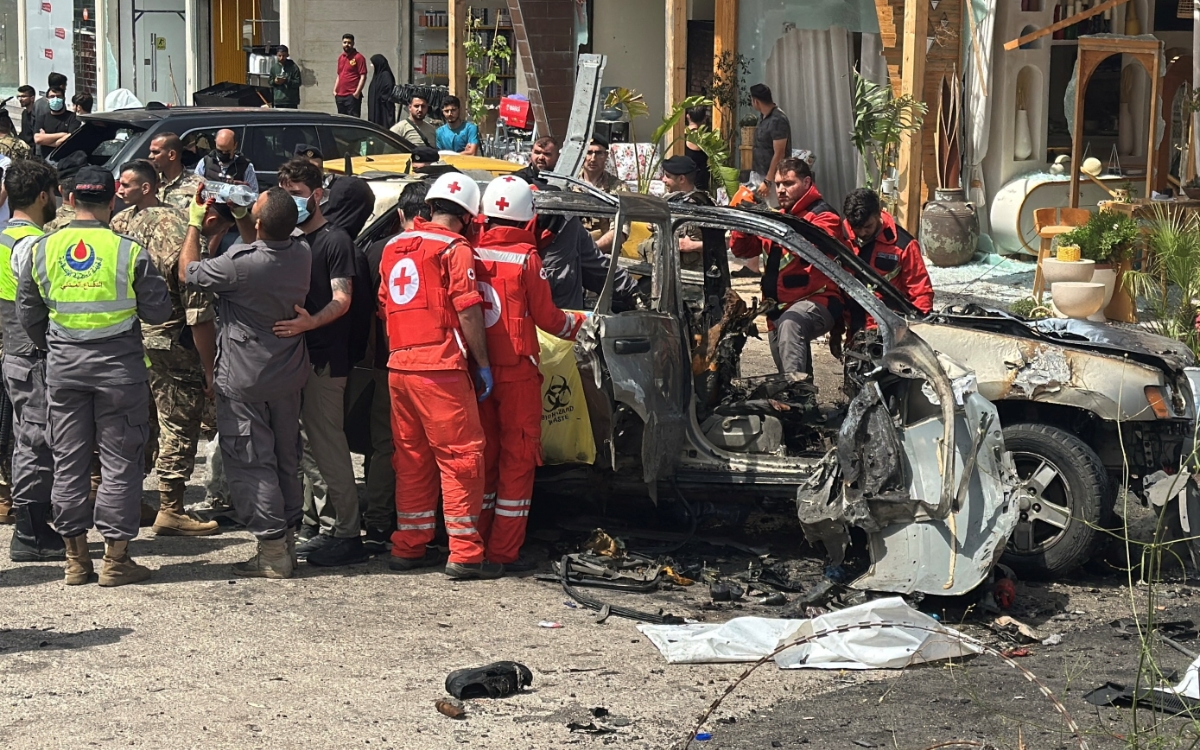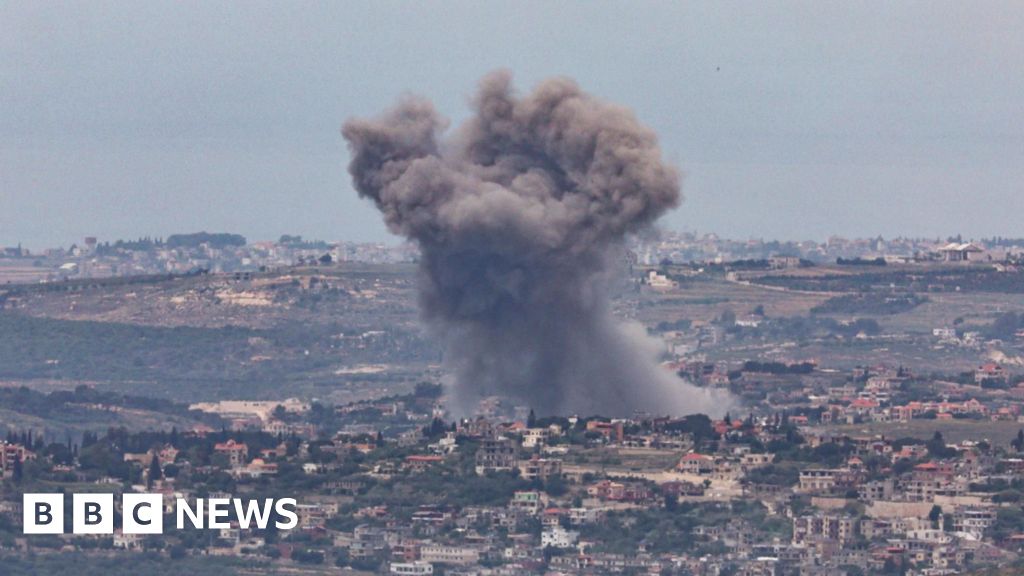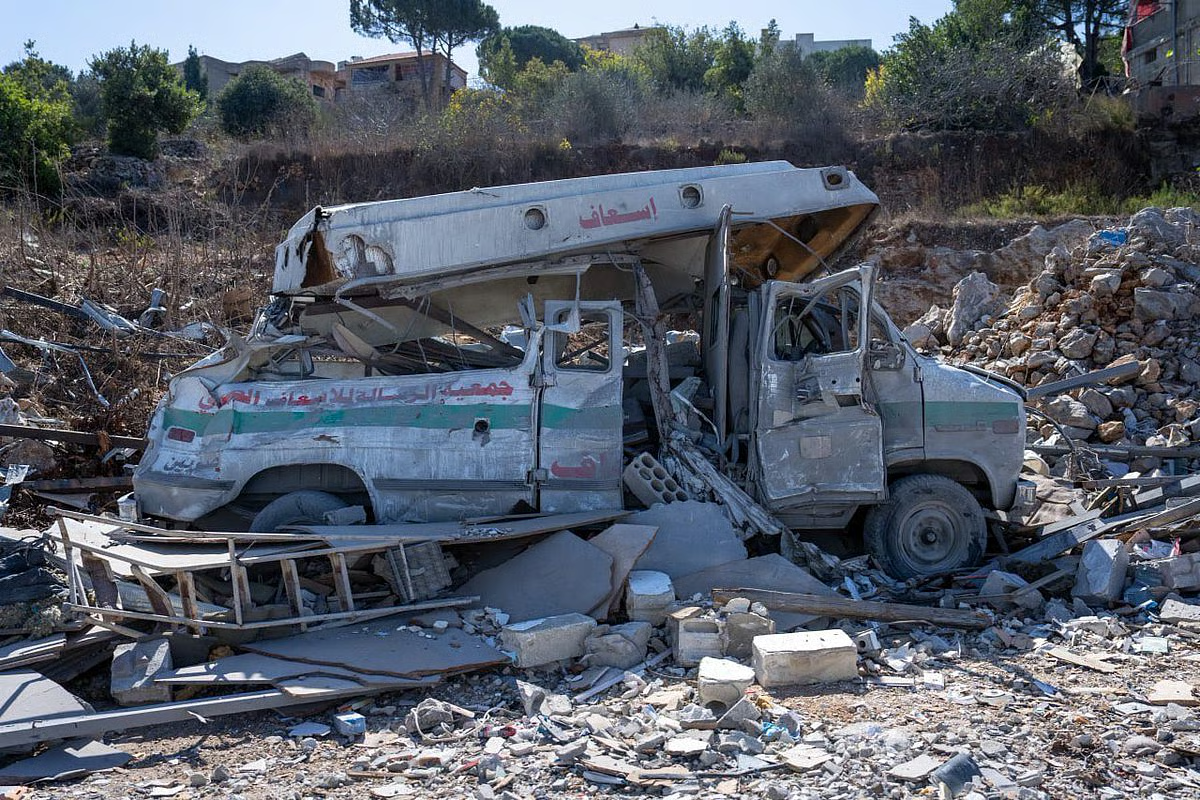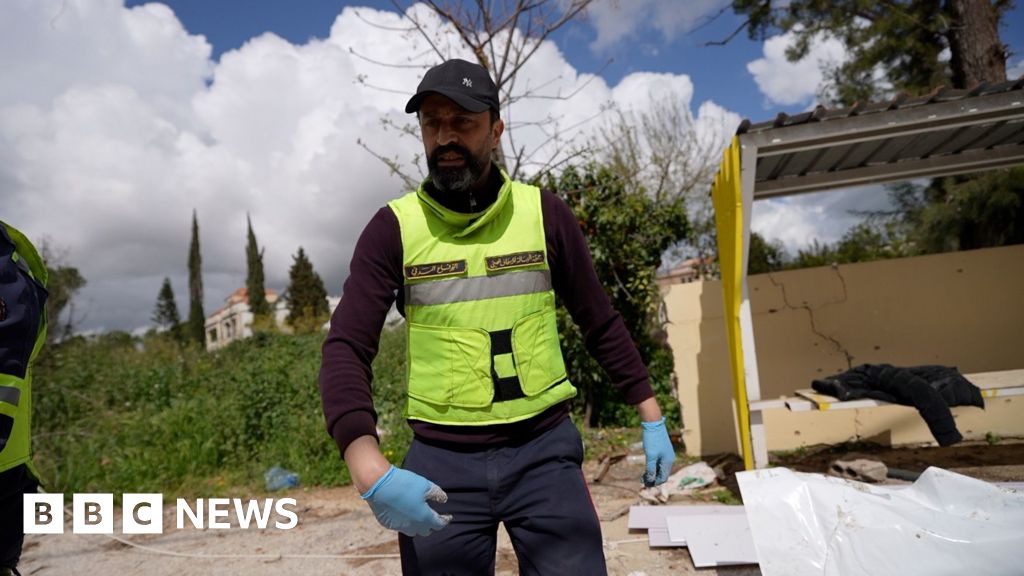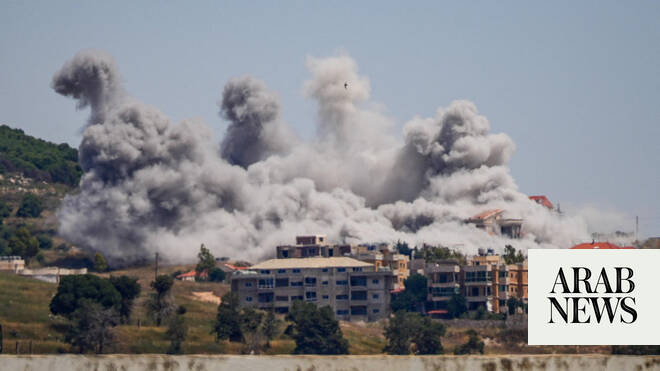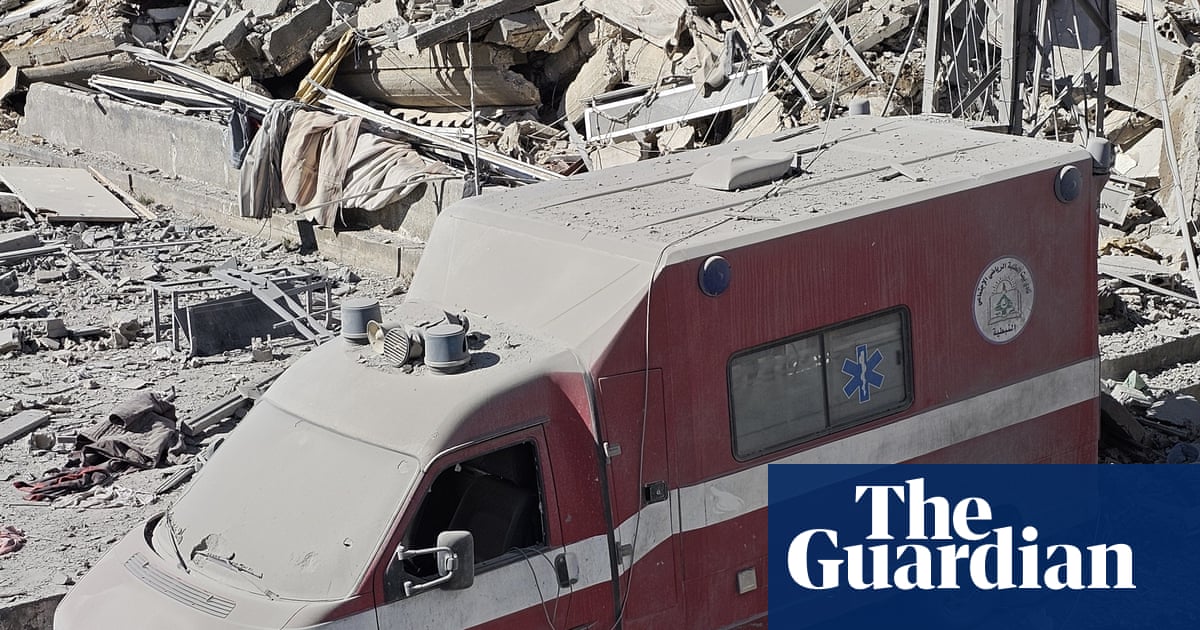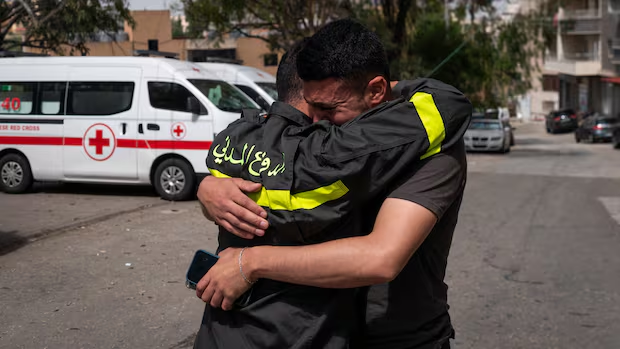
WorldInternational organization Doctors Without Borders says a Tuesday drone strike that killed two paramedics and injured another in southern Lebanon is part of an "alarming pattern" of Israeli attacks targeting first responders.Some 110 health-care workers killed in Lebanon since reignited war: Health MinistrySara Jabakhanji · CBC News · Posted: May 14, 2026 3:39 PM EDT | Last Updated: 7 hours agoListen to this articleEstimated 5 minutesThe audio version of this article is generated by AI-based technology. Mispronunciations can occur. We are working with our partners to continually review and improve the results.Civil Defence paramedics and colleagues of two men killed by an Israeli drone airstrike arriving at Al Najdeh Al-Shaabiyeh Hospital on Wednesday in the southern Lebanese city of Nabatieh. (Adri Salido/Getty Images)International organization Doctors Without Borders says a Tuesday drone strike that killed two paramedics and injured another in southern Lebanon is part of an "alarming pattern" of Israeli attacks targeting rescue teams.On Tuesday, the paramedics, who are part of the Lebanese Civil Defence rescue team, left Al Najdeh Al-Shaabiyeh Hospital in the southern Lebanon city of Nabatieh to respond to a nearby strike. A drone strike hit the first responders as they were helping a person injured in the earlier strike, killing two of them immediately, according to the nongovernmental organization (NGO), also known by its French name, Médecins Sans Frontières (MSF). “We are outraged over the killing of paramedics who were simply doing their job, taking huge risks to save lives,” said MSF Head of Mission in Lebanon Jeremy Ristord."Attacks on health care are unacceptable and must not be normalized."Another rescue team witnessed the strike on their colleagues and returned to the site to collect human remains, the NGO said.A large crowd of mourners flooded the streets of Sidon on Wednesday to mourn the loss of the two paramedics — Hussein Jaber and Ahmad Noura.Mourners attend a funeral Wednesday, for Lebanese Civil Defence members Hussein Jaber and Ahmad Noura, who were killed in an Israeli strike on the southern town of Nabatieh a day earlier. (Aziz Taher/Reuters)In a statement to CBC News on Thursday, the Israel Defence Forces (IDF) said it struck a "terrorist" in the area of Mayfadoun in southern Lebanon, roughly five kilometres from Nabatieh. It said it was aware of reports that "uninvolved individuals" were injured in the area."The objectives of the strike were not achieved in the initial strike, and therefore, the terrorist was struck again in order to remove the threat," it said without providing further evidence."It should be emphasized that the strike was directed solely at a terrorist, and not toward rescue personnel."Rescues delayed due to riskMSF said its teams have witnessed the deadly aftermath of airstrikes, drone strikes and artillery fire, that have damaged hospitals, ambulances and medical equipment. The attacks have also injured civilians, health workers and first responders.AnalysisInside the 'quadruple tap' strike on Lebanon paramedicsColleagues describe Lebanese journalist Amal Khalil's final hours as Israeli bombs rained downSince the reignited war between Israel and Hezbollah on March 2, at least 110 health-care workers have been killed and 252 injured in Israeli attacks, including Tuesday's attack, according to the Lebanese Health Ministry.CBC News has previously reported on Lebanese ambulance workers who say that filming the attacks on their teams has been critical in serving as evidence against Israeli claims that they are misusing their status to help Hezbollah. WATCH | Lebanese paramedics record strikes on their ambulances on camera:When the IDF hit the ambulances, the paramedics were recordingApril 22|Duration 5:23Lebanese ambulance workers say their video of a series of strikes that killed four paramedics is clear evidence against Israel’s claim that medical teams in Lebanon are misusing their status to help Hezbollah. CBC’s Chris Brown talks to members of the Nabatieh Ambulance Service who say their cameras have become an insurance policy.Dr. Mina Naguib, a British emergency physician with MSF, said paramedics in southern Lebanon face increasing risk responding to calls in targeted areas. "We know quite clearly that Israel targets and kills paramedics," Naguib told CBC News from southern Lebanon in an earlier interview on Friday."But as we have seen they often take that risk at devastating personal cost."The IDF has previously told CBC it "doesn’t target medical staff, it only targets military targets, in accordance with international law." Israeli strikes kill 12 people, including 2 children, in Lebanon ahead of U.S.-mediated talksIsraeli strikes kill 5 in southern Lebanon as Hezbollah rockets hit open areas in IsraelMSF said rescue and medical teams in Nabatieh and across southern Lebanon are increasingly forced to delay or limit life‑saving interventions out of fear of being targeted. "Ambulance crews supported by MSF report spending only minutes at blast sites due to the risk of repeated strikes, avoiding the use of excavation equipment, and delaying evacuations, leaving some people trapped under rubble for hours or days," it said in a news release Thursday. Its doctors have treated patients whose conditions were critically worsened by these delays, including severe trauma cases who later died from their injuries, MSF said.Over 160 attacks on medical facilities, workersThe World Health Organization (WHO) said it recorded 161 attacks against health-care facilities and workers between March 2 and May 12. "This included 15 attacks resulting in 12 deaths and 21 injuries that occurred after the start of the ceasefire," MSF said. The ceasefire, it said, "has not led to a cessation of hostilities and has not allowed displaced populations to return home or people stranded in heavily targeted areas to seek safety." Meanwhile, Lebanese health authorities said 22 people were killed in Israeli strikes on Wednesday, including eight children.The latest attacks came ahead of a third round of direct talks between Israel and Lebanon in Washington, as the Trump administration pushes for a breakthrough between the two neighbors that have been in a state of war since Israel was created in 1948. Hezbollah has rejected those talks and is not part of them.First responders affiliated with the Islamic Risala Scout Association gather at the scene following Israeli bombardment that hit their ambulances at a facility in the village of Arnoun in southern Lebanon on Tuesday. (AFP/Getty Images)A ceasefire, which was declared on April 16, is due to expire on Sunday.Hostilities have largely been contained to southern Lebanon since then but regular Israeli strikes have continued despite the deal.The Israeli military said an explosive drone launched by Hezbollah on Thursday fell within Israeli territory near the border and injured several Israeli civilians.Lebanon's Health Ministry says the war has killed 2,896 people in Lebanon since March 2, including 589 women, children and medics. Its toll does not say how many combatants have been killed.Some 1.2 million people have been driven from their homes in Lebanon, many of them fleeing from the south.Israel says 17 of its soldiers have been killed in southern Lebanon, along with two civilians in northern Israel. CorrectionsA previous version of this story said Lebanese authorities co-ordinate with Israel for safe passage of paramedics. In fact, the source could not confirm such co-ordination takes place.May 15, 2026 8:41 AM EDTABOUT THE AUTHORSara Jabakhanji is a Toronto-based senior writer assigned to cover news developments in the Middle East. She has worked in CBC bureaus in Ottawa, London and Toronto. You can reach her at sara.jabakhanji@cbc.ca.With files from Reuters and The Associated Press
Israeli attacks on medics in southern Lebanon part of 'alarming pattern,' says MSF | CBC News
International organization Doctors Without Borders says a Tuesday drone strike that killed two paramedics and injured another in southern Lebanon is part of an "alarming pattern" of Israeli attacks targeting first responders.
1,212 words~6 min read