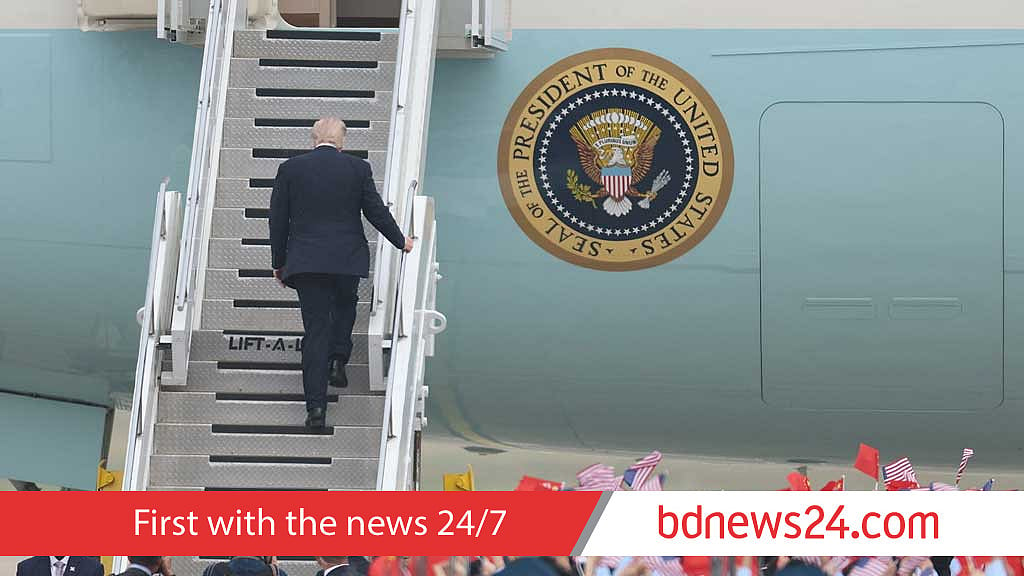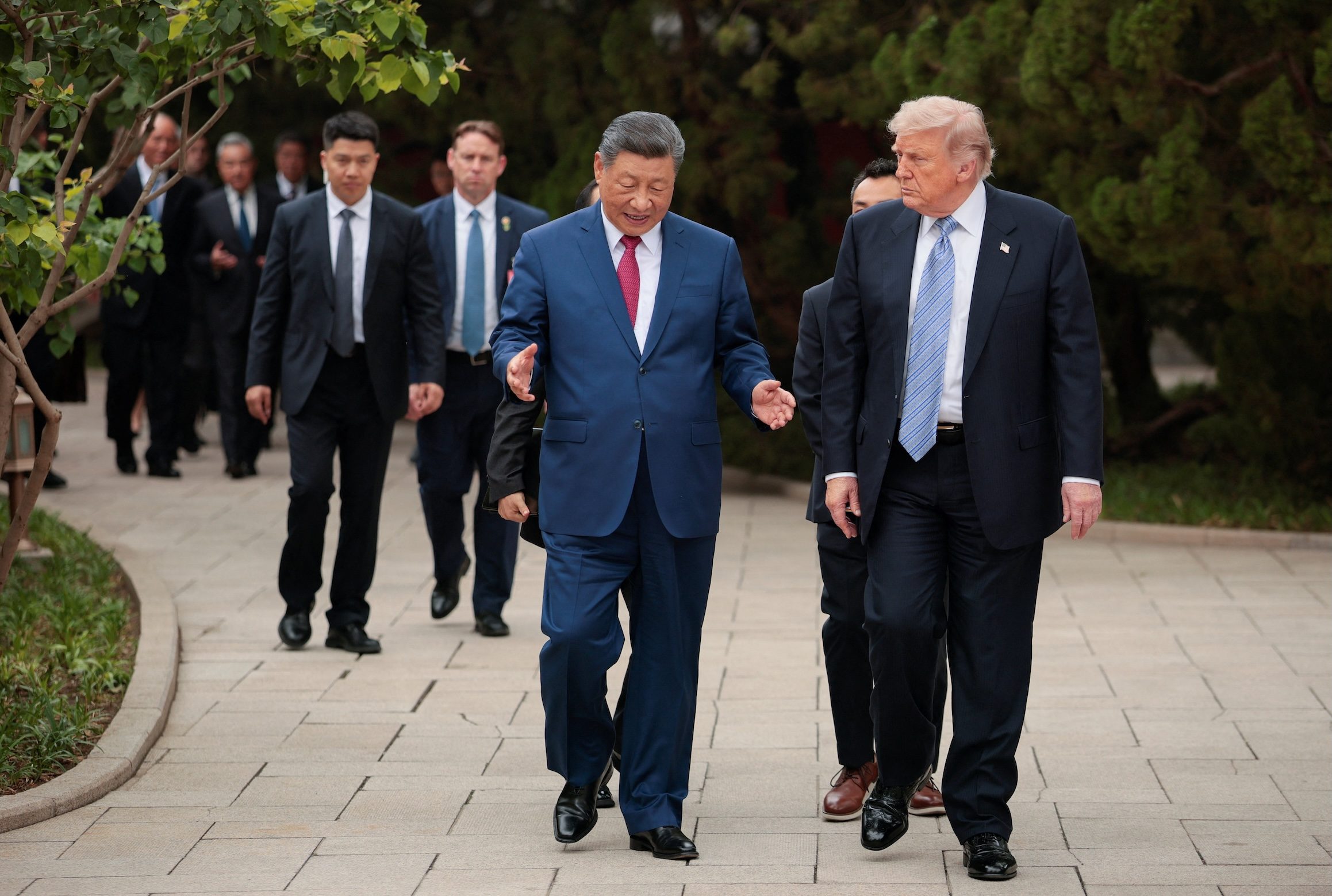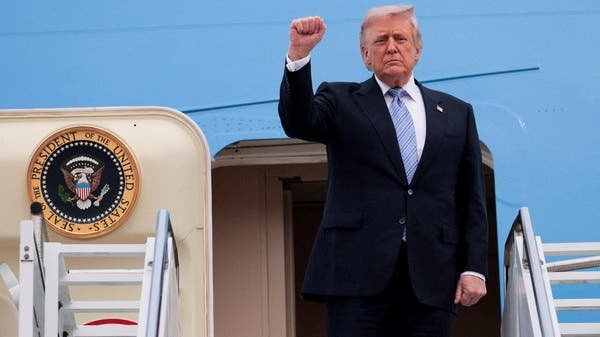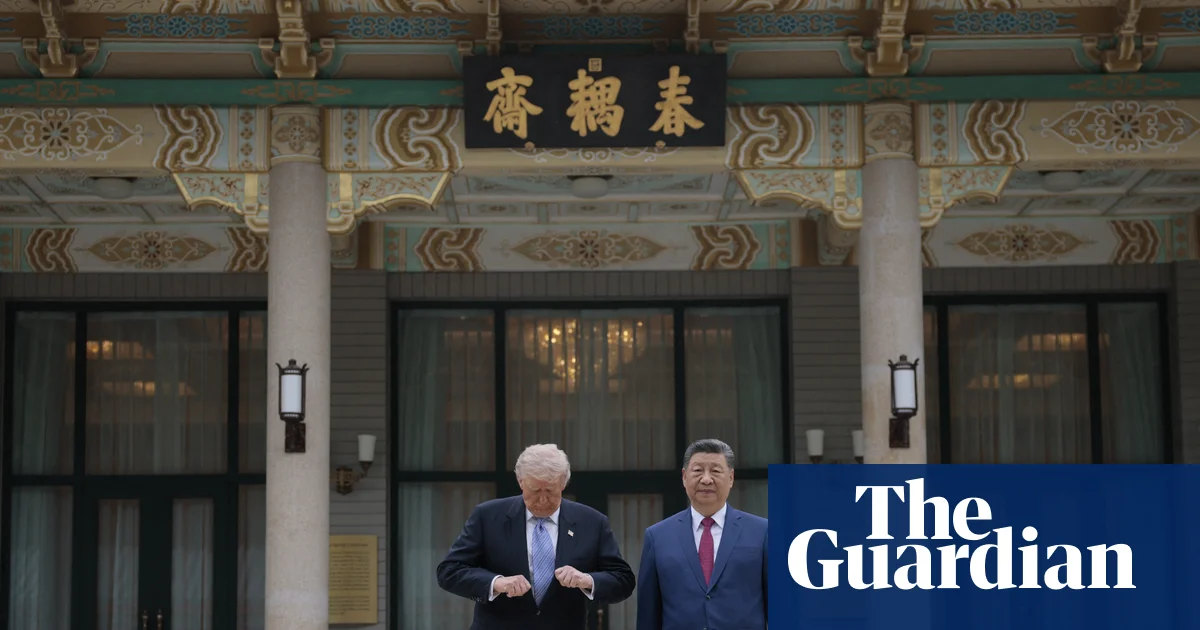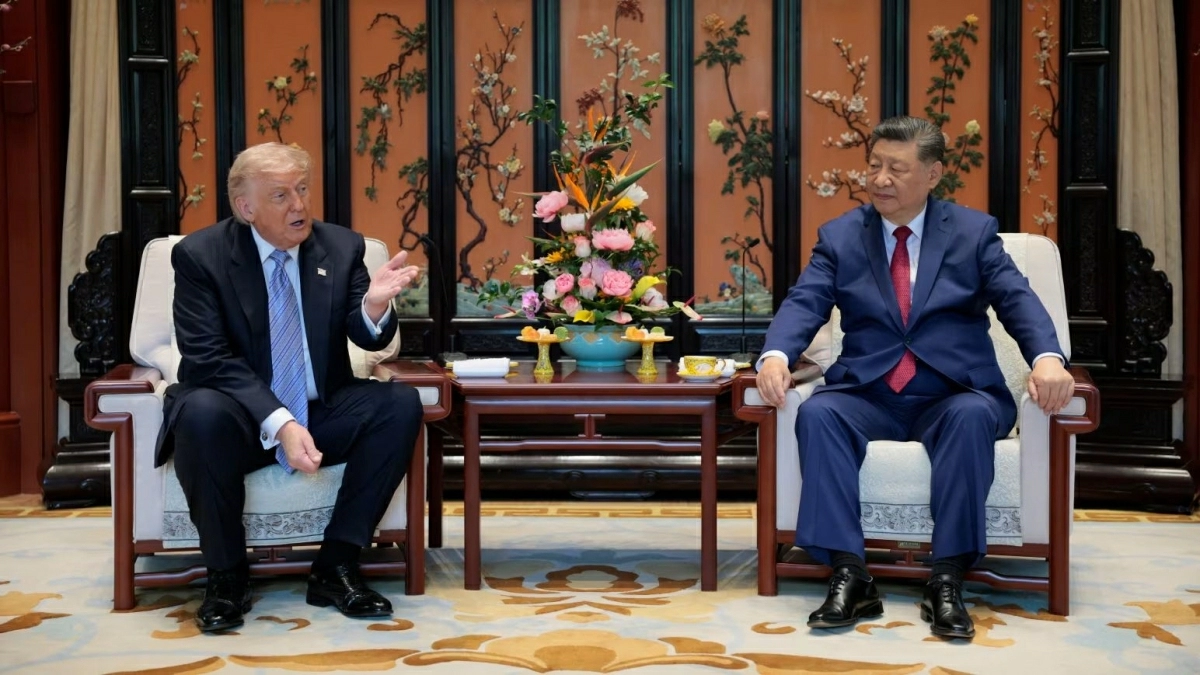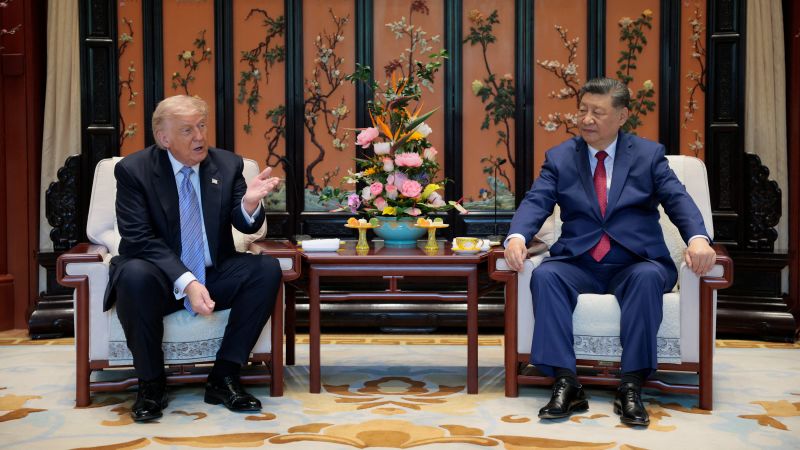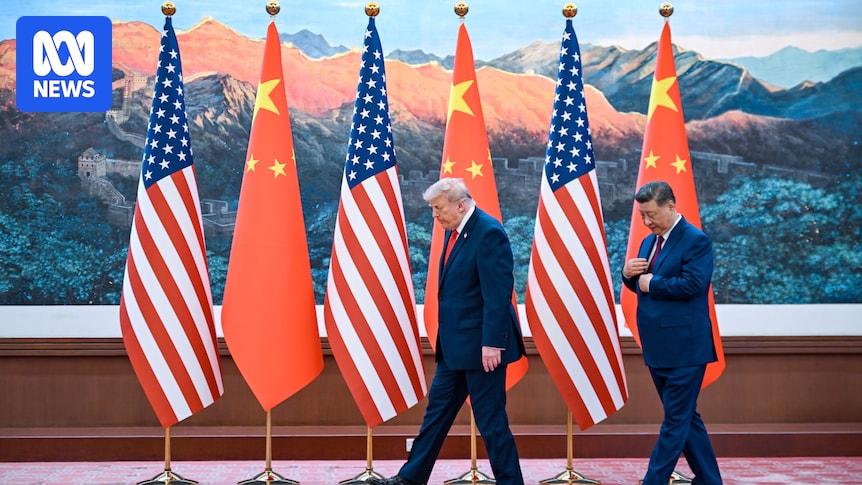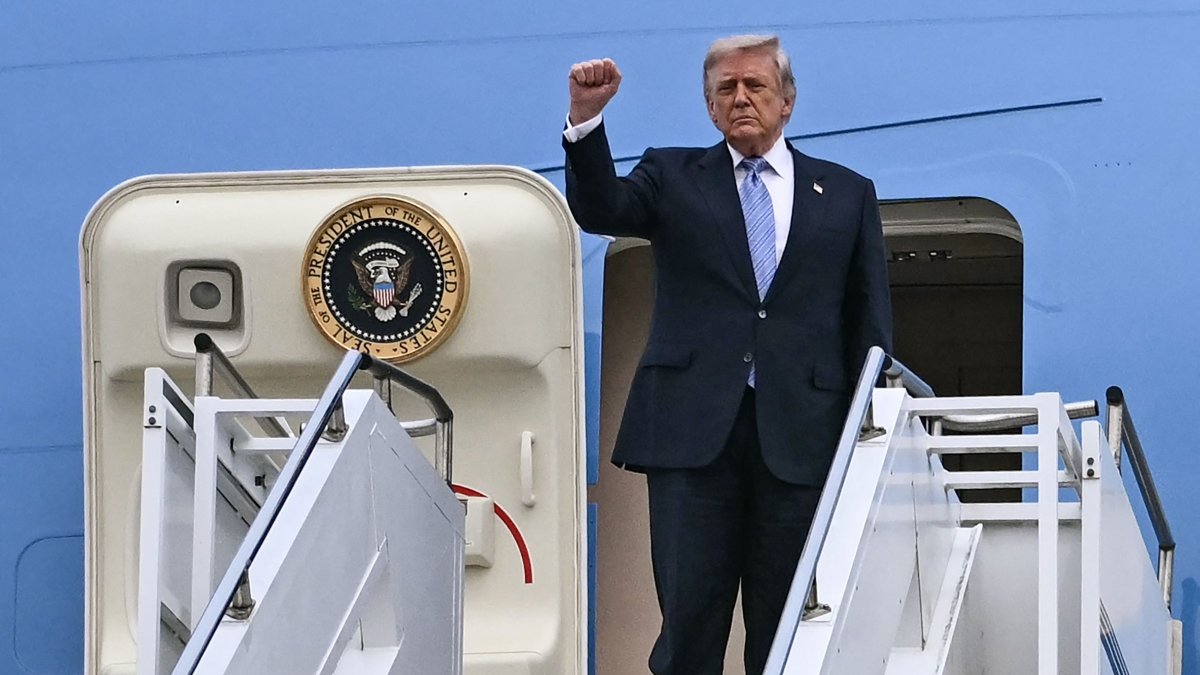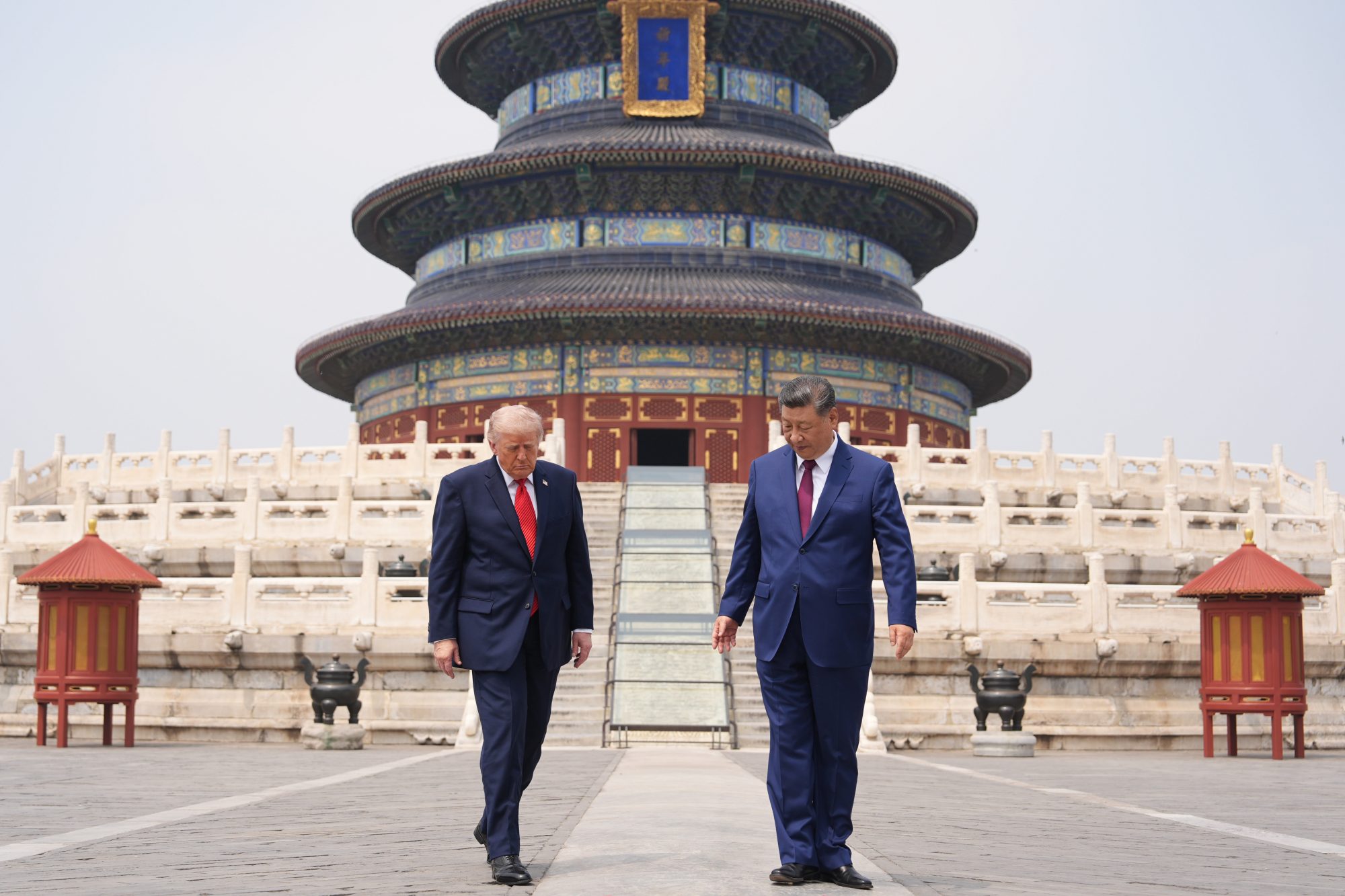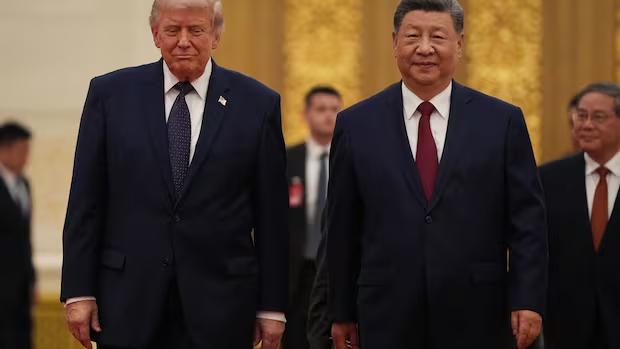
U.S. President Donald Trump departed China on Friday touting business deals that gave markets little to cheer, while Beijing warned Washington about mishandling Taiwan and said its war with Iran should never have started.Trump's visit to America's main strategic and economic rival, the first by a U.S. president since his last trip in 2017, had aimed for tangible results to beef up his dented approval ratings ahead of crucial midterm elections.The summit was filled with pageantry, from grand receptions with goose-stepping soldiers to lavish banquets and private tours of a secret garden, while Trump repeatedly heaped praise on his host, commenting on his warmth and stature."It's been an incredible visit. I think a lot of good has come of it," Trump told Xi at their final meeting at the Zhongnanhai complex, a former imperial garden housing the offices of Chinese leaders, before they dined on a menu of lobster balls and Kung Pao scallops.But just before Friday's meeting, China's foreign ministry issued a blunt statement outlining its frustration with the United States and Israel's war with Iran.Xi warns Trump that mishandling of Taiwan could lead to conflictAnalysisWhat Trump and Xi are looking to get out of this week's summit in Beijing"This conflict, which should never have happened, has no reason to continue," the ministry said, adding that China was supporting efforts to reach a peace deal in a war that had severely affected energy supplies and the global economy.At Zhongnanhai, Trump said the leaders had discussed Iran and felt "very similar," though Xi did not comment.U.S. President Donald Trump boards Air Force One in Beijing on Friday. (Evan Vucci/Reuters)Trump had been expected to urge China to use its leverage with Iran to make a deal. But analysts doubt Xi will be willing to push Tehran hard or end support for its military, given Iran’s value to Beijing as a strategic counterweight to the US.A brief U.S. summary of Thursday's talks highlighted what the White House called the leaders' shared desire to reopen the Strait of Hormuz off Iran, through which a fifth of global oil and gas once flowed, and Xi's apparent interest in American oil purchases to pare its dependence on the Middle East."What's notable is that there's no Chinese commitment to do anything specific with regards to Iran," said Patricia Kim, a foreign policy fellow at the Brookings Institution.U.S. officials said they had also agreed deals to sell farm goods and made progress on setting up mechanisms to manage future trade, with both sides expected to identify $30 billion US of non-sensitive goods.There were scant details of the deals, however, and no signs of a breakthrough on selling Nvidia's advanced H200 AI chips to China, despite CEO Jensen Huang's dramatic last-minute addition to the trip.WATCH | Does Trump have any leveral with Xi:Weakened Trump in China for high stakes talks with XiMay 13|Duration 2:27With the Iran war unresolved, and the Strait of Hormuz still effectively closed, U.S. President Donald Trump has arrived in China in a weakened position for a high-stakes summit with Chinese President Xi Jinping — Trump's first since 2017, during his first presidency.Trump told Fox News that China had agreed to order 200 Boeing jets, its first purchase of U.S.-made commercial jets in nearly a decade, but that was far short of the roughly 500 expected by markets, and Boeing shares fell more than four per cent."For the market, the summit can be strategically reassuring while underwhelming in substance," said Chim Lee, senior China analyst at the Economist Intelligence Unit.Fragile trade truceChinese stocks slid on Friday as the summit between the leaders of the world's top two economies produced few deals to excite investors.The summit's main achievement may be maintaining a fragile trade truce struck when the leaders last met in October and Trump suspended triple-digit tariffs on Chinese goods while Xi backed away from choking off supplies of vital rare earths.It has not yet been decided whether to extend the truce beyond its expiry later this year, U.S. Trade Representative Jamieson Greer, accompanying Trump, told Bloomberg TV on Friday.Such an extension would be "the most basic benchmark" for the summit, said the Brookings' Kim. LISTEN | Trump in China in weakened position:Front Burner28:35Weakened, Trump heads to ChinaWarning from XiOn Thursday, Xi delivered a stark warning to Trump that mishandling the Taiwan issue could push U.S.-China relations to "a very dangerous place." Xi's remarks on Taiwan, the democratically governed island Beijing claims, represented a sharp, if not unprecedented, warning during a pomp-filled summit that otherwise appeared friendly and relaxed.China's foreign ministry said they came in a closed-door meeting that ran more than two hours.Taiwan, which lies just 80 kilometres off China's coast, has long been a flashpoint in U.S.-China ties, with Beijing refusing to rule out the use of military force to gain control of the island and the United States bound by law to provide Taipei with the means to defend itself.U.S. Secretary of State Marco Rubio, who is with Trump in China, told NBC News that Taiwan was discussed, saying the Chinese "always raise it ... we always make clear our position and we move on to the other topics."WATCH | Taiwan issue could jeopardize U.S. relations, China warns:Trump hails China trade progress as Xi issues subtle warning on TaiwanMay 14|Duration 2:06U.S. President Donald Trump hailed trade progress with China as he heaped praise on President Xi Jinping, who struck a more reserved tone with a subtle warning that mishandling the Taiwan issue could put the China-U.S. relationship back in peril."U.S. policy on the issue of Taiwan is unchanged as of today," Rubio added. Trump did not respond to a reporter's shouted question on whether the leaders had discussed Taiwan when he posed with Xi for photos at the Temple of Heaven, a UNESCO World Heritage Site.At Thursday's lavish state banquet, Xi called the China-U.S. relationship the most important in the world and added: "We must make it work and never mess it up."Jailed China critic raisedWhen asked about Hong Kong's most vocal China critic, media tycoon Jimmy Lai, who was sentenced to 20 years in jail in February on two counts of conspiracy to collude with foreign forces and one count of publishing seditious materials, Rubio said Trump had raised the case with Xi."The president always raises that case and a couple others, and obviously we’ll hope to get a positive response from that," Rubio told NBC News.Sebastien Lai, son of jailed media tycoon Jimmy Lai, holds a sign outside 10 Downing Street in London, in September 2025. (Jaimi Joy/Reuters)"We'd be open to any arrangement that would work for them, as long as he's given his freedom," he said of Lai, who has denied all charges against him.A Chinese foreign ministry spokesperson, when asked about Lai, has previously said that Hong Kong affairs were an internal matter for China.
Trump leaves Beijing with few wins, many warm words for Xi | CBC News
U.S. President Donald Trump departed China on Friday touting business deals that gave markets little to cheer, while Beijing warned Washington about mishandling Taiwan and said its war with Iran should never have started.
1,137 words~5 min read