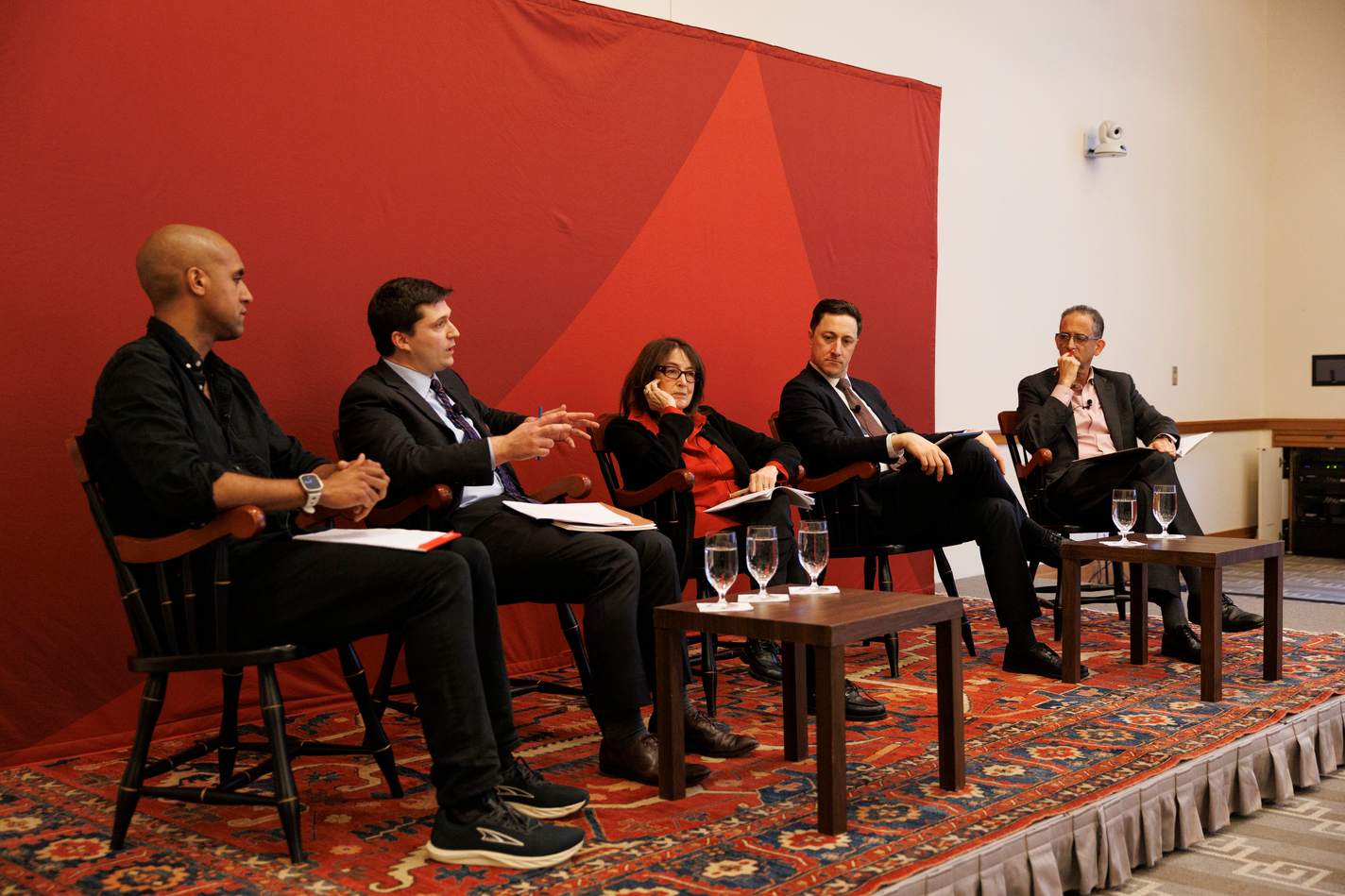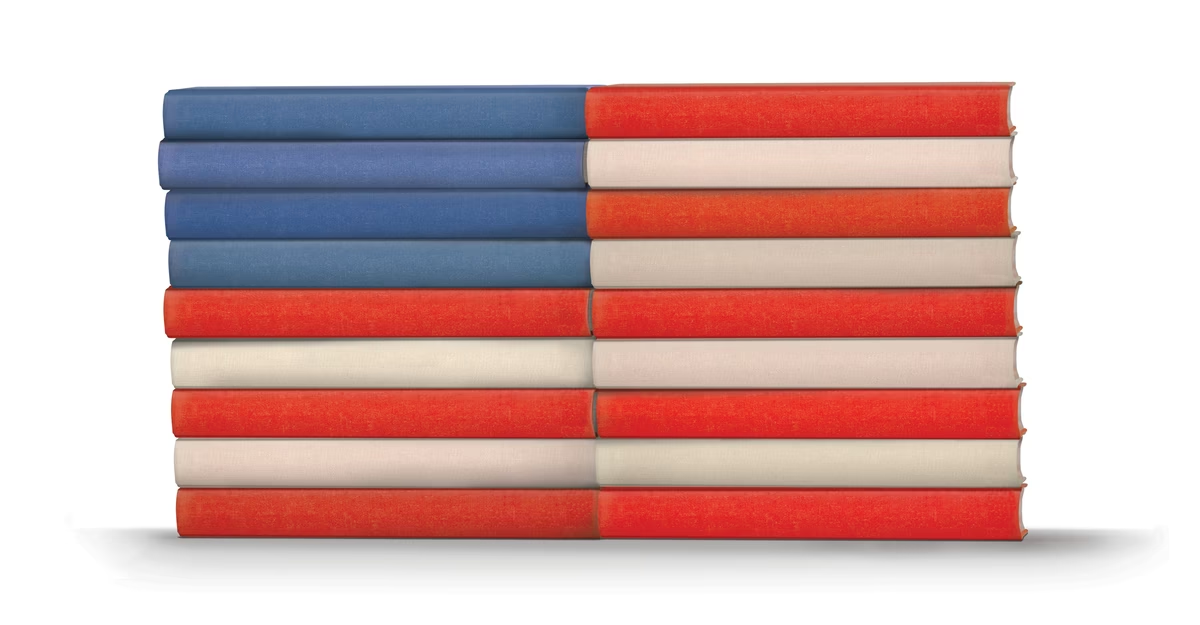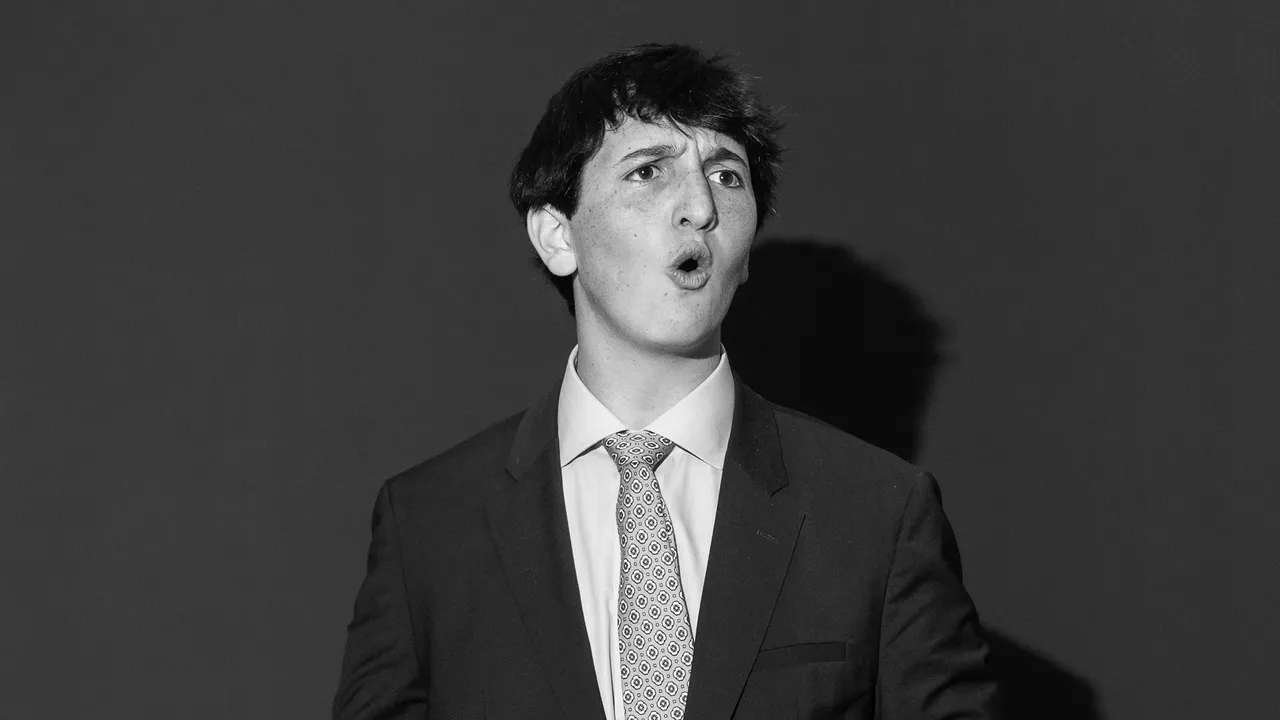
The distinctly American and remarkably intense world of high-school debate.May 4, 2026One of America’s sunnier national convictions is that when people disagree it is useful, even virtuous, for competing sides to make their cases to the public. We wrap this belief in decorum and sometimes in misleading history—the famed Lincoln-Douglas debates looked more like soccer-hooligan meetups than like any genteel vision of measured discourse in wood-panelled rooms. We do, though, believe in debate, and not merely out of a hope that we can talk through our differences, but because the combat of ideas feels intrinsic to the national spirit. Debate has a duality; it is simultaneously conciliatory and domineering. We believe we can resolve our differences because we believe that a good new idea can trounce a bad old one.Dara Cuenca, from Arkansas, has done debate since eighth grade. “I used to be pretty timid,” she says.The kids in these photographs are from Arkansas, California, Florida, and Pennsylvania. They travelled to district and national tournaments to debate legislation about Venezuelan oil and the morality of nuclear weapons in space. If you ask them what they love about debate, as I did recently, they will speak about the value of “multiple perspectives,” but other interests will also surface. Mallory Cloud, from Russellville, Arkansas, wants to be a state representative. Carter Nelson, of Palm Beach County, told me, “I’ve always loved competition in general.”In their effort to reach the nationals, students in Arkansas first competed at a district tournament in Springdale.Trophies on display at a district tournament held at a prep school in San Jose, California.My high-school years were spent much like theirs. On weekends, I put on a button-up shirt and my dad’s tie and rode in a van to debate tournaments in Greensboro and Raleigh. These were held at high schools filled with gawky kids in suits that always fit badly but never in the same way: the tie was too long, the pants or the skirt too small, the jacket was borrowed from an older sibling. I’d post up in the corner of a cafeteria that smelled of industrial cleaner and old French fries and visualize the trophy I was about to win. I did Policy, a tedious and somewhat insane form of debate, in which a team of two presents a plan to uphold that year’s resolution—this year’s is “The United States federal government should establish national health insurance”—and the other side uses everything from procedural fouls to nuclear-war scenarios to show that the plan is a bad idea.Even now, debate prep can be highly analog, often involving piles of notecards sometimes carted to tournaments in giant backpacks.“When it goes well, it can be extremely addicting,” Carter Nelson, who competes in Lincoln-Douglas, says.A judge in Arkansas listens to students engaged in Congressional Debate, in which participants will often deploy quips and one-liners in addition to reasoned argument.There are other forms at these contests: Lincoln-Douglas, the classic; Congressional Debate, which simulates the passage of legislation; and, more recently, Public Forum, which was originally called Ted Turner Debate, because it’s modelled on the panels of pundits you see on CNN. But those seemed better suited to people who wanted to win hearts and minds through stirring oratory. Policy favored the monsters who plot in the background, more Kissinger than Kennedy.Aanya Raghavan practices for a Policy debate at her high school in Austin, Texas. To get through arguments quickly, she distills her evidence to as few words as possible.Alexander Vidal, a classmate of Raghavan’s, practices for a Policy debate.Each speech in Policy is time-limited; kids speak like gasping auctioneers to cram in arguments their opponents must try to rebut. The judge—sometimes a teacher, sometimes a parent who may not understand a word that the overstimulated speed-readers in the front of the room are saying—tries to track all the shouting and scores the result.Debate kids drink a lot of water when they’re not chugging energy drinks. Aayush Appan, left, and Yang Bai, center, from Plano, Texas, and Sami Hassan, from Lexington, Massachusetts, prepare for a Public Forum debate at an invitational tournament, at Harvard.Within a debate round, nothing is assumed. If you assert that unhinged rantings on social media are more trustworthy than an article in the Times, your opponent can’t simply scoff. Similarly, if you want to argue that health care should not be expanded because more people need to die to prevent resource wars that could wipe out humanity, you’re free to do so, and to confidently cite Thomas Malthus’s 1798 “Essay on the Principle of Population” in the effort. This freedom from conventional assumptions was, for me, both the draw of debate and its abiding lesson. Debate also taught me about extraordinary renditions and about the nutritional value of spirulina. It forced me to read everyone from William F. Buckley to Judith Butler. And it taught me that I did not have to respect the institutional freight that accompanied any particular author or article.An audience at Harvard watches a Public Forum debate, a format that includes a “crossfire” round inspired by cable television.Jonathan Gu, standing, competes in Public Forum at a district tournament in San Jose, California. “Even if something sounds a bit dumb at first,” he says, “debating has taught me to understand the logic behind it before dismissing it entirely.”I’ll admit that I was not thinking, back then, about the discursive spirit of America. I just wanted to win, and to say crazy things about the impending end of the world. I suppose one can argue that converting ethical and political questions into a high-speed game for arrogant children is bad for society, especially given how many former debate kids have filled the halls of our dysfunctional Congress. Maybe children should not learn to regard truth in such a flexible way; maybe they should not embrace Malthus just to beat their rivals from Northwest Guilford. But what these kids are learning is how to build an account of the world from the ground up. And nothing—particularly in a polarized country a mere two hundred and fifty years old—feels more important than insuring that new ideas find their way into the minds of young people in bad suits. ♦Outside the Tournament of Champions, held every year at the University of Kentucky, students rehearse their arguments for the next round.Between debates, students sometimes change into more comfortable clothes. On the second day of a district tournament in Arkansas, Grace Haverstick, a student at Cabot High School, did her makeup in a hallway.Mallory Cloud, center, votes for a bill concerning Venezuelan oil reserves during a Congressional Debate at a tournament in Arkansas. Cloud, who’s from Russellville, qualified for nationals last year. She’s thinking of going into politics.Eli Durst is a photographer based in Austin, Texas, and a 2025 Guggenheim Fellow. He is the author of the monograph “The Children’s Melody.”
The Very American, Very Intense World of High-School Debate
What do kids learn when ethical and political questions become a high-speed game?
1,140 words~5 min read